

How to Spot Replaced Parts in Pre-Owned Chanel Bags During Authentication
Check out our Chanel collection!
Buying a pre-owned Chanel bag can feel like navigating a minefield, especially when you're investing thousands of dollars. Even if the bag passes basic authentication checks, there's another layer of complexity that catches many buyers off guard: replaced parts.
From swapped chains to refinished leather panels, modifications can dramatically affect a bag's value and authenticity status.
The trickiest skill in spotting replaced parts is learning to notice inconsistencies between the bag's era, wear patterns, and component quality. A 1990s Classic Flap with pristine hardware but worn leather may indicate inconsistent wear that raises authenticity concerns.
We've come across everything from a subtle touch-up to a full-blown hardware transplant in our years of handling luxury bags.
While Chanel itself does replace parts through official repairs, third-party shops or counterfeiters are often responsible for alterations. Knowing the difference really protects your wallet, and your collection's reputation.
Key Takeaways
- Mismatched wear between leather, hardware, and interior parts often points to replacement parts that can threaten authenticity
- Details like hardware color, chain heft, and stitching style should make sense for the bag's serial number period
- Pros with proper tools can spot non-original parts using close-up analysis and material testing, stuff most buyers miss
Key Indicators of Replacement Parts in Pre-Owned Chanel Bags
Replaced components in a pre-owned Chanel bag make authentication a headache because they erase or hide the clues we count on to verify authenticity. Knowing which parts get swapped most and how these changes mess with value and verification helps you buy smarter in the pre-owned world.
Why Replaced Parts Are a Red Flag
When you inspect a second-hand Chanel, replacement parts can mean the most important authenticity markers are gone or altered. Every piece on a real Chanel bag has its own traits that match its production era, from hardware weight and finish to the tiniest font on the stamp.
Third-party repairs or swaps strip away these details. A new chain might lack Chanel's hallmarks, or a fresh lining could hide the original serial sticker. We've seen bags where so many parts were replaced that even if the base was real, we just couldn't tell for sure anymore.
When multiple components are swapped, the bag becomes a "frankenbag," which makes it difficult to vouch for authenticity even if some parts are genuine.
Commonly Swapped Components
Hardware is the top offender. We often spot bags with generic chain straps, plain zipper pulls, or clasps missing Chanel's signature engravings and metal quality from the right era.
Interior linings are another hotspot. Sellers sometimes swap out worn linings to freshen up a bag, but this covers up key authentication details like serial stickers and stamps. The new fabric almost never matches Chanel's original specs.
Leather parts like straps, piping, and corners get replaced when they're too beat up. Sure, it makes sense for upkeep, but it also erases the chance to check for authentic aging, texture, and that classic Chanel leather smell.
| Component | Why It's Replaced | Authentication Impact |
|---|---|---|
| Chain straps | Wear, tarnishing | Removes hallmarks and weight clues |
| Lining | Stains, rips | Hides serial numbers and stamps |
| Zippers | Broken, sticky | Loses branded zipper verification |
| Leather trim | Cracks, discoloration | Blocks leather authenticity assessment |
How Replacement Affects Value and Authenticity
A Chanel bag with swapped parts significantly impacts its value, though some buyers may still consider it based on the base condition of the bag. Collectors and savvy buyers hunt for original-condition pieces, and every non-original part chips away at that premium.
Authenticity-wise, it's just as tough. If we can't confirm key markers, we have to call it "inconclusive." That doesn't automatically mean the bag's fake, just that we can't stand behind it with certainty. It's a subtle but important difference, though it still tanks resale value.
Chanel usually refuses to service bags with lots of third-party replacements. Bring in a bag with swapped hardware or lining, and the boutique might turn you away. It's more than just a hassle, it's a signal that the bag no longer meets Chanel's standards.
Examining Leather: Spotting Non-Original Panels and Finishes
Real Chanel bags use specific leathers with unique traits that replacement panels rarely match. To check, you need to look at the grain pattern, color consistency, and any restoration work that doesn't fit Chanel's usual style.
Identifying Lambskin Versus Caviar Leather
Chanel sticks mainly to two leathers: lambskin and caviar. Lambskin feels super soft, almost glassy, with natural hide variations. It's delicate and scratches easily, so replaced panels stand out if they're too perfect.
Caviar leather has a pebbled texture from a special embossing process. On real Chanel, those "pebbles" are uniform in size and spacing. Replacement panels often show uneven pebbling or use generic pebbled calfskin that just doesn't nail the look.
Compare the front flap to the back and sides. If one part looks much newer or the grain doesn't match, it's probably been swapped. Run your fingers along the seams, if the texture changes suddenly, that's a red flag.
Texture, Scent, and Colour Consistency
Real Chanel leather has a subtle, earthy smell, never plasticky or chemical. Replaced panels often smell off because they're new or treated differently. Sniff around the bag to catch any weird differences.
Color is a big deal. Original Chanel leather ages evenly across all panels if exposed to the same conditions. Under bright light, check for spots where the color doesn't match, especially where new and old panels meet.
The finish should be consistent. Lambskin has a soft glow, while caviar stays mostly matte. Replacement panels might look too shiny or too dull compared to the rest.
Signs of Non-Chanel Restoration
Third-party shops use different techniques than Chanel. We often see thick top coats hiding the leather's natural texture or color fixes that don't quite match Chanel's dyes.
Look at the stitching. Non-Chanel repairs might have uneven stitch spacing, wrong thread thickness, or the number of stitches per inch might be off. Sometimes the thread color doesn't quite match.
Edge paint on replacement panels can look too perfect or use a different formula. Original edge paint wears in a certain way, while new paint on an old bag just looks... off.
Hardware Analysis: Authenticity Cues and Hardware Replacement
Chanel hardware is one of the best clues for authenticity, but it's also the most swapped-out part in pre-owned bags. Real Chanel hardware has specific finishes, sharp engravings, and solid heft that fakes and aftermarket parts rarely get right.
Decoding Chanel Hardware Finishes
Chanel uses three main finishes: gold-tone, silver-tone, and ruthenium (dark grey). Each has its own vibe, which shifts a bit over the years.
Gold-tone hardware from the '80s and '90s is richer and more yellow than the lighter gold from the 2000s. Silver-tone should be bright and polished, not easy to tarnish. Ruthenium, which came later, is a gunmetal grey that's darker than silver.
Replaced hardware often looks off. Sometimes the chain is a different gold than the clasp, or the finish is too shiny or too flat for the bag's age. Real hardware ages with small scratches but the base color stays true. Fakes and replacements might flake, fade, or show brass underneath after a while.
Checking CC Logo Hardware and Interlocking CC
The CC logo on Chanel hardware follows strict proportions. The right C always overlaps the left at the top and sits behind it at the bottom.
Engravings on real CC logos have certain depths and fonts depending on the bag's age. Newer bags have sharper engravings, while vintage ones look softer. The space between the Cs and the smoothness of the curves matter too.
Replaced hardware often gets the logo slightly wrong, maybe the overlap is off, the font is too chunky or thin, or the engraving is uneven. Some fakes use the wrong CC style for the bag's year. The logo on clasps should line up perfectly with the hardware, not look crooked.
Proper Screws and Engravings
Chanel hardware uses specific screws and engraving spots that change by year and collection. Most use flat-head screws with one slot, though some newer bags have tiny star-shaped screws.
Screws should be flush, with no stripped threads. Engravings usually say "CHANEL" in all caps, spaced just so. Sometimes you'll see "PARIS" underneath or on the back. The letters should be crisp, not fuzzy.
Replacements often use the wrong screws, like Phillips heads Chanel never used for that model. Sometimes only the turn-lock is swapped, so screw styles don't match. Aftermarket engravings can look laser-etched and too perfect, while real Chanel stamps have little quirks.
Weight and Feel of Authentic Metals
Chanel hardware feels heavy because they use solid brass with plating, not hollow or cheap alloys. Hold a Classic Flap, the chain should feel substantial.
Chain links should move smoothly and have a good weight. The leather woven through should match the bag's body. Fake and replacement chains feel lighter, stiffer, or even make tinny noises.
Turn-locks should feel solid and click firmly into place, not wobble. Replacements are often loose or stiff. Real hardware has consistent metal thickness; replacements can feel thin or flimsy.
Serial Numbers, Authenticity Cards, and Microchip Authentication
Checking serial numbers and authenticity cards reveals if key parts have been swapped or tampered with. Bags made before 2021 use hologram stickers and matching cards. Newer ones have microchips with stored authentication data.
Understanding Chanel Serial Number Evolution
Chanel started using serial numbers in 1986, white stickers with black numbers. Early ones (1986-1991) had two Chanel logos above the number. From 1991-2000, they added grey lines and faint Chanel text for security.
Holographic overlays came in around 2000-2005 to make fakes harder. From 2005-2021, stickers had gold specks and X-cut lines so you couldn't remove them cleanly. Serial numbers went from 6 digits (1986) to 7 (late '80s-2005) to 8 (2005-2021).
For bags made before 2021, serial numbers are still located on hologram stickers. From 2021 onwards, Chanel switched to microchips embedded in the bags.
Detecting Replaced Serial Plates or Hologram Stickers
Replaced stickers show clear signs if you look close. Authentic stickers from 2005-2021 have X-cuts that rip if removed, so an intact sticker on an old bag is suspicious. Watch for glue residue, crooked placement, or extra tape layers around the sticker.
Font matters a lot. Real Chanel uses sharp, consistent type with no smudges or weird spacing. Fakes often mess up the font or digit alignment.
Make sure the serial number is in the right spot for the bag's style and year. Classic Flaps have them near the bottom corners; Reissue 2.55 bags hide them under the flap. Wrong placement can mean a fake or a swapped part.
For bags after 2021, check the microchip's metal plate. It should match the hardware color and have a clean Chanel logo. Loose plates, mismatched finishes, or messy engravings are all warning signs.
Authenticity Card Red Flags
The chanel authenticity card must match the bag's serial number exactly. If the numbers don't align, either the card or sticker was swapped out somewhere along the way. Sellers sometimes pair real cards with fake bags, or the other way around, it's a classic trick.
Genuine cards use sturdy black plastic with gold or white lettering. You'll see the Chanel logo on the front and the serial number on the back. Some years even added holographic details for extra security.
Missing authenticity cards aren't always a sign of trouble, especially with older bags, cards just get lost after a couple decades. Still, bags from 2005-2020 should generally have both card and matching hologram sticker. If someone claims a 2015 bag never had a card, that's suspicious.
For post-2021 bags, authenticity cards are gone for good. If you see a 2023 bag with a traditional card, that's a huge red flag. Chanel switched to microchips and stopped making the cards completely.
Stitching and Quilting: Uncovering Non-Original Details
When panels get replaced or repairs are done, the stitching and quilting patterns usually give it away. Sometimes you'll find 10 stitches per inch on one side and 8 on another, definitely not how Chanel does things.
Stitches Per Inch and Quality of Construction
Authentic Chanel bags always keep 10-11 stitches per inch everywhere. It's not just for looks; that higher stitch count gives the bag its structure and keeps the quilting from sagging as it ages.
When checking pre-owned bags, we count stitches in different spots. If a flap has 8 stitches per inch and the body has 11, that's a sign of replacement. The thread itself can be a giveaway too.
Chanel uses thick, high-strength thread that ages gracefully. Replaced stitching often uses thinner, shinier thread that stands out against the original. Most repair shops can't match the exact thread or color, especially on older bags.
Stitch tension matters. Real Chanel bags keep it even all over. Replaced sections might show puckering or loose spots where new and old stitching meet.
Comparing Diamond Quilting Alignment
The Chanel 2.55 and Classic Flap have diamond quilting that needs to align perfectly across all seams and panels. Not almost, perfectly.
Original bags keep diamond symmetry, even where the front flap meets the body. When someone swaps a panel, they almost never get this right. Watch for diamonds that change size or shape at the seams.
Pocket areas deserve a close look. A replaced pocket usually throws off the diamond alignment where it attaches. The quilting should flow smoothly, without interruption.
Back panels can be especially obvious. If the diamonds don't line up with the side gussets, that's a dead giveaway. Chanel would never let that slip.
Spotting Irregular Stitch Count
If the stitch count varies across the bag, that's a sign of replaced parts. We use a ruler to count stitches on the flap, then compare with the body and sides.
Original bags are made in controlled factory settings, so they keep things consistent. If one area has 9 stitches per inch and another has 11, that's repair work. It might sound minor, but it changes the way the quilting looks and feels.
We also check the angle and direction of the stitches. Chanel has strict standards for how stitching crosses the diamond quilting. Replacement work often ends up slightly off, with angles or paths that don't quite match the original.
Interior and Lining: Clues to Replacements Inside the Bag
Inside a Chanel bag, you can spot details that counterfeiters and unauthorized repair shops rarely get right. The lining fabric, interior stamps, and pocket construction all help reveal if the original parts are still there.
Lining Fit and Fabric
Authentic Chanel linings sit smooth against the interior walls, no bunching or loose spots that scream amateur work. The original linings use specific fabrics based on collection and era: grosgrain ribbon, lambskin, or Chanel's signature quilted textile in black, burgundy, or red.
When we check for replaced linings, we look for stitching that doesn't match Chanel's methods. Originals have precise, even stitches at specific points. Replacements often show weird spacing or off-color thread. The fabric should feel consistent throughout.
Replaced linings usually use generic materials that don't have Chanel's signature sheen or weave. Edges where the lining meets leather should be clean, not raw or glued. If the lining looks brand new but the outside is worn, that's a mismatch that raises questions.
Brand Stamps and Embossing
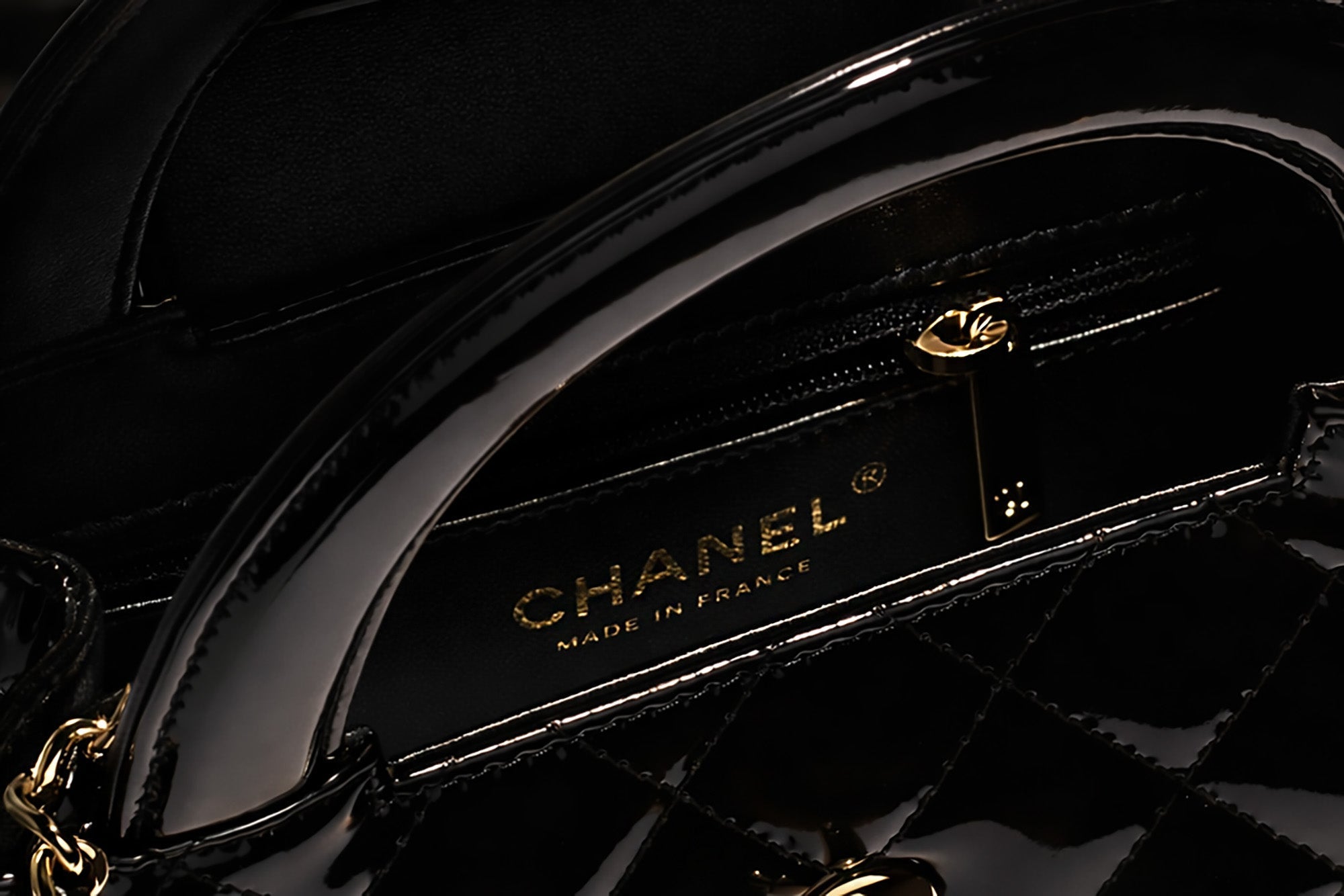
Genuine Chanel interior stamps keep consistent placement, font, and depth for each production period. We always check the stamp's location, whether it's on a leather patch or embossed right on the interior.
Replaced linings often lose these stamps, or someone tries to recreate them with the wrong font or placement. Authentic embossing is sharp and clean, never smudged or uneven. Serial number stickers should match Chanel's records for that style and year.
We also check that the leather tag matches the bag's era. Chanel changed tag styles, sizes, and attachment over the years. If the tag doesn't fit the time period, that's a sure sign of replacement.
Pocket and Interior Leather Tags
Interior pockets in real Chanel bags have reinforced stitching at stress points, and their placement lines up with the quilting pattern when it matters. We check if the pocket matches factory specs for that model.
The leather inside should match the exterior in both quality and aging. If the interior pocket looks untouched but the rest of the bag is worn, it's probably been replaced. Originals have specific pocket sizes and zipper placements that unauthorized repairs often mess up.
We also look at how interior leather tags attach to the lining. Chanel uses certain hardware and stitching patterns for each production period. Replaced tags might have different rivets, wrong fonts, or attachment styles that don't match Chanel's way of doing things.
Professional Authentication Services and When to Seek Expert Help
It's great to know what to look for yourself, but sometimes you just need a pro. Experts have access to brand archives, special tools, and years of hands-on experience. They catch things even seasoned collectors might miss.
Indicators That Call for a Pro
If you're buying a Chanel bag over $2,000, especially vintage or "restored", it's smart to get it checked by a professional. If the seller mentions repairs, replaced hardware, or any interior work, don't skip expert verification.
Warning signs like mismatched hardware finishes, leather that's too stiff or too soft for its age, or a lining that looks fresh compared to the outside mean you should call in an expert. Scratched or re-stamped serial numbers, or ones in weird spots, are also reasons to get help.
Bags from the 1980s and 1990s are especially risky. These often get "frankenbagged", parts from different bags combined into one. If you're buying online without seeing the bag in person, a professional authentication is basically insurance.
How the Pros Detect Replaced Parts
Pros use a systematic approach. They'll check hardware under magnification to see if engravings, fonts, and metal composition match Chanel's records for that year.
They analyze stitching, thread color, thickness, and pattern, against factory standards. Counting stitches per inch and checking for consistency is part of the process. Replacement straps or handles usually have different densities or patterns.
For materials, they compare leather grain, weight, and even smell to known authentic examples. Experts keep reference libraries of Chanel parts from all eras, so they can spot when a zipper pull is from 2015 but the bag supposedly dates to 2008.
They'll use UV light to spot glue residue, re-dyeing, or altered stamps you can't see in normal light. And they document everything with photos and notes about what they found.
Choosing a Trusted Chanel Authentication Service
Look for services with real credentials and clear processes. The best ones explain their background, show case studies, and give detailed reports, not just a yes or no.
Check how long they've focused on Chanel bags specifically. General luxury experts aren't always Chanel specialists. Read recent reviews, especially about communication, speed, and whether their reports were accepted by resale sites or insurers.
Legit services usually have tiered prices. Basic checks might be $20-50, while full reports with legal standing cost $75-150. Be wary if someone promises a verdict without seeing the bag in person, or never gives "inconclusive" results.
Frequently Asked Questions
Authenticating pre-owned Chanel bags isn't just about a quick glance. Details like hardware, leather, stitching, serial numbers, and structure often trip up counterfeiters and amateur restorers.
What are the tell-tale signs of non-authentic hardware on a Chanel bag?
Fake hardware usually feels lighter than real Chanel pieces. The finish might tarnish, flake, or lose color quickly, while authentic hardware keeps its shine for years.
The interlocking CC logo is a big clue. On real bags, the right C overlaps the left at the top, and the left overlaps the right at the bottom. Fakes or replacements often get this wrong or make the overlap inconsistent.
Screws matter too. Chanel used flathead screws until 2015, then switched to star-shaped ones. If a bag claims it's from after 2015 but has flathead screws, or the other way around, that's off.
Engravings should look crisp, evenly spaced, and deeply etched. Fakes usually have shallow, uneven, or blurry engravings that seem stamped rather than properly engraved.
Can you outline the steps for verifying the authenticity of Chanel leather?
Start by touching the leather. Real Chanel leather, lambskin or caviar, feels soft and luxurious, never plasticky or stiff. Even older bags keep that distinct quality you just can't fake.
Look closely at the grain. Authentic caviar leather has even, uniform pebbling. Lambskin should feel buttery, with natural texture that varies a bit, as real leather does.
Don't be afraid to smell it. Authentic leather has a rich, natural scent. If it smells like chemicals or plastic, it might be replaced or treated with cheap products.
Check for natural imperfections. Real leather sometimes has tiny marks or texture changes. Perfectly uniform leather with no variation is suspicious and often synthetic.
How can I tell if a Chanel bag's lining has been tampered with or replaced?
A real Chanel lining fits perfectly against the interior, with no bubbling, wrinkling, or loose spots. If you see air pockets or poorly attached areas, someone probably replaced the lining.
Check how the lining is attached at seams and edges. Originals use invisible stitching and precise alignment. Replacements often show glue residue, uneven stitches, or gaps where the lining doesn't meet the leather.
The interior stamp should be embossed into the leather, not just printed. If the stamp looks new on a worn bag, or sits on a too-fresh patch, that section may have been swapped.
Compare the lining material to known authentic examples. Chanel uses specific fabrics with certain textures and weights. Replacements usually feel thinner or look off.
What should I look for when examining the stitching of a Chanel bag to ensure it's original?
Count the stitches per inch. Genuine Chanel bags have 10 to 12 stitches per inch for tight, durable seams. Fewer stitches mean shoddy work, likely from a fake or a bad repair.
The quilting should be perfectly centered and symmetrical. Every diamond, chevron, or square should line up without distortion. If it's off-center or the shapes are weird, something's been changed.
Thread color matters. Chanel matches thread to the leather exactly. If the thread doesn't match, especially in repaired spots, it's a sign of replacement or outside restoration.
Check the flap alignment. The front flap should sit flush with the body, not sticking out at the sides. If the stitching looks redone or the flap doesn't line up, the bag's been tampered with or poorly restored.
How does one check for authenticity in a Chanel bag's serial number sticker?
The serial number format ties directly to when Chanel made the bag. If yours has a six-digit code, it's from before 2005. Seven digits? That's 2005 to 2021. And, since the 21A collection in 2021, Chanel ditched the sticker for a microchip system, using alphanumeric codes on tiny metal plates.
Look closely at the sticker's font and where it's placed. Authentic numbers look sharp, evenly spaced, and sit right in the middle. If the font looks off, the numbers are crooked, or the spacing feels weird, that's a red flag, probably a fake or a swapped sticker.
Sticker material makes a difference, too. Real Chanel stickers have a certain texture and stickiness. Fakes or replacements often seem too shiny, too smooth, or even start peeling at the edges, while originals stay put.
It's smart to double-check the serial number against the bag's style and year. If the sticker came from a different model or era, something just won't add up when you compare it to the bag's other details.
Could you give tips on spotting alterations in the overall shape and structure of pre-owned Chanel bags?
Take a good look at the bag’s silhouette from different angles. Authentic Chanel bags usually keep their structure, even when they’re empty, that’s part of the charm, right? If you notice sagging, odd bulges, or a shape that just seems off, it could mean someone tried a shoddy repair or swapped out some structural parts.
Corners and edges are worth a closer look. They get the most wear, so repairs often happen there. If the stitching looks out of place or the leather in those spots seems fresher than the rest, something’s probably been touched up.
Run your hands along the base and sides. Real Chanel bags have special stiffening materials inside that help keep their shape, but they don’t feel like plastic or cardboard. If the support feels weirdly soft or way too stiff, that’s a red flag.
It’s also smart to compare the bag’s proportions to authentic examples of the same model. Even tiny changes made during repairs can mess with the original dimensions. If the measurements are off from what’s standard for that style, chances are the structure’s been altered.
Love Hermès? See More from Rome Station
Add us to your Preferred Sources on Google to see our newest Hermès guides and insider tips first.

