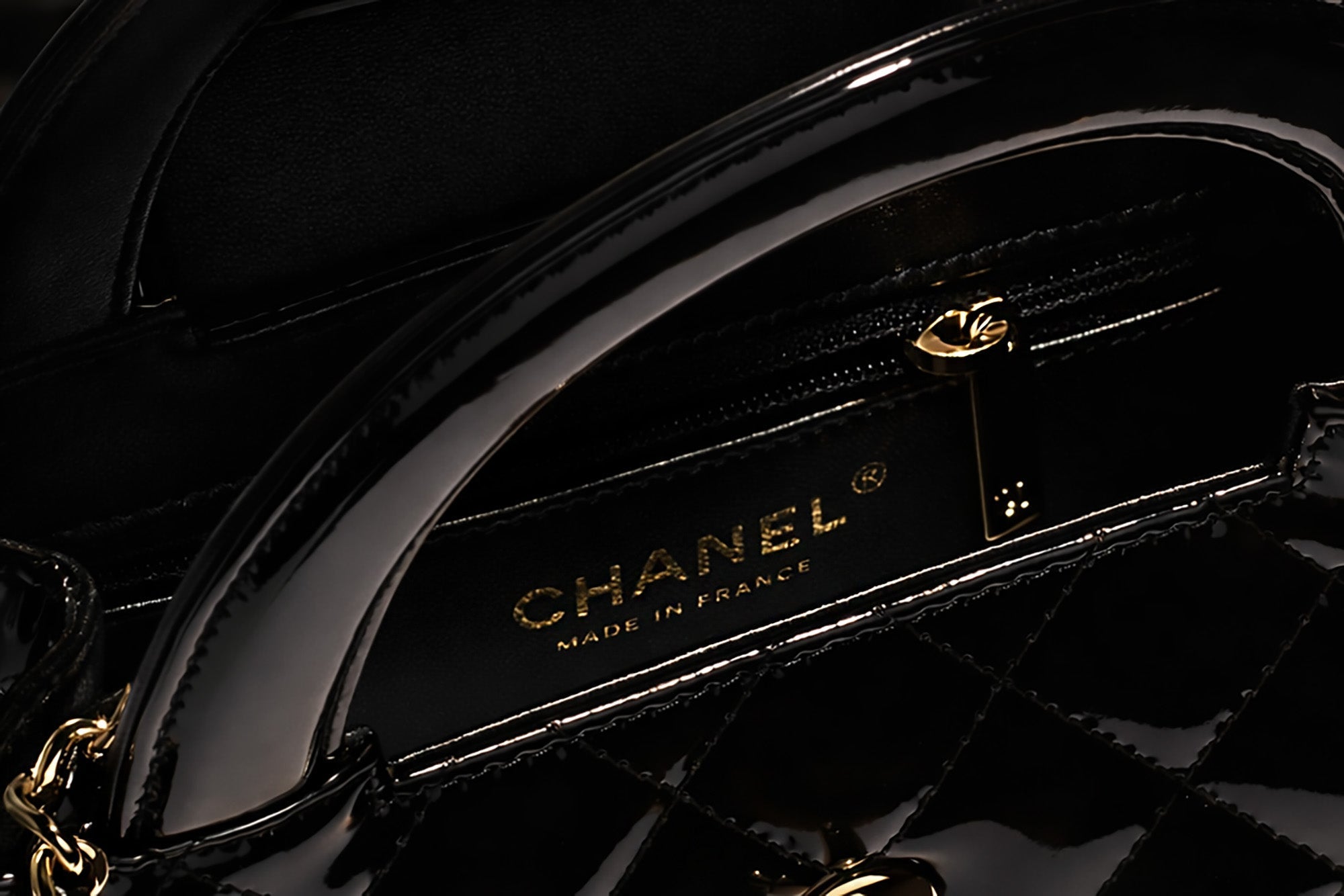



Understanding Chanel Date Code Placement Changes Over the Years
Check out our Chanel collection!
Chanel date codes are those tiny stamps or stickers tucked away inside bags that tell us when and where they were made. These codes have shifted a lot in terms of placement, format, and security features from the mid-1980s right up to 2021, when Chanel switched everything over to microchips.
If you're buying, selling, or just trying to figure out if a vintage Chanel is the real deal, knowing where to look for these codes in each era is pretty much essential.
Plenty of collectors get tripped up when they can’t spot a date code where they expect it, not realizing Chanel has moved these little markers all over the place through the years. Sometimes they’re in an exterior pocket, sometimes buried in a seam, or stuck to a leather tab.
Eventually, they landed on hologram stickers, and now, well, they’re invisible, hidden in microchips. Each era had its own system, and honestly, knowing these patterns saves a ton of headaches when you’re trying to verify a bag’s age or authenticity.
This guide covers every major shift in Chanel date code placement from 1984 right up to today. I’ll show you where to look based on age, what the codes should look like, and a few warning signs that might mean you’re looking at a fake.
Key Takeaways
- Chanel date codes started as simple 6-digit stamps in the 1980s, then became 8-digit codes, and finally microchips after 2021
- Code placement changed a lot over the years, exterior pockets, interior seams, leather tags, hologram stickers, and now microchips
- Knowing the placement and format for each era is crucial for authenticating and dating vintage Chanel bags
What Is a Chanel Date Code?
A Chanel date code is just a unique serial number inside a Chanel bag that tells you when it was made. Think of it as the bag’s birth certificate, though it’s really not that complicated.
Chanel started using these in 1984, printing serial numbers on little stickers inside their bags. The main goal? Track when bags were made and add a layer of authenticity.
A few basics about Chanel date codes:
- They show the year a bag was made (not the month)
- They don’t tell you which factory produced the bag
- You’ll find them on a sticker or tag inside the bag
- For bags made before 2021, the number should match the authenticity card
The code is just a string of digits, and the format depends on when the bag was made. Early codes were 6 digits, then 7, and by 2005, Chanel switched to 8 digits.
But here’s the thing: a date code alone doesn’t prove authenticity. Always check other details, craftsmanship, materials, hardware. Counterfeits have become increasingly sophisticated.
In 2021, Chanel ditched the stickers and went all-in on NFC microchips. These chips hold an 8-character code you can only read with Chanel’s own scanners, which is a pretty big change for how the brand handles authentication.
The Evolution of Chanel Date Codes
Chanel’s serial number system has come a long way since 1984. It started with simple stickers and ended up with high-tech microchips. Each era brought new formats and security tweaks, all aimed at making bags harder to fake.
Early Serial Numbers: 1984 to 1986
Chanel rolled out its first serial numbers in 1984 to fight the growing counterfeit scene. These first codes were straightforward, 6 digits, usually starting with 1 (like 1XXXXX).
The stickers? Nothing fancy. Black numbers on a white rectangle, covered with a clear film. No holograms, no background logos, just the basics.
Most bags from this era don’t have authenticity cards, since Chanel hadn’t started issuing them yet. That makes it a bit trickier to authenticate these early pieces. The location of the sticker inside the bag varied, making it less predictable than in later years.
These early codes laid the foundation for the later systems, even though they may seem primitive by today’s standards.
Seven Digits and Security Tweaks: 1986 to 2004
In 1986, Chanel bumped up to 7-digit serial numbers. These started with 0 (0XXXXXX), and as the years went on, the numbers progressed, 1, 2, 3, and so on.
This era saw the introduction of authenticity cards, which had to match the serial number inside the bag exactly. Stickers started to get subtle upgrades, faint Chanel logos in the background, unique fonts.
By the late ‘90s, Chanel got serious about counterfeiting. Holograms appeared on the stickers, along with “X-cut” lines to show if someone tried to remove or swap the sticker. Some versions had two interlocking Chanel logos above the number.
Sticker designs changed a bit during these 18 years, but the 7-digit format held steady. If you know which starting number matches which year, it’s not too hard to date a bag from this era.
Eight Digits and Holograms: 2005 to 2021
In 2005, Chanel switched to 8-digit serial codes, starting with 10 and counting up. This gave them more numbers to work with as production ramped up.
Stickers from this period are the most high-tech before microchips. They added anti-counterfeiting features, “CHANEL” printed vertically on the right, a vertical line on the left, and those X-cut tamper-proof lines. Gold speckles and glitter became standard, making the sticker shimmer in certain light.
Main security features:
- Two interlocking CC logos above the number
- Holographic elements that shift when you tilt the sticker
- Matching authenticity cards
- Consistent rectangular shape with clean edges
This was the most standardized period for Chanel serial numbers. Placement got more predictable, and the stickers themselves became much harder to fake.
Microchips and Metal Plates: 2021 to Present
In 2021, Chanel dropped the serial number stickers and authenticity cards, replacing them with embedded NFC microchips. That’s the biggest change since serial numbers started.
The microchip sits inside a small metal plate sewn into the bag’s lining. Instead of a number you can see, the chip holds an 8-character code that only Chanel’s scanners can read. You can’t just peek inside a bag and jot down a code anymore.
Some collectors and resellers aren’t thrilled about this, since they relied on visible codes for quick checks. However, it’s a major win for security, counterfeiters can’t replicate Chanel’s encrypted system. Only Chanel boutiques and a few top authentication services have the gear to read these chips.
The metal plates are usually rectangular and show up in the same spots as the old stickers, so at least that part hasn’t changed much.
How and Where to Find Chanel Date Codes
Finding a date code in a Chanel bag depends on the style and when it was made. The location shifts depending on whether you’ve got a vintage piece or something newer, and the stickers themselves have some telltale features if you know what to look for.
Common Date Code Placements in Different Styles
Usually, the serial number sticker hides somewhere inside the bag, but the exact spot depends on the style. In Classic Flap bags, you’ll find codes on the interior back wall or up near the top edge. For Boy bags, check the inside back panel or under the flap.
Totes like the Grand Shopping Tote often have codes on the interior side panel or near the top rim. Smaller bags like the WOC (Wallet on Chain) put the code inside the main compartment, usually by the card slots.
Sometimes the code is on a white or black sticker with the Chanel logo, or it’s stamped onto a leather tab in the lining. Some bags have both a sticker and a matching authenticity card.
Typical spots:
- Interior back wall near the top
- Side seams of the lining
- Inside pocket areas
- Leather tabs in the corners
- Behind or near zipper compartments
Placement Variations in Vintage versus Modern Bags
Vintage Chanel bags from the ‘80s and ‘90s can be unpredictable. Early ones (1984-1986) with 6-digit codes might have them on big white stickers, stuck wherever inside the bag. These stickers tend to be larger and easier to spot.
From 1986 to 2004, 7-digit codes landed on stickers with more consistent placement, but there’s still some variety. Sometimes the code is on a leather tab instead of a sticker, especially in older bags where the original sticker wore off.
Modern bags (2005-2021) with 8-digit codes are more standardized. The sticker is smaller, more discreet, and pretty much always in the same spot for each style. By 2021, Chanel switched to microchips in metal plates, so you won’t find a traditional date code at all.
Recognizing Authentic Serial Number Stickers
Real Chanel date code stickers have a few features that help you spot fakes. The numbers are sharp and evenly spaced, with the Chanel logo above or below. The font stays consistent, and the numbers look crisp.
Authentic stickers use specific colors: white or black backgrounds with black or white text. The Chanel logo on the sticker should match the official brand font. Depending on the era, you might see a hologram or reflective effect.
The sticker should be firmly attached to the leather or fabric, though older bags might show some wear. Edges should be clean, no bubbling or signs of tampering. And of course, the code format should match the bag’s age and style.
Chanel Serial Number Stickers versus Microchips
For years, Chanel used serial number stickers as the main way to authenticate bags, but in 2021 they switched to microchips and metal plates. Understanding both systems helps collectors know what’s normal for each era.
Sticker Features and Security Details
Chanel’s stickers changed a lot from 1984 to 2021. Early ones were just white labels with black numbers. By 2000, they had all sorts of security features.
The most recognizable version is the 8-digit code on a white sticker, covered by a clear holographic overlay. The overlay has two interlocking CC logos above the number, “CHANEL” printed vertically on the right, and a dark line down the left. Gold speckles and glitter are mixed in, plus those X-cut tamper lines that tear if you try to peel the sticker off.
The font is unique, too, zeroes have a diagonal line, and ones have little feet. Stickers might show up on leather tabs, lining fabric, or tucked deep in a pocket, depending on the bag and year.
Common sticker locations:
- Leather tab sewn into a pocket
- Directly on the lining
- Hidden in zippered compartments
- Attached to the interior flap
The Transition to Metal Plates and Microchips
In 2021, Chanel stopped using stickers and authenticity cards, moving to RFID microchips and metal plates. Each plate has an 8-character code (letters and numbers, starting with a letter) unique to that bag.
These new codes don’t tell you the production year or factory, they’re just ID numbers tied to Chanel’s database. The metal plates are way more durable than stickers, which often peeled or faded, especially in humid climates.
Vintage bags with missing or damaged stickers aren’t always fakes. It’s pretty normal for old stickers to fall off. Bags made before 2021 will have the sticker system (if it’s still intact), while newer ones only have the metal plate. Both are legit, and you should always look at the big picture, stitching, hardware, leather, and overall quality, when authenticating.
Chanel Date Code Charts and Reference Tables
Serial numbers follow a clear progression: 6 digits in 1984, then 7, then 8 digits up to 2021, with each series tied to certain years. These charts help collectors match serial codes to production dates and spot anything that doesn’t add up.
Production Years and Their Code Series
Chanel started adding serial numbers to bags in 1984, beginning with 6-digit codes that started with 1 (1XXXXX) and ran through 1986. In 1986, they switched to 7-digit codes, which started with 0, 1, or 2 and carried on through the late '80s.
By 1989, things got a bit more organized. Codes beginning with 1XXXXXX covered 1989-1991, while 2XXXXXX meant 1991-1994. The mid-1990s saw 3XXXXXX (1994-1996) and 4XXXXXX (1996-1997).
The 5XXXXXX series (1997-1999) brought in holographic security features. From 2000 to 2005, Chanel used 6XXXXXX through 9XXXXXX, adding gold speckles and X-cut tamper lines. In 2005, they moved to 8-digit codes, starting at 10XXXXXX and running sequentially up to 31XXXXXX by 2021.
After 2021, Chanel ditched serial stickers altogether. Now, they use NFC microchip plates with alphanumeric codes that only Chanel boutiques can scan.
Identifying Codes for Collectors and Resellers
Collectors and resellers rely on these date code charts to figure out a bag’s production era and check if its style and hardware match up. The authenticity card should mirror the serial number inside the bag, and both need to fit the right release window for that style.
For bags made before 2005, just counting the digits, 6, 7, or 8, quickly narrows down the production year. Security details like strikethrough zeros, serifed ones, and holographic overlays are tied to specific series. From 57XXXXXX onward, stickers feature two CC logos above the serial number; earlier ones don’t.
Bags made after 2021 use microchips instead of stickers or authenticity cards. If you see both a sticker and a microchip in one bag, that’s a major warning sign. Spotting these patterns is a big part of authenticating and dating vintage Chanel.
Date Codes, Authenticity, and Collectibility
Date codes are crucial when it comes to verifying real Chanel bags and figuring out their market value. Knowing how these codes work helps collectors and buyers make smarter decisions.
Role in Authenticating Chanel Handbags
Date codes play a role in authentication, but they’re just one piece of the puzzle. Counterfeiters have gotten pretty good at copying codes and even creating fake authenticity cards.
So, we look at more than just the code. Sticker quality, font, and placement all changed over the years, and a sticker from the ‘80s won’t look like one from the 2000s. The authenticity card should match the serial number, but matching numbers alone don’t prove anything.
Key things to check:
- Leather quality and stitching
- Hardware weight and engravings
- Interior lining construction
- Date code sticker’s look and font
- Authenticity card style that fits the production era
Missing date codes or authenticity cards don’t always mean a bag’s fake, some older bags lost their stickers after years of use.
Date Codes and Vintage Chanel Value
Collectors chase vintage Chanel from certain eras, and date codes help pinpoint those periods. Bags from 1984-1986 with six-digit codes are especially rare and fetch top dollar.
That little date code ties a bag to its original collection and season, which can make a huge difference for collectors. Some years produced iconic designs that are still popular. Bags from the late ‘80s and early ‘90s, for example, really capture classic Chanel style.
Having a verifiable date code boosts buyer confidence, but provenance and condition matter just as much. We’ve seen identical styles from different years sell for wildly different prices, just because of their production date and collection.
Frequently Asked Questions
Chanel has moved date codes around a lot, from simple white stickers in the ‘80s to holographic labels, and now to microchips. Each era brought new security features and placement quirks, depending on the bag model and year.
How has Chanel's date code placement evolved since their first introduction?
When serial numbers showed up in 1984, Chanel just stuck 6-digit white labels with black numbers inside bags, usually in interior pockets or hidden seams.
By the late ‘80s and early ‘90s, placements got more consistent. The 7-digit stickers were usually in zippered pockets, along seams, or under flaps. Chanel started developing patterns for where codes went, depending on the bag.
The holographic era (from 1997) brought X-cut tamper lines, gold speckles, and vertical “CHANEL” text. Classic Flaps usually had codes in the main interior pocket; totes often hid them along side seams or under inner flaps.
From 2005-2021, the 8-digit codes kept a pretty predictable placement. Boy bags had stickers inside the back wall pocket, Wallet on Chain bags hid them in zippered compartments, and larger totes tucked them along side seams or under leather patches.
In 2021, stickers disappeared, replaced by metal plates with embedded NFC microchips. These plates are sewn into linings, inside pockets, or under flaps, depending on the model.
What do the changes in Chanel date code placement tell us about the brand's approach to design and authentication?
Chanel’s shifting placement strategy shows a brand always trying to balance ease of access with tighter security. Early placements were practical but pretty obvious, so counterfeiters could just copy sticker locations.
As fakes got better, Chanel started moving codes around more, even within the same year but on different styles. This inconsistency actually became a security feature, what’s right for a 2008 Classic Flap could be totally wrong for a 2008 GST.
Switching to microchips is a big leap toward brand control. Now only Chanel can read the data, locking out independent authenticators. It’s a bold move, maybe a bit controversial, but it puts them firmly in charge.
Chanel also cares about design. They hide codes so they don’t mess with the look of the bag, but they’re still reachable if you need to check authenticity.
Can you decode the mysteries behind Chanel's most recent date code system?
The microchip system from 2021 is a whole new ballgame. Each metal plate has an 8-character alphanumeric code and a CC logo that matches the hardware color. The real info is in the NFC chip itself, not on the plate.
Thing is, you can’t scan these yourself. Only Chanel has the equipment to pull up the production details and purchase history stored in the encrypted chip. So now, authentication leans even more on craftsmanship and less on serial numbers.
Where the plate sits depends on the model. Classic Flaps usually have it stitched into the lining near the back wall. Boy bags might put it inside a flap pocket. Wallet on Chain styles often hide it in a zippered compartment.
One thing to remember: a real Chanel never has both a serial sticker and a microchip. If you see both, that’s a red flag for a fake.
What are some insider tips to spot a Chanel bag's date code quickly?
For pre-2021 bags with stickers, start by figuring out the bag model, placement follows certain patterns. Classic Flaps almost always have codes inside the main interior pocket, usually along the right side or back wall. Check under leather patches or flaps.
Boy bags from the 8-digit era usually put stickers inside the back wall pocket or along the interior spine. Large totes and GSTs often have codes along side seams or under small leather tabs.
Wallet on Chain and smaller crossbodies can be trickier. Look inside zippered compartments, under card slots, or along interior edges where the lining meets the leather. Sometimes you’ll need a flashlight to find stickers in dark interiors.
For microchipped bags, feel along the lining and inside pockets for a small, rectangular metal plate, about the size of a postage stamp, flush with the lining or leather. It should feel sturdy and match the hardware.
Vintage bags from the ‘80s and early ‘90s are less predictable. Check every interior pocket, seam, and under any leather patches. Early stickers often went wherever there was space during production.
Why has Chanel opted for different date code placement in various bag models over the years?
Different bags need different solutions. A structured Classic Flap has more hiding spots than a soft, unlined tote. Chanel adapts placement to the bag’s design.
Security is a big reason, too. By changing placement across models and years, Chanel makes it harder for counterfeiters. Someone might get it right for one model but totally miss for another from the same year.
Practicality matters. Codes go where they’re easy to reach for authentication, but hidden enough not to get in the way. Putting a code outside would look bad and be less secure.
Manufacturing plays a part as well. Some placements fit better with how the bag is assembled. A code added early in production might end up in a different spot than one put on near the end.
Love Hermès? See More from Rome Station
Add us to your Preferred Sources on Google to see our newest Hermès guides and insider tips first.