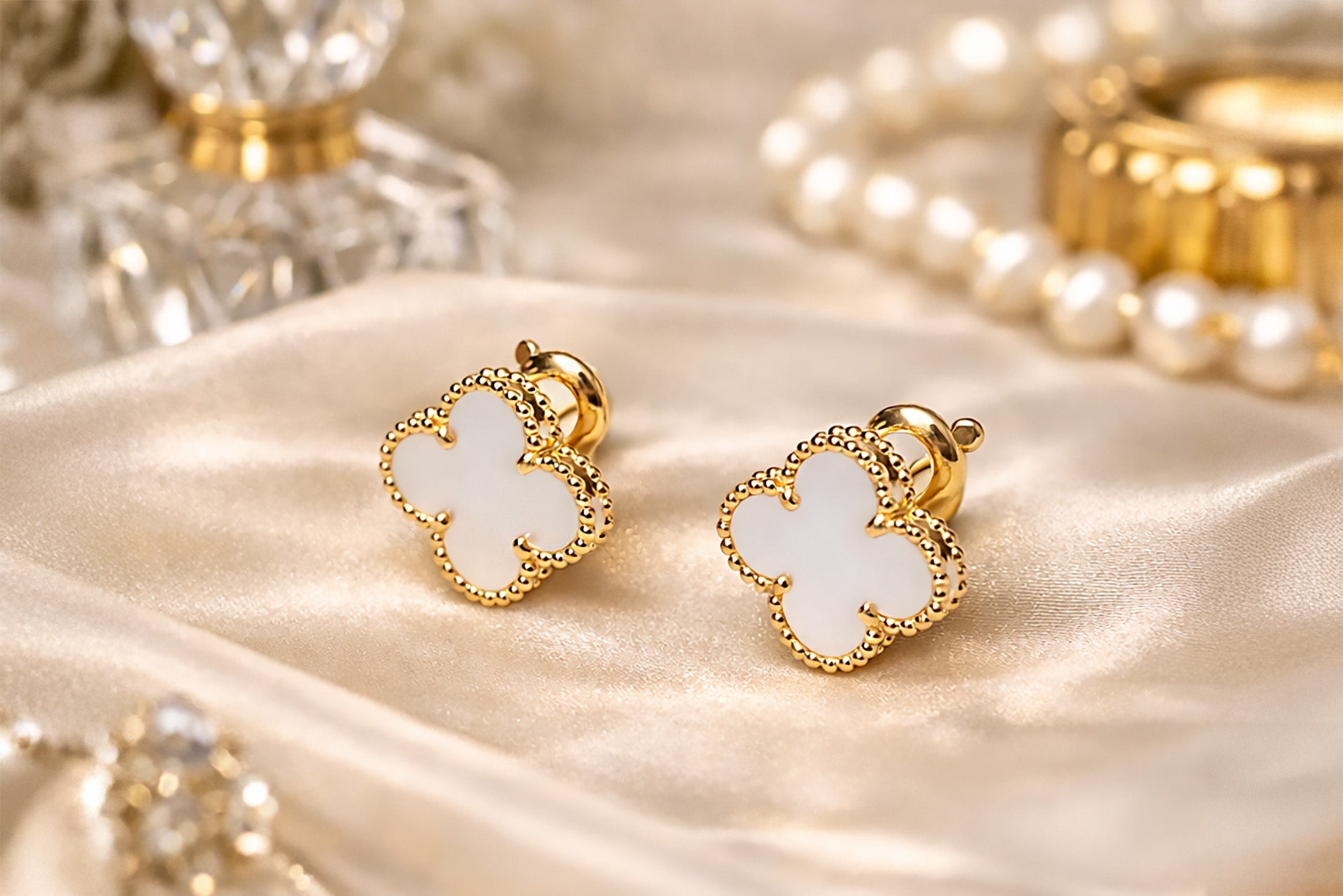


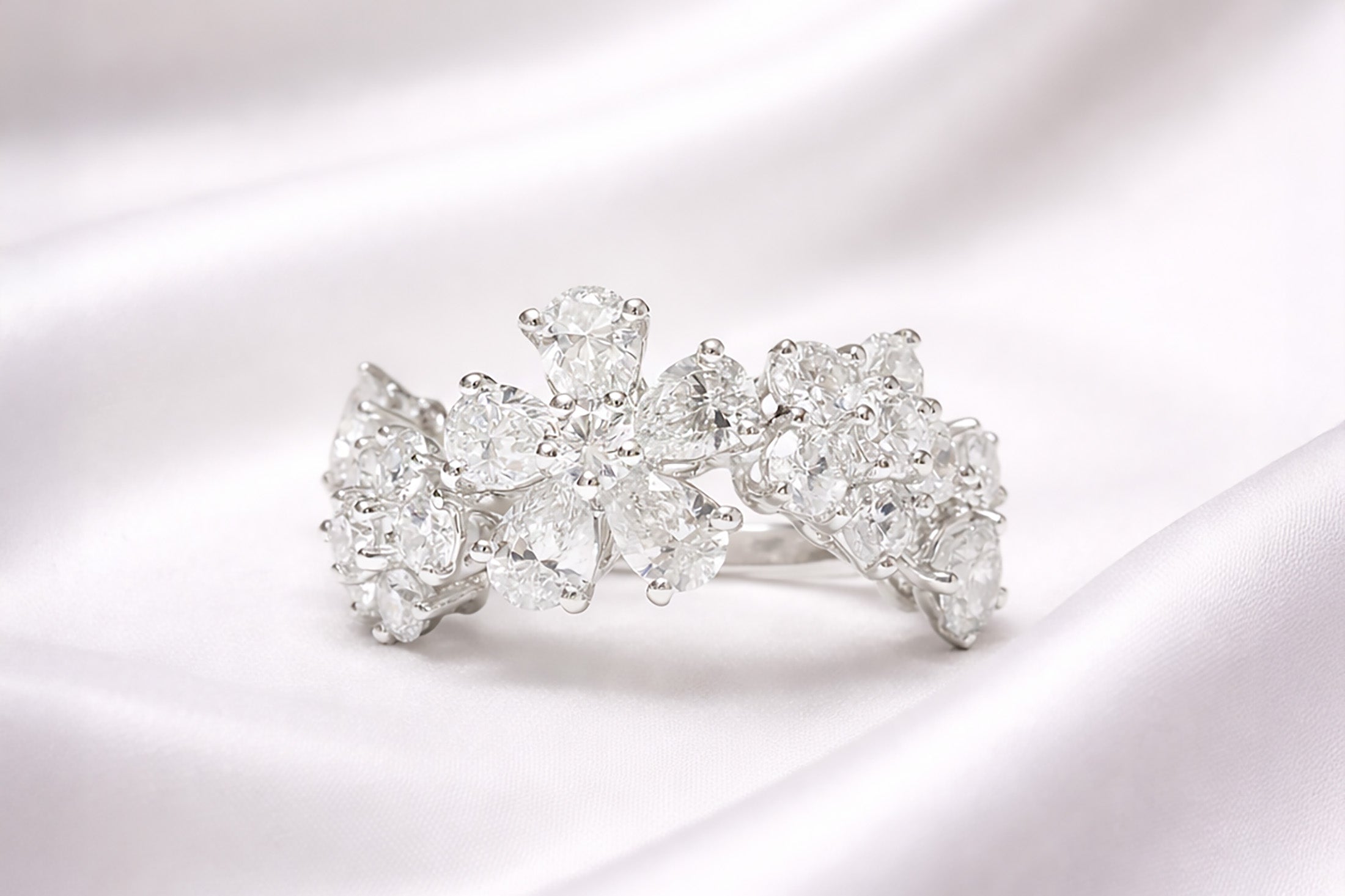
How Weight Differences Can Signal Authenticity in Van Cleef & Arpels Pieces
Check out our Van Cleef & Arpels collection!
Weight is one of the most telling clues when it comes to spotting a fake Van Cleef & Arpels piece. You can usually sense it right away, real VCA jewelry has a heft that’s hard to miss.
Van Cleef & Arpels uses solid 18k gold in their genuine pieces, which gives them a noticeably substantial feel compared to counterfeit items made from lighter materials. Fakes tend to use much lighter base metals with only a thin layer of gold on top, and it doesn’t take long to notice the difference once you know what to expect.
After handling plenty of pre-owned Van Cleef & Arpels, we’ve learned that weight tells you a lot about the materials and craftsmanship. A genuine Alhambra bracelet feels solid in your hand, never hollow or flimsy. Even when counterfeiters get the look right, they almost always miss the mark on the feel and density of real 18k gold paired with natural gemstones.
Knowing how weight varies between collections, and why it matters, gives you a serious edge when buying pre-owned. From the Alhambra’s beaded borders to the construction of clasps and settings, every gram is a clue. Here’s what to pay attention to, where weight differences pop up, and how a simple feel test can help you avoid costly mistakes.
Key Takeaways
- Genuine Van Cleef & Arpels jewelry feels heavier because it’s made from solid 18k gold; fakes use lighter, plated metals.
- Weight changes depending on the collection and design, so knowing typical weight ranges for each piece helps spot counterfeits.
- The best authentication comes from combining tactile tests with a close look at hallmarks, gemstones, and overall craftsmanship.
Why Weight Matters in Van Cleef & Arpels Authentication
Solid 18k gold has a density that’s tough for counterfeiters to fake. When you pick up a real VCA piece, the weight difference often jumps out at you, replicas usually go for lighter alloys or hollow construction to save money.
The Science of Jewellery Weight
18k gold sits at about 15.6 g/cm³, so even smaller VCA motifs should feel surprisingly weighty. If you hold an authentic Alhambra pendant, you’ll notice that reassuring heft from solid gold running through the whole piece.
Counterfeiters get stuck here. They might use gold-plated brass (which is much lighter) or try to bulk up the weight with tungsten or lead inside, but that throws off the balance and feel. Nothing really matches the even density of a real VCA piece.
The chain makes a difference too. Real VCA chains use thick, solid links, so the weight feels even from clasp to motif. If you drape the necklace over your hand, it should settle with a heavy, smooth flow, not stiff or weirdly light.
Common Weight Ranges for Authentic vs Fake Pieces
| Piece Type | Authentic Weight | Typical Fake Weight |
|---|---|---|
| Sweet Alhambra Pendant | 2.5-3.5g | 1.2-2g |
| Vintage Alhambra Pendant | 4-6g | 2-3.5g |
| Magic Alhambra Pendant | 9-12g | 4-7g |
| Vintage Alhambra Bracelet (5 motifs) | 13-16g | 6-10g |
These numbers shift a bit with chain length or motif materials, a mother-of-pearl motif weighs less than onyx, but the gold setting and chain should still feel solid.
Fakes rarely hit these weight marks. Even the “good” replicas usually come up 30–50% light, since real 18k gold is just too pricey for counterfeiters.
How Counterfeiters Get Weight Wrong
Most replicas use brass or copper with gold plating, which instantly chops the weight by more than half. If you’ve handled enough real pieces, the difference is obvious, the fake feels hollow or almost tin-can light.
Sometimes, counterfeiters try to cheat with internal weights. We’ve seen fakes stuffed with lead or tungsten, but that just makes the piece feel lopsided. Maybe the motif is heavy but the chain is feather-light, or the other way around. Real Van Cleef & Arpels jewelry keeps the weight balanced throughout.
Chains are usually the biggest giveaway. Fake chains use thinner wire or hollow links to save on materials. If you put them side by side, the real chain feels much sturdier, and the links don’t bend or squish when you pinch them.
Alhambra Collection: Weight Clues for Each Iconic Design
Each Alhambra line; Vintage, Sweet, Magic, and Pure has its own weight profile, thanks to different sizes and materials. Authentic pieces from these lines show specific weight traits that fakes just can’t seem to copy.
Vintage Alhambra: Recognizing the Heft of History
Vintage Alhambra is the classic, heavier side of the collection. A single 18K gold Vintage Alhambra pendant usually weighs between 6 and 8 grams, depending on the stone, while a five-motif bracelet comes in around 11 to 13 grams.
That beaded border around each clover motif adds a nice bit of weight. Replicas often go hollow or use cheaper gold to cut costs, so they end up feeling disappointingly light.
The 20-motif Alhambra necklace, first released in 1968, should feel like something when you wear it. Mother-of-pearl versions weigh less than onyx or carnelian, but all authentic Vintage Alhambra pieces keep to a consistent standard. The real thing never feels flimsy or insubstantial.
Sweet Alhambra: Subtle Weight Differences
Sweet Alhambra pieces are smaller, so checking weight gets a bit trickier but is still important. These dainty designs usually weigh 2 to 4 grams for pendants and 6 to 8 grams for bracelets, depending on the chain and stone.
Don’t let the size fool you. Van Cleef & Arpels sticks to 18K gold for all Alhambra lines, so Sweet Alhambra jewelry should still feel solid for its size. Fakes usually go for gold plating over base metals, making them suspiciously light.
If you’re examining Sweet Alhambra, compare the weight-to-size ratio. A real sweet clover motif, even though it’s small, should feel dense, not hollow or cheap.
Magic Alhambra and Pure Alhambra: Spotting Real vs Replica
Magic Alhambra brings in a two-sided design, so both faces are decorative, this adds complexity and makes them heavier. These reversible pieces usually weigh 20–30% more than similar single-sided Vintage Alhambra designs.
Pure Alhambra skips the gemstones and sticks with solid gold or mother-of-pearl. The all-gold versions are heavier than stone-set ones, with pendants around 8 to 10 grams. Fakes have a hard time matching this weight unless they use expensive materials, which they rarely do.
Lucky Alhambra pieces follow similar weight patterns. When we check any of these designs, we look for even weight across the chain and motifs, smooth movement, and real heft at the clasps, authentic VCA hardware adds a few grams you can actually feel.
Gold Standards: How Metal Content Impacts Authenticity and Weight
Van Cleef & Arpels only uses 18k gold and platinum, and these metals have certain weights and features that fakes can’t really pull off. The metal content directly affects how heavy a piece feels, and knowing these standards helps spot counterfeits that use cheaper alloys or simple plating.
18k Gold vs Cheap Alternatives
Real VCA jewelry uses 18k gold, 75% pure gold mixed with 25% copper, silver, or palladium. That mix gives authentic pieces a heft that’s hard to fake.
Counterfeiters usually go for gold-plated brass, bronze, or lower-karat gold. These have different weights than solid 18k gold. Brass, for example, is about 8.4–8.7 g/cm³, while 18k gold is closer to 15.5 g/cm³ (give or take, depending on the gold color).
We’ve handled plenty of fakes that just feel too light or off-balance. The way the weight is spread out matters as much as the total grams. A real Alhambra necklace feels satisfyingly heavy and balanced, something cheap materials can’t really match.
Gold-plated pieces also tend to wear down at stress points like clasps or edges, where the base metal starts to show. Real 18k gold keeps its color through and through because it’s not just a surface layer.
PT950 Platinum and Its Tell-Tale Weight
Platinum pieces bear the PT950 mark, which means 95% pure platinum. Platinum is even denser than gold, about 21.45 g/cm³, so platinum jewelry feels noticeably heavier than gold of the same size.
That weight difference is actually one of the easiest ways to spot real platinum. A platinum ring should feel much heavier than an 18k gold ring of the same size. Counterfeiters rarely use real platinum, it’s pricey and tough to work with.
Sometimes fakes use white gold with rhodium plating to look like platinum, but the weight gives them away. Even 18k white gold is only about 15 g/cm³, so it’s around 30% lighter than platinum.
If you pick up a piece marked PT950 and it feels weirdly light, that’s a red flag.
Role of AU750 and Hallmark Stamps
Every real Van Cleef & Arpels 18k gold piece has the AU750 (or just 750) stamp, usually near the VCA signature and serial number. This stamp confirms the gold’s purity and acts as a legal guarantee.
These marks aren’t just for show. They’re deeply engraved, with crisp edges you can feel. Fakes often have shallow, uneven, or poorly placed hallmarks that look stamped on instead of engraved.
VCA AU750 markings show up in different spots depending on the jewelry:
| Jewelry Type | Hallmark Location |
|---|---|
| Alhambra necklaces | Clasp tag or ring |
| Rings | Inside band |
| Earrings | Clip mechanism |
| Bracelets | Clasp or small plate |
We always check that the 750 mark matches the quality of the other engravings. If the serial number looks clean but the AU750 is fuzzy or off-center, something’s off. Real pieces keep the same engraving quality across all hallmarks, they’re done with precision tools at the same time.
Comparing Real vs Fake: Tactile Tests and Sensory Cues
Authentic Van Cleef & Arpels pieces stand out through their tactile feel, the way the weight is distributed, the substance you sense in every component. You can train yourself to spot these differences with some careful handling.
Holding the Difference: Feel, Balance, and Substance
When you hold a genuine VCA piece, the weight distribution tells you a lot. Authentic pieces use 18k gold (about 15.3–15.6 grams per cubic centimeter) or platinum, so they have a certain heft that sits differently in your hand than the gold-plated brass or base metals found in fakes.
Balance matters. A real Alhambra bracelet spreads the weight evenly across each motif, no part feels heavier or lighter than the rest. Fake bracelets often feel uneven because they use hollow or inconsistent materials.
Key tactile signs:
- Real pieces feel dense and solid, but not awkwardly heavy
- Clasps and moving parts move with a smooth, gentle resistance
- The surface texture stays consistent all over
- Real gold warms up slower than plated metals
Even small authentic pieces, like a Sweet Alhambra pendant at 2–3 grams, feel dense for their size.
Common Weight Traps in Counterfeit Van Cleef Pieces
Counterfeiters always struggle with weight. Most fake VCA jewelry falls into familiar weight ranges that give them away.
The usual trick is to use lighter base metals with heavy plating. These can feel okay at first, but the weight is never quite right. A fake motif might weigh 40–60% less than a real one.
Typical counterfeit weight issues:
| Component | Authentic Weight Range | Common Fake Weight | Detection Method |
|---|---|---|---|
| Single Alhambra motif | 3.2-3.8g | 1.5-2.5g | Compare identical size pieces |
| Vintage Alhambra bracelet (5 motifs) | 16-18g | 8-12g | Use precision scale |
| Magic Alhambra pendant | 4.5-5.2g | 2.0-3.5g | Feel density when held |
Some of the more ambitious fakes add weights inside to try to match the real mass, but this throws off the balance. When we look at pre-owned Van Cleef, we always check if the weight feels weirdly concentrated in one spot. If it does, that’s a big warning sign.
Case Study: Fake Van Cleef Bracelet vs Genuine Article
We got our hands on a counterfeit Vintage Alhambra bracelet and a real one, just to see how they stacked up. The fake came in at 11.2 grams, while the genuine article weighed a solid 17.4 grams, a difference of about 35%.
Holding both at once, the contrast was obvious. The real Van Cleef bracelet felt dense and balanced, with each of its five motifs weighing between 3.4 and 3.5 grams. The fake? Not so much. Its motifs ranged from 2.0 to 2.4 grams, and the clasp barely registered any weight at all.
Chain links told their own story. On the real piece, links were 0.8mm thick and felt sturdy. The fake’s links looked okay at a glance but measured just 0.5mm and felt flimsy, almost tinny. Flexing the genuine chain took some effort, while the fake bent with barely any pressure.
Temperature was another giveaway. After holding both for half a minute, the authentic piece stayed cool, but the fake warmed up quickly, probably thanks to cheaper, lighter materials. If you’re shopping for pre-owned Van Cleef & Arpels, just holding the piece for a bit can tell you a lot.
Design and Construction: Details That Add or Steal Weight
Van Cleef & Arpels uses specific methods that really affect weight. Counterfeiters often skip these steps, using cheaper materials or shortcuts. Everything from the way the metal joins, to the consistency of the motifs, even the packaging, these details all add up.
Joints, Jump Rings, and Prong Settings
On the real jewelry, jump rings are solid 18K gold, not hollow or plated. These little connectors between chain segments make a surprising difference in how the piece feels. Fakes usually have thin, stamped rings that barely weigh anything.
Prong settings matter too. Van Cleef & Arpels uses hefty, solid gold prongs to secure gemstones. They’re not just for show, they add weight and make the piece last. Fakes usually have thin, hollow prongs or even glue, which just feels wrong.
Where the parts are soldered together, you’ll see a difference. Genuine pieces have smooth, seamless joins, keeping the metal thick and sturdy. Fakes? You’ll spot gaps, messy solder, or abrupt changes in thickness that make the whole thing lighter and weaker.
Motif Consistency Across Collections
The quatrefoil motif is a Van Cleef signature, and they keep its size and thickness consistent whether it’s on a pendant, bracelet, or earring. That means the weight is predictable across different pieces.
There’s always a solid backing plate behind each motif on real pieces, no hollow shells. For example, a 20mm Alhambra pendant has a full gold backing, not just a thin layer.
The beaded edging isn’t just stamped or painted on. Each bead is formed individually from gold. Over a whole piece, these little details add up, making real Van Cleef jewelry feel noticeably heavier than the copies.
Packaging and Its Influence on Perceived Weight
Van Cleef & Arpels packaging looks and feels high-end, but don’t let it fool you. The cream-colored boxes are sturdy, and the velvet inside is nice, but this is just for presentation. It’s not proof of authenticity.
Some buyers think heavy packaging means real jewelry. Honestly, packaging can be bought or copied separately. The certificate cards, dust bags, and boxes all have their own standards, but you should always check the actual jewelry for weight and quality.
Gemstones, Beading, and Finishing: How Material Choice Alters Weight
The materials Van Cleef & Arpels uses make a real difference. Genuine gemstones are heavier than fakes, and the way the piece is finished adds weight too. Authentic beading, pearls, and the brand’s signature stone-setting techniques all create weight patterns that fakes rarely match.
Gemstone Quality and Authenticity Signals
Real gemstones just feel heavier. Stones like citrine, amethyst, and tiger eye have a natural heft because of their mineral makeup. When you pick up a genuine Van Cleef piece with these stones, you can sense the quality.
The brand is picky about its stones. A real tiger eye bead with that silky shimmer will always outweigh a glass copy. Natural inclusions and density matter, a turquoise or lapis piece with authentic stones is much heavier than a synthetic one. Lab-created stones just don’t have the same minerals, so they’re lighter.
Van Cleef’s mystery set technique, where gems are set without visible prongs, also requires stones with the right weight and strength.
Impact of Ornamental Features: Pearls, Beads, and More
Take the Perlée collection. Each gold bead is solid, not hollow or filled. When you tap them, they don’t sound empty. Counterfeits often skimp here, and you can feel it.
Van Cleef uses real freshwater pearls, which are heavier than shell pearls or plastic. A genuine pearl necklace has some weight, thanks to the layers of nacre built up over time. Fakes use lightweight imitations that just don’t compare.
Sometimes Van Cleef uses unique materials like lava beads or wood in limited editions, and even these follow strict weight rules. Leather cords don’t add much, but you’ll still notice the difference in overall feel.
Spotting Synthetic and Glass Imitations
Glass beads weigh less than quartz crystal or other real stones. That’s why weight is such a handy test. We’ll compare a suspect piece to a known authentic one of similar size, quartz just feels heavier than glass.
Glass fakes often have air bubbles, making them even lighter and giving them a hollow feel. Real stones might have inclusions, but never that hollowness. Under magnification, you can spot these things, but your hand will usually tell you first.
Lab-grown stones can be close to natural ones chemically, but they’re usually missing trace minerals that add density. When you line up several pieces from the same collection, these differences become obvious.
Frequently Asked Questions
What subtle weight characteristics should I look for to spot a genuine Van Cleef & Arpels piece?
Real Van Cleef & Arpels pieces just feel right, solid, balanced, and made from 18k gold. The weight is even, never top-heavy or awkward.
We’ve noticed that fakes use hollow construction or cheap alloys, making them feel lighter. If you’ve handled the real thing, the difference jumps out at you.
Clasp mechanisms matter too. If the clasp feels flimsy or strangely light compared to the rest, that’s a warning sign.
Can the heft of a jewelry item be a reliable clue to its authenticity, specifically for Van Cleef & Arpels collections?
Absolutely. Heft is a solid clue. Van Cleef uses solid metals and quality stones, so each design falls within a certain weight range.
For example, the Alhambra collection is consistent. A 20-motif necklace in 18k gold should be around 32-35 grams. A single Alhambra pendant? About 3-4 grams, depending on the stone.
Fakes rarely hit these numbers. They’re almost always lighter, thanks to gold-plated base metals or hollow construction.
What's the deal with weight discrepancies in Van Cleef & Arpels jewelry, and how does it relate to the real McCoy?
Weight differences show up because fakes don’t use real materials. Authentic pieces are 18k gold, stamped “Au750,” and have a density you can’t really fake cheaply.
We’ve seen fakes that look convincing, but as soon as you pick them up, they’re just too light. Sometimes counterfeiters add weights, but it often feels unnatural.
The real thing keeps its weight consistent across production. If you have a few of the same design, they should all weigh nearly the same, give or take a fraction of a gram.
Are there specific weight benchmarks for authentic Van Cleef & Arpels jewelry items that collectors should know about?
Collectors should know the typical weight ranges. A vintage Alhambra bracelet in yellow gold is usually 6-8 grams. The Magic Alhambra long necklace comes in around 25-28 grams.
If you’re serious, get a small jewelry scale. Real pieces will always fall within expected ranges, and anything way off deserves a closer look.
Sweet Alhambra bracelets weigh about 2-3 grams, they’re delicate. Medium Frivole flower earrings are usually 4-5 grams per pair, with slight variation depending on the center stone.
How can the weight of a Van Cleef & Arpels piece help in distinguishing a counterfeit from the genuine article?
Comparing weight gives you hard data that’s tough to fake. We start by weighing the piece and checking it against known weights for that design.
If it’s more than 10% off, that’s suspicious. Real Van Cleef pieces use solid construction, while fakes cut corners with hollow parts or cheap metals.
We also look at how the weight matches the size. If a piece looks right but feels surprisingly light, that usually means it’s not the real deal.
Could you give a rundown on understanding the significance of weight for assessing Van Cleef & Arpels jewelry authenticity?
Weight is a key checkpoint when you're trying to spot real Van Cleef & Arpels jewelry. The brand never skimps on materials, so their pieces have a certain heft, thanks to solid gold and carefully chosen gemstones.
We look at weight as one piece of the whole puzzle. Sure, it can't prove authenticity by itself, but when you pair it with hallmark checks and a close look at craftsmanship, you start to get a much clearer sense of what's genuine.
It's tough for counterfeiters to get the weight just right. If they cheap out on materials, the jewelry feels too light. If they try to bulk it up, the balance feels off, almost awkward. So, weight kind of becomes a silent storyteller, pointing out whether something fits Van Cleef & Arpels' high standards or not.