

How to Identify Stone Replacement in Van Cleef & Arpels Jewelry
Check out our Van Cleef & Arpels collection!
Van Cleef & Arpels pieces are prized for their exceptional craftsmanship and carefully selected stones, but the secondary market brings real concerns about authenticity.
Spotting stone replacements means looking closely at the quality of materials, color and texture consistency, setting precision, and whether everything matches the Maison’s famously high standards. Each stone type, mother-of-pearl, carnelian, and so on, has its own quirks that original pieces always seem to show off.
The difference between an original stone and a replacement can seriously affect value and even how the piece feels to wear. Replaced stones often stand out: maybe the undertones just don’t match, the polish isn’t as smooth, or the setting looks a bit off compared to Van Cleef & Arpels’ usual perfection. Getting these details right is key for collectors who want to avoid expensive mistakes and keep their jewelry truly special.
If you’re eyeing a piece to buy or just want to double-check your own collection, knowing what to look for is crucial. Here’s a breakdown of the visual clues and technical details that help you spot authentic stones versus replacements.
Key Takeaways
- Authentic Van Cleef & Arpels stones have consistent color, high-quality polish, and specific features that line up with the Maison’s strict standards
- Replacements often show mismatched undertones, odd banding, lower surface quality, or settings that just aren’t quite right
- You can’t just look at the stones, check hallmarks, serial numbers, craftsmanship, and paperwork too
Why Stone Authenticity Matters in Van Cleef & Arpels Jewellery
Replaced stones in Van Cleef & Arpels jewelry can reduce resale values by 30-50%, and may also expose buyers to financial risks. The distinction between original and replacement stones goes beyond appearance, it can impact the piece’s structural integrity and its legal standing in resale markets.
Risks of Stone Replacement
Stone replacements create authentication headaches that never really go away. Swapping out original stones, even with good ones, breaks the Maison’s careful design balance. Van Cleef & Arpels picks stones with exact weights and sizes, so everything sits just right in pieces like Alhambra bracelets.
Replacement stones often don’t fit perfectly. The bezels were shaped for stones with exact dimensions, so substitutes can wobble, leave gaps, or even fall out. Sometimes, we see turquoise or malachite replacements that don’t match the original density, making the whole piece feel off-balance.
There’s also the legal side. Selling jewelry with replaced stones as “authentic” Van Cleef & Arpels is basically fraud in many places. Dealers who miss replacements can get sued by buyers, and private sellers might end up in court.
Value Impact of Non-Original Stones
Van Cleef & Arpels jewelry holds its value because of those top-tier stones. Swap them out, and the price drops, fast.
Typical value impacts from stone replacement:
| Type of Replacement | Value Loss |
|---|---|
| Single stone in multi-motif piece | 15-25% |
| Multiple stones or center stone | 30-50% |
| Full restringing with mixed stones | 40-60% |
Original-stone Van Cleef pieces usually go up in value, sometimes even beating new retail prices by 5-10% a year, especially for discontinued lines. Pieces with replacements? They flatline or lose value. Auction houses and luxury resale sites often won’t even take them, or they’ll sell them with warnings that drag down the price.
Look at something like an Alhambra pendant: authentic mother-of-pearl has a special luster and depth that comes from Van Cleef & Arpels’ own suppliers. Generic mother-of-pearl from a repair shop just doesn’t have the same look or story, it makes the piece feel like a compromise, and collectors can tell.
Spotting Red Flags Early
If you see different stone characteristics across motifs, start asking questions. In real five-motif Alhambra bracelets, malachite banding should look pretty similar in each clover. If one motif looks lighter or the patterns are off, that’s a red flag.
Examine how the stone fits in its bezel under proper lighting. Authentic stones sit flush against the gold, without any gaps. Replacements often leave small spaces, which can sometimes be filled with glue that yellows over time.
Look at the polish. Van Cleef & Arpels gives stones a uniform, glassy shine, onyx should look identical in every motif. If one stone is dull among shiny ones, it’s probably a replacement that wasn’t finished right.
If you can, compare the piece’s weight to official specs. If a bracelet feels lighter than it should, someone might’ve swapped in less dense stones.
Signature Stones and Iconic Collections
Van Cleef & Arpels built its reputation on picking the right stones for each collection. Knowing these signature materials helps you spot when someone’s swapped in a lower-grade or non-authentic stone.
Alhambra Stones and Variations
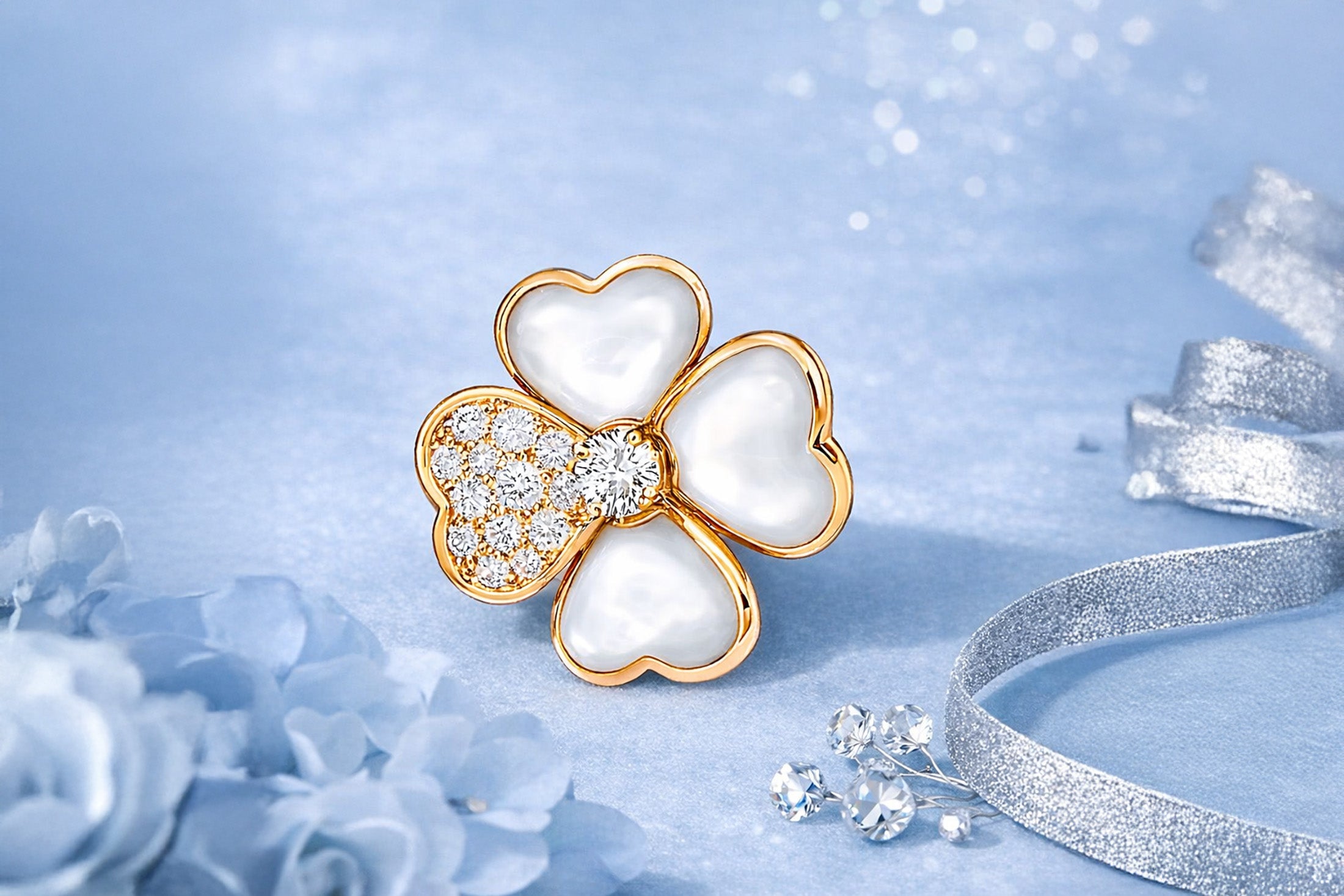
The Alhambra line, launched in 1968, is all about the four-leaf clover shape, done in a range of stones. Van Cleef & Arpels uses mother-of-pearl, onyx, carnelian, malachite, turquoise, chalcedony, tiger eye, and agate in Alhambra pieces.
Each stone type has its own vibe. Mother-of-pearl glows softly with natural iridescence. Onyx is pure, deep black. Carnelian brings warm orange-red, and malachite has those unmistakable green bands.
The Maison picks stones for their optical qualities. Chalcedony, for example, can be opaque, semi-transparent, or translucent, Van Cleef & Arpels chooses pieces where the transparency lets a bit of skin show through, making each piece feel personal.
Stones are cut to fit the clover shape perfectly. If you see any gap between the stone and the gold beaded border, that’s a sign something’s off, maybe a replacement or even a fake.
Sweet Alhambra, Magic Alhambra, and Vintage Alhambra Differences
Vintage Alhambra is the classic design, with motifs around 15mm. It sticks closest to the original 1968 look.
Sweet Alhambra shrinks the clover down, making daintier pieces. The tiny stones mean even small mistakes stand out, replacements are especially obvious here.
Magic Alhambra mixes big and small clovers in one piece. Larger motifs can be 16mm or more, while the small ones are Sweet Alhambra-sized. Each size needs its own precise stone cutting, so mismatches are easier to spot.
No matter the size, the stone quality should stay the same. If you see color, clarity, or finish issues in any Alhambra line, it’s a problem.
Perlée and Mystery Set Stones
The Perlée collection is known for its gold beading. Some Perlée pieces have gemstones, and those stones meet the same standards as Alhambra. The diamond-set Perlée pieces only use diamonds from D to F color and IF to VVS2 clarity.
Mystery Set pieces are a technical marvel. Created in 1933, this technique sets stones so close together that you can’t see the metal. The stones seem to float, no prongs, no gaps.
Mystery Set stones have grooves underneath that slide onto gold rails. Replacing a stone in these pieces is nearly impossible without taking the whole thing apart. So, you’re less likely to see partial replacements here, but if someone tries, it takes a real expert.
Notable Gemstone Types: Tiger Eye, Onyx, Malachite, and Diamonds
Tiger eye has chatoyancy, a moving band of light across the surface. Authentic Van Cleef & Arpels tiger eye is golden-brown with crisp stripes, and the light band should move smoothly as you tilt it.
Onyx is jet black, no color variation, no visible inclusions. It should have a smooth, high-gloss finish. Replacement onyx sometimes looks grayish or uneven.
Malachite shows clear, concentric green bands. Van Cleef & Arpels picks malachite with strong, symmetrical patterns, if the banding is muddy or random, that’s a bad sign.
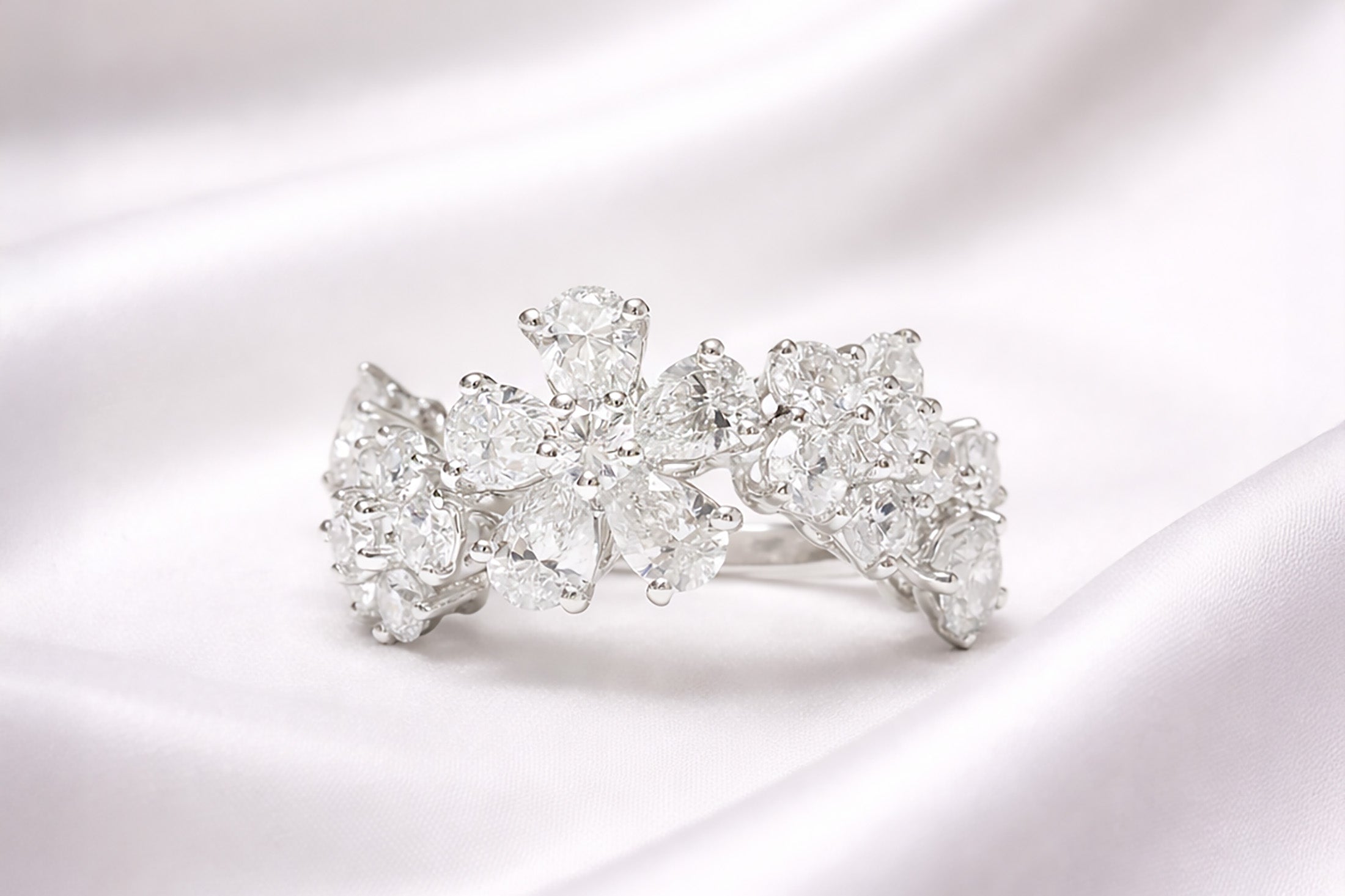
Van Cleef & Arpels diamonds always meet strict GIA standards: D to F color, IF to VVS2 clarity. You shouldn’t see inclusions under 10x magnification, and the color should be icy white. Lower-quality diamonds point to replacements or authenticity issues.
Stone Quality and Selection in Authentic Van Cleef & Arpels Pieces
Van Cleef & Arpels sets the bar high for gemstone selection, using a two-step process: measurable criteria and expert visual checks. Their standards for diamond grading, colored stone selection, polish, and matching make originals tough to copy.
Diamond Grading and The 4Cs
Van Cleef & Arpels uses the 4Cs (color, clarity, cut, carat) but takes it further. Only diamonds graded D, E, or F make the cut. Center stones are always D or E grade, the whitest available.
Clarity is just as strict: only FL (Flawless) through VVS2. That means no inclusions, or ones you can barely spot under 10x magnification.
Cut must be “excellent” or “very good,” with perfect symmetry and polish. A bad cut wastes even the best color and clarity. Center stones start at 0.30 carats, so they have presence and sparkle.
After checking the specs, gemologists look at each diamond to make sure it has that signature Van Cleef & Arpels brilliance. Some stones pass the numbers but just don’t have the right look, and they get rejected.
Coloured Gemstones: Hue, Saturation, and Luster
Colored stones are judged on saturation (how intense the color is), tone (light or dark), and how even the color looks.
Malachite needs bold, clear banding with deep green shades. Each stone’s pattern is unique, but the color and silky shine should be consistent.
Onyx should always be deep, uniform black, no spots, no color shifts. The surface should be glassy and opaque from every angle. Tiger’s eye, lapis lazuli, and turquoise each have their own markers, too.
Mother-of-pearl has to show even, rich nacre and a glowing luster, not the flat, chalky look of lower grades. Carnelian is picked for smooth color and a bit of natural shimmer. Every colored stone gets a close look to make sure it fits the collection’s standards.
Visual Perfection and Surface Evaluation
Surface quality is a big deal. Experts check stones under 10x magnification for scratches, chips, or polish marks. Any flaw that affects how light bounces off the surface is a problem.
A perfect polish lets the stone shine, creating that signature Van Cleef & Arpels sparkle. Even small flaws scatter light and dull the effect.
In pavé settings, like Perlée bracelets, every tiny diamond is checked just as carefully as the big ones. Even small surface issues can get worse over time or weaken the piece.
The finish should look flawless in normal light. Stones with even minor surface problems are rejected, no matter how well they score elsewhere.
Stone Matching Across Motifs
Pieces with multiple stones, especially in lines like Magic Alhambra, need to match across the board. Each stone in a five-motif bracelet should have similar color, pattern, and visual weight.
Key matching criteria:
- Color consistency: Stones should look like they belong together, not like random picks
- Pattern flow: Malachite bands or turquoise matrix should complement each other motif to motif
- Size: Stones must fit their bezels perfectly, no gaps
- Finish: Shine and polish should be uniform everywhere
The quatrefoil design in Alhambra pieces calls for symmetry in each motif. All four petals need to match, whether it’s mother-of-pearl glow, onyx depth, or carnelian’s shimmer.
Gold beading around each setting should be even and consistent. If you see uneven beads or height differences, it might mean replacements or a fake. The way stones are placed and secured should always reflect the Maison’s obsession with technical perfection, anything less, and you’re right to be suspicious.
Craftsmanship, Settings, and Signature Techniques
Van Cleef & Arpels relies on setting methods that are tough to duplicate, especially when it comes to replacing stones. The way they space metal beads, the exactness of prongs, and their signature mystery set all give away whether stones are original or swapped.
Maison's Prong and Mystery Set Techniques
Van Cleef & Arpels prong settings are almost unnervingly precise, prong thickness, height, and angles all match. Each prong tapers off cleanly, no rough file marks or weird lumps. The metal hugs the stones with just the right pressure, never too tight (which could crack a stone) or too loose (which lets it wiggle).
Their mystery set technique is wild, no metal visible between stones. The gems just float in neat rows, facets lined up perfectly. They cut grooves into each stone’s pavilion and slide them onto hidden rails. Not exactly something you can do at home.
Replacement stones usually don’t live up to this level. You’ll notice off-kilter facets, little gaps, or stones sitting a hair higher or lower. The original mystery set looks like a smooth, unbroken surface where light just glides across. Swap in a stone and, even if it’s a good job, it breaks up the flow.
Bead Count and Motif Consistency
The Alhambra motif has exactly 40 gold beads around each clover, 10 per petal. They’re spaced and sized like clockwork, creating a tidy border. Counterfeits or bad repairs often mess up the count or spacing.
We always check bead diameter under magnification. Originals have matching beads across every motif in a piece. If a stone’s been replaced and reset, you might spot:
- Beads of different sizes or shapes
- Gaps where a bead went missing
- Beads sitting higher or lower than the rest
- Odd spacing
Perlée collections have a line of gold beads along the edges. The rhythm should feel steady and even, not broken up or irregular like after a repair.
Quality of Stone Settings and Secure Mounts
Original VCA settings leave no space between the stone and its bezel. The gold wraps the stone’s edge all the way, with even pressure. Jewelers sometimes can’t match this fit if they’re working with a replacement stone that’s even slightly off.
Take a look underneath if you can. VCA polishes even the parts you don’t see. Replacement jobs often leave tool marks, rough patches, or globs of solder on the back.
The maison sets stones with tension that stops rattling but doesn’t risk cracking. Tap the piece gently near your ear. Originals sound solid. Loose replacement stones make little clicks or rattles. Settings should also sit flush with the rest of the metal, no raised bits or gaps where dirt collects.
Identifying Stone Replacement: Key Visual Cues
Spotting replaced stones in Van Cleef & Arpels jewelry takes a sharp eye for color, setting, and craftsmanship. A handful of visual clues usually tip you off to modifications.
Mismatched Colour, Clarity, or Shape
Original VCA pieces are all about matched stones. We look for subtle differences in color or tone between stones that should be identical. Even tiny variations can mean a stone’s been swapped.
Clarity is another giveaway. Van Cleef is picky about inclusion patterns and transparency. If one stone is way cleaner (or cloudier) than the rest, it stands out.
Shape matters, especially in the Alhambra or mystery-set designs. We measure outlines and facet angles. Replaced stones often have slightly off proportions or cutting styles, pretty obvious in pieces where precision is the whole point.
Discrepancies in Bead Work or Setting Edges
Van Cleef & Arpels has a distinctive style of beading and milgrain around settings. Originals have beads that match in size and spacing. Replacement work usually shows beads that are off-rhythm or uneven.
We check prong tips and gallery work up close. Factory settings have smooth, rounded prongs that blend into the metal. Resetting stones leaves marks, flattened prongs, excess solder, or little nicks.
Where the stone meets the metal is key. Originals have no gaps or weird angles. If the metal’s shinier or the texture looks off around one stone, it’s probably been worked on.
Signs of Workmanship Differences
Van Cleef’s finishing is top-notch everywhere, even where you wouldn’t look. We compare polish quality, if one area’s duller or shinier, that’s a clue. Fresh metal from a repair often stands out against the older patina.
Tool marks can’t hide. Original work is clean. Replacement jobs leave file marks, uneven burnishing, or rough textures, especially underneath.
Symmetry often takes a hit when stones get replaced. A swapped stone might sit higher or lower, making the surface uneven. We check from all angles to spot these subtle differences.
Microscopic and Loupe Inspections
A 10x loupe is your friend here. We check each stone’s girdle for chips or scratches from removal and resetting. Fresh marks along the edge mean recent work.
Under magnification, we look at the setting cement. Van Cleef uses specific stuff and applies it cleanly. If you spot extra glue, bubbles, or modern epoxies, that’s a red flag.
Microscopic checks on facet junctions and polish direction help too. Originals have consistent polish and crisp facet meets. We also look for cleaning damage or residue from sloppy repairs, Van Cleef experts can spot these instantly.
Examining Hallmarks, Serial Numbers, and Metal Purity Marks
Genuine Van Cleef & Arpels jewelry carries hallmarks, serial numbers, and purity marks in reliable spots. These details often reveal if someone’s swapped stones or altered the piece. The style, placement, and sharpness of these marks separate real from fake or tampered jewelry.
Where to Locate Authentic Hallmarks
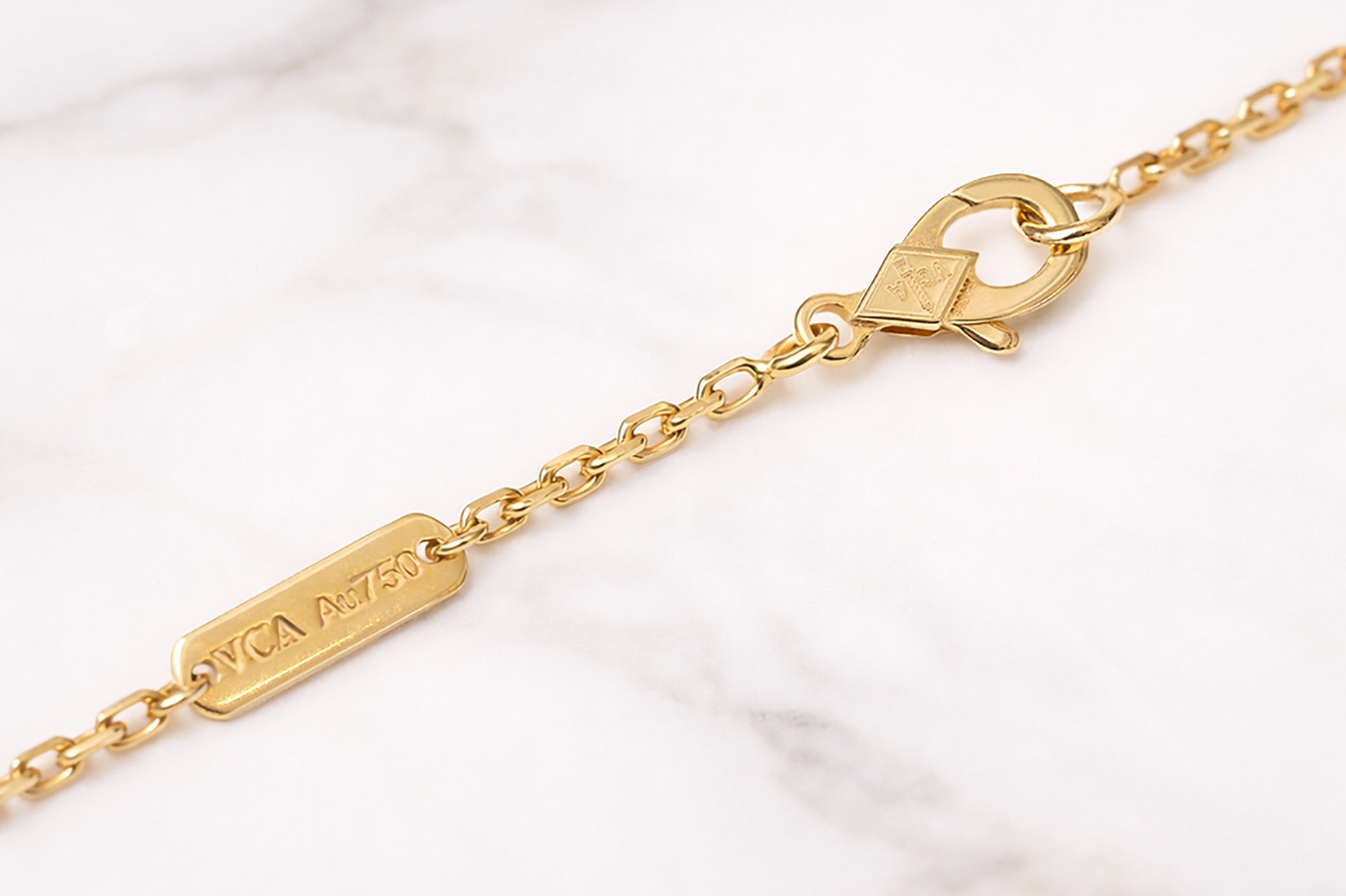
Van Cleef & Arpels puts hallmarks in predictable places. For Alhambra necklaces and bracelets, look for stamps on small plates or rings next to the clasp.
Rings have them inside the band, though wear can fade them. Earrings show marks on the closures or clips, sometimes split between left and right.
You’ll usually see the maker’s mark (“VCA” or “Van Cleef & Arpels”), the gold or platinum stamp, and the serial number grouped together. If stones might’ve been replaced, check these spots. Re-engraving, smoothed metal, or crooked stamps can mean tampering.
Common hallmark locations:
- Necklaces: clasp rings or metal tags
- Bracelets: near the clasp
- Rings: inside the band
- Earrings: on the backs or posts
Understanding 'VCA', 'Van Cleef & Arpels', and Metal Marking Norms
The signature reads “VCA” or the full “Van Cleef & Arpels.” If it just says “Van Cleef,” that’s a problem.
They only use 18k gold, marked “750” or “Au750”, that’s 75% pure. Platinum pieces say “950” or “Pt950.” If you see 14k (585) or 10k (417), it’s not authentic.
The French maker’s mark is a lozenge with VC and A flanking the Place Vendôme column. Sometimes you’ll spot the eagle’s head, France’s official 18k gold mark.
After stone swaps, some jewelers try to re-stamp the piece, but often do it poorly. Look for sharp, even letters and numbers. The Au750 and VCA marks should match the style of other pieces from the same era.
Serial Numbers: Consistency and Placement
Every Van Cleef & Arpels piece gets a unique serial number, letters and numbers mixed. These sit near the brand signature and purity marks, usually on the same tag or clasp.
The engraving should feel deep and crisp, not like it was scratched on. You can feel it with your fingertip, clean, even, and not likely to wear off.
Serial numbers show up with the other hallmarks. For Alhambra, check the clasp. The number helps trace the history, and boutiques can verify it.
If you see weird engraving depth, mismatched fonts, or numbers that just don’t fit the piece’s age, be skeptical. Real serial numbers are always as sharp as the other marks.
Spotting Fake or Tampered Marks
Counterfeits and bad repairs often mess up the hallmarks. Fakes have blurry stamps, uneven letters, or shallow marks that look pressed, not engraved.
Check if the marks line up. Real Van Cleef & Arpels stamps are straight, centered, and evenly spaced. Crooked or crowded letters, or wobbly lines, suggest fakes or re-stamping after a repair.
Red flags:
- No 750 or Au750 gold mark
- Stamps in the wrong place for that jewelry type
- Different engraving depths in the same cluster
- Missing or faint hallmarks on newer pieces
- Serial numbers that don’t fit the brand’s format
Run your fingernail over the marks. Genuine ones are precise and nearly flush. If the metal around them looks polished differently or reworked, someone may have altered it after a stone swap. Van Cleef’s engraving is so sharp that any oddity stands out once you know what to look for.
Packaging, Documentation, and Provenance
Van Cleef & Arpels packaging is hard to fake, and documentation can confirm if stones are original. Provenance from boutiques and ownership records adds another level of trust when you’re checking stone authenticity.
Signature Packaging and What To Expect
Van Cleef & Arpels packages pieces in signature deep navy blue boxes with a matte, weighty feel.
The outer box should have clean gold foil stamping reading “Van Cleef & Arpels” in the right font, never blurry. Inside, there’s a cream suede or velvet pouch with gold drawstrings and the VCA monogram.
Jewelry sits in fitted inserts, suede-lined trays or cushioned slots that hold each piece securely. Even the packaging shows craftsmanship: tight corners, precise edges, matching color.
If a piece has replaced stones, often the original packaging is missing. That’s not always a red flag; plenty of legit vintage pieces lost their boxes over the years. Still, missing packaging means you’ll need to lean on other ways to authenticate.
Papers, Certificates, and Sales Records
Original paperwork is the best proof that stones haven’t been swapped. Van Cleef & Arpels gives detailed receipts, certificates of authenticity, and sometimes a warranty card.
Authentic VCA Documentation:
- Sales receipt with item details
- Certificate of authenticity with serial number
- Care booklet
- Warranty card (for newer pieces)
- Gemstone specs (for diamonds)
The certificate’s serial number should match the engraving. If not, something’s off, either fake papers or undocumented stone replacement.
Receipts list the exact piece and stones, like “mother-of-pearl” or “onyx.” If your piece has different stones than the receipt, a swap happened. Sales records also help with dating, since some materials were only used in certain eras.
Boutique Verifications for Stone Authenticity
Van Cleef & Arpels boutiques offer authentication services that can spot replaced stones for sure. Staff use magnification and check against brand archives.
Boutique experts know which stones belong in which collections and years. If your Alhambra has turquoise but the serial number dates to a time when that wasn’t used, that’s clear proof of replacement.
Book ahead, especially at flagship stores. Bring any paperwork you have, it helps them cross-check records.
Boutiques can provide written confirmation of authenticity and stone configuration. This is handy for insurance, resale, or estate planning. Some charge for detailed reports, but it’s worth it when you’re dealing with expensive pieces.
Ownership History and Value Implications
Clear provenance, just solid, documented ownership history, gives buyers real confidence that stones are original. Pieces bought straight from Van Cleef & Arpels boutiques or reputable fine jewellery retailers usually come with the most reliable background.
Single-owner pieces with paperwork from day one? Those are the gold standard. Once jewellery starts passing through several hands, especially through informal channels, the chance of undocumented modifications or swapped stones goes up. Every undocumented transfer is basically an open door for unnoticed changes.
Provenance Documentation:
- Original boutique purchase receipt
- Service records from authorised centres
- Insurance appraisals with detailed descriptions
- Auction house certificates (for estate pieces)
Stone replacement can seriously hit resale value, even if the new stones look great. Collectors and boutiques care a lot about originality, so modified pieces typically sell for 30 to 50 percent less than untouched ones. If you can prove the stones are original, especially with rare materials like certain vintage turquoise or coral that Van Cleef & Arpels doesn’t use anymore, you might add thousands to the value.
Frequently Asked Questions
You can often spot stone replacements in Van Cleef & Arpels pieces by looking for mismatched colour saturation, odd setting details, little gaps between stones and bezels, or inconsistencies in the paperwork. Sometimes, weight differences, professional gem testing, or just a careful look at how the stones are mounted can reveal the truth.
What are the telltale signs that a gemstone in my Van Cleef & Arpels piece might not be original?
Colour inconsistency is usually the first giveaway. Say you’ve got an Alhambra necklace with five malachite motifs, if one petal looks lighter or the banding’s off, that’s suspicious.
Original VCA stones match across all motifs. Mother-of-pearl should have the same lustre and nacre depth; if one clover looks flat or chalky while the others glow, someone probably swapped it.
Check how the stone fits inside the gold bezel. Originals sit flush, no gaps between stone and metal. Replacement stones often leave tiny spaces because they just weren’t cut to VCA’s specs.
Surface quality counts. VCA uses flawless stones with even polish. If you see scratches, chips, or dull spots on just one stone, while the rest look pristine, that’s a red flag.
Can I spot a replaced stone in vintage Van Cleef & Arpels jewellery by examining the setting?
The gold beads around each Alhambra motif should be even in height and spacing. If a stone’s been replaced, jewellers sometimes disturb these beads, leaving them a bit uneven compared to untouched motifs.
Take a look at the bezel prongs or the gold border. Original settings have wear that matches the piece’s age. If you see a freshly polished setting around one stone but natural patina on the rest, someone’s probably worked on it.
Solder marks can tell you a lot. VCA’s original soldering is nearly invisible, but replacement work sometimes leaves faint lines or slight colour changes in the gold.
Flip the piece over. Original backs have consistent finishing and engraving depth. If one motif’s back looks different or has odd tool marks, that stone probably came out at some point.
What should I look for in the paperwork when verifying the authenticity of stones in my Van Cleef & Arpels jewellery?
Original certificates from Van Cleef & Arpels list details about the stones, type, colour grade for diamonds (D, E, or F), clarity (FL to VVS2), and carat weights. These should match what’s actually in the piece.
Check that the serial number on the paperwork matches the engraving on your jewellery. The certificate should also mention the specific model and production year. Any mismatches could mean fake papers or that someone swapped parts between pieces.
Service records help too. If your vintage piece has repair or maintenance documentation, see what was done. VCA boutiques log legitimate service, and they’ll note if stones were replaced with authentic materials.
Missing paperwork isn’t always a dealbreaker for vintage pieces, but if the documents you do have don’t line up with the jewellery, that’s cause for concern. Original certificates use specific fonts and security features that fakes rarely get right.
Is there a way to tell if a stone has been swapped out in my Alhambra necklace without heading to a professional?
Line up all the motifs under natural daylight. Hold the necklace so each clover gets the same light and look for colour differences. Original sets use stones from the same batch, they should look like siblings, not distant relatives.
Run your finger along where each stone meets the gold. You shouldn’t feel any gaps or height changes. If one stone sits higher or lower in the bezel, that’s not typical for VCA.
Look at the chain connections. Jewellers sometimes leave tiny scratches or marks on the metal when replacing stones. Originals have consistent finishing throughout.
Try snapping photos of each motif in the same lighting and compare them side by side on your phone. Sometimes, differences in colour or lustre show up more clearly in photos, especially with materials like turquoise or carnelian.
How does the weight of my Van Cleef & Arpels piece factor into detecting a stone replacement?
Different stones have different weights. Malachite is heavier than plastic or resin, so a swapped stone can make the piece feel lighter. You might not notice a gram or two, but your hand knows what feels right.
If you’ve got documentation listing the original weight, compare it. VCA sometimes includes total weight in certificates or service records. If you see a difference of more than half a gram, material changes might be to blame.
In multi-stone pieces, each motif should feel balanced. If you hold an Alhambra bracelet and one clover feels lighter than the rest, that stone might be a replacement made from a lighter material.
The gold settings themselves have a consistent weight. If someone replaced a stone and reworked the bezel, they might’ve removed a bit of gold, which affects both the stone and the overall piece weight.
What professional techniques are used to determine if the stones in my Van Cleef & Arpels collection are genuine?
Gemologists usually start with spectroscopy. This helps spot a stone's chemical makeup and quickly shows if your onyx is actually chalcedony, or just dyed glass. Every material carries its own spectral fingerprint, and honestly, you can't fake that.
They'll grab a microscope, zooming in at 10x to 40x magnification. Here, they're searching for inclusion patterns, checking crystal structure, and eyeing surface details. Natural stones reveal inclusions that line up with their geological origins, while synthetics tend to show telltale signs of lab growth.
UV light comes next. It exposes treatments and imitations in a flash. Natural turquoise glows differently than dyed or stabilized stuff. Mother-of-pearl lights up with a fluorescence that plastic just can't mimic.
Refractometry gets involved to see how light bends through the stone. Each gem has its own refractive index, think of it like a gemstone's ID number. This test is gentle on your piece but gives a pretty clear answer about what you're holding.
Experts don't stop at the stone. They'll check the setting with specialized tools, look at solder joints, test metal composition with XRF analysis, and compare engraving fonts and depths to authentic pieces. Even the way the stone's mounted can hint at whether it's original or a later addition.
Love Hermès? See More from Rome Station
Add us to your Preferred Sources on Google to see our newest Hermès guides and insider tips first.