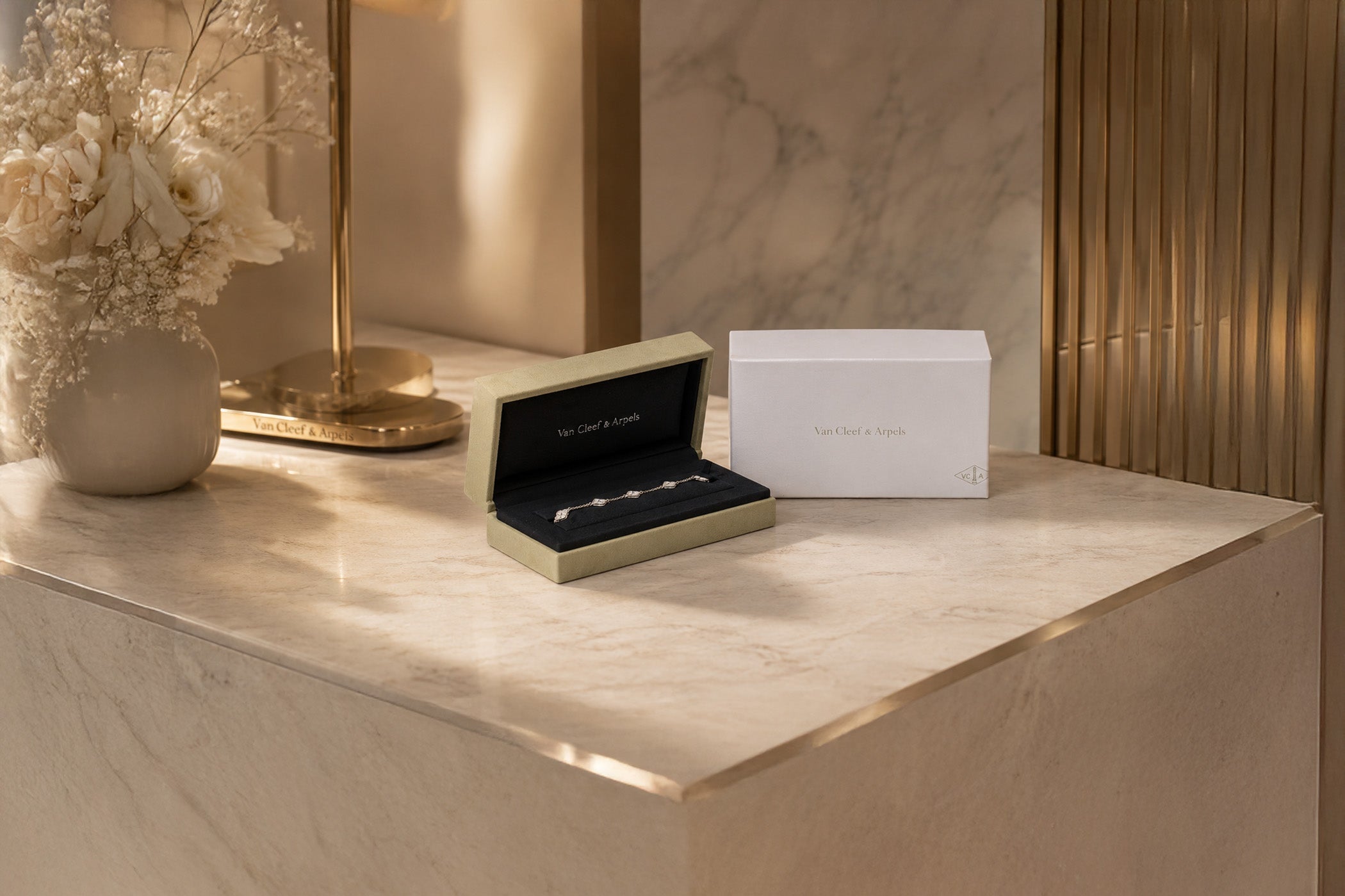



How Micro-Scratches on Van Cleef & Arpels Jewelry Can Affect Authentication
Check out our Van Cleef & Arpels collection!
Van Cleef & Arpels pieces are built to last generations, but even the finest jewellery picks up micro-scratches over time. These tiny surface marks can complicate authentication because they obscure serial numbers, blur hallmark details, and make it harder to assess the original craftsmanship.
Whether you wear your piece daily or tuck it away for safekeeping, knowing how these scratches affect verification is important before selling, insuring, or just figuring out what you have.
Authenticators depend on crisp engravings and sharp motif edges to tell real pieces from fakes. When micro-scratches cloud those details, even experts have to get creative, sometimes it means squinting under magnification or trying different lighting angles.
Not every scratch is a big deal for value or authenticity, but recognizing which ones matter and how to handle them can save you plenty of headaches.
In this guide, I’ll break down how micro-scratches impact authentication, where they usually show up, and what you can do to protect or restore your Van Cleef jewellery.
We’ll touch on preventive care, professional polishing, and some practical steps to keep your investment both beautiful and verifiable.
Key Takeaways
- Micro-scratches can hide serial numbers and hallmarks, making authentication trickier
- Everyday wear causes surface marks, but good storage and handling cut down on scratches
- Professional polishing can help, but overdoing it can remove original metal and hurt value
Why Micro-Scratches Matter for Van Cleef & Arpels Authentication
Surface imperfections on Van Cleef & Arpels pieces tell a story about manufacturing quality, metal composition, and wear patterns. Authenticators use these clues to sort real pieces from surprisingly convincing fakes. The way authentic 18K gold or platinum picks up micro-scratches looks very different from the harder, cheaper alloys in counterfeit jewellery.
The Role of Surface Integrity in Identifying Authentic Pieces
Van Cleef & Arpels sticks to 18K gold (75% pure) and platinum in their Alhambra collection, never sterling silver. These premium metals develop micro-scratch patterns that are pretty distinct compared to the base metals you find in knockoffs.
Real VCA pieces show fine, even scratching that reflects the softer nature of high-gold alloys. Scratches are usually shallow and uniform because 18K gold wears in a predictable way.
Fakes often use harder alloys that either barely scratch at all or develop weird, deep gouges that don’t match normal wear.
What you’ll see on authentic surfaces:
- Shallow, hairline scratches that catch the light in a consistent way
- Patina that builds up evenly around spots that get touched a lot
- Smooth transitions between polished and brushed areas
- No signs of plating peeling or base metal peeking through
The hallmark plate on genuine Alhambra necklaces usually keeps its crisp engraving, even with micro-scratches nearby. Fakes? Their stampings blur or fade much faster.
How Scratches Impact Expert and Technological Authentication
Professional authenticators use magnification to check micro-scratches and see how the metal behaves. Surface analysis works hand-in-hand with other methods like XRF scanning, which checks metal purity.
When FASHIONPHILE’s gem lab tests Van Cleef pieces, they run XRF scans that spot metal purity, no matter the scratches. If a piece looks right on the surface but tests as mostly silver (like with some fake chalcedony pendants), it’s a hard fail.
Surface checks also reveal shortcuts in counterfeiting. Genuine VCA pieces get polished with care, creating a specific surface hardness. Fakes often have rushed finishes, strange polishing marks, or coatings that scratch off to show cheaper metal underneath.
Authentication methods affected when scratches show up:
- Magnified hallmark inspection (clarity depends on scratch placement)
- Reflectivity testing (scratches mess with how light bounces)
- Patina analysis (real metals age in predictable ways)
- Edge examination (wear patterns differ between real and fake)
Scratches near solder points, clasps, or jump rings are especially telling, since these areas get the most stress and reveal how well the metal holds up.
Differences Between Micro-Scratches and Normal Wear
Micro-scratches are tiny surface marks, less than 0.1mm deep, from regular contact with clothing, skin, and other surfaces. Normal wear might include deeper scratches, dents, or bends from bumps or pressure.
Authentic Van Cleef pieces pick up micro-scratches gently. The high gold content lets the metal accept fine marks without chipping, flaking, or revealing layers underneath. You’ll see a soft, lived-in patina, not obvious damage.
Fakes can’t handle even minor contact. Plated pieces quickly show bare spots. Cheap solid fakes scratch too easily or barely at all, depending on what they’re made from.
Micro-scratches vs. concerning wear:
- Acceptable: Fine hairlines, even dulling, consistent patina
- Worrisome: Color changes, base metal showing, deep grooves, peeling coating
Older VCA pieces naturally show more micro-scratching, but authenticators know what’s normal for each style and age. For example, a five-year-old Alhambra pendant should have light scratching around motif edges and jump rings, not deep gouges or a suspiciously flawless surface.
Origins and Types of Micro-Scratches on Fine Jewellery
Micro-scratches on Van Cleef & Arpels pieces come from daily wear and how materials interact. Different finishes show wear in their own ways. Knowing how these marks form, and what sets them apart from intentional patina or actual damage, helps us judge authenticity and a piece’s history.
Common Everyday Causes Unique to Van Cleef & Arpels Pieces
Van Cleef & Arpels jewellery picks up micro-scratches just from brushing against clothing, especially with Alhambra necklaces that rest on cashmere or silk. The beaded edges of Perlée bracelets get circular wear from rubbing against desks or laptops.
Rings, especially Between the Finger styles, get fine scratches near hinges and moving parts. The backs of pieces collect scratches differently than the fronts, creating uneven wear that authenticators pay close attention to.
Chain links show scratch directions based on how the necklace moves. Clasp areas almost always have the most micro-scratching from opening and closing, and real pieces show wear that matches how the clasp is built.
Storage habits matter. Keep pieces together in a box and you’ll see random scratches. Store them in their own pouches and the marks are minimal.
Distinguishing Micro-Scratches from Damage and Patina
Micro-scratches look like fine, shallow marks that don’t mess with the structure of the metal. Gouges or dents, on the other hand, actually change the piece’s shape. We look for direction in scratch patterns, normal wear creates scratches that follow how the piece moves.
Real patina builds up gradually and evenly, shifting color across the whole surface. Micro-scratches, though, stay linear and catch the light under magnification. Deep scratches that show metal underneath are actual damage, especially on gold vermeil where the base metal peeks through.
Polishing marks from professional cleanings tend to be more uniform and circular, while everyday scratches are random. Areas that should logically have wear, like clasps and high-touch zones, need to show the right amount of scratching for the piece’s age.
If a new piece shows heavy scratching in odd spots, that’s a red flag. Sometimes forgers try to fake age, but they don’t always get it right.
Materials and Finishes Prone to Micro-Scratching
High-Polish Yellow Gold shows scratches more clearly. 18k gold develops a soft sheen as fine lines build up, giving it that lived-in look.
White Gold and Platinum hold up a bit better but still show marks, especially under strong light. White gold’s rhodium plating adds protection, but it wears off eventually, creating a two-tone effect with the scratches.
Onyx and Mother-of-Pearl in Alhambra pieces scratch differently than metal. Mother-of-pearl gets fine, linear marks that don’t go deep. Onyx stays smooth longer but shows scratches as light lines on the dark surface.
Matte and Brushed Finishes do a better job hiding micro-scratches, though a magnifier will still reveal similar wear patterns under the texture.
Authentication Processes Affected by Micro-Scratches
Micro-scratches get in the way of two main authentication steps: magnified inspection of engravings and digital analysis of hallmark depth. Even light surface wear can scatter light in photos or hide the sharp edges that set real pieces apart from fakes.
Impact on Laser and Magnification Analysis
Micro-scratches mess with how light bounces off the surface, making magnification tough. When we check serial numbers or hallmarks under 10x to 30x magnification, scratches throw shadows or bright spots that blur the engraving.
A real Van Cleef & Arpels serial number has even depth and crisp edges. If scratches cross the engraving, the borders between the letter and the metal get fuzzy. It’s harder to tell if the marking was properly struck or just poorly stamped.
Macro photography runs into the same problems. Scratches reflect the camera flash unevenly, creating glare that hides tiny details like the crossbar in the “A” of “VCA” or the serif on the “7” in “Au750.”
We usually have to photograph pieces from different angles and use diffused light to work around surface wear. Sometimes, scratches are deep enough to permanently hide parts of important markings, so we rely more on things like clasp construction, chain weight, and motif symmetry.
How Scratches Obscure Hallmarks and Serial Numbers
Scratches over hallmarks are the most common headache. The VCA Au750 marking sits on a tiny jump-ring plaque that takes a beating from clothes, skin, and storage.
When micro-scratches pile up here, the shallow hallmark recesses get filled with visual noise. Letters might look thinner than they are, or the depth differences between real and fake markings get impossible to measure.
Serial numbers have the same issue. Real serials are engraved with care, but a cluster of scratches can mimic the uneven depth of fakes. We look for steady stroke width across the code, but scratches can throw off the pattern.
If the serial area is too worn, we focus on other markers like clasp logo sharpness, chain link shape, and how the clasp feels when it snaps shut. These are tougher to fake and usually less affected by normal wear.
Preventing and Minimising Micro-Scratches on Van Cleef & Arpels Jewellery
Good storage and gentle cleaning are your best bets for avoiding scratches. It takes some discipline, but it keeps your jewellery looking sharp and makes life easier for authenticators.
Daily Storage and Handling Best Practices
Store each Van Cleef piece in its original box or a soft pouch, away from other jewellery. This keeps harder metals and stones from scratching softer parts.
Mother of pearl, a favorite in Alhambra pieces, scratches super easily. Never stack mother of pearl with other jewellery or watches, even quick contact can leave marks you can’t undo.
If you wear your pieces often, put them on last, after makeup, perfume, and lotion. These products can leave a film that attracts grit. Take your jewellery off first before activities like working out, cleaning, or gardening.
When traveling, keep each piece in its pouch, and pack them in the center of your luggage surrounded by soft clothes. Don’t put jewellery boxes near the edges where they might get bumped.
Choosing the Right Cleaning Tools and Methods
Stick to soft, lint-free microfiber cloths for everyday cleaning. Paper towels, tissue, and regular fabrics have fibers that can scratch precious metals and stones.
For basic care, gently wipe pieces with a dry microfiber cloth after wearing to remove oils and dust. For deeper cleaning, mix a few drops of mild dish soap with lukewarm water.
Dip the cloth in the solution, wring it nearly dry, and gently wipe the metal. Never submerge pieces with mother of pearl or other porous stones, moisture can seep in and cause problems.
Van Cleef offers cleaning kits with the right tools for their jewellery. Avoid ultrasonic cleaners, steamers, and anything with alcohol, ammonia, or harsh chemicals, they can wreck delicate stones and finishes.
Options for Scratch Removal: When and How to Restore
Removing scratches from Van Cleef & Arpels pieces isn’t something to rush. The person doing the work and the method they use matter a lot. The wrong approach can erase authentic details that are crucial for authentication.
Professional Restoration Versus DIY Approaches
Van Cleef & Arpels offers preservation services at their boutiques and authorized service centres. Their specialists know the Maison's unique techniques, alloy blends, and those subtle signature details that collectors obsess over. Restoration takes a few weeks, and costs depend on the piece and how much work it needs.
Honestly, we wouldn't suggest at-home polishing for VCA jewellery, even if you're just using a soft cloth. Gold in fine jewellery is surprisingly soft, and a little too much pressure can flatten out crisp edges, especially on motifs like the Alhambra clover. Sure, you might get away with buffing a plain gold band, but VCA pieces have specific finishes that really need a pro's touch.
Some third-party jewellers offer scratch removal, but they often miss the mark on VCA's precise finishes. Their tools can be a bit too harsh for delicate engraving or that special brushed texture.
Risks of Over-Polishing and Loss of Authentic Details
Too much polishing strips away tiny layers of gold. Over time, hallmarks, serial numbers, and maker's marks fade or lose their definition. We've come across pieces where repeated polishing left stamps barely readable, which is a nightmare for authentication.
VCA's signature finishes need careful handling. If you over-polish, that subtle satin or brushed look disappears, replaced by an odd, shiny surface. Alhambra clover edges are meant to stay crisp, not rounded off from aggressive buffing.
Chain links? They're especially at risk. Over-polishing can thin out the metal and weaken the whole piece. Van Cleef's preservation service always checks chain condition before doing anything else.
Long-Term Value and Collectability Concerns
Micro-scratches aren't just a headache for authentication. They hit collectors right in the wallet and chip away at a piece's provenance.
Resale Value Implications
Van Cleef & Arpels pieces generally hold value, sometimes even appreciating, think Alhambra. But visible micro-scratches can knock 10-25% off resale prices, depending on how bad and where they are.
Buyers in the secondary market have gotten pickier. If a piece has heavy scratching on noticeable spots like bezels or around stones, expect bigger discounts than if the wear is tucked away on a clasp.
It gets worse if micro-scratches mess with hallmarks or serial numbers. Buyers worry about authenticity, and that hesitation turns into lower offers, even if the piece is legit.
Auction houses and resellers like FASHIONPHILE put a lot of weight on condition. A scratched piece might move, but it won't snag top dollar.
Preserving Provenance and Documentation
When micro-scratches blur physical authentication markers, original paperwork becomes even more important. Always stash purchase receipts, certificates, and service records somewhere safe.
Snap photos of your Van Cleef pieces when they're new. Those images become a handy reference if hallmarks get worn, giving authenticators something to compare against.
Getting your jewellery serviced at Van Cleef & Arpels boutiques builds a paper trail, too. Each service record adds another layer of proof that you've kept things official.
If you're buying pre-owned, ask for any documentation the seller can provide. Even things like original boxes or old authentication reports help when it comes time to resell.
Frequently Asked Questions
Micro-scratches and authentication, there's a lot to unpack. Knowing what to look for, how to care for your jewellery, and what actually hurts value matters. Pros look for wear patterns that separate real use from fake aging.
What subtle signs should I look for to spot wear and tear on Van Cleef & Arpels pieces?
We check for wear in places that make sense, clasps, chain links, backs of pendants. That's where genuine pieces pick up micro-scratches from rubbing against skin or clothes.
On real pieces, the hallmark plate gets fine scratches but the engraving underneath stays sharp and readable. Fakes often show either no wear at all or weird, random scratches that don't match how jewellery actually ages.
Edges tell a story, too. Authentic VCA pieces develop gentle, rounded edges from use. Counterfeits might have sharp edges or scratches in odd places that just don't look right.
Can professional polishing remove micro-scratches from my Van Cleef & Arpels jewelry, or is that just a shiny myth?
Professional polishing can take out surface micro-scratches, but it's not always the best move. Van Cleef & Arpels prefers you use their own services because the wrong approach strips away metal and can mess with the original details.
We've seen pieces that lost their crisp hallmarks and bezel edges after too much polishing. Every session removes a little gold or platinum, so too many trips to the buffer can actually weaken the piece.
The brand's care services use techniques that keep the original finish. They know exactly how much to remove without risking the authenticity markers that matter later on.
How do micro-scratches impact the value of Van Cleef & Arpels jewelry when it comes to resale?
Light micro-scratches from normal wear don't usually hurt resale value for pre-owned pieces. Buyers expect a little honest wear, and those marks can actually help confirm authenticity.
Heavy scratching or visible damage does drop value, sometimes by 10-30%, depending on how bad it is and where it shows up. Deep scratches on the front of Alhambra motifs are worse for value than some wear on a clasp.
Authenticators at places like FASHIONPHILE's lab look at condition and authenticity together. A piece with a little patina and micro-scratches often sells better than one that's suspiciously perfect.
Is there a way to prevent those pesky little micro-scratches on my treasured Van Cleef & Arpels accessories?
We can cut down on scratches, but if we're actually wearing our jewellery, some will happen. Store pieces separately in soft pouches to keep them from scratching each other.
Take jewellery off before working out, cleaning, or sleeping, basically, anything rough on metal. It's also smart to remove bracelets and necklaces before dealing with zippers or textured clothes.
Regular professional cleaning helps too. Van Cleef & Arpels boutiques offer services that keep the original finish and get rid of debris that might cause scratches.
What's the best method to authenticate Van Cleef & Arpels jewelry if it has some signs of love, like micro-scratches?
Certified gemologists are your best bet, especially for worn pieces. Services like FASHIONPHILE use XRF scanning to check metal composition, so micro-scratches aren't a big problem for that test.
Authenticators look at how wear lines up with the piece's age and style. They want to see consistent aging across clasps, chains, and settings, wear that makes sense, not something faked.
Always get authentication before buying, especially pre-owned. Hallmarks, serial numbers, and metal quality can still be checked on worn pieces, though it takes a sharper eye.
Do micro-scratches affect the lustre of Van Cleef & Arpels jewelry, or are they just a tiny hiccup on luxury's radar?
Light micro-scratches leave a soft patina that can dull the mirror finish of new pieces a bit. Honestly, it’s subtle, many collectors even like this look, seeing it as a sign of character and real-life wear.
Van Cleef & Arpels uses 18K gold that keeps most of its glow, even after picking up a few surface marks. You can usually restore a lot of that original shine with a professional cleaning or a gentle polish, no need to worry about losing the piece’s authenticity or unique features.
Gemstones like mother-of-pearl, onyx, and carnelian in Alhambra pieces? Now, they’re a bit trickier. These stones scratch more easily than metal, and you’ll notice it quicker. They need a softer touch to keep their polished look and that lovely, natural shine.
Love Hermès? See More from Rome Station
Add us to your Preferred Sources on Google to see our newest Hermès guides and insider tips first.