How Does Stone Type Impact Van Cleef Resale Value?
Check out our Van Cleef & Arpels collection!
Van Cleef & Arpels pieces aren’t all built the same when it comes to resale, and honestly, most buyers don’t realize just how much the stone type can swing things. The stone you pick in a piece like this can mean the difference between holding strong value or even going up in price.
Mother-of-pearl and onyx are steady, while rarer materials often get snapped up at a premium simply because they’re scarce. Design and condition get all the attention, but if you ask me, the stone quietly calls the shots on whether your piece becomes a collector mainstay or something people fight over.
We’ve watched resale trends across major collections, and a few patterns jump out. Diamonds are king for value retention, but high-quality colored stones, like emeralds, sapphires, and rubies, can sometimes match or top diamond prices, especially in older pieces.
Semi-precious stones like malachite, carnelian, and turquoise have their die-hard fans, though their prices bounce around more depending on what’s in style or available.
Knowing which stones actually hold up isn’t just some trivia for collectors. It’s practical stuff if you want to buy smart, whether you’re eyeing a signature clover motif or chasing a harder-to-find gem.
Some materials are baked into the history of these pieces, others come and go in certain designs, and those shifts can send demand, and prices, through the roof if you spot them early.
Key Takeaways
-
Stone type can account for nearly half of a piece’s resale value, and precious stones usually beat semi-precious ones.
-
Mother-of-pearl, onyx, and diamond pieces regularly keep strong value, while harder-to-find materials can sometimes sell at a premium.
-
Having the original paperwork can boost value by 15-25%, and things like stone quality, sourcing, and collection matter for long-term performance.
Stone Type as the Resale Value Powerhouse
Stone choice is really the main thing that shapes how a piece does on the resale market. Precious stones win out over semi-precious ones, rarity causes price spikes, and some collections are closely tied to certain materials that help keep their collector status.
Precious Stones Versus Semi-Precious Stones
Diamonds, emeralds, rubies, sapphires, they’re the heavyweights in resale. Pieces with these stones often keep 80-90% of their original price, while options like carnelian or tiger’s eye tend to hang around 40-50%.
Why the gap? Durability, broad appeal, and plain old rarity. Diamonds in floral or beaded collections sell faster and for more than semi-precious versions. Colombian emeralds, Myanmar rubies, and Kashmir sapphires bring the big premiums, especially in vintage pieces with solid provenance.
Mother-of-pearl is a bit of a curveball. Technically it isn’t a stone, but in clover-motif pieces it often holds 70-80% of retail. Onyx and malachite aren’t far behind, likely because they’re so central to these classic designs.
If you want the safest bet for resale, precious stones are the way to go. They’re easier to authenticate, everyone knows what they are, and they don’t ride fashion waves as much.
Rarity and Market Demand Dynamics
Scarcity just makes people want things more. Older stone combinations and harder-to-find colorways can sell for more than their original retail. Vintage clover-motif pieces with lapis lazuli or turquoise can jump 20-30% or higher.
Myanmar rubies are harder to come by thanks to trade restrictions, so pieces with them get snapped up quickly. Holiday pendants from the 2010s, each with different semi-precious stones, have become mini-collectibles. Certain colors now sell for a premium just because there aren’t that many.
Pieces with original certificates get a 15-25% bump over those without. Collectors want proof, especially for rare combos or vintage finds. Scarcity and documentation together are a big deal for serious resale value.
Market tastes change, too. Top-quality malachite with perfect banding is more valuable than lower-grade material, and buyers are getting a bit picky about color and quality.
Iconic Collections and Their Stone Preferences
Signature clover-motif pieces are the big driver for resale in almost every material. Mother-of-pearl versions are everywhere, helped in part by Princess Grace of Monaco, and they usually keep strong value. Onyx versions are popular because you can wear them year-round.
Carnelian, malachite, and older turquoise releases have their own followings, but resale varies. Limited-edition clover-motif pieces with rare materials can break five figures, especially if a specific combination is hard to find now.
Floral lines and some of the nature-inspired styles lean heavily on diamond quality. Since these use smaller pavé stones, color and cut matter a lot. Even small flaws can knock down the price, because buyers check every detail.
Vintage clover-motif pieces in precious stones, especially diamonds, sit at the top. The combination of design history and high-grade stones means these pieces can go up in value. Some vintage diamond necklaces have resold for more than their original price, thanks to both the design and the diamonds themselves.
Signature Stones and Value Impact
Diamond pieces get the highest resale, while mother-of-pearl and onyx stay in steady demand for signature clover motifs. Semi-precious stones like malachite and carnelian do well, but harder-to-find materials like lapis lazuli and coral sometimes outperform everything because they aren’t always easy to source in the same configurations.
Diamond Pieces and the Investment Hierarchy
Diamonds are at the top of the resale game. Diamond clover-motif pieces usually keep 80-90% of their retail price, and some vintage or rare ones can even sell for more than they originally cost.
Strict standards based on the GIA’s 4Cs mean diamonds are judged carefully for cut, color, clarity, and carat. That consistency gives buyers confidence. They know what they’re getting.
All-diamond pieces from floral lines or diamond-set clover necklaces regularly sell for more than the same pieces in semi-precious materials. Larger clover-motif styles, which often mix in diamonds, get a boost from this too.
Diamond pieces keep value because of:
-
Broad appeal. Everyone wants diamonds.
-
Durability. They last forever.
-
Easier authentication and appraisal.
-
Quicker resale when you need to sell.
Mother-of-Pearl: Iridescence on the Market
Mother-of-pearl is probably the most recognizable material here, especially in vintage and smaller clover-motif pieces. These usually keep 70-80% of their retail price, so they’re a safe bet for resale.
The material’s glow and its link to Princess Grace keep demand steady. We’ve seen mother-of-pearl necklaces sell fast on the resale market, often with barely any haggling.
Still, mother-of-pearl needs gentle handling. It’s sensitive to water, perfumes, and chemicals, so condition matters. Pieces with visible wear or discoloration might drop to 60% of retail or less.
Mother-of-pearl pieces are a great entry point for collectors. They’re popular, so you’ll probably find a buyer quicker than with more niche materials, even if the returns aren’t quite as high as diamonds.
Onyx, Carnelian, Malachite, and the Semi-Precious Appeal
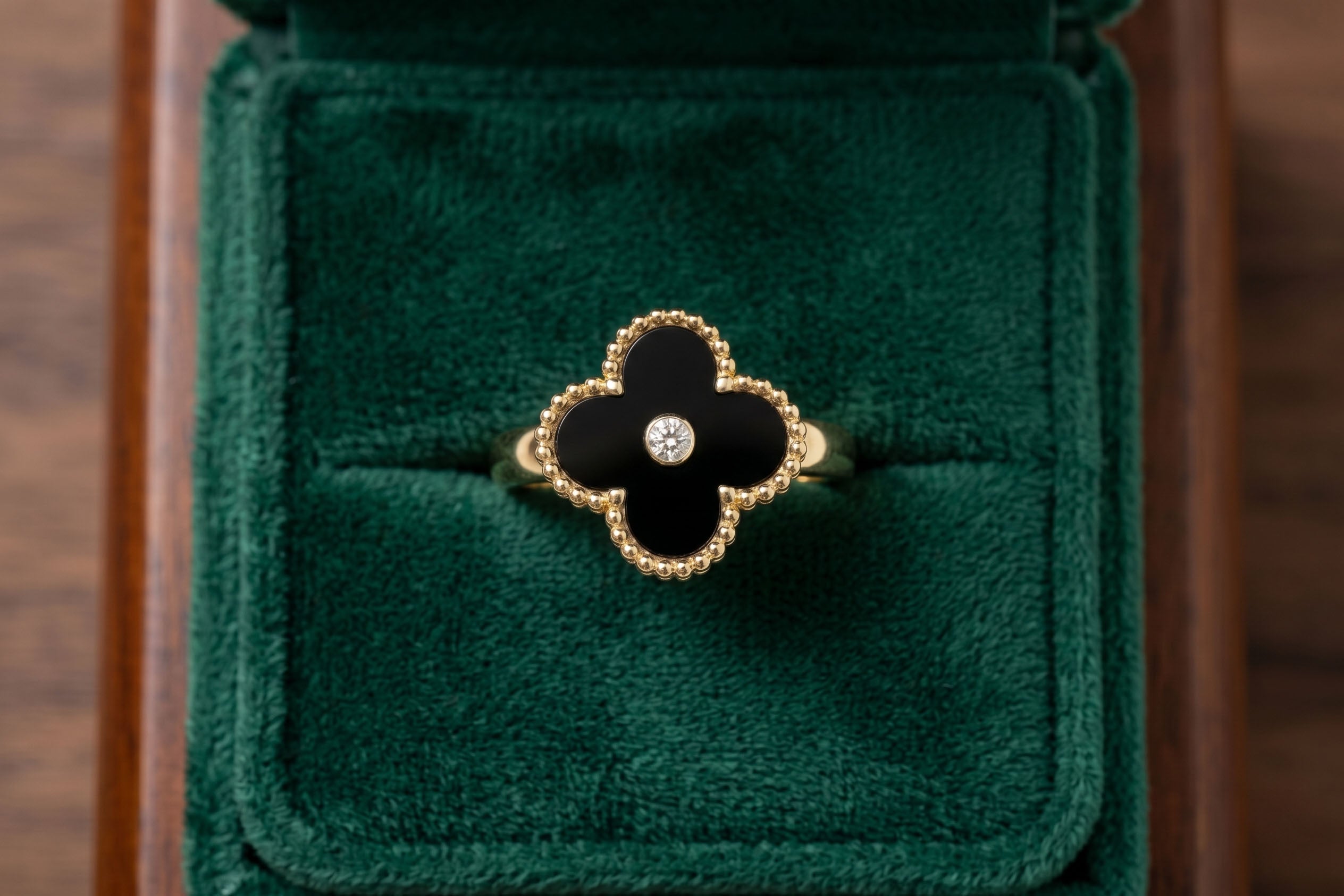
Onyx brings a classic, versatile look to clover-motif bracelets and necklaces, and usually holds about 70-75% of retail value. Its deep black color works year-round, so collectors always have a reason to want it.
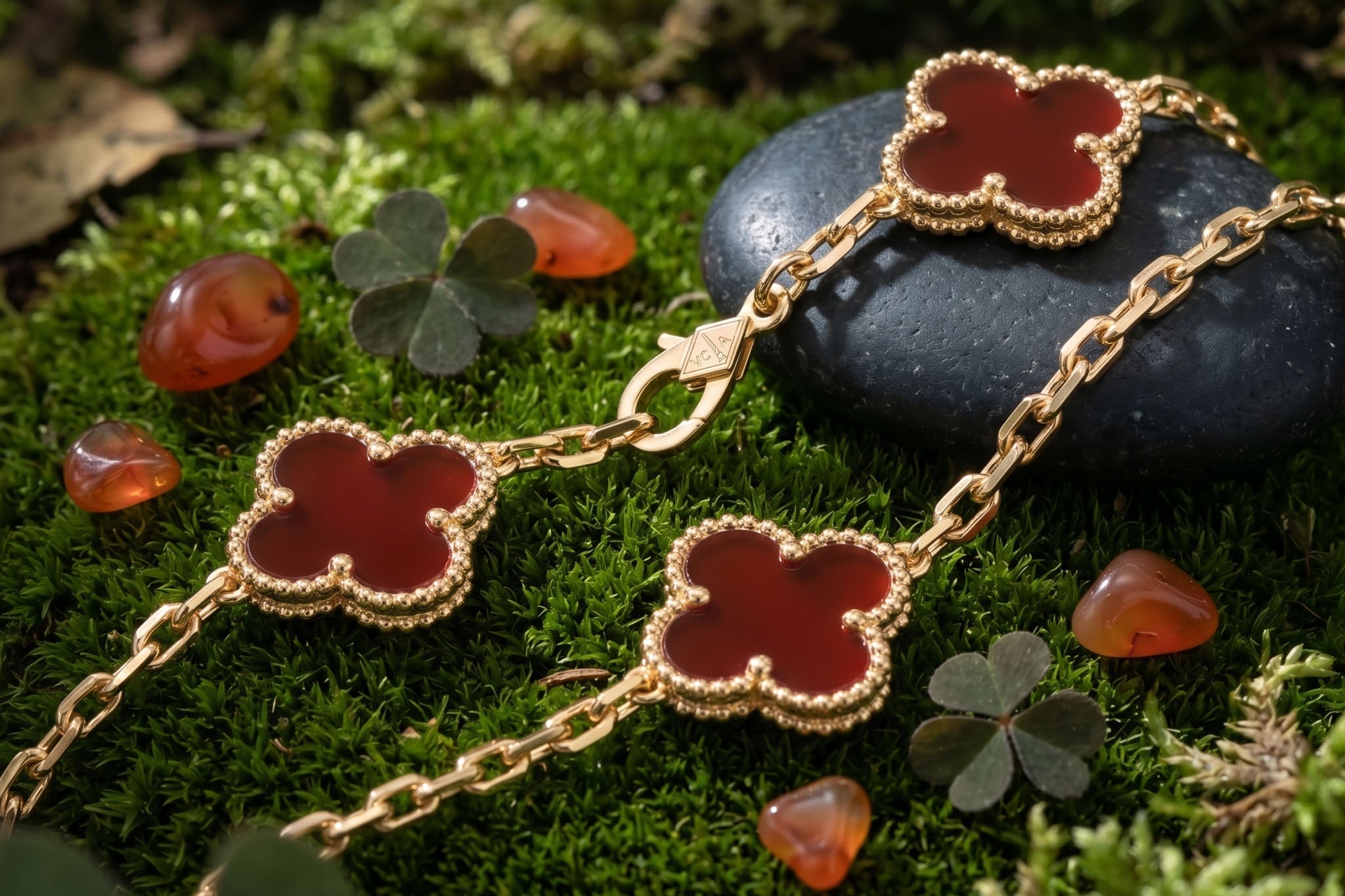
Carnelian, with its rich reddish-orange, holds similar value. The best examples show even color, with no weird spots or stripes, so buyers know what to expect.
Malachite is all about those green bands. Top-quality malachite with straight, crisp veining gets the best prices, sometimes up to 80% of retail. The bold color makes it a favorite for statement pieces in larger motif styles.
Tiger’s eye and agate show up less, but have their fans. Tiger’s eye has that cool shifting light effect, chatoyancy, which draws people in. These materials usually keep 60-70% of retail, depending on color and pattern.
Harder-to-Find and Limited Stones: Lapis Lazuli, Coral, and Beyond
Lapis lazuli and coral have become collector favorites whenever a particular design, color pairing, or older release is hard to source. Older lapis pieces sometimes sell for more than retail, especially if the configuration is rare.
Turquoise pieces from certain limited runs in the 2010s follow a similar path. Holiday pendants from those years, each with a different stone, can fetch a premium when they pop up.
Coral gets tricky because of international trade rules. That can make existing pieces more appealing, but it also means buyers need solid paperwork to confirm what they’re getting and to make future resale easier.
Rarity in these materials leads to unpredictable jumps in value. Something that sold at retail five years ago might go for much more now, just because that exact version is tough to find. For investment-minded folks, these materials are probably the most interesting category.
Stone Quality, Uniformity, and Sourcing
Stone quality and how well the stones match really decide how much value a piece keeps. Collectors look at color, shine, and how well stones match across the piece. Provenance and original sourcing paperwork separate investment pieces from the rest.
How Collectors Judge Color, Luster, and Banding
Color needs to be consistent across every stone in a piece like this. We look for even tone and depth, especially in carnelian or malachite, where natural variation can either make or break the look. A five-motif bracelet should have the same color intensity in each clover, with no oddballs.
Luster tells you right away if the material is quality. Mother-of-pearl should show that rainbow shimmer, which comes from thick nacre. Thin nacre looks dull. Onyx should be glassy and even, with no cloudy spots. Malachite’s polish should bring out the bands, not hide them.
Banding is critical for materials like malachite. Real malachite has flowing, organic bands in varying shades of green. The bands should line up across the motifs, following the natural growth. Tiger’s eye needs the right cut to show its moving light band.
The Importance of Sourcing and Provenance
The house gets its materials from vetted suppliers, and the paperwork that proves this really matters for collectors. Original certificates list the exact materials, creating a provenance trail. Without it, even genuine pieces get questioned and sell for less, since buyers can’t confirm the materials are up to the house’s standards.
Provenance is especially important when checking whether stones are original to the piece. Replacement stones rarely come from the house’s sources, so you’ll spot differences in color, shine, or finish. We’ve seen authenticated pieces with full paperwork sell for 30-40% more than the same design without it, especially in clover-motif collections where matching stones are everything.
Stone Matching and the Role of Consistency
Stone uniformity is what sets this kind of work apart from rushed or sloppy work. Stones are often picked from the same batch to ensure matching color, opacity, and look across every motif. That means sorting through a lot of raw material to find stones that really fit together, which drives up both costs and resale value.
Consistency isn’t just about color. It’s about thickness in inlays, the direction of bands in striped materials, and surface quality everywhere. Chalcedony pieces need careful placement of transparent and opaque areas, not random patches. Mother-of-pearl motifs should have the same level of iridescence to keep the look consistent.
If the stones don’t match, value drops fast. Mixed batches or uneven colors suggest non-original stones or pieces that never met the house’s standards. Collectors will check under different lighting and from different angles, since photos can hide color differences that are obvious in person.
Authentication and Originality Factors
Having the right paperwork and physical markers can add 15-25% to resale value, but only if everything checks out. Anyone looking to buy these pieces needs to check hallmarks, spot common fakes, and know how repairs might affect future value.
Hallmarks, Serial Numbers, and Paperwork
Every genuine piece comes with specific hallmarks that confirm its origin. You'll spot the signature, metal purity marks, and usually a serial number tucked away in a discreet spot. The serial number is almost always engraved on a flat surface, and it should look clean, with no shaky lines and no uneven depth.
Original paperwork really bumps up resale value. A certificate of authenticity from the maker, the original receipt, and service records can boost your piece's value by 15-25% compared to identical items missing documentation. The certificate lists the stone, metal, and creation date.
Key authentication documents:
-
Certificate of authenticity with matching serial number
-
Original purchase receipt
-
Service records from the original boutique
-
Original box and pouch
Auction houses and reputable dealers check these markers before taking on any piece. Buyers sometimes walk away from otherwise stunning jewelry if the paperwork doesn’t match the serial number.
Authentication Red Flags
Inconsistent hallmarks are a big warning sign. Real stamps are crisp and perfectly aligned, never shaky or shallow. The font should match across pieces from the same era. Open-finger rings and other vintage items have era-specific markings, and counterfeiters often mess those up.
Stone quality is another giveaway. The best pieces use high-grade mother-of-pearl, onyx, and other materials. If the material looks dull, uneven in color, or poorly cut, that’s suspicious.
Weight matters. Real pieces feel substantial because they’re solid gold. Fakes often use hollow or plated metal and feel lighter. Clasps should work smoothly, with no wobbles or loose parts.
Implications of Repairs and Replacements
Stone replacements really hurt resale value unless the original maker does the work. Even top-notch third-party repairs make collectors nervous if they’re after original pieces. We’ve seen identical necklaces sell for up to 40% less just because one had a replaced stone.
Original makers often keep detailed repair records. If you’ve had work done through a boutique, that documentation actually helps your resale value. The service card proves the repair used genuine materials and followed original standards.
Replaced clasps or findings matter less than stone swaps, but original components are still preferable. Some collectors specifically look for untouched pieces and will pay extra for that.
Stone Selection Across Collections
These collections don’t just throw stones together. Signature clover-motif pieces have the widest range, from affordable semi-precious stones to diamond-heavy versions, while floral and beaded lines mostly stick to diamonds and metals.
Signature Clover Motifs, Vintage Styles, and Larger Motif Designs
The signature clover-motif family shows off the full material library, and that variety shapes resale value. Classic versions come in mother-of-pearl, onyx, carnelian, malachite, tiger’s eye, and all-diamond editions. Larger motifs make a bolder statement, while smaller versions go more delicate.
Mother-of-pearl and onyx usually hold strong value across the different sizes. Some pendants and bracelets in these materials have even appreciated, especially if they’re older or harder-to-find versions. Malachite versions sit a bit lower, around 70-80% of their original price.
Resale patterns by stone type:
-
Diamond: 80-90% retention, sometimes more for limited editions
-
Mother-of-pearl and onyx: Strong retention
-
Carnelian and malachite: Usually solid, but more trend-sensitive
-
Harder-to-find materials: Often above retail
Single-pendant necklaces sell faster than multi-motif versions, probably because of the lower entry price. Bracelets in classic materials like onyx are steady sellers year-round.
Floral and Beaded Collections: What Sets Them Apart
Floral designs rely almost entirely on diamonds for their delicate petal look, so stone quality drives resale value. There’s not much material variety here compared to clover-motif pieces. Every flower motif needs diamonds that match in color and clarity. Minor differences can lower resale value.
Beaded styles focus on gold beadwork, with diamonds as accents, not the main event. The beaded edge is the star. Pieces with diamond stations usually keep 60-70% of retail, which is lower than floral designs at 70-80%. Floral designs generally do better on the secondary market because buyers tie them more closely to heritage styling.
Neither collection has the stone diversity that makes clover-motif pieces so accessible, so their resale audience is a bit narrower.
Care, Cleaning, and Maximizing Resale Value
How you treat your jewelry directly affects what buyers will pay later. Different materials need different care, and knowing when to clean at home versus going to a pro can make all the difference.
Daily Stone Care Essentials
Stone type sets your care routine. Mother-of-pearl, for example, hates water and chemicals, so take those pieces off before washing hands or using lotion. Onyx and malachite can lose their finish if they’re exposed to too much moisture, heat, or product buildup.
Diamonds, sapphires, and rubies are tougher, but still need attention. Wipe diamond pieces with a soft, lint-free cloth after each wear to avoid buildup. Store each piece separately in its original pouch or a lined box to prevent scratches.
Softer materials like turquoise and lapis lazuli are especially fragile. Keep them away from perfumes, hairspray, and cleaning products. Even a little chemical exposure can discolor these materials for good, which tanks their value when you want to sell.
Temperature swings aren’t great either. Don’t leave jewelry in direct sunlight or near heat. Some materials can crack, dry out, or lose polish faster that way.
Professional Cleaning and Service
Boutiques and professional service centers offer cleaning and care services, and honestly, they’re worth using over risky DIY methods. Their staff knows which techniques work for each material, and they’ll catch any loose settings or wear that could hurt resale value.
For luxury jewelry, get professional servicing every 12 to 18 months. This means checking clasps, prongs, and stone settings. Even a tiny loose prong can cost you 10-15% off your asking price.
If you can’t get to a boutique, find a jeweler with high-end experience. Don’t use ultrasonic cleaners at home for anything with mother-of-pearl, malachite, or turquoise. The vibrations can ruin them. Harsh chemicals or rough cloths are just as risky.
Hang on to all your service records. Documentation from the original boutique or a trusted jeweler reassures buyers that your piece was cared for, which can add 5-10% to resale value.
Selling Strategies for Top Value
When you’re ready to sell fine jewelry like this, presentation is everything. Original boxes, certificates, and receipts can boost value by 15-25%, especially for rare or harder-to-find materials. Buyers want proof of authenticity and history.
Timing helps. Diamond pieces sell steadily year-round, but colored stones like emeralds or rubies often peak around holidays and engagement season. Clover-motif pieces with mother-of-pearl or onyx move fastest in spring and summer, when lighter jewelry is in demand.
Pick your selling platform carefully. Consignment services that specialize in fine jewelry usually fetch higher prices than generic resale sites. They attract serious collectors and handle authentication and photography, which matters when buyers are spending thousands.
Price competitively, but don’t undersell rarer materials. If you have an older lapis lazuli, coral, or turquoise piece, check recent sales of similar designs. Some can sell for more than retail, so don’t jump at the first low offer.
Frequently Asked Questions
Stone type drives a lot of resale performance, but buyers also look at craftsmanship, condition, provenance, and timing. Here are some quick answers collectors usually want first.
What factors influence the resale value of jewelry pieces?
Stone type matters most, but condition, paperwork, rarity, and buyer demand all play a part. Strong materials, clean provenance, and a well-kept piece usually do the best.
How does the choice of stones in these creations affect their market desirability?
Diamonds and high-quality colored stones tend to attract the widest buyer pool. Mother-of-pearl, onyx, and other familiar materials also do well, but niche colors can be more trend-sensitive.
Can the type of gemstone in my piece make a difference when I’m looking to upgrade?
Definitely. Precious stones and rarer materials usually give you more leverage with dealers, while common semi-precious options often bring less trade-in value unless condition is excellent.
Are certain gemstones considered better investments in the secondary market?
Yes. Diamonds are usually the safest bet, and premium emeralds, rubies, and sapphires can be just as strong. Certain older lapis, turquoise, or coral releases can outperform when collectors want that exact version.
Does the color or clarity of stones play a role in their resale price?
Absolutely. Buyers notice color consistency, polish, banding, and clarity right away. Even small issues can drag down value, especially in pieces where every motif is supposed to match.
How is the resale value affected when the piece includes rare or unique stones?
Rare materials can push prices up fast, especially when a specific release is hard to find. But the premium usually depends on condition, paperwork, and whether collectors are actively chasing that exact combination.
Love Hermès? See More from Rome Station
Add us to your Preferred Sources on Google to see our newest Hermès guides and insider tips first.