

How Can You Detect Structural Weakness in Van Cleef Chains?
Check out our Van Cleef & Arpels collection!
Van Cleef & Arpels chains might look flawless at first glance, but structural weaknesses can hide in plain sight until it's too late. The most reliable way to spot structural weakness in Van Cleef chains is to check link symmetry, test how the clasp works, inspect solder joints up close, and look for stretched or misshapen links near connection points.
Too many collectors only find out there's a problem after a motif disappears or a chain breaks, so knowing what to look for ahead of time really does save money, and a lot of heartache.
These problems don't usually show up as obvious breaks or bent metal. Instead, you might notice the chain drapes a little unevenly, the clasp doesn't click quite like it used to, or some links feel looser as you run the chain through your fingers.
Even real Van Cleef pieces wear down over time, especially where motifs attach or where clasps get opened and closed over and over.
If you're thinking about buying pre-owned, or just want to keep your own piece safe, knowing how Van Cleef chains fail gives you an edge.
Let's walk through where weaknesses tend to show up in different Alhambra collections, what proper construction actually looks like, and when it's time to call in a pro.
Key Takeaways
-
Authentic Van Cleef chains have uniform oval links, clean solder joints, and a consistent, hefty feel.
-
Structural weakness shows up as stretched links, loose clasps, hairline cracks at solder points, and uneven draping before any actual break.
-
Using a loupe, a professional can spot hidden flaws at connection points, jump rings, and motif attachments, and these often predict future problems.
Core Structural Features of Van Cleef Chains
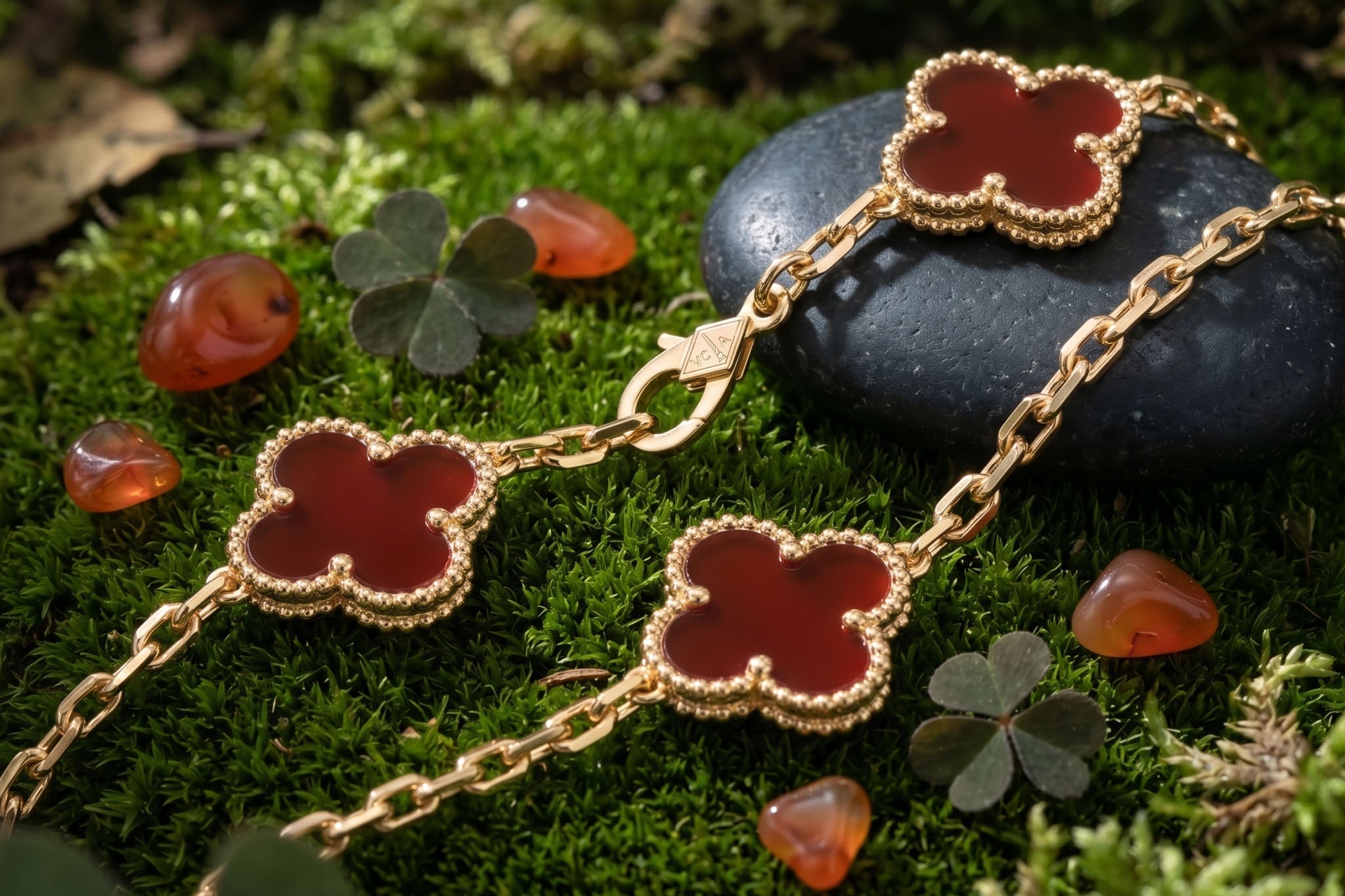
Van Cleef & Arpels chains depend on precise link engineering, high-end materials like 18k gold, and carefully balanced weight to get their signature drape and durability. These features keep both the look and the strength of authentic pieces intact, whether it’s Alhambra or another collection.
Engineered Link Geometry and Closure
Real Van Cleef & Arpels chains use oval links that are all the same size, connected with visible precision. Each link stays consistent throughout the chain, with no odd shapes or uneven spacing to disrupt the flow.
Where links meet, you shouldn’t see messy solder joints or extra metal. Van Cleef’s metalwork closes each link completely, making seamless connections that spread out stress evenly.
Link shape matters a lot for durability. Those elongated ovals you see in Vintage Alhambra, Magic Alhambra, and Sweet Alhambra help avoid weak spots. When you check a real piece, the links move freely in all directions but keep their oval form, even with gentle pulling.
Fakes usually give themselves away with odd-shaped links, visible gaps, or sloppy solder marks. Getting this level of precision is tough, which is why genuine Van Cleef & Arpels chains are so hard to copy.
Signature Materials: 18K Gold, Platinum, and Precious Elements
Van Cleef & Arpels uses solid 18k gold or platinum, so the chains feel weighty but not clunky. These materials have the density to support mother-of-pearl, carnelian, and chalcedony motifs while still looking refined.
The 18k gold blend is durable but still keeps that rich Van Cleef color. Yellow, white, and rose gold all use this standard, with different alloys for color.
What to look for:
-
AU750 for 18k gold
-
PT950 for platinum
-
Stamps on clasps or jump rings
-
Hallmarks with crisp, clear lettering
Real Van Cleef chains feel hefty for their size. Plated or hollow fakes feel tinny and too light. The finish stays even and polished across all links, with no brassy or greenish patches that signal cheap base metals.
Chain Drape, Flexibility, and Weight
Genuine Van Cleef chains move with that fluid, easy motion you only get from well-engineered links. Drape a real piece, and it should fall naturally, with no bunching, kinks, or odd curves.
The flexibility comes from links that move smoothly in every direction but still hold their structure. If you fold a real chain and let it go, it should return to its original shape.
Weight is balanced all along the chain, even in multi-motif Alhambra necklaces. Perlée chains manage the same effect, even with their beaded texture.
Try running the chain through your fingers. It should glide without catching or snagging. If you hit a stiff spot, that's a red flag for damage or bad construction, not something you'll see on a well-kept authentic piece.
Symmetry and Consistency Across Collections
Van Cleef keeps the same construction standards whether you’re looking at a delicate Sweet Alhambra bracelet or a chunky Vintage Alhambra necklace. Link sizes change for each collection, but the geometry and finishing stay top notch.
Motif spacing is always precise. On a five-motif necklace, the center motif sits exactly in the middle, with the rest spaced out evenly.
This consistency holds up no matter the stone, mother-of-pearl, carnelian, or chalcedony. They all hang from the same style of attachment, with jump rings sized for each collection. The chain never looks too heavy for delicate charms or too flimsy under larger motifs.
Quality control is strict. Put two real pieces from different years side by side and you'll see the same standards.
How to Identify Structural Weakness in Van Cleef Chains
Chain weakness shows up in ways you can spot: links lose their shape, stress builds up at connection points, drape gets uneven, and small cracks form in the metal. Spotting these early can save your piece from disaster.
Stretched, Distorted, or Misshapen Links
Van Cleef links start out as perfectly matched ovals. When they stretch, the gaps between connections widen and the shape gets off. This happens most in thinner chains carrying heavier motifs.
Lay your chain flat and look at the links from above. Each one should match its neighbors. Stretched or twisted links look wider, flatter, or just off.
Stretching usually happens near where motifs hang, since that's where the weight pulls most. Gold is soft, so years of wear can deform it, even 18k gold isn’t immune.
To check, gently pull the chain taut. If links are out of shape, you’ll see an irregular pattern. Some might sit at odd angles or not line up. This throws off the drape and means the metal is getting weak.
Stress Points and Attachment Areas
Jump rings that connect motifs to chains take a beating. They carry all the weight and twist with every move. Over time, they open up a bit or get thin at the closure.
Use a jeweler’s loupe if you can. Look for tiny gaps where the ring’s ends don’t meet. Even a small opening can be a problem. The solder joint at the jump ring’s closure is the weak link.
The first link next to each motif also takes a lot of stress. Look for thinning, stretching, or unusual movement here.
Key areas to check:
-
Jump rings at every motif
-
First and second links next to motifs
-
Clasp connection points
-
Center sections on multi-motif necklaces
Bracelets wear differently than necklaces. Friction from your wrist, desk, or clothes wears down metal at attachment points. Magic Alhambra pieces focus all stress on two spots, so watch those carefully.
Uneven Drape and Kinked Movement
A healthy Van Cleef chain hangs smoothly. Hold it by the clasp and let it dangle. The curve should be even, with no bunching, kinks, or odd tilts.
Kinks mean damaged links or lost flexibility. Real VCA chains should slip through your fingers without catching. If you feel stiff spots or movement isn’t smooth, those links are probably damaged or badly repaired.
When links lose their shape, the chain sags differently. Motifs might hang crooked or at odd angles. It’s not just a visual issue, it means the structure is compromised.
Test flexibility by folding a section and letting go. It should return right back. If it stays bent or slowly straightens, it’s lost its original tension. That can happen when metal gets work-hardened or solder joints start to fail.
Metal Fatigue and Hairline Cracks
Hairline cracks usually start at solder joints where links connect. You’ll need a loupe to see them at first. These tiny lines often run perpendicular to where the stress hits. In gold, once they start, they can spread quickly.
Metal fatigue can show up as discoloration around stressed areas before cracks appear. Look for dark spots or dull patches near jump rings and closures, as this can hint that the metal is starting to break down.
Check every solder point. New Van Cleef soldering is usually very clean, but stress can reveal problems. Failed solder looks like gaps or splits at the joint. Sometimes the link moves more than it should or feels loose.
Cracks tend to show up on the inside curve of links where they bend most. Older or heavily worn pieces get these first. Focus on links that bend a lot, like near the back of necklaces or the wrist side of bracelets. Once a crack forms, get it fixed right away or you risk losing the whole piece.
Critical Connection Points: Clasps, Jump Rings, and Solder Joints
Van Cleef & Arpels chains usually fail at three spots: the clasp, the jump rings, and the solder joints. These areas take the most wear, and even small flaws here can mean lost motifs or broken chains.
Assessing Lobster Clasps and Closure Mechanisms
The lobster clasp on an Alhambra necklace should close with a clear, crisp click. If you have to squeeze hard to shut it, or if it feels mushy when you open it, the spring inside is probably wearing out.
Test the clasp several times, opening and closing it at least ten times in a row. A good clasp keeps the same tension every time. Watch for any play or wiggle in the arm, because that’s a sign it’s getting loose.
Real VCA clasps have sharp edges and clear hallmarks inside. Worn clasps show scratches on the inside where metal rubs. Some wear is normal, but deep marks mean the clasp might not last much longer.
The bail, the loop connecting the clasp to the chain, is another weak spot. Check for thinning where the chain passes through. Daily wear grinds this area down faster than the clasp itself.
Inspecting Jump Rings and Solder Integrity
Jump rings hold motifs to chains on pieces like Magic Alhambra, and they take a lot of strain. Look for gaps where the ring should be closed, even tiny ones, since these can mean the solder joint is failing.
A 10x loupe helps spot issues at jump rings. Check for smooth, flush metal at the closure. Bad soldering looks lumpy or shows discoloration. Real Van Cleef pieces have nearly invisible solder.
Gently test the jump ring to see if it moves. It shouldn’t flex or give at all. If it does, the joint needs professional repair before it opens up.
Red flags at jump rings:
-
Visible gaps at the closure
-
Discoloration or oxidation around solder
-
Ring feels loose or spins on its own
-
Thinning metal on one side from wear
Recognizing Weakness at Motif and Charm Attachments
Attachment points where motifs hang from the chain take on all the weight and movement. On multi-motif Alhambra necklaces, we check each connection one by one since the wear isn’t always even.
The jump rings holding motifs are always under tension. Watch for elongation. If a ring turns from round to oval, that’s a sign the metal is getting tired and could snap soon.
Look at the first link of chain right next to each attachment. These links get more strain and often show bending or stiffness before breaking. If a link feels stuck or sits oddly, that’s usually fatigue in the metal.
Magic Alhambra pieces only have two attachment points holding the motif, so wear collects in those spots quickly. In our experience, these degrade faster than multi-motif styles where the stress spreads out. Check both sides, since the swinging motion wears both rings down over time.
Authentication Markers and Engraving Precision
VCA engravings and hallmarks show authenticity through their sharp depth, steady font, and exact placement, things counterfeiters often get wrong. The AU750 stamp, serial numbers, and VCA logo all follow strict standards, so any oddness is a red flag.
Serial Numbers and VCA Logo Engravings
Real Van Cleef & Arpels pieces have serial numbers with even depth and spacing that matches their era. You’ll find these numbers on clasps, jump rings, or little plaques on the chain, depending on the collection.
The VCA logo always looks crisp, with letters of the same height and width. Authentic engravings catch the light evenly because they’re applied with precision, not scratched in by hand. The letters have clean edges, with no bleeding and no fuzzy borders.
Serial number formats follow VCA’s own system, and older pieces may use different numbering, but the sharpness of the engraving stays consistent.
What to look for in real engravings:
-
Even, clean depth in all characters
-
Consistent spacing between letters and numbers
-
Sharp edges, no tool marks or hand-etched signs
-
Logo matches VCA’s official proportions
Depth, Font, and Placement of Hallmarks
The AU750 hallmark on genuine pieces has a steady depth, cut into the gold cleanly. This stamp indicates 18k gold and sits next to the VCA logo, usually on clasps or connecting rings, in the standard spots for each collection.
Authentic hallmarks use a specific font that fakes rarely match. The letters and numbers have distinct stroke widths and small details you can compare to known authentic pieces.
Placement is a big deal. Alhambra pieces usually show hallmarks on clasp hardware or connecting rings, where they’re visible but don’t interrupt the design. Stamps are parallel to edges and centered in their space.
We always check that the hallmark depth is consistent across the piece. If some are shallow and others are deep, that’s a sign of bad stamping or sloppy work, which VCA would not allow.
Common Mistakes in Counterfeits
Fakes often have blurry or shallow engravings, like someone scratched them in by hand. The VCA logo might be off, with letters crammed together or unevenly spaced.
Counterfeit hallmarks are often too light or pressed in too deep. Some use surface etching that rubs off quickly. Others stamp so hard that the metal around the mark gets warped.
You’ll see AU750 stamps in the wrong font, with spelling mistakes, or strange spacing like “AU 750” or “750 AU.” Sometimes the markings don’t match the style VCA used for that period.
Fake serial numbers usually follow random patterns or look unnaturally uniform, without the refined finish authentic examples show.
Recognizing Signs of Wear and Routine Maintenance Needs
Van Cleef & Arpels chains wear in predictable ways that tell you when it’s time for a checkup. Knowing these patterns and keeping your chains clean helps protect both the piece and its value, especially at stress points like attachment rings and clasps.
Identifying Wear Patterns on Chains and Motifs
Van Cleef chains show certain wear patterns depending on how often you wear them and what you wear them with. The most common issue is thinning at stress points, where links near clasps or motifs lose metal from rubbing and movement. If you catch this early, you can avoid breaks.
Attachment points where motifs connect to the chain wear out faster than the rest. These spots take the most tugging, especially on single-motif pieces like Magic Alhambra. The jump rings get slightly oval or the metal thins on one side.
Gold chains pick up surface scratches and a natural patina over time. That’s normal. But if you see scratches piling up in one area, where the chain rubs against clothing or other jewelry, that’s a sign of faster wear. Deep scratches can weaken the gold.
Mother-of-pearl, carnelian, and other inlays can chip or crack around the edges if the bezels loosen. Check the edges often. If a stone moves in its setting, the bezel needs tightening before the stone comes out.
Avoiding Dirt, Debris, and Surface Damage
Dirt and oils build up in chain links and around motifs, making the chain stiff and trapping moisture. This isn’t just cosmetic, it can discolor gold and damage stones over time.
We usually clean Van Cleef pieces with a soft, dry cloth after wearing, especially if there’s sweat or lotion involved. If the piece needs more than that, professional cleaning is the safer option.
Store each chain in its own soft pouch to avoid scratches. If chains tangle, links can bend or clasps can get damaged. Never toss Van Cleef jewelry into a drawer or box where it will rub against other pieces.
Avoid wearing your chains around harsh chemicals, saltwater, chlorine, or cosmetics. These can damage gold finishes and delicate natural materials.
Maintenance Tips for Luxury Chain Longevity
Professional servicing every 12 to 18 months keeps Van Cleef chains in top shape and helps hold their value. Jewelers check solder joints, test clasps, tighten stones, and clean areas you can’t reach.
Between visits, check your own pieces monthly. Lay the chain flat and look for links that don’t line up or feel weak when you pull gently. It should feel solid along its length.
What we check:
-
Clasp snaps shut with a firm click
-
Jump rings aren’t gapped or bent
-
Stones sit flush in their settings
-
No discoloration around solder points
-
Chain drapes evenly when worn
Keep service records and any paperwork from Van Cleef. When you sell or consign, buyers pay more for pieces with a maintenance history. It shows you’ve taken care of the structural integrity and kept it investment-worthy.
If you notice stiffness, odd sounds, or the chain hangs differently, get it checked right away. Catching issues early usually means smaller, cheaper repairs that don’t hurt resale value.
When to Seek Professional Authentication or Servicing
Van Cleef & Arpels chains need expert care when you see warning signs, want to check authenticity before buying, or want to protect long-term value. Professional servicing goes way beyond basic repairs. It’s about preserving function and resale potential.
Red Flags That Require Expert Attention
If your VCA chain starts snagging on clothes or feels stiff in places, it’s time for a pro to look at it. These signs often mean bent links or failing solder joints you can’t spot without magnification.
Clasps that won’t stay shut or need extra force are a safety risk. A loose clasp is all it takes to lose a pricey piece. Don’t wait, get it checked as soon as you notice.
Any discoloration at connection points, especially dark or unusual spots, may mean metal breakdown or a bad past repair. This matters a lot for pre-owned pieces with unknown history.
Call in a pro if you see:
-
Chains that hang crooked or twist when flat
-
Gaps at link connections or solder joints
-
Motifs that spin loosely instead of staying put
-
Weight that feels off compared to similar pieces
If you’re buying pre-owned VCA outside boutiques, get a professional to authenticate before you buy. Experts check hallmarks, metalwork, and construction details that fakes can’t get right.
What Professional Servicing Includes for Van Cleef Chains
Professional VCA servicing starts with careful cleaning to get oils and dirt out of the links, places you can’t reach at home. This process can also reveal hidden problems like tiny cracks or worn solder.
Authorized service includes a detailed inspection under magnification. Every link, jump ring, and connection gets checked for wear. They’ll measure the chain for stretching and test the clasp tension.
Good jewelers re-solder weak joints with gold that matches your piece, not generic filler. They’ll check and tighten any loose stones, which is crucial for pieces with mother-of-pearl, onyx, or carnelian.
Standard servicing covers:
-
Link repair and assessment
-
Clasp replacement or adjustment
-
Fixing chain length if it’s stretched
-
Making sure stones are secure
-
Verifying hallmarks and documentation
-
Professional cleaning and polishing
VCA boutiques offer official servicing, but some independent jewelers with experience in high jewelry can handle routine maintenance. Just make sure they know 18k gold and can document their work for future reference.
Protecting Resale Value and Collectibility
Professional service records boost resale value, especially for vintage or discontinued Alhambra pieces. Buyers pay more for VCA chains with documented maintenance.
There’s a real value gap between pieces with documentation and those without. A well-maintained Vintage Alhambra with records can bring stronger offers than the same piece with no history.
Fixing issues before they become serious problems is key. A jump ring fixed by a pro is barely noticeable and usually doesn’t hurt value, but a broken chain repaired poorly can hurt resale.
For collectible pieces, keeping original parts matters. Professional servicing helps preserve authentic clasps, hallmarks, and construction details that collectors check. DIY fixes or work by inexperienced jewelers often replace these with generic parts.
Keep all your service docs, receipts, and certificates somewhere safe. When you sell or consign your VCA jewelry, this paperwork helps support authenticity and careful ownership, and both can lead to better offers from buyers and consignment shops.
Frequently Asked Questions
Pre-owned Van Cleef pieces need careful checks for stretched links, loose clasps, and worn solder joints. Proper care means regular inspections, safe storage, and prompt professional servicing when something feels off.
What are the telltale signs of wear and tear to look for in pre-loved Van Cleef jewellery?
Look for stretched or flattened links, uneven spacing, a clasp that feels loose, and tiny gaps at jump rings. The chain should drape smoothly and sit evenly. If motifs hang crooked, solder points look dark, or stones shift in their settings, the piece likely needs attention.
What professional methods are recommended for assessing the integrity of Van Cleef & Arpels jewellery pieces?
Professionals usually inspect the piece under magnification, check clasp tension, review hallmarks and serial markings, assess link symmetry, and compare weight and construction to known authentic examples. They also look for past repairs, thinning metal, and loose stones that may not be obvious to the naked eye.
Could you share some expert tips for maintaining the condition of Van Cleef & Arpels chains to prevent structural weakness?
Store each piece separately, wipe it gently after wear, and keep it away from water, perfume, chlorine, and cosmetics. Avoid sleeping, exercising, or layering carelessly in delicate chains. Have the piece inspected regularly, especially if you wear it often.
How do fluctuations in the resale market impact the inspection frequency of Van Cleef chains for collectors?
When resale demand rises, collectors often inspect pieces more often before selling or consigning because condition affects offers. Even when the market is slower, routine checks still matter. Delayed maintenance can lead to bigger repairs later, which can hurt both condition and resale value.
What's the role of craftsmanship in determining the longevity of Van Cleef & Arpels jewellery?
Craftsmanship is a big reason authentic Van Cleef pieces last. Precise link geometry, clean soldering, balanced weight, and strong settings all help reduce stress and wear. When those details are done well, the chain moves properly, supports the motifs correctly, and stays structurally sound longer.
How can amateur collectors conduct a preliminary check for structural issues in Van Cleef & Arpels jewellery before professional appraisal?
Lay the chain flat, check for even links, then lift it to see if it drapes smoothly. Test the clasp a few times and look closely at jump rings and motif connections. If anything feels stiff, loose, uneven, or visibly worn, get a professional opinion before wearing or buying it.
Love Hermès? See More from Rome Station
Add us to your Preferred Sources on Google to see our newest Hermès guides and insider tips first.