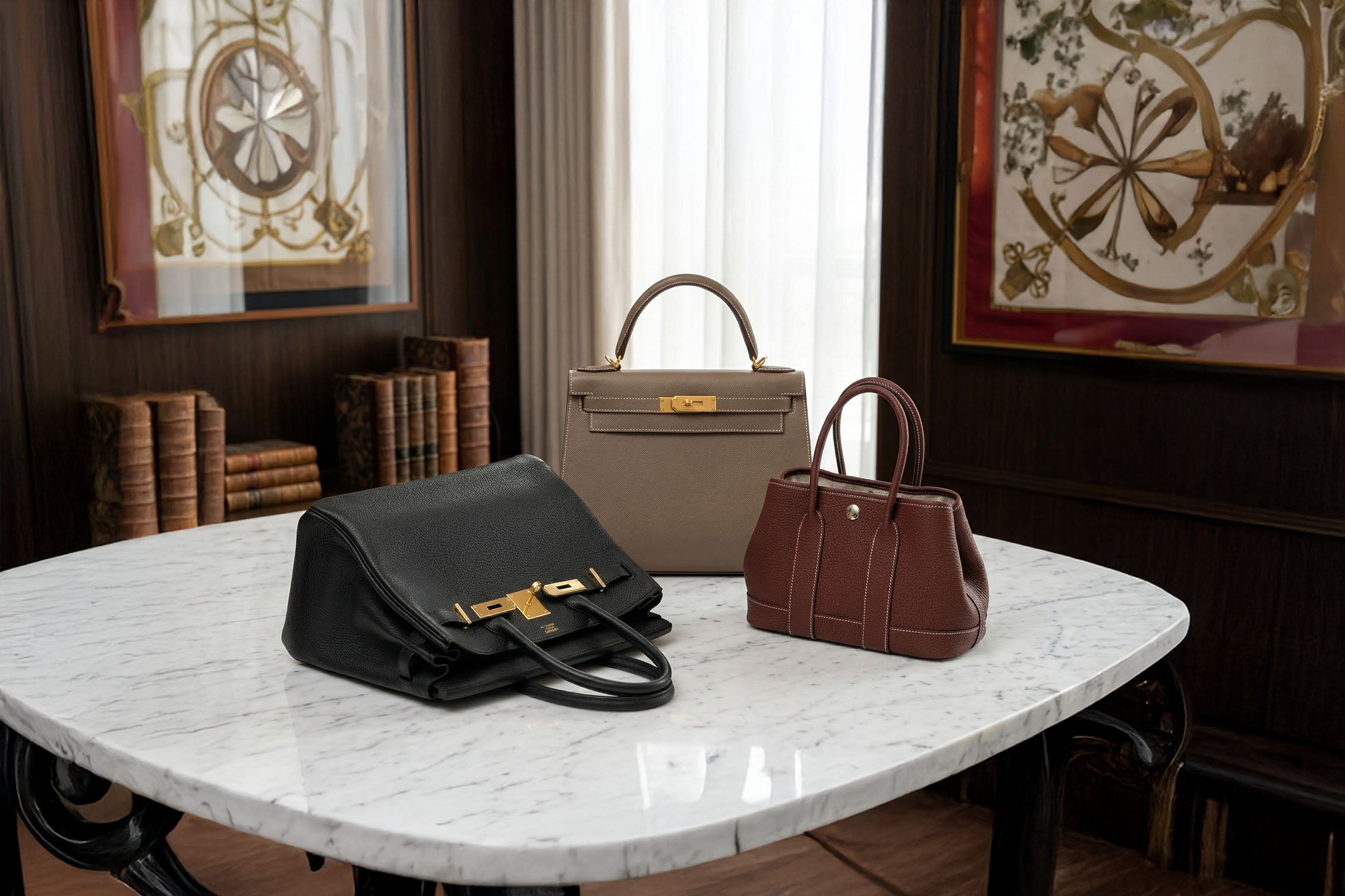



Exotic vs Standard Leather Hermès Bags: Which Has Better Investment Potential?
TL;DR
When comparing exotic vs standard leather Hermès bags, exotic skins usually sit at the top of the market because they are rarer, more complex to source, and more demanding to maintain. Standard leathers like Togo, Epsom, and Clemence are easier to live with, easier to resell, and often more practical for buyers who want strong long-term desirability without the added complications of precious skins. If your priority is exclusivity and collector appeal, exotics generally lead. If your priority is liquidity, durability, and a lower-risk entry into Hermès, standard leather often makes more sense.
Check out our Hermès collection and Birkin bags!
When people talk about Hermès bags as investments, the conversation almost always splits in two directions: exotic skins or standard leathers. Both show up on icons like the Birkin, Kelly, and Constance, but they behave very differently once rarity, care, buyer demand, and resale confidence enter the picture.
Exotic vs standard leather Hermès bags is not just a price question. It is really a question of scarcity versus practicality. Exotic pieces bring exclusivity, visual impact, and stronger collector appeal. Standard leathers offer steady demand, easier ownership, and a broader resale audience.
There is no one-size-fits-all answer. The better choice depends on your budget, your timeline, your comfort with maintenance, and whether you want a bag that feels easier to wear and easier to move later. This guide breaks down how both categories compare, so you can decide which route better fits your collecting goals.
Key Takeaways
- Exotic Hermès bags usually carry stronger collector appeal because rarity, paperwork, and limited supply make them harder to replace.
- Standard leathers tend to be easier to care for, easier to authenticate, and easier to resell to a broader pool of buyers.
- The best investment is not just the rarest bag, but the one with the right mix of condition, color, size, provenance, and market liquidity.
Featured Products


What Defines Exotic and Standard Leather Hermès Bags?
Before comparing value, it helps to define what Hermès is actually working with. The split between exotic and standard leather shapes everything from appearance and care to access and resale confidence.
Standard leathers form the backbone of the Hermès market
Standard leathers are the foundation of most Hermès bags. They include familiar materials such as Togo, Epsom, Clemence, Swift, and Box Calf. These leathers differ in grain, weight, softness, and structure, but they share one important trait: they are the most common entry point into Hermès collecting.
Togo remains a go-to for many Birkin and Kelly buyers because it balances softness, durability, and everyday practicality. Clemence feels heavier and more relaxed, with a slouchier look that suits buyers who want something less rigid. Epsom is crisp, lightweight, and structured, which is why it is so often associated with sharp silhouettes and formal finishes.
Standard leathers are not ordinary in any broad sense. They are still luxury materials shaped by Hermès craftsmanship. They are simply more accessible, more widely understood, and usually more forgiving in day-to-day use.
Exotic skins sit at the higher end of rarity and complexity
Hermès describes its exotic materials as precious leathers, including crocodile, alligator, ostrich, and lizard. These skins carry distinctive natural textures, from scale patterns to follicles, and they require more specialized handling in both production and ownership.
Exotics stand out immediately. Crocodile and alligator create a more dramatic surface than any calfskin can offer. Ostrich has its unmistakable quill pattern. Lizard has a refined, delicate scale structure that appeals to collectors who want something especially uncommon.
The difference is not just visual. Exotic bags are more sensitive to light, heat, water, and moisture, and they often come with extra documentation considerations, especially when international movement is involved. That added complexity is part of what supports their prestige, but it is also part of what narrows the buyer pool.
Why the distinction matters for investment value
The gap between exotic and standard leather is not only about what a bag costs up front. It is about how many examples are available, how easy the bag is to maintain, how broadly it appeals on resale, and how much risk the owner is taking on.
Exotics start from a place of scarcity and collector desire. Standard leathers start from a place of broader demand and stronger usability. In practice, that means exotics may offer more upside at the very top end, while standard leathers often offer a smoother ownership and resale experience.
How the Birkin, Kelly, and Constance Change the Comparison
The material matters, but the bag model matters too. A leather type does not perform the same way across every Hermès icon. The Birkin, Kelly, and Constance each respond differently to structure, scale, and collector demand.
Birkin
The Birkin is where the contrast between exotic and standard leather is often most visible. In standard leathers like Togo and Epsom, it holds broad appeal because it combines brand prestige with practicality. These versions are easier for more buyers to imagine using, which helps support steady resale demand.
In exotic skins, the Birkin shifts into a more collector-driven category. Smaller, more structured formats often become especially desirable because the skin pattern feels balanced and visually striking. These pieces can command enormous attention, but they also depend more heavily on condition, documentation, and exact specifications.
Kelly
The Kelly naturally leans into sharper structure and more formal elegance, so both standard and exotic materials can work beautifully here. Epsom, in particular, suits the bag’s crisp lines and helps preserve its shape. Box Calf also remains important for buyers drawn to vintage character and patina.
Exotic Kelly bags tend to benefit from the model’s already elevated aura. The silhouette is refined enough that rare skins feel especially intentional rather than purely flashy. That can make the Kelly one of the strongest examples of how exotic material and iconic design reinforce each other.
Constance
The Constance plays a slightly different role. Its shoulder and crossbody format gives it a more casual, urban energy, and standard leathers often perform well because they make the bag easier to wear. Epsom is especially common here because it keeps the lines clean without adding too much weight.
Exotic Constance bags certainly attract attention, especially in smaller sizes, but the buyer audience is narrower. For many collectors, the Constance in standard leather offers a compelling mix of recognizability, functionality, and market demand without moving too far into the specialist end of the category.
Investment Fundamentals: Scarcity, Demand, and Resale Reality
Most of the investment gap comes down to how scarcity and practicality interact. Exotic bags usually attract more attention, but standard bags often move more easily. That difference matters just as much as headline value.
Exotics usually lead on rarity and collector appeal
Exotic Hermès bags are produced in much smaller numbers, and Hermès applies strict standards to sourcing and quality control. The result is a category that feels harder to access and harder to replace. That alone supports stronger collector demand.
Because the supply is tighter, exotics often carry higher ceilings when the color, size, hardware, and condition line up. They also benefit from the fact that many buyers are not just shopping for a bag. They are shopping for rarity itself.
That said, rarity does not automatically guarantee an easy sale. The audience is smaller, the price point is higher, and buyers tend to be more exacting.
Standard leathers usually lead on liquidity
Standard leather Hermès bags do not have the same aura of rarity, but they have a major advantage: more people can realistically buy them, use them, and care for them. That broader buyer pool often makes them easier to resell.
Togo, Epsom, and Clemence remain popular not because they are scarce, but because they are trusted. Buyers know how they wear, how they photograph, and how they fit into daily life. That familiarity supports liquidity in a way exotics do not always match.
For someone thinking like an investor, liquidity matters. A bag that can be sold with fewer complications may be the more practical asset even if it never reaches the same top-end premium as an exotic piece.
Condition and provenance matter for both
Condition matters across the board, but it matters even more with exotics. A precious skin can lose appeal quickly if scales lift, the finish dulls, or moisture leaves visible damage. Standard leathers are generally more forgiving and easier to keep looking strong over time.
Provenance matters too. Original receipts, packaging, and any relevant paperwork all help reinforce buyer confidence. With exotics, those details often become even more important because buyers are spending more and asking more questions before they commit.
| Factor | Exotic Leather Hermès Bags | Standard Leather Hermès Bags |
|---|---|---|
| Rarity | Very limited and more collector-driven | More available and easier to source |
| Buyer Pool | Narrower and more specialized | Broader and more practical |
| Care Requirements | Higher and more specialized | Easier to maintain |
| Resale Potential | Higher ceiling when specs are strong | Steadier and often easier to realize |
| Authentication Complexity | Higher | More straightforward |
| Everyday Practicality | Lower for most owners | Higher for most owners |
Practical Considerations: Longevity, Care, and Wear
Investment value is only part of the picture. Ownership experience matters too. A bag that feels stressful to use or difficult to preserve may not be the right choice, even if it looks stronger on paper.
Standard leathers are easier to live with
Togo and Clemence are reliably forgiving, which is a big reason they remain so popular. Their grain helps disguise minor scratches, and they generally tolerate regular use better than precious skins. Epsom, while stiffer, also tends to perform well for owners who want structure with relatively low maintenance.
That durability has a direct investment benefit. Bags that are easier to wear without visible damage are easier to keep resale-ready. They may not have the same dramatic upside as an exotic piece, but they often create fewer ownership headaches along the way.
Exotics demand more careful handling
Hermès notes that its precious leathers are highly sensitive to light, sunlight, intense heat, water, and moisture. That means exotic bags demand more planning in storage, handling, and daily use.
Alligator and crocodile can be durable in some respects, but they are not carefree. Lizard is especially delicate. Ostrich sits somewhere in between, with a distinctive texture and a reputation for being more approachable than scaled skins, though still more demanding than standard leather.
If you plan to carry the bag often, this difference matters. Exotic ownership can feel rewarding, but it can also feel restrictive if you are constantly worried about the environment around the bag.
Patina and heirloom appeal
Standard leathers and exotics age differently. Box Calf can develop a beautiful sheen and character over time. Togo and Clemence soften gradually and often remain appealing as they relax. Exotics tend to preserve their dramatic look when cared for properly, but they need a more controlled environment to do so.
For some buyers, that visible evolution is part of the charm. For others, the goal is to keep the bag as close to pristine as possible. Either way, the long-term result depends less on theory and more on how the bag is actually stored, used, and maintained.
Access, Liquidity, and Risk in the Resale Market
Even the most desirable Hermès bag exists within a real resale market, and that market comes with friction. The stronger investment on paper is not always the easier one to buy or sell in practice.
Exclusivity does not always mean easy resale
Exotic Hermès bags may draw stronger collector interest, but they also involve more barriers. Buyers at this level expect detailed photos, stronger provenance, careful authentication, and sometimes additional paperwork. Sales can take longer simply because fewer buyers are prepared to move at that price level.
This is where many people overestimate exotics. They may be more valuable, but they are not always more liquid.
Standard leathers often offer a smoother exit
Standard leathers benefit from familiarity. Buyers understand what Togo, Epsom, and Clemence are supposed to look and feel like. That makes the sales conversation more straightforward, especially for classic colors and desirable sizes.
If your goal is not just to own well, but to preserve optionality, standard leather often has the advantage. It may not be the most glamorous answer, but it is a realistic one.
Trend risk affects both categories
No Hermès bag is completely insulated from shifts in taste. Size preferences change. Color trends change. The resale market can reward a very specific combination one year and cool on it the next.
Exotics usually remain more protected because rarity does not disappear, but they are still exposed to trend cycles and to broader changes in buyer sentiment around precious skins. Standard leathers are less dramatic on the way up, but they are often steadier when the market becomes more cautious.
Final Thoughts
Exotic Hermès bags generally win on rarity, prestige, and collector upside, while standard leather Hermès bags usually win on practicality, liquidity, and ease of ownership. For most buyers, the stronger long-term choice is the one that matches how they actually plan to buy, carry, maintain, and eventually resell.
If you are weighing your next Hermès piece, Rome Station can help you compare options with a sharper eye for both beauty and long-term value.
Fact Check and Data Sources
This comparison has been tightened to avoid unsupported resale percentages, auction-style hype, and overly precise return claims. Where brand-specific facts are referenced, they are grounded in official Hermès material, including Hermès pages on the Birkin, Kelly, and Constance, the Hermès care guidance for precious leathers, Hermès guidance on availability, and Hermès Finance information on animal welfare and certified sourcing.
Frequently Asked Questions
Do exotic Hermès bags always make better investments than standard leather bags?
Not always. Exotic bags usually have stronger rarity and prestige, but standard leather bags are often easier to buy, maintain, and resell. The better investment depends on whether you value upside or liquidity more.
Which standard Hermès leathers are usually the safest for long-term desirability?
Togo and Epsom are often the most dependable because buyers know them well, they suit classic Hermès models, and they tend to balance durability with strong market appeal.
Are exotic Hermès bags harder to care for?
Yes. Hermès states that precious leathers are sensitive to light, heat, water, and moisture, so exotic bags require more careful handling and storage than most standard leathers.
Why do standard leather Hermès bags often sell faster?
They usually appeal to a broader audience. The price point is more approachable, the care requirements are easier, and buyers are often more comfortable evaluating condition and authenticity.
Does paperwork matter more for exotic Hermès bags?
In many cases, yes. Provenance helps with any Hermès bag, but exotic pieces tend to attract more scrutiny because of their value, rarity, and the added complexity around precious skins.
Is the Birkin, Kelly, or Constance best for this comparison?
The answer depends on the buyer. The Birkin often shows the strongest contrast between practicality and rarity, the Kelly highlights structure and refinement especially well, and the Constance tends to favor buyers who want something more wearable in standard leather.
Love Hermès? See More from Rome Station
Add us to your Preferred Sources on Google to see our newest Hermès guides and insider tips first.