


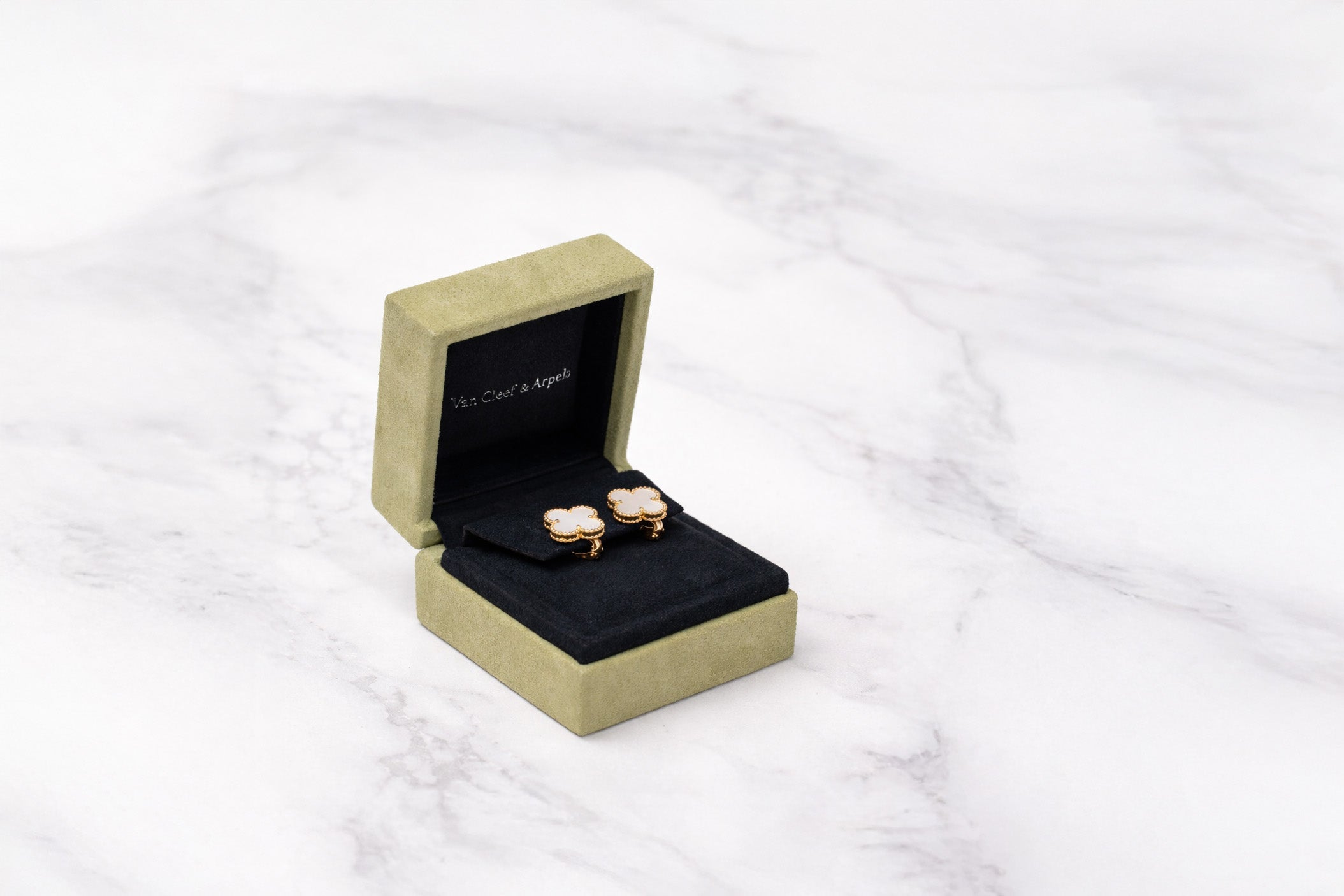
Cleaning Van Cleef & Arpels Stones Without Damaging Their Finish
Check out our Hermès collection and Birkin bags!
Van Cleef & Arpels jewellery deserves care that matches its craftsmanship, but cleaning these pieces can feel intimidating when you're worried about damaging delicate stones or finishes.
The key to safely cleaning Van Cleef & Arpels stones is understanding that different materials require different approaches, with some needing only dry cleaning while others can handle soapy water. Get it wrong and you might end up with cloudiness or dullness that even the pros can't always fix.
We've all been there, nervously holding an Alhambra piece over the sink, hoping we're not about to ruin it. Thankfully, Van Cleef & Arpels provides guidance for their stones. Once you know which method fits each material, the process gets a lot less stressful.
Mother-of-pearl wants nothing to do with water; diamonds can handle a gentle scrub. Each stone kind of has its own personality when it comes to cleaning.
Let's walk through how to care for each type of stone, no guesswork, no anxiety, just practical steps to keep your jewellery looking as brilliant as the day you unboxed it.
Key Takeaways
- Different Van Cleef & Arpels stones need different cleaning methods, some only dry cleaning, some okay with soapy water
- Never get mother-of-pearl or malachite wet; onyx and carnelian can handle gentle soap and water
- Skip ultrasonic cleaners and harsh chemicals, and store pieces in soft pouches to prevent scratches
Understanding Van Cleef & Arpels Stones
Van Cleef & Arpels uses a range of gemstones and materials, and each one needs its own kind of care. The method that works for diamonds could wreck malachite or mother-of-pearl, so knowing what you're working with matters.
Signature Gemstones in Van Cleef & Arpels Jewellery
You’ll find both precious and ornamental stones in VCA pieces, all picked with a pretty high bar for quality. Their Alhambra collection is famous for stones like onyx, carnelian, mother-of-pearl, malachite, and turquoise, plus the classics.
Diamonds show up everywhere in VCA designs. They're tough and can handle most cleaning methods.
You’ll also see blue agate, tiger's eye, and colorful chalcedony. Each material has its own quirks. Mother-of-pearl, for example, has a delicate shine and needs extra gentle handling, while onyx is much more robust.
So, you can't just use the same cleaning trick for every stone. What makes carnelian glow could strip malachite’s finish.
How Stone Types Affect Cleaning Needs
Stone porosity and hardness decide what cleaning is safe. Porous stones like turquoise and malachite can soak up water, soap, and chemicals, bad news, since that can mean stains or even damage.
Softer materials like mother-of-pearl (Mohs 2.5-4.5) scratch way easier than diamonds (Mohs 10). So, skip abrasive cloths or brushes on delicate pieces.
Some stones hate moisture. Others can't handle even mild soap. Van Cleef & Arpels splits their stones into dry-clean-only and those safe for soapy water.
Identifying Sensitive Materials
Mother-of-pearl and malachite are the most sensitive. Stick to dry cleaning for both, water can leave spots, dull the finish, or even cause cracks.
Never submerge these or use liquid cleaners.
Onyx, carnelian, blue agate, chalcedony, tiger's eye, and turquoise can handle gentle soapy water but still need a gentle touch. Don’t let them soak or hit them with harsh chemicals.
If you’re not sure what stone you have, check your VCA paperwork or just ask them.
General Rules for Cleaning Van Cleef & Arpels Stones Safely
Start with the right tools and techniques. The wrong materials or chemicals can mess up delicate surfaces and settings.
Essential Tools for Safe Cleaning
Each VCA cleaning kit comes with a soft brush and a chamois cloth made from recycled cotton. These cover most cleaning needs.
The brush should have gentle bristles, no scratching! Use it to get into crevices and around bezels. The chamois cloth buffs and polishes without leaving lint.
For soapy water cleaning, mix a few drops of mild, pH-neutral dish soap with lukewarm water (not hot, hot water can shock some stones). Use a bowl just for jewellery so you don’t get other residues involved.
Keep a separate microfiber cloth for drying. Pat pieces dry, don’t rub, rubbing can disturb prongs or snag on metalwork.
What to Avoid When Cleaning
Harsh chemicals are a no-go. Bleach, ammonia, chlorine, and alcohol-based cleaners can discolor metals and eat away at stones. Even regular household cleaners can dull the finish.
Ultrasonic and steam cleaners? Not worth the risk. Vibrations can loosen stones, and some materials (like mother-of-pearl and malachite) don’t react well to heat or moisture.
Abrasive stuff scratches metals and soft stones, so skip paper towels, rough cotton cloths, and stiff brushes. Toothbrushes might seem handy, but most are too rough.
Don’t submerge pieces, especially those with porous stones or vintage glue.
Protecting the Finish and Settings
Before cleaning, check for loose stones or damaged prongs. Gently wiggle each motif. If something feels off, skip home cleaning and go to a boutique.
The metal finish matters too. Yellow, white, and rose gold all develop patina differently. Light pressure keeps the polish intact.
Clasps and chain links collect oils and debris, but they also wear out faster if you scrub too hard. Use the soft brush with barely any pressure.
Always store cleaned pieces in their original pouches, separated from each other. That way, nothing scratches or bumps.
Special Care Instructions by Stone Type
Every stone in VCA’s collection has its own needs. Mother-of-pearl and malachite want only dry cleaning, while carnelian, onyx, blue agate, tiger's eye, and turquoise can handle gentle soap and water.
Mother-of-Pearl: Preserving Iridescence
Mother-of-pearl is delicate. Its shine comes from thin layers of nacre that scratch or lose their glow with rough cleaning.
Stick to dry methods. Use the soft brush to gently sweep away dust, then lightly buff with the chamois cloth.
Never let mother-of-pearl touch water, chemicals, or ultrasonic cleaners. Moisture can cloud or separate the nacre layers. Even perfume and lotion can dull it over time, so put jewellery on last when getting ready.
Store mother-of-pearl pieces away from harder stones. The surface scratches easily, so individual pouches are a must.
Carnelian: Keeping Colour Vibrant
Carnelian’s orange-red glow is a favorite, and it’s tougher than mother-of-pearl. It can handle soapy water.
Mix lukewarm water and a few drops of mild soap. Dip your soft brush in and gently clean the carnelian. Focus on the gold bezels where oils build up.
Rinse quickly under lukewarm water and pat dry with your chamois cloth. Don’t let carnelian soak.
If the stone looks dull, it’s probably just surface buildup, proper cleaning will fix that.
Onyx and Blue Agate: Deep Clean Without Risk
Onyx and blue agate are both chalcedony family members and pretty hardy. They do well with soapy water cleaning.
Mix your cleaning solution, dip the soft brush in, and work it over the stone in small circles. Pay attention to bezels and edges where dirt hides.
Rinse under lukewarm water and dry right away with your chamois cloth. Buff gently to bring out the shine. These stones can handle regular cleaning like this.
Malachite, Turquoise, and Tiger's Eye: Handling Porous Gems
These stones are porous, they soak up liquids and chemicals. Malachite needs dry cleaning only; turquoise and tiger’s eye can handle quick soapy water treatment.
For malachite, just use the soft brush to remove dust and buff with the chamois cloth. Water or cleaning solutions can stain or discolor its green banding for good.
Turquoise and tiger’s eye can handle brief soapy water cleaning. Work fast: clean with the brush, rinse, and dry thoroughly. Never let them soak.
All three are sensitive to perfumes, hairspray, and lotions. Put these pieces on last and take them off before swimming, showering, or using beauty products. The stones can soak up these substances and get permanently discolored.
Diamonds and Hard Stones: Polishing and Sparkle
Diamonds and other hard stones in VCA pieces can handle more cleaning than softer ones, but the settings are still delicate.
Safe Cleaning Methods for Diamonds
Mix a few drops of mild dish soap with warm water. This removes oils and residue without harming the settings.
Use a new, soft-bristled toothbrush to gently scrub the diamonds and get into crevices. Avoid scratching the metal beading.
Steps:
- Rinse with lukewarm water to remove all soap
- Rinse again with distilled water to avoid mineral spots
- Pat dry with a lint-free cloth
Skip ultrasonic cleaners even for diamonds. Vibrations can loosen settings, especially those tiny beads around Alhambra stones.
Maintaining the Setting and Brilliance
The metal beading around each stone needs care too. Polish gently with a soft, lint-free cloth in small circles, no heavy pressure.
For daily upkeep, just wipe your pieces with a polishing cloth after wearing. This keeps oils from building up and keeps the sparkle alive.
Store diamond pieces in soft pouches, away from other jewellery. Diamonds are tough, but their gold settings and beading can get scratched.
Cleaning Techniques: Dry, Damp, and Soapy Water
Van Cleef & Arpels pieces need different cleaning approaches based on the stone. Choosing the wrong method can cause damage you can’t undo. Dry cleaning is the safest bet for most, but some stones can handle soapy water if you’re careful.
When to Use Dry Cleaning
Dry cleaning’s really the safest bet for most Van Cleef pieces, and honestly, it’s the only way to go for delicate stones like mother-of-pearl and malachite. Both are porous, just a little water can seep in, causing discoloration or even damaging the structure over time.
Here’s what we do: grab a soft brush (natural bristles, not those scratchy synthetic ones) and gently sweep away dust and debris from the stone’s surface and around the setting. Light, easy motions work best, especially right where the metal hugs the stone.
After brushing, we follow up with a chamois cloth to bring back the shine and wipe away any lingering bits. This dry method works for all VCA stones, so it’s our default between wears. If there’s ever a doubt about a stone’s water tolerance, we just stick to dry cleaning, better safe than sorry.
Gentle Soapy Water Methods for Robust Stones
Some stones, onyx, carnelian, blue agate, chalcedony, tiger’s eye, turquoise, can actually handle a little water if they need more than a quick dust-off. We mix a dash of mild dish soap with lukewarm (never hot!) water; hot water can shock certain stones, and nobody wants that.
We briefly dip the piece or use a damp soft brush, then rinse it quickly under running water. Right after, we pat it dry with a soft cloth and let it air out completely before putting it away. The trick is to keep water exposure short and dry the piece thoroughly.
Diamonds? They’re tough and can take this method without fuss. Still, we avoid soaking anything with glued parts or older pieces where adhesives might be iffy.
Tips for Using a Soft Brush
A soft brush is essential for stone care, it won’t scratch or wear down the finish. Natural bristles really do the job better than nylon or other synthetics, which can leave micro-abrasions.
We use gentle, circular motions and let the bristles do the heavy lifting, especially around detailed settings and chain links where grime loves to hide. For dry cleaning, we brush right on the stone and metal. For soapy water cleaning, we dip the brush in the solution, not the whole piece.
After each use, we rinse the brush with water and let it dry completely. A clean brush is just as important as a clean piece of jewellery.
Big No-Nos: Ultrasonic Cleaners and Other Risks
Van Cleef & Arpels pieces need careful handling, and some cleaning methods can really do a number on their stones and settings. Ultrasonic cleaners and harsh chemicals are especially risky for these luxury pieces.
Why Ultrasonic Cleaners Are Off Limits
Ultrasonic cleaners might sound handy, but they’re absolutely not for Van Cleef & Arpels jewellery. These machines use high-frequency sound waves to create little bubbles that collapse with force, and that can wreak havoc on delicate stones.
Turquoise from Alhambra collections, for example, is porous and can crack or discolor from the vibrations and heat. Mother-of-pearl? Its layered structure can get torn apart by ultrasonic cleaning.
The vibrations also threaten stone settings. Van Cleef’s mystery setting technique uses no visible prongs, relying on precise metalwork that can loosen up under ultrasonic stress. Even traditional settings with older adhesives or delicate bezels aren’t safe.
Heat from ultrasonic cleaning is another issue. Stones like opal, which contain water, can crack with temperature swings, and treated stones might lose their color.
Common Mistakes That Ruin Stones
Other cleaning mistakes can be just as bad. Harsh chemicals, think ammonia, bleach, acetone, can pit soft stones, strip treatments, and corrode the gold settings.
Abrasive materials are another enemy. Paper towels, regular cloths, and even some polishing cloths have fibers that scratch softer stones like turquoise and lapis lazuli. We always reach for microfiber cloths designed for fine jewellery.
Hot water isn’t safe either. Sudden temperature changes can cause thermal shock, cracking stones like opal, emerald, and tanzanite.
Soaking pieces for too long lets water seep behind settings or into porous stones, which can discolor, weaken adhesives, or tarnish the metal.
Everyday Protection and Storage Tips
Keeping Van Cleef & Arpels pieces safe between cleanings means building good habits and storing them smartly, prevention’s half the battle.
Wearing and Storing Van Cleef Pieces
Take off VCA jewellery before anything involving water, chemicals, or potential knocks. That means before showering, swimming, spritzing perfume, or tackling chores. Lotions and cosmetics leave residue, and chlorine or cleaners can hurt both stones and metal.
For storage, Van Cleef bracelets and other pieces need their own soft-lined compartments in a jewellery box. Storing them separately keeps metal from scratching metal and protects those delicate stones. The recycled cotton pouch from your purchase is perfect for single pieces.
Stash your jewellery box somewhere cool and dark, away from sunlight and humidity. Fluctuating temperatures and too much moisture can affect certain stones over time.
Avoiding Daily Hazards
Hard knocks are the biggest risk, especially for malachite and mother-of-pearl. We suggest putting on jewellery last when getting dressed and taking it off first when you get home.
Apply perfume, hairspray, and hand sanitizer before putting on your pieces. These products contain alcohol and chemicals that can dull stones or damage materials. If you get something on your jewellery, just wipe it gently with a soft, dry cloth.
Extreme temperatures matter more than you’d think. Avoid wearing your pieces in saunas, hot tubs, or during winter activities that involve rapid temperature swings.
Frequently Asked Questions
Van Cleef & Arpels jewellery really does need specific care based on stone and metal, plus a little extra attention to water sensitivity and cleaning technique to keep that signature sparkle.
How can one clean Alhambra jewellery pieces without dulling their iconic shimmer?
We reach for the soft brush from Van Cleef’s cleaning kit to gently dry clean mother-of-pearl Alhambra pieces. It removes dust and oils without risking water damage.
For hard stones like onyx or carnelian, lukewarm soapy water with a bit of mild dish soap does the trick. Gently brush, rinse quickly, and pat dry with the chamois cloth. Just don’t let water linger.
What's the best home remedy for sprucing up those beloved Van Cleef gems?
A simple mix of lukewarm water and a little pH-neutral soap works wonders for most hard stones. That’s actually what the Maison suggests for tiger’s eye, blue agate, and chalcedony.
Always test your cleaning method on a hidden spot first. We skip harsh chemicals, ultrasonic cleaners, and anything acidic like lemon juice or vinegar, they’ll just ruin delicate surfaces.
Are there any professional services you'd recommend for maintaining that just-bought lustre of VCA stones?
Van Cleef & Arpels boutiques offer complimentary cleaning for pieces you’ve bought from them. We recommend using this yearly or whenever your jewellery looks like it needs more than a quick home touch-up.
If you spot loose settings, scratched metal, or stubborn tarnish, it’s time to see the pros. The Maison’s specialists know how to care for each stone and can tell if repairs are needed.
What's a no-no when it comes to keeping those stones sparkling, any common mistakes to avoid?
Never use water on mother-of-pearl or malachite, these stones soak it up and lose their shine for good. Hot water’s bad news for all Van Cleef pieces, as it can loosen adhesives and damage settings.
Ultrasonic cleaners might look tempting, but they’re a hard no for VCA jewellery. The vibrations loosen prongs and crack soft stones. We also avoid household cleaners, toothpaste, and rough cloths that scratch metals and stones.
Could you share a step-by-step for a safe DIY clean tailored for precious VC&A stones?
For hard stones that can handle water, we start with a small bowl of lukewarm water and a couple drops of mild, unscented dish soap. Dip the soft brush from the VCA kit in the solution and gently brush the jewellery in circles.
Then rinse quickly under lukewarm running water, making sure all the soap’s gone. Pat dry with the chamois cloth, and let it air dry on a clean towel for at least 30 minutes before wearing or storing.
For mother-of-pearl and other water-sensitive stones, skip the water. Just use the dry soft brush to remove dust and oils, then gently buff with the chamois cloth.
How often should one pamper their VCA beauties with a clean to keep them looking posh and pristine?
We usually give our frequently worn pieces, like Alhambra necklaces, a gentle dry brushing every couple of weeks. That helps keep oil and dirt from building up, and it doesn’t stress those delicate stones or settings.
If we wear something daily, we just give it a quick swipe with the chamois cloth after each use. For a deeper clean, soapy water does the trick about once a month. And honestly, when things start to look a bit dull, we’ll pop into a Van Cleef boutique for professional cleaning, maybe once or twice a year, depending on how much we wear each piece.
Love Hermès? See More from Rome Station
Add us to your Preferred Sources on Google to see our newest Hermès guides and insider tips first.

