
Why Van Cleef & Arpels Alhambra Is One of the Safest Jewelry Investments
Check out our Hermès collection and Birkin bags!
When you’re thinking about luxury jewelry investments, Van Cleef & Arpels’ Alhambra collection just keeps popping up as a top contender.
The Alhambra’s steady demand, strong resale values, and a track record that stretches over 50 years make it one of the safest bets you can make in jewelry.
While so many so-called “it” pieces fade into the background, these four-leaf clover designs have kept their magic alive, think Grace Kelly in the ‘70s, Kate Middleton now, and everyone in between.
We’ve seen plenty of trends come and go, but the Alhambra? It’s always there. The collection’s investment appeal isn’t just about the name, either.
Limited production, stellar craftsmanship, and a lively secondary market keep values high and steady.
If you’re eyeing your first investment piece or adding to a collection, it helps to know what makes the Alhambra so financially sound.
Let’s get into why these elegant clovers have become, well, the gold standard for jewelry investors everywhere.
Key Takeaways
- The Alhambra collection has held strong demand and resale value for over 50 years
- Van Cleef & Arpels’ craftsmanship and limited production help keep value high
- The collection outshines many luxury jewelry brands in the resale market thanks to its iconic status and wide appeal
What Makes Van Cleef & Arpels Alhambra a Standout Investment
The Alhambra collection stands apart because it blends a respected brand, broad collector recognition, and a design that doesn’t bow to fleeting trends.
The Power of Brand Heritage
Van Cleef & Arpels has worked out of Place Vendôme in Paris since 1906, and by now, they’re firmly established as one of high jewelry’s most respected names. Their reputation is built on decades of craftsmanship and creative design.
The Alhambra collection debuted in 1968 with a 20-motif long necklace, those now-iconic four-leaf clovers in creased yellow gold. That motif wasn’t random. Four-leaf clovers had already shown up in the brand’s archives as early as 1906, and Jacques Arpels, nephew of the founders, used to pick real four-leaf clovers for employees as good luck charms.
This deep tie between the brand’s past and the collection’s symbolism gives the Alhambra a kind of “heritage value.” Buying an Alhambra piece isn’t just about owning luxury jewelry, it’s about joining a story that’s over a century old, with a design that grew naturally from the brand’s own traditions.
Instant Recognition and Collectibility
You can spot an Alhambra piece from across the room. That quatrefoil shape is unmistakable. This instant recognition really matters in the resale world because buyers can quickly spot and value pieces without too much fuss.
Some famous Alhambra wearers:
- Princess Grace of Monaco (three sautoirs, 1979)
- Romy Schneider (1973)
- Françoise Hardy (two sautoirs, 1973)
Collectors of all ages keep the demand strong, from millennials buying their first luxury piece to seasoned buyers looking for rare vintage versions.
Van Cleef & Arpels keeps things fresh by adding new materials and colors but never messing with the core design. That means collectors have plenty of options, and limited editions or rare materials often appreciate faster than standard versions. There’s a reason people keep coming back for more.
Focus on Timeless Elegance
Alhambra’s design doesn’t get stuck in any one decade. Unlike jewelry with obvious ‘80s or 2000s vibes, Alhambra sticks to its original shape and size from 1968.
They made some smart design choices. The clover motif uses simple geometry that works for everything from tiny earrings to bold necklaces. Details like the beaded gold borders and the “guilloché” texture (that creased look on vintage pieces) add interest but don’t overwhelm.
Alhambra pieces photograph beautifully, formal or casual, doesn’t matter. A single pendant looks right with a business suit or jeans, so these pieces actually get worn instead of gathering dust in a safe.
Richemont, Van Cleef & Arpels’ parent company, has credited Alhambra’s success with boosting their jewelry category by four percent recently. That’s a sign of real, ongoing demand, not just hype.
The Iconic Alhambra Motif and Its Origins
The Alhambra collection pulls from a rich mix of cultural symbolism, personal passion, and architectural inspiration. Van Cleef & Arpels didn’t just whip up a clover in 1968, they leaned into centuries of luck symbols and Moorish style to create something that lasts.
Cultural Influences Behind the Design
Four-leaf clovers have meant good luck for centuries, and Van Cleef & Arpels had been using them in their jewelry since 1906. The Maison always liked to include symbols of luck, wood talismans, charms, and other little tokens.
When the first Alhambra necklace launched in 1968, it had 20 clover-shaped motifs in creased yellow gold edged with gold beads. It came out during a time when women were starting to buy fine jewelry for themselves, not just as gifts. The four-leaf clover worked because it was approachable but still sophisticated.
It was rare to find fine jewelry you could wear every day and still feel special. Alhambra bridged that gap, perfect with casual outfits, but just as good for a fancy night out.
The Story of Jacques Arpels and Four-Leaf Clovers
Jacques Arpels, the founders’ nephew, took four-leaf clovers from his own backyard and handed them out to employees for luck. His quote, “To be lucky, you have to believe in luck,” became the heart of the Alhambra collection.
This wasn’t just clever marketing. Jacques really did collect those clovers and believed in their power. His genuine passion fed right into the Maison’s most successful line, showing how real enthusiasm can lead to classic design.
The clover motif showed up now and then in the brand’s early 20th-century archives, but Jacques made it a signature.
Inspiration from Alhambra Palace
The collection’s name comes from the Alhambra Palace in Granada, Spain, a masterpiece of Moorish architecture famous for its geometric patterns and quatrefoil shapes. The palace’s repeating four-lobed designs echo the clover motif Van Cleef & Arpels uses.
This ties the collection to centuries of artistry and craftsmanship. Moorish artisans at the Alhambra Palace used geometry and repetition to create harmony, ideas Van Cleef & Arpels borrowed for their jewelry.
The palace connection lifts the clover from a simple luck symbol to a sophisticated, architectural element. That dual identity, in our view, is a big part of why Alhambra endures.
Signature Styles and Sub-Collections that Drive Value
The Alhambra’s investment strength comes from four main sub-collections. Each one keeps the clover motif but offers different styles and price points. That gives collectors lots of ways to build a portfolio, and some pieces definitely command stronger resale prices than others.
Vintage Alhambra: The Classic Investment
Vintage Alhambra sticks with the original 1968 design and remains the most coveted line for serious collectors. Standard-sized clover motifs come in everything from mother-of-pearl and onyx to diamonds and lapis lazuli.
The 20-motif necklace (the long “sautoir” style) is the real MVP here, especially in yellow gold with mother-of-pearl. That combo has the broadest appeal and is easiest for buyers to recognize.
Vintage pieces don’t feel dated, even decades later. Stones like carnelian and tiger’s eye have become more sought after lately, as collectors look for rarer colors beyond the usual white mother-of-pearl.
Magic Alhambra and Its Unique Appeal
Magic Alhambra brought in larger clovers and some asymmetry, perfect for anyone who wants a statement piece with more presence. The bigger motifs create a bolder look but still feel refined.
Resale is strong for Magic Alhambra, especially when the pieces feature precious stones or unique materials. Long necklaces with mixed motif sizes are especially interesting to collectors who already have Vintage pieces.
Magic Alhambra sits in a sweet spot, distinctive enough to stand out, but still recognizably Alhambra. That keeps these pieces in demand.
Sweet Alhambra and Pure Alhambra Explained
Sweet Alhambra uses the tiniest clover motifs, delicate, everyday pieces at lower price points. Pure Alhambra skips the beaded edges for a minimalist take.
These entry-level lines serve different roles. Sweet Alhambra is a great place to start a collection, though it usually appreciates a bit slower than Vintage. Pure Alhambra appeals to minimalists but doesn’t command the same resale premiums due to less brand recognition.
Both lines help collectors diversify. They’re easier to get (no waitlists) and offer options for selling smaller pieces to fund bigger purchases.
Materials, Craftsmanship, and Jewelry Types Favored by Investors
Alhambra’s investment appeal comes down to top-notch materials, 18K gold, carefully chosen gemstones, and specific formats that do well in the resale market.
Mother-of-Pearl, Hard Stones, and Diamonds
Mother-of-pearl is the collection’s signature material, loved for its shimmery, timeless look. Van Cleef & Arpels only picks the best nacre, so every clover shines and lasts. This material’s been a staple since 1968.
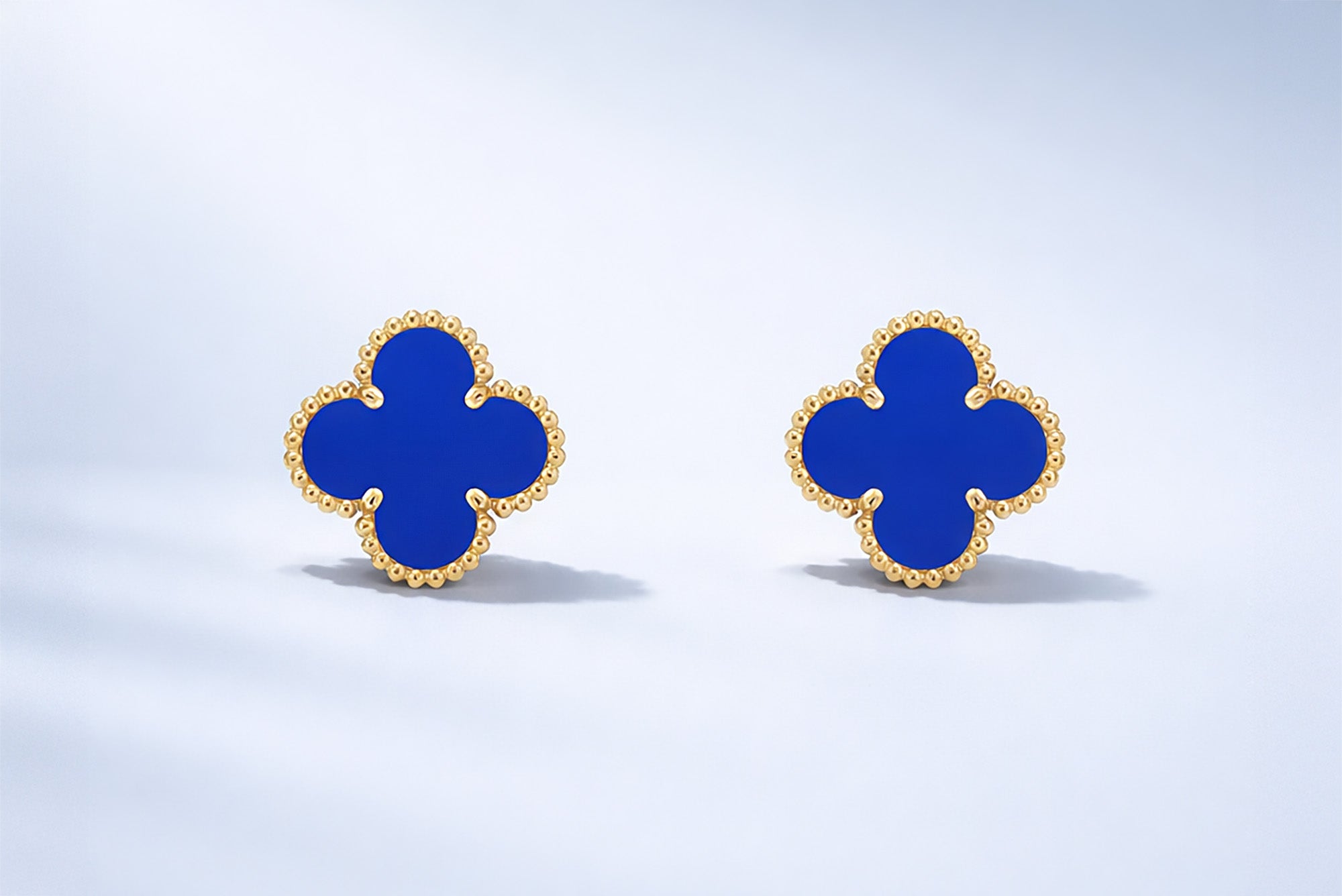
Hard stones add drama and stability to Alhambra pieces. Onyx gives bold black contrast, malachite brings rich green stripes, carnelian offers warm orange-red, and lapis lazuli shows off deep blue with gold flecks.
Rarer materials like tiger’s eye, blue agate, chalcedony, and agate show up in limited editions and vintage pieces, often selling for a premium. Diamond-set Alhambra pieces sit at the top, full pavé clovers fetch the highest prices. In our experience, rare stone combos almost always outpace standard mother-of-pearl in appreciation.
Necklaces, Bracelets, Rings, and Earrings
Necklaces are the cornerstone, especially the 20-motif long style. They’re versatile, recognizable, and move easily from day to night. The single-motif pendant is more accessible but still holds its value.
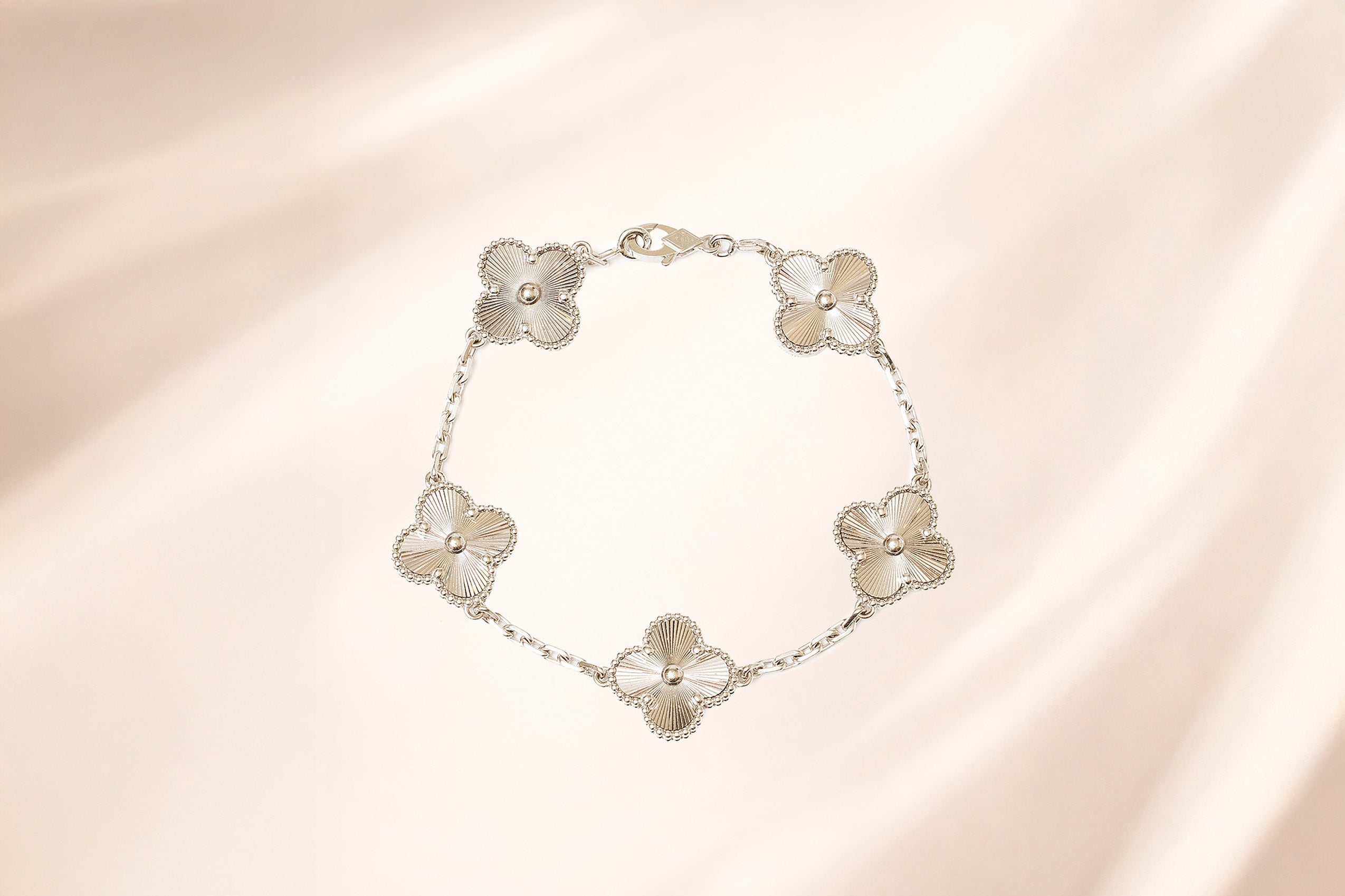
Bracelets come next, with the five-motif version being especially popular. They’re practical for daily wear, which keeps demand high.
Earrings and rings round out the collection. Matching earrings appeal to set collectors, while rings can be a bit more trend-driven. For pure investment, we tend to focus on necklaces and bracelets, but building a set? Don’t skip the earrings.
Expert Artisans and Iconic Details
Van Cleef & Arpels’ artisans spend years mastering the skills needed to make Alhambra jewelry. Each clover gets hand-finished to create the signature beaded gold border, the Perlée edge. It’s a painstaking process that takes real expertise to get right.
Their workshops enforce strict standards for stone selection and setting. Mother-of-pearl is cut for the best iridescence; hard stones are chosen for color and pattern. Every piece goes through individual inspection before leaving the workshop.
That’s why Alhambra jewelry holds up so well. Vintage pieces from the ‘70s still have crisp beading and secure stones, which definitely helps their resale value. The blend of traditional techniques and top materials means these pieces genuinely last.
Market Performance and Resale Value
The Alhambra collection keeps showing strong resale numbers, with pieces often retaining 80-90% of their original price, and some vintage items even surpassing retail. Auction results and boutique waitlists both point to steady, real demand in both the primary and secondary markets.
Why Alhambra Holds Its Value
Alhambra pieces really seem to hold their own on the resale market, especially compared to other luxury jewelry. You’ll often see them keeping 80-90% of their retail value, and some vintage pieces even go for more than their original price.
Take the 20-motif Alhambra necklace, some of those have sold for up to 113% of what they cost new. That kind of stability mostly comes from steady, worldwide demand rather than people just trying to flip for quick profit. Van Cleef & Arpels bumped up prices by about 4.8% in the U.S. and 5.1% in Europe for 2025, which has helped support the value of pieces bought before those increases.
Their jewelry sales jumped 11% in 2025, which is a lot stronger than the general luxury sector’s 6% growth. That’s probably a sign that collectors are genuinely interested, not just reacting to market trends.
Celebrity Influence and Cultural Cachet
Alhambra's reach has definitely pushed past the usual luxury crowd. Even MLB players like Miguel Rojas and Junior Caminero have worn Alhambra necklaces during games. That’s brought the motif to younger folks who might not have paid attention to high jewelry before.
There’s also this long-standing connection to old-school glamour. Princess Grace of Monaco wore Van Cleef & Arpels, and that association with elegance still lingers. Mix that heritage with modern celebs, and you get a kind of cross-generational appeal that doesn’t feel forced.
The four-leaf clover motif is so recognizable now, it’s not just jewelry, it’s a bit of a cultural marker. People know what they’re buying, and that familiarity helps keep resale values up.
Auction Results and Boutique Exclusivity
Christie’s auctions have shown that Van Cleef & Arpels pieces, especially those with the Mystery Set technique, can fetch millions. Collectors clearly see these as more than just pretty accessories, they’re investments.
The Place Vendôme boutique keeps waiting lists for popular Alhambra styles, which naturally limits supply. You can’t just stroll in and pick up whatever you want, and that keeps the market from getting flooded. Pre-owned Alhambra pieces usually sell for just 20-30% below retail, which is a pretty tight margin and says a lot about demand.
When Van Cleef releases limited editions with materials like malachite or guilloché enamel, collectors get even more eager. These often sell out fast and show up on the secondary market at a premium.
How the Alhambra Collection Compares to Other Luxury Jewellery Brands
Alhambra competes with other big names, but its mix of recognizable design, steady pricing, and solid resale makes it stand out. Chanel has its bold logos, and Fred brings different motifs, but Van Cleef’s clover is in its own lane.
Alhambra vs. Chanel: Quiet Luxury vs. Statement Style
Chanel’s fine jewelry leans hard on the CC logo and quilted looks, super recognizable, but maybe a bit trendier. Collections like Coco Crush and Camelia are great if you want your jewelry to shout its brand.
Alhambra isn’t about big branding. The four-leaf clover feels elegant and subtle, so you can wear a Vintage Alhambra pendant to a meeting without feeling over the top, then layer up for something more dramatic at night.
On the investment side, Alhambra tends to have steadier resale. Chanel’s fine jewelry doesn’t hold its value as well, probably because the brand is more famous for bags and costume pieces. Van Cleef’s price hikes have also been more predictable and less dramatic.
Material-wise, both brands use quality gold and stones, but Van Cleef’s mother-of-pearl, onyx, and carnelian pieces are a bit more accessible. Chanel goes heavier on diamonds, which can push prices up fast.
Fred and Other High Jewellery Maison Rivals
Fred’s Force 10 collection, with its cable motif, sits close to Alhambra on price and quality. It’s got loyal fans, but just hasn’t hit the same level of recognition or resale power.
Other heavy hitters like Boucheron, Bvlgari, and Cartier each have their own thing going. Cartier’s Love and Juste un Clou are strong investments, but they’re a bit more minimalist. Bvlgari’s Serpenti is bolder, and Boucheron’s Quatre rings stand out for their style.
What really sets Alhambra apart is its long history. Since launching in 1968, the collection’s barely changed and it’s still in production. That kind of staying power isn’t common.
Vintage Alhambra pieces from the 1970s can fetch serious premiums at auction. Meanwhile, lots of rival collections from that era have faded away.
Frequently Asked Questions
People have a lot of practical questions about the Alhambra collection, investment value, care, and how it performs in the market. Here’s what we know right now.
What makes Van Cleef & Arpels' Alhambra collection such a timeless investment for jewellery enthusiasts?
Alhambra’s strength as an investment goes back to its 1968 debut and the way it’s never really gone out of style. The four-leaf clover design, inspired by the Alhambra Palace in Granada, strikes a nice balance between meaning and everyday wearability.
The collection’s versatility means you can wear these pieces just about anywhere, from casual lunches to formal events. That kind of flexibility makes people hang on to their pieces, which keeps demand high.
Van Cleef uses 18K gold and top-notch materials like mother-of-pearl, onyx, and carnelian. Their craftsmanship hasn’t slipped since the collection started, each piece feels solid and well-made.
How has the resale value of the Alhambra collection trended over recent years?
Lately, some Alhambra pieces have sold for more than their original retail price on the secondary market. Limited runs and discontinued color combos create scarcity, which pushes up prices.
Vintage pieces, especially those with white mother-of-pearl, are seeing the strongest demand and highest resale prices.
Even when the economy’s shaky, Alhambra jewelry tends to hold up. Luxury resellers report steady interest, and annual price bumps from Van Cleef help keep values moving up.
Could you share why collectors are so captivated by the Alhambra necklace?
The Vintage Alhambra necklace is probably the collection’s most iconic piece. The single motif pendant hits a sweet spot for length and works with all kinds of outfits.
Collectors love that you can layer the necklace with other Alhambra pieces or even mix it up with different brands. That makes it more wearable, which matters when you’re investing this much.
Plus, the necklace lets Van Cleef show off their “Mystery Set” stone-setting technique. The metal settings kind of disappear, letting the materials really stand out.
What factors contribute to the enduring appeal and stable investment potential of Van Cleef & Arpels Alhambra?
Brand heritage is a big factor. Van Cleef & Arpels is one of France’s top jewelry houses, and Alhambra benefits from that reputation without having to rely on big logos.
Limited editions and seasonal colors add to the collectability. When certain versions get discontinued, prices in the secondary market often jump right away.
The collection offers something for everyone, from entry-level Sweet Alhambra to high jewelry Magic Alhambra. That gives buyers a way to grow within the brand.
Royal and celebrity fans help too. British royals have worn Alhambra for years, giving it a kind of credibility that advertising just can’t match.
In terms of investment, how does Alhambra compare to other high-end jewellery pieces?
Alhambra stands alongside Cartier’s Love bracelet and Tiffany’s Return to Tiffany when it comes to recognition and resale. Still, Alhambra offers more choices in materials and price.
Generally, Alhambra pieces keep their value better than jewelry from brands mostly known for leather goods or fashion. Van Cleef’s deep jewelry expertise shows in the quality.
Compared to just buying loose diamonds or gemstones, Alhambra has the edge of instant brand recognition. A nice diamond is valuable, but it doesn’t have the same collector pull.
The Perlée collection from Van Cleef is also a strong investment, though it hasn’t quite reached Alhambra’s level yet. For now, Alhambra’s the safer pick if you’re thinking about investment within the Van Cleef range.
What care and maintenance tips can ensure my Alhambra piece retains its value over time?
Try to keep Alhambra pieces in their original pouches and boxes, let’s be honest, the packaging and paperwork really do matter if you ever want to resell. Hang onto those purchase receipts and certificates of authenticity, but maybe don’t store them right next to your jewelry. A little separation never hurts.
Steer clear of harsh chemicals, household cleaners, perfumes, and chlorine. Take off your Alhambra jewelry before you swim, shower, or get into your beauty routine. It’s surprisingly easy to forget, but those things can do a number on delicate surfaces.
If you want to keep your piece in top shape, a professional cleaning at a Van Cleef & Arpels boutique is the way to go. Not only does it freshen things up, but you’ll also get service records, kind of like a little maintenance log for your jewelry. Collectors love that stuff.
The gold bezels around each motif? They pick up scratches with regular wear. Sure, professional polishing can bring back the shine, but it’s best not to overdo it. Maybe once every few years is enough, otherwise you risk thinning the metal.
Mother-of-pearl is a bit fussy, it’s softer than other stones. Store these pieces on their own so they don’t get scratched by something harder, and don’t leave them baking in the sun. It’s tempting, but direct sunlight isn’t their friend.
Love Hermès? See More from Rome Station
Add us to your Preferred Sources on Google to see our newest Hermès guides and insider tips first.