


Van Cleef & Arpels Hallmarks Explained: Stamps, Fonts, and Authenticity Clues
Check out our Van Cleef & Arpels collection!
Van Cleef & Arpels jewelry sits at the top of the luxury world, but figuring out what makes a piece authentic isn’t always obvious.
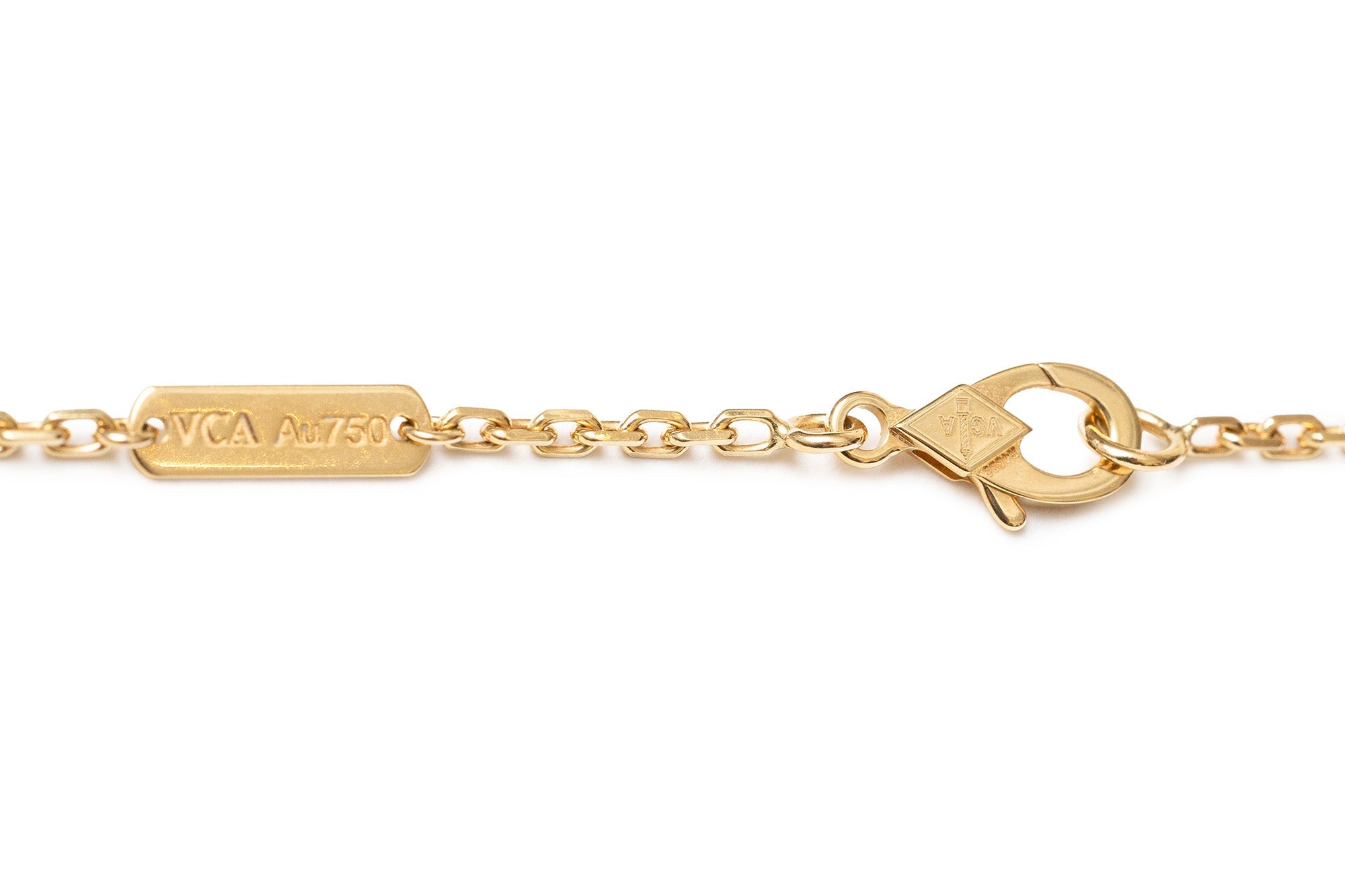
You’ve got to know your hallmarks. Every real Van Cleef & Arpels piece has three main markings: a signature stamp ("Van Cleef & Arpels" or "VCA"), a "750" for 18K gold, and a unique serial number, each in its own spot depending on the type of jewelry. Counterfeiters try, but those fonts and placements are tough to fake.
We’ve handled plenty of pieces that seemed legit until we looked closer. It’s always the little things with Van Cleef & Arpels. The French maker’s mark with the Place Vendôme column, the exact letter spacing, each detail hints at whether your jewelry is the real deal.
Whether you’re eyeing a vintage Alhambra or a modern ring, knowing what to look for in stamps and engravings can save you from a costly mistake.
Key Takeaways
- Genuine Van Cleef & Arpels jewelry always features specific markings: brand signature, 750 gold purity stamp, and unique serial number in set locations
- The French maker’s mark is a lozenge-shaped stamp with VC and A flanking the Place Vendôme column
- Authentication means checking engraving precision, metal quality, craftsmanship, and paperwork
Key Hallmarks on Van Cleef & Arpels Jewellery
Van Cleef & Arpels pieces have specific maker’s marks, gold purity stamps, serial numbers, and sometimes assay marks. These are all in particular spots and are hard for fakes to get right.
Maker’s Marks and Brand Stamps
Every authentic piece carries either "Van Cleef & Arpels" or "VCA" as its maker’s mark. If you see just "Van Cleef," that’s a big warning sign.
You’ll usually find the VCA stamp on little tags near clasps for Alhambra pieces, or on the metal itself if there’s room. Necklaces and bracelets tend to have these marks on rings next to the clasp. For earrings, the hallmarks turn up on the closure mechanisms, sometimes split between both clips.
The engraving on real pieces is sharp, with even spacing and depth. Van Cleef & Arpels artisans use precise tools, so the stamps look clean and are easy to read, even on tiny surfaces. The letters line up perfectly, fakes often have sloppy, uneven, or shallow engravings.
Metal Purity and Gold Hallmarks (750, Au750)
Van Cleef & Arpels only uses 18 karat gold, marked as "750" or "Au750." That means 75 percent pure gold, the luxury industry’s standard for 18k.
You’ll spot the metal hallmark next to the maker’s mark and serial number, usually in the same area. On Alhambra pieces, it’s often on the clasp ring or a small metal plate. For rings, it’s inside the band, though wear can make it a bit faint after years of use.
The purity mark should be just as crisp and professional as the maker’s mark. If a piece claims to be Van Cleef & Arpels in 14k gold or doesn’t have a gold mark, I’d be skeptical, this brand sticks to 18k.
Serial and Reference Numbers
Each Van Cleef & Arpels piece gets its own serial number, usually a mix of letters and numbers. These help trace the piece’s history and can be checked with the brand.
Serial numbers are etched on small metal plates or stamped right onto clasps and findings. They’re done with the same care as the other hallmarks, consistent size, spacing, and depth. On Alhambra items, you’ll find the serial near the VCA stamp by the clasp.
If you want to be sure, Van Cleef & Arpels boutiques or authorized service centers can check serial numbers and match them to production records.
Assay, Workshop, and Country Markings
French law requires some extra marks. You’ll often see the eagle’s head, the French state’s 18k gold assay mark.
Some pieces add workshop marks or artisan initials. "Made in France" pops up on some items, especially those made for export.
What marks you find depends on the era and where the piece was sold. Mid-20th-century pieces may have different assay symbols or skip country marks, while newer ones usually show more hallmarks to meet current rules.
Signature Fonts, Engraving Techniques, and Placement
Van Cleef & Arpels pieces show off precise engravings, consistent fonts, and well-thought-out placement. Counterfeiters have a tough time getting these right. The brand’s stamps and numbers have stuck to certain standards over the years, even as styles changed.
How to Identify Genuine Stamps and Engravings
Real VCA stamps have sharp, evenly spaced letters, either "Van Cleef & Arpels" or "VCA." Fakes often slip up with messy engravings, weird spacing, or even misspelling (like just "Van Cleef").
Run your finger over a genuine stamp and you’ll feel a clean, deep engraving, not shallow scratches or clunky raised marks.
Every real VCA piece has the "750" mark for 18K gold, right near the signature stamp, and it’s engraved with the same care. There’s also a unique serial number, stamped just as neatly.
The French maker’s mark is a lozenge shape, with VC and A around the Place Vendôme column, a nod to the brand’s Parisian roots and a key detail for authenticity.
Font Styles: From Vintage to Modern
Van Cleef & Arpels sticks to clean, serif fonts for full signatures, even on tiny pieces, though there are small shifts between old and new. Modern pieces have crisper, more uniform letters thanks to better engraving tech. Vintage items might have softer edges but keep the same proportions and spacing.
The "VCA" abbreviation uses all caps in a specific style. Counterfeiters often get the letter widths or spacing wrong, but real pieces are precise, no matter how old.
Where Hallmarks Are Placed on Different Pieces
Stamp locations depend on the jewelry type but follow patterns. For rings, stamps go inside the band, protected but easy to check.
Earrings show markings on one or both clips, depending on the style. Alhambra pieces put the stamps on the gold edge of the quatrefoil closest to the clasp, visible when worn but not in-your-face.
Necklaces usually have stamps on the clasp or a small tag next to the signature. Bracelets are similar, with stamps on clasps or discreet tags that don’t mess with the look. Serial numbers hang out near the signature, making a little cluster of marks for easy checking.
Material Quality and Metal Purity
Van Cleef & Arpels uses only 18 karat gold and platinum in their jewelry, and they’re picky about gemstones, too, only the best make it in.
18 Karat Gold and Platinum Standards
You can spot authentic pieces by their purity marks: 750 for 18k gold, 950 for platinum. That’s 75 percent gold or 95 percent platinum in the mix.
Sometimes you’ll see Au750 instead of just 750. Van Cleef & Arpels doesn’t use lower karats like 14k or 10k, if you see marks like 585 or 417, it’s not the real thing.
These marks sit next to the brand signature and serial number. If you don’t see them, or if the numbers are off, you’re probably looking at a fake.
Gold Colours: Yellow, White, Rose
All three gold colors, yellow, white, and rose, are still 75 percent gold. The rest is alloyed metals. Yellow gold mixes in silver and copper for that classic look. White gold gets palladium or nickel, then a rhodium dip for brightness.
Rose gold uses more copper for its pinkish tone. No matter the color, you’ll see the 750 hallmark.
Van Cleef & Arpels likes to mix gold colors in one piece, especially in their signature lines. You’ll see contrasting tones, but the gold content stays consistent.
Gemstone and Pearl Authenticity in Hallmarks
Van Cleef & Arpels picks diamonds in the D to F color range and IF to VVS2 clarity, the best, basically. Hallmarks don’t say anything about gemstone grades, though.
They use colored stones like agate, carnelian, chalcedony, tiger eye, and onyx, especially in Alhambra pieces. Each stone is chosen for its look; chalcedony, for example, is picked to let a bit of skin show through.
Mother of pearl is a staple, cut to fit each design without gaps. While you won’t see gem quality stamped on the piece, the combo of top-notch stones and proper metal marks is a good sign you’ve got the real thing. Stones should be set snugly, with flawless finish work.
Hallmark Variations in Van Cleef & Arpels Collections
Hallmarking changes a bit from collection to collection. The Alhambra line, for example, varies by motif size, collection, and when it was made. Knowing these differences helps you spot real pieces and estimate their age.
Alhambra, Magic Alhambra, Sweet Alhambra Motifs
The classic Alhambra collection puts hallmarks on metal tags or clasps: "VCA" or "Van Cleef & Arpels" plus "Au750" for 18k gold. On necklaces and bracelets, look for these on small rectangular plates by the clasp.
Magic Alhambra, with smaller motifs, uses more compact hallmarking, same info, just squeezed onto thinner tags.
Sweet Alhambra pieces are tiny, so the stamps might be on jump rings or micro-plates designed not to throw off the proportions.
Whichever version, you should see clear, well-spaced letters in the right font. The 750 mark has to be there, and serial numbers show up as letter-number combos.
Vintage Hallmarks Versus Contemporary Stamps
Older pieces from the ’70s and ’80s usually say the full "Van Cleef & Arpels," not just "VCA." The vintage font is a bit different, more pronounced serifs, deeper stamps.
Modern pieces (post-2000) mostly use "VCA" and the metal hallmark. Newer stamping tech leads to sharper, more uniform marks.
Vintage Alhambra pieces might have worn hallmarks, but that’s normal, authenticators expect some wear. That’s different from bad fakes with shallow, uneven, or weirdly styled stamps.
The switch from full name to abbreviation happened gradually. Some ’90s pieces have either. If you’re unsure, it’s smart to check with someone who really knows Van Cleef & Arpels’ hallmark history.
Motif and Collection Specific Authenticity Clues
Beyond the standard hallmarks, each Alhambra motif has its own quirks when it comes to authentication. Stone-set pieces in this collection only use genuine, high-quality materials, no diamond simulants or synthetic substitutes. Mother-of-pearl, chalcedony, and onyx versions always show consistent color and natural stone patterns.
That beaded gold border around every clover motif? It's a dead giveaway. Real pieces have perfectly round, uniform beads, polished smooth all the way around. This "Pearls of Gold" detail takes a lot of skill, most fakes just can't get it right.
Quick authentication markers by material:
- Gold pieces: Always 18K gold (that's 75 percent pure), usually confirmed with XRF scans.
- Stone-set items: Only natural diamonds, and those should be pretty much flawless or close.
- Metal composition: Never sterling silver, real VCA doesn't tarnish like that.
You won't see "Van Cleef" by itself or any weird spelling mistakes on real Van Cleef & Arpels pieces. Those are instant red flags.
Authentication Tips: Spotting Fakes and Common Red Flags
Counterfeiters miss a lot of the little things when they try to copy Van Cleef & Arpels, especially in the hallmarks and engraving. Knowing where they slip up can save you from buying a dud.
Hallmark and Stamp Inconsistencies
First thing we do? Check the serial number. Real Van Cleef & Arpels pieces have serial numbers that are deeply and evenly engraved, you can feel the difference just by running a finger over them.
Metal purity stamps tell their own story. Authentic 18K gold pieces will show "750" or "Au750" in clear, sharp letters. If the stamp looks blurry, half-missing, or barely there, that's not a good sign.
Key hallmarks to look for:
- The full VCA signature or "Van Cleef & Arpels"
- Unique serial number
- Metal purity marks (like 750 for 18K gold)
- Country marks, sometimes
Fake pieces often have stamps that rub off or look pressed in, not engraved. We've seen hallmarks in the wrong places, or stamps that are just the wrong size for the piece.
Font, Depth, and Alignment Giveaways
Van Cleef & Arpels keeps its typography consistent, clean, neat letters, even spacing. The font weight is the same across every letter.
Engraving depth matters. Authentic pieces have a consistent, deep enough engraving that doesn't vanish with wear. When we run a fingernail across the engraving, it's almost flush, so precise you barely feel it.
Alignment is another giveaway. The text should be straight and centered. Fakes often show crooked lines, uneven baselines, or letters that look squished or stretched.
Red flags in engraving:
- Letters with different thicknesses
- Wobbly baselines
- Weird spacing
- Shallow, stamped-looking etching
Common Mistakes on Fake Van Cleef & Arpels Pieces
Misspellings are the most obvious red flag, though the better fakes don't do this as much. We've seen "Arpel" missing the "s," or "VanCleef" as one word.
Finish quality is a big deal. Real VCA is polished to perfection, no tool marks, rough edges, or uneven surfaces. The signature spheres on Alhambra pieces should be perfectly round and match each other.
Weight is another clue. Real Van Cleef & Arpels pieces use solid gold or platinum, so they're heavier than hollow fakes. We compare the weight to official specs if we can.
Packaging and paperwork matter, too. Genuine pieces come with specific certificates, and the packaging is always high-end, crisp printing, quality materials.
Certificates, Provenance, and Documentation
Real Van Cleef & Arpels pieces come with paperwork that matches the physical hallmarks, tying the serial number and reference code directly to the jewelry. This chain of verification is tough for fakes to copy.
The Role of Certificates of Authenticity
Van Cleef & Arpels includes certificates of authenticity with new purchases. These are printed on branded paper with built-in security features. They list the piece's description, materials, reference number, and usually the matching serial number.
A genuine certificate feels substantial, not flimsy, and the printing is sharp. For high jewelry, certificates might go into detail about gemstone specs, carat weight, and clarity. Sometimes you even get lab reports from GIA or SSEF.
We've seen fake certificates that look decent at first but fall apart on closer inspection, spelling errors, weird fonts, missing watermarks, or no holograms.
Tying Documentation to Hallmarks and Serial Numbers
The serial number on your certificate has to match what's engraved on the jewelry. For Alhambra, you'll find the number on the gold edge near the clasp, double-check it against your papers.
Van Cleef & Arpels can verify authenticity if you give them the serial and reference numbers. Reach out to their boutiques and they'll confirm if the details match their records.
Reference numbers are specific to each design and material. For example, an Alhambra pendant in yellow gold with onyx has a different reference than one in white gold with mother-of-pearl. If the reference on your certificate doesn't match the actual piece, that's a problem.
Original purchase receipts help, too, especially from authorized retailers. Receipts should show the boutique, date, and item details that line up with the jewelry and certificate.
Best Practices for Storing Certificates and Receipts
Keep certificates in acid-free sleeves, away from sunlight and moisture. We stash ours in a fireproof safe with insurance docs and appraisals.
Scan or photograph all paperwork at high resolution. Save digital copies in a few places: cloud storage, an external drive, and maybe even your email. Take clear photos of the hallmarks and serial numbers on the jewelry, too.
A simple inventory log helps keep track:
- Purchase date and location
- Serial and reference numbers
- Certificate number (if any)
- Insurance appraisal date
- Service history
Don't separate certificates from their pieces, especially if you're selling or passing jewelry to family. Full provenance makes resale easier and boosts value.
Evaluating Craftsmanship: Finishing, Weight, and Quality Checks
Real Van Cleef & Arpels pieces stand out by how they feel and look, polish, soldering, and the weight of real precious metals. These details are hard to fake.
Craftsmanship Clues in Polishing and Soldering
We check the finish under direct light. Genuine pieces have a mirror-smooth surface, no buffing marks, rough spots, or tool scratches. The shine is consistent, even in tricky spots like between motifs or around stones.
Solder joints are another checkpoint. Van Cleef & Arpels artisans make joins almost invisible. Fakes often have extra solder, rough seams, or discoloration where parts meet.
The back of pendants and clasps should feel just as polished as the front. Forgers usually skip these hidden areas, leaving them rough or unfinished. Real pieces have smooth edges and backs, no sharp points or raw metal.
Stone settings should be uniform. Prongs are all the same size and polished to match. The metal around stones sits flush, no gaps or glue.
Weight and Material Feel of Genuine Pieces
Authentic Van Cleef & Arpels jewelry feels heavy because it's solid gold or platinum. An 18K gold Alhambra pendant, for example, is much heavier than a gold-plated or hollow fake. The difference is obvious if you compare them side by side.
Real gold and platinum have their own feel, they're cool to the touch at first, then warm up. They're also harder to scratch than base metals.
You can tell quality by touch. Genuine pieces feel solid, not hollow or tinny. Clasps close with a satisfying click, not a loose rattle. Chains and links move smoothly without catching.
When worn, real pieces balance well. Clasps work smoothly, and the weight is evenly distributed, not pulling weirdly to one side.
Frequently Asked Questions
Van Cleef & Arpels hallmarks can be tricky. Knowing where to look and what the stamps mean helps a lot. Serial numbers, brand stamps, metal purity marks, and engraving quality all matter when checking authenticity.
What subtle markings should I look for on a piece to verify it's a genuine Van Cleef & Arpels item?
Real Van Cleef & Arpels pieces have precise, discreet markings in specific places. Bracelets and necklaces usually have stamps on the clasp or a small tag. Rings have markings on the inside band.
The brand stamp says "VCA" or the full "Van Cleef & Arpels" in the right font. If you see only "Van Cleef," that's a red flag.
Metal purity marks like "750" for 18K gold or "PT950" for platinum show up next to the maker's mark. These stamps are sharp and evenly spaced.
Serial numbers are engraved with even depth and spacing. You should feel a slight recess when you run your finger over them, not just a surface etch.
Can you break down the meaning behind different stamps used by Van Cleef & Arpels over the years?
The "VCA" stamp is just the brand's initials, it's on a lot of modern pieces because it's shorter. Both "VCA" and the full "Van Cleef & Arpels" are legit, but the full name usually appears on bigger pieces.
Metal purity stamps are standard: "750" for 18K gold, "585" for 14K, and "PT950" or "950" for platinum.
French hallmarks sometimes show up on pieces for the European market. The eagle's head means 18K gold tested in France, and the dog's head marks platinum.
Country-specific marks vary. British pieces might have extra hallmarks from London, while American pieces usually stick to the maker's mark and purity.
How can I tell if the font on my Van Cleef & Arpels jewellery is the real deal?
The real font is clean, evenly spaced, and the letters are all the same thickness. Under a magnifier, each letter should look sharp, not blurry or misshapen.
Fakes often get the font almost right, but up close, you'll see letters that are too thin, too thick, or unevenly sized.
Spacing matters, too. Authentic stamps keep it uniform; fakes often have letters crammed together or spaced weirdly.
Compare your piece's font to official examples from the brand or trusted dealers. Taking clear close-ups under good lighting helps spot the differences.
What are some common authenticity clues that distinguish real Van Cleef & Arpels pieces from fakes?
On real Van Cleef & Arpels jewelry, soldering marks are basically invisible. The joins are seamless, while fakes often show obvious solder points or rough spots.
The weight of genuine pieces stands out, they feel solid, thanks to quality metals. Fakes are usually lighter because they're hollow or use cheap metals.
Stone setting is another clue. Real pieces have stones set perfectly, all at the same depth and securely in place. Fakes tend to have uneven stones or loose settings.
The polish on authentic pieces is flawless and even. Fakes usually have dull spots, tool marks, or uneven finishing.
How has Van Cleef & Arpels hallmarking evolved, and what does that tell us about the piece's history?
Older Van Cleef & Arpels pieces (early to mid-20th century) often have the full name stamped in a slightly different font. The spacing and letter shapes have changed over time as stamping got better.
Serial numbers became more standardized in recent years. Vintage pieces might not have serial numbers or use simpler codes, while newer ones have longer, more complex ones.
The "VCA" abbreviation came in as the brand grew and needed faster marking. Both the full name and "VCA" are still used, depending on the piece.
French hallmarks on older pieces help date them to certain periods, since those marks changed as French laws evolved.
When inspecting potential Van Cleef & Arpels acquisitions, what are the top indicators of authenticity I should be aware of?
Start with the serial number. Authentic numbers show even depth, proper spacing, and the right spot for the type of piece. They should line up with the style used in the era the piece supposedly comes from.
Look closely at the brand stamp, grab a magnifier if you have one. Genuine stamps have crisp, clean engraving. The font should match known examples, right down to letter shapes and spacing. Any weirdness here? That's a red flag.
Check the metal purity marks. They need to match what the piece claims to be made of, like 750 for 18k gold, and sit where you'd expect to find them.
Pay attention to the overall craftsmanship: stone settings, polish, and construction. Van Cleef & Arpels is famous for their standards. If you spot sloppy work or something feels off, that's a big warning sign.
Ask for certificates of authenticity and original packaging if possible. While these aren't perfect proof, real certificates from Van Cleef & Arpels have security features and should match the serial number on the piece.