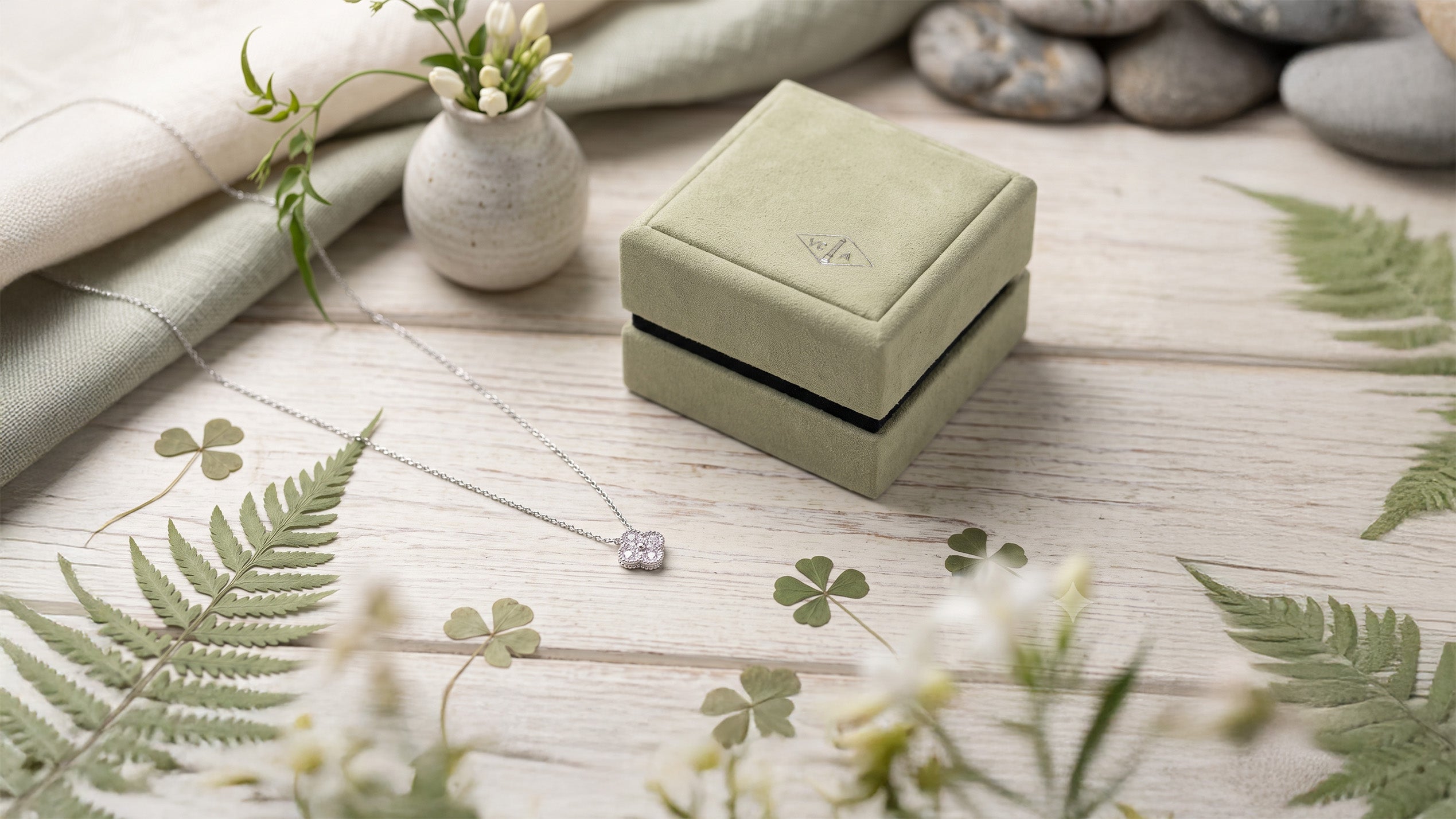


Van Cleef & Arpels Bracelet vs Necklace: Which Piece Builds Stronger Buyer Confidence?
TL;DR
When comparing a Van Cleef & Arpels bracelet vs necklace, there is no single universal winner. Bracelets, especially five-motif Alhambra styles, often inspire strong buyer confidence because they are easy to wear, simple to style, and consistently desirable in the resale market. Necklaces make a bigger visual impact and can attract collectors who want statement design, longer motif layouts, and strong craftsmanship. The better choice depends on your priorities: daily wear, resale ease, visual presence, condition sensitivity, or long-term collectibility.
Check out our Van Cleef & Arpels collection!
Some luxury jewelry choices are not about which piece is more beautiful. They are about which piece gives the buyer more confidence. When you compare a Van Cleef & Arpels bracelet vs necklace, you are not trying to pick a universal favorite. Instead, you are looking at how each style performs across wearability, craftsmanship, resale demand, authentication, and collectibility.
Both bracelets and necklaces give you a way into the maison’s signature style, especially through the Alhambra collection. Yet each format brings its own strengths depending on how you plan to wear, store, authenticate, or eventually sell the piece. This comparison explains the practical differences buyers should understand before choosing between a Van Cleef & Arpels bracelet and necklace.
Key Takeaways
- Van Cleef & Arpels bracelets are often easier to wear daily and tend to feel more straightforward for resale buyers.
- Necklaces offer stronger visual impact and collector appeal, but condition, length, and styling matter more.
- Buyer confidence depends on authenticity, craftsmanship, condition, documentation, and how well the piece fits secondary market expectations.
Signature Differences: Bracelets Versus Necklaces
Van Cleef & Arpels bracelets and necklaces share the same design DNA, but each shows it differently. Motif count, symmetry, chain movement, and how the piece sits on the body all shape how collectors judge completeness, authenticity, and long-term desirability.
Motif and Design Language
You will spot the same motifs on both bracelets and necklaces, but the way they are used changes with the format. The signature quatrefoil clover appears across Alhambra bracelets and necklaces, yet collectors respond differently depending on how many motifs there are and how they sit on the body.
Most Vintage Alhambra bracelets are recognized for their compact five-motif layout. The format feels tidy, balanced, and finished without extra length or styling effort. Necklaces, by contrast, may feature a single pendant or a longer multi-motif layout that creates rhythm around the neckline. That longer format can feel more dramatic, but it also gives buyers more areas to inspect for wear, alignment, and consistency.
Both bracelets and necklaces carry maison signatures and identifying details, although placement varies by design and era. On Alhambra pieces, buyers typically look for crisp markings, clean finishing, and details that feel consistent with Van Cleef & Arpels standards for that collection and period.
| Feature | Bracelet | Necklace |
|---|---|---|
| Typical Visual Format | Compact and self-contained | More elongated or statement-making |
| Styling Role | Easy daily piece or stackable accent | Statement piece or refined focal point |
| Condition Review | Focused on clasp, links, stones, and wrist wear | Focused on chain, drape, motif alignment, and clasp |
| Buyer Confidence Factor | Practicality and resale ease | Visual impact and collector appeal |
Iconic Collections Like Vintage Alhambra
The Vintage Alhambra collection remains one of the most recognizable Van Cleef & Arpels lines, whether you are looking at bracelets or necklaces. Both formats use the maison’s familiar clover motif, gold edging, and materials such as onyx, mother-of-pearl, carnelian, and malachite.
Collectors often start with bracelets from the Vintage Alhambra line because the five-motif version is easy to wear and simple to understand. It sits flat on the wrist, works for daily wear, and can be styled alone or with other fine jewelry.
Necklaces from the same collection bring more drama. A multi-motif necklace becomes a piece you build an outfit around. It also requires more careful review because the longer chain, multiple motifs, and overall drape all affect buyer confidence. A necklace in excellent condition can feel highly collectible, but buyers tend to inspect it more closely before committing.
How Pieces Are Styled and Layered
People style Van Cleef & Arpels bracelets and necklaces differently, which shapes how buyers see their versatility and resale appeal. Bracelets are easy to add to a jewelry wardrobe. A five-motif Alhambra bracelet works alone or stacked with a watch, bangle, or another bracelet without feeling overdone.
Necklaces ask for more thought. A pendant necklace can feel effortless, while a ten-motif or twenty-motif necklace makes a stronger statement. Layering necklaces requires attention to length, motif size, neckline, and chain style. Buyers who want flexible everyday pieces often feel more confident with bracelets, while those seeking a more expressive luxury piece may prefer necklaces.
Bracelets are also easier to photograph and present in resale listings. Necklaces require careful arrangement to show the drape, motif alignment, clasp, and chain condition clearly. For remote buyers, that difference can matter.
Craftsmanship and Materials
Bracelets and necklaces from Van Cleef & Arpels both showcase refined craftsmanship, but the way that craftsmanship affects buyer confidence is not identical. Bracelets face more daily contact, while necklaces need smooth movement, even spacing, and balanced drape across a longer structure.
Manufacturing and Construction Considerations
Van Cleef & Arpels is known for precise finishing, careful stone setting, and polished metalwork. In bracelets, the construction must support frequent movement, wrist friction, and regular clasp use. Buyers usually examine the clasp, jump rings, links, and bezels to understand how much wear the piece has experienced.
Necklaces focus more on flexibility and flow. Longer Alhambra necklaces rely on linked sections that allow the piece to move naturally. If the links feel stiff, stretched, repaired, or uneven, confidence can drop even when the stones themselves look strong.
Bracelets face more structural risk because wrists move constantly and come into contact with hard surfaces. Necklaces usually face less mechanical stress, but their longer format means buyers must assess consistency across more components.
Selection and Setting of Coloured Stones
Coloured stones play an important role in how buyers evaluate both bracelets and necklaces. Materials such as onyx, malachite, carnelian, and mother-of-pearl are chosen for visual beauty, surface quality, and how well they fit the motif design.
Bracelets, with fewer motifs, can feel easier to inspect. Buyers look for even surfaces, intact edges, secure settings, and signs of scratching or dullness. Because bracelets sit on the wrist, stones may show more exposure to daily contact.
Necklaces protect stones more naturally because they sit against clothing or skin rather than hard surfaces. However, multi-motif necklaces require more visual consistency. A buyer will often compare the tone, shine, and condition of every motif because differences are easier to notice across a longer piece.
How Craftsmanship Builds Buyer Trust
Buyers judge craftsmanship because it tells them how well a piece will hold up and how confidently it can pass inspection. For bracelets, they check clasp strength, link movement, scratches, worn edging, and any looseness around the stones. Tight construction and gentle wear signal stronger durability.
For necklaces, buyers want smooth articulation and even drape. They check spacing between motifs, chain flexibility, and whether the necklace lies naturally without twisting. A necklace that sits flat and moves cleanly can inspire strong buyer confidence.
For both formats, original packaging, service history, and clear identifying details help support trust. Documentation does not replace expert authentication, but it gives buyers more context and can make the resale process feel more secure.
Resale Value and Buyer Confidence
Van Cleef & Arpels jewelry is highly respected in the luxury resale market, but bracelets and necklaces behave differently. Demand, condition sensitivity, ease of authentication, and styling preferences all influence which format gives a buyer more confidence.
Market Demand and Liquidity
Bracelets from Van Cleef & Arpels, especially five-motif Alhambra styles, are often seen as highly wearable and easy to understand. They appeal to buyers who want something recognizable, elegant, and practical enough for regular use. This broad appeal can support strong resale confidence.
Necklaces can attract a more selective buyer. A pendant may feel approachable and easy to wear, while a long multi-motif necklace often appeals to someone looking for visual impact. The buyer pool may be narrower, but the right necklace in excellent condition can still be highly desirable.
Neither format is automatically more valuable. A bracelet in poor condition may be less compelling than a necklace with excellent provenance and minimal wear. The strongest resale pieces are those that combine authenticity, condition, recognizable design, and buyer-friendly presentation.
How Condition and Wear Affect Valuation
Bracelets usually show more visible wear than necklaces because they come into contact with desks, countertops, keyboards, and doorframes. Scratches, softened edges, loose links, or a tired clasp can quickly affect confidence.
The beaded gold edge on Alhambra pieces is especially important to inspect. Even subtle flattening or uneven wear can tell buyers that a piece has been worn heavily. This does not make the piece undesirable, but it should be reflected honestly in condition notes.
Necklaces often avoid the same level of surface impact. Their main condition concerns are chain kinks, clasp function, stretched links, uneven motif spacing, and stone condition. A necklace with clean drape, tight settings, and minimal chain wear can feel very compelling to a collector.
The Role of Provenance and Documentation
Complete provenance strengthens buyer confidence for both bracelets and necklaces. Original receipts, boutique paperwork, service records, branded boxes, and certificates can help support authenticity and ownership history.
For bracelets, documentation showing sizing or clasp service can be especially helpful because it confirms that work was handled carefully. For necklaces, paperwork that supports length, materials, and service history can give buyers added reassurance, particularly for higher-value or multi-motif pieces.
Missing paperwork does not automatically prevent a sale, but it does increase the importance of expert authentication and detailed condition review. In luxury resale, trust is built through clear information, careful inspection, and transparent presentation.
Wearability and Everyday Practicalities
Bracelets and necklaces feel different on the body, require different levels of adjustment, and respond differently to daily wear. These practical details often shape which format feels more comfortable, versatile, and confidence-building for a buyer.
Fit, Comfort, and Adjustability
Getting the right bracelet size matters. If a bracelet is too loose, it can spin around the wrist and take more contact from surfaces. If it is too tight, it can feel restrictive and less comfortable for daily wear.
Necklaces are often more forgiving. A pendant or motif necklace sits along the neckline, and longer formats may offer more styling flexibility. However, length still matters. A necklace that falls too high, too low, or does not match a buyer’s usual wardrobe can feel less practical.
From a resale perspective, bracelets can be more size-sensitive, while necklaces can be more styling-sensitive. Buyers should ask for exact measurements, clasp photos, and images showing how the piece sits when worn.
Durability of Metals and Stones
Van Cleef & Arpels Alhambra pieces are often crafted in 18k gold, which gives them a refined feel but does not make them immune to scratches or daily wear. Yellow gold may visually soften minor marks better than some other finishes, but condition still matters.
Bracelets take more impact because the wrist is constantly moving. Clasps are opened and closed more often, links flex throughout the day, and stones may come into contact with surfaces. This makes careful condition review especially important.
Necklaces generally protect stones better because they rest against the body rather than hitting hard objects. Their durability concerns are more about chain integrity, clasp function, and whether the motifs remain evenly spaced and secure.
Styling Versatility for Daily Wear
Bracelets fit into daily life with less effort. A five-motif Alhambra bracelet can work in casual, professional, and evening settings. It can be worn alone for a clean look or layered with other wristwear for a more personal style.
Necklaces pull more focus. A single motif pendant feels refined and subtle, while a multi-motif necklace becomes a stronger visual statement. This gives necklaces more presence, but it also means the buyer may think more carefully about neckline, outfit, and occasion.
Both can work beautifully for everyday wear. Bracelets usually feel more practical for buyers who want effortless use, while necklaces appeal to those who want more visual impact and are comfortable making the piece a central part of the look.
Collectibility and Long-Term Desirability
Bracelets and necklaces occupy different spaces in the collector market. Buyers look for recognizable design, strong condition, rarity, and pieces that feel aligned with the maison’s most enduring visual codes.
Vintage Appeal and Icon Status
The Alhambra bracelet captures the Van Cleef & Arpels design language in a compact and accessible way. Older Alhambra bracelets can appeal to collectors who appreciate vintage hallmarks, patina, and continuity of design. The format is easy to compare across eras, which can help buyers assess condition and authenticity more confidently.
Necklaces offer more variety. This can make them exciting, but also more complex. A rare vintage necklace may be highly desirable, yet buyers must consider length, motif count, chain condition, and whether the style fits their wardrobe or collecting goals.
Rarity Within the Market
Rarity in Van Cleef & Arpels jewelry often comes down to material, production history, condition, and how often a style appears in resale. Some bracelet versions in unusual materials or less common combinations can attract long-term interest, especially when well preserved.
Necklaces may feel rarer in certain configurations, particularly when the format, material, or condition is difficult to find. However, rarity alone is not enough. Buyers still want a piece that feels authentic, wearable, and supported by strong presentation.
What Discerning Buyers Seek
Discerning buyers usually look for pieces that are wearable, recognizable, and confidently presented. Bracelets check many of these boxes because they are easy to style and instantly associated with the maison’s signature look.
Necklace buyers often have more specific preferences. They may be looking for a particular length, motif count, stone, gold tone, or styling effect. This can make the buying process more selective, but it also means a well-matched necklace can feel especially meaningful.
In both cases, the most confidence-building pieces are those with strong condition, clear authentication, desirable materials, and transparent seller guidance.
Final Thoughts
In the Van Cleef & Arpels bracelet vs necklace comparison, bracelets often feel more practical and easier to resell, while necklaces offer greater visual presence and collector appeal. The best choice depends on how you balance daily wear, condition, authenticity, and long-term value. For buyers seeking expert guidance in the luxury resale market, Rome Station offers a trusted, confidence-first experience.
Fact Check and Data Sources
This article avoids unsupported hard resale percentages, fixed price ranges, or timing claims. Brand-specific references have been kept broad and aligned with widely recognized Van Cleef & Arpels collection terminology.
For official collection context, readers may refer to Van Cleef & Arpels’ official Alhambra information on VanCleefArpels.com. Any resale-focused guidance in this article is based on condition, documentation, authenticity, and buyer-confidence principles rather than unsupported market guarantees.
Frequently Asked Questions
Is a Van Cleef & Arpels bracelet or necklace better for buyer confidence?
Which Van Cleef & Arpels style is easier to wear every day?
Do Van Cleef & Arpels bracelets show more wear than necklaces?
What should buyers check before purchasing a Van Cleef & Arpels bracelet?
What should buyers check before purchasing a Van Cleef & Arpels necklace?
How important are box, papers, and service records for resale confidence?
Why buy a Van Cleef & Arpels bracelet or necklace through Rome Station?
Love Hermès? See More from Rome Station
Add us to your Preferred Sources on Google to see our newest Hermès guides and insider tips first.