The History Behind Hermès Most Famous Bag Designs
TL;DR:
Hermès began as a Paris harness workshop in 1837, and its most famous bags grew out of that practical, equestrian heritage. According to Hermès, Robert Dumas designed the bag that became the Kelly in the 1930s, the Constance dates from 1967, the Evelyne has been made since 1978 and was first intended for tending horses, and the Birkin was born in 1984 after Jean-Louis Dumas met Jane Birkin on a flight from Paris to London.
Why is the Kelly always trapezoid? Why does the Evelyne have holes punched into one side? And how did a conversation on a plane lead to the Birkin? If you are drawn to Hermès, or deciding which icon suits you, the story behind each design explains a great deal about its shape and details.
This guide traces the Kelly, the Birkin, the Constance and the Evelyne through Hermès' own account of its history, from a harness-maker's workshop in Paris to the bags the house is known for today. The historical details below come from the official Hermès website.
Key Takeaways
-
Hermès started in 1837 as a harness-making workshop in Paris, and that equestrian heritage still shows in its bags, from the Kelly's straps to the Evelyne's girth-like shoulder strap.
-
Robert Dumas designed the bag that became the Kelly in the 1930s, and his son Jean-Louis Dumas sketched the Birkin in 1984 after meeting Jane Birkin on a Paris to London flight.
-
According to Hermès, 100% of its leather goods are made in France.
From Harness Maker to Leather Goods House
The bags make more sense once you know where the house started. Hermès describes its history as a dual thread: the painstaking work of the artisan in the workshop on one side, and the changing lifestyles of its customers on the other.
1837: A Harness Workshop in Paris
The story begins in 1837, when harness-maker Thierry Hermès opened a workshop on rue Basse-du-Rempart in Paris. Hermès says his harnesses combined discreet finesse with endurance in all conditions, and they earned an award at the Universal Exhibition of 1867.
In 1880, his son Charles-Émile Hermès moved the workshops to 24 Faubourg Saint-Honoré and opened a store there. At that address, harnesses and saddles were made to measure, and the house's reputation spread throughout Europe.
Émile Hermès and the Move Into Leather Goods
Between the wars, lifestyles changed, and under Émile Hermès, son of Charles-Émile, the house expanded from saddlery and harnesses into leather goods.
One detail from this period has a Canadian connection. On a trip to Canada, Émile Hermès was fascinated by a closing system on the hood of a military car. In 1922 he obtained the exclusive rights to it. Today we know it as the zip, and Hermès went on to use it on many of its bags.
A Family House
Hermès describes itself as an independent, family-owned company, and the names behind its famous bags belong to that family. Robert Dumas was Émile Hermès' son-in-law and took over as head of the business in 1951. Jean-Louis Dumas, Robert's son, shaped the house from 1978 onwards. Since 2013, Hermès has been led by Axel Dumas, Jean-Louis' nephew and a sixth-generation family member.
The Kelly: From a 1930s Design to a Princess
The Kelly is the oldest of the four bags in this guide, and its story shows how a single image can change the fate of a design.
Robert Dumas' Ladies' Bag With Straps
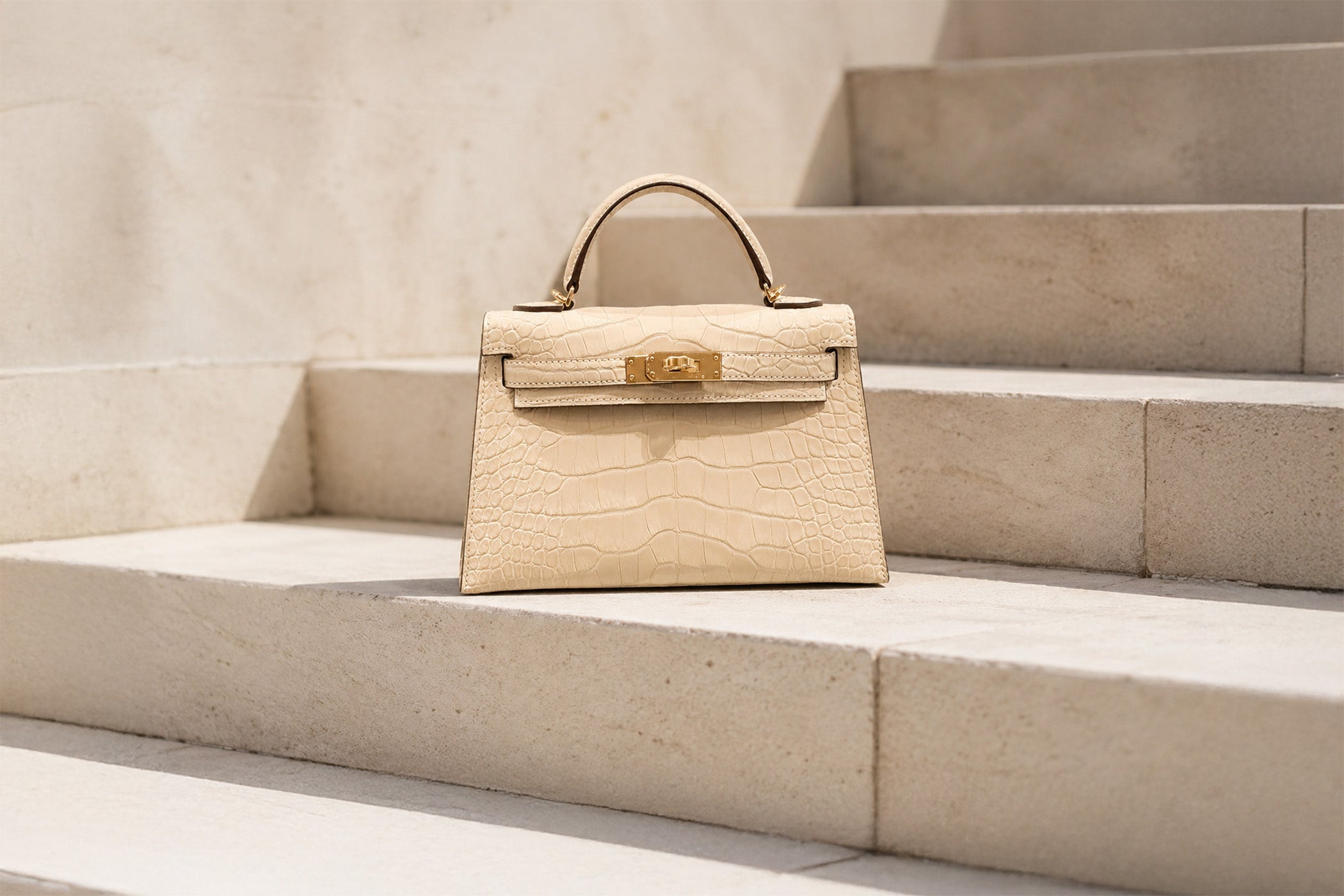
Robert Dumas created the ladies' bag with straps in the 1930s. Hermès presents its creation as the moment the house entered an era of boldness and modernism. The house also credits Robert Dumas with several of its other major successes, including the first Hermès silk scarf in 1937 and the Chaîne d'ancre bracelet.
The Photograph That Gave It a Name
In 1956, a photograph of Grace Kelly carrying the bag was published around the world. According to Hermès, she was holding it over her stomach to conceal the signs of her pregnancy. The house named the bag Kelly in honour of the princess of Monaco.
Always Trapezoid
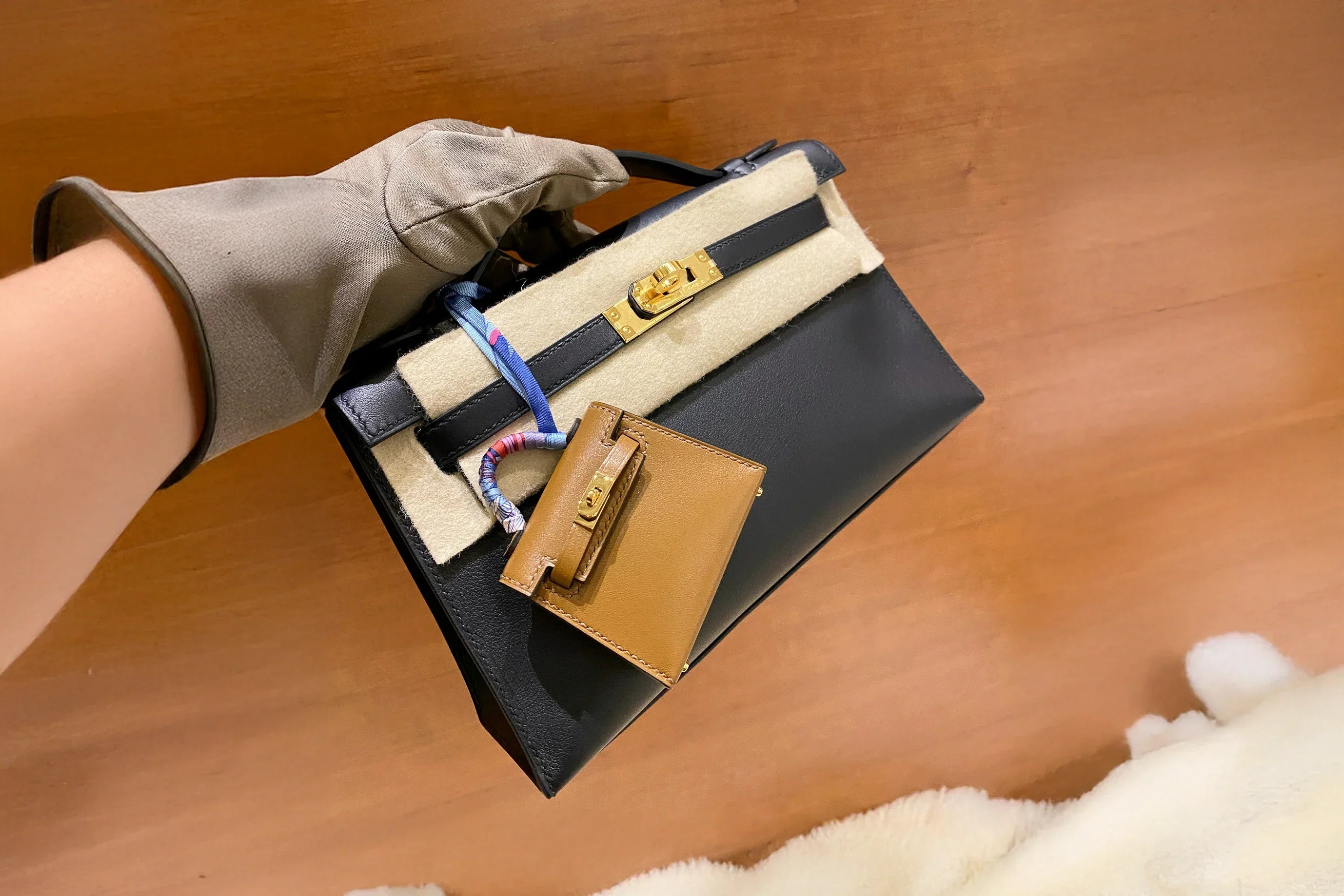
Hermès says the Kelly comes in many formats, sometimes mini and sometimes maxi, worn over the shoulder or carried by hand, but always trapezoid. The line runs from size 40 down to mini formats and includes Kelly II sellier and Kelly II retourne models.
The Kelly's signature details, from the Touret clasp to the padlock, also appear in a men's line that includes the Kelly Messenger bag. Hermès has even made Kellywood variants, which combine leather craftsmanship with cabinetmaking know-how.
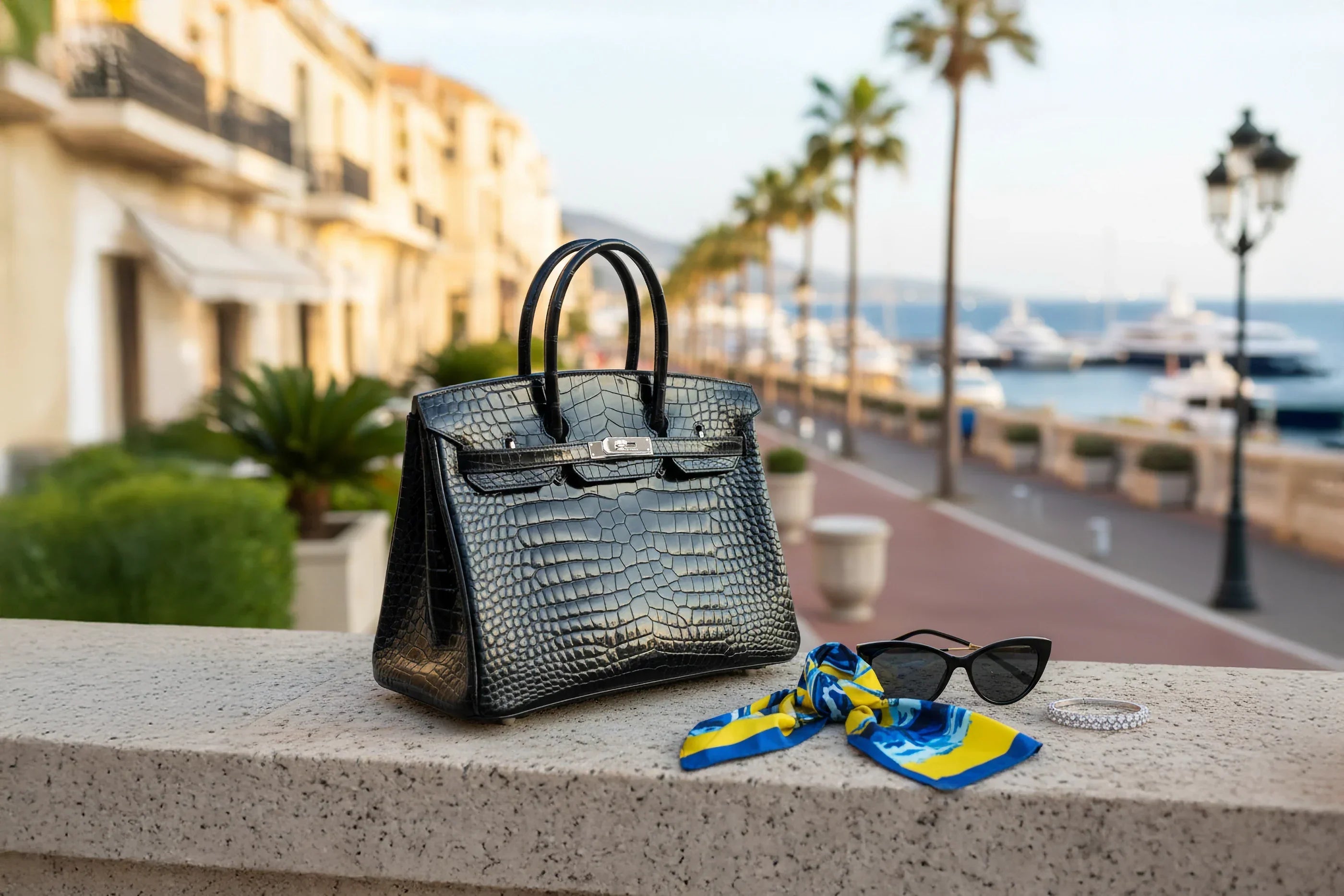
The Birkin: Born on a Flight
Hermès calls the Birkin one of the most coveted objects of recent decades, and the house traces its origin to a single flight.
The 1984 Encounter
In 1984, on a flight from Paris to London, British actress Jane Birkin was seated next to Jean-Louis Dumas, Executive Chairman of Hermès from 1978 to 2006. She told him she couldn't find a bag that suited her needs as a young mother.
According to Hermès, Dumas immediately sketched a supple, spacious rectangular holdall with a burnished flap and saddle stitching, including a dedicated space for her baby's bottles. Hermès describes the result as elegant and voluminous, for evening or daytime.
Sizes and Heritage Leather
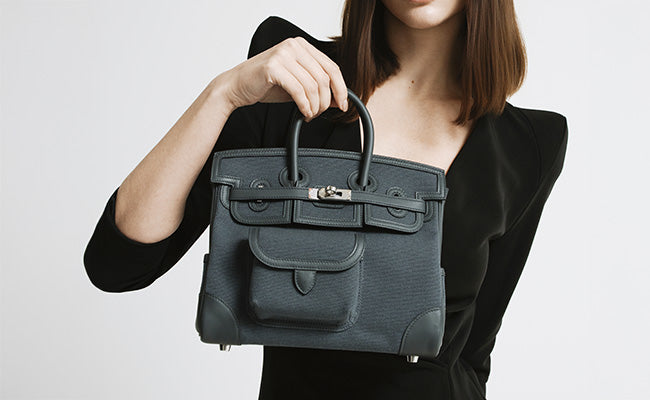
The Canadian Hermès Birkin page currently features the Birkin 25, Birkin 3 en 1 30, Birkin 35 and Birkin 40.
Hermès also offers the Birkin in a rare heritage leather: entirely vegetable-tanned natural cowhide with a transparent finish. Hermès says it gains a patina and becomes even more beautiful over time.
The Constance and the Evelyne
Alongside the Kelly and the Birkin, the Constance and the Evelyne show the same habit of turning a practical idea into a signature.
The Constance
According to Hermès, the Constance dates from 1967. The designer who created it was pregnant at the time and named the bag after her newborn daughter, Constance.
Its defining feature is the H, which Hermès describes as a first: the letter itself became a working clasp, opened and closed by a spring mechanism concealed on each side of the metal bar attached to the flap. A sliding strap lets the bag sit against the hip or on the shoulder. Current models include the Constance I 24 and the Constance III mini, and Hermès has also released a Constance Marble Silk edition using a silk-marbling technique perpetuated in Japan by several generations of the same family.
The Evelyne
Hermès says the Evelyne has been made since 1978 and was first intended for tending horses. It was sewn without a lining, and its perforated "H" let the equipment inside dry. Those in the know wear the H side against the body, and Hermès describes its shoulder strap as girth-like.
The bag continues to evolve. The Neo Evelyne 16, for example, pairs Officier canvas with Swift calfskin.
Materials and Craftsmanship
Behind every one of these designs is the house's commitment to leatherwork and to keeping that work in France.
Togo Calfskin
Togo is one of the leathers Hermès describes in detail on its product pages. It first appeared in the collections in 1997 and takes its name from an African country, reflecting that year's theme of Africa. An intensive drumming process brings out its natural features. Hermès describes it as matte, with a round, irregular grain and often visible veins, supple and responsive to the touch, and says it softens over time.
Made in France
Hermès says 100% of its leather goods are made in France. In 1992, the leather workshops moved from 24 Faubourg Saint-Honoré to Pantin, just outside Paris. In 2025, Hermès opened its twenty-fourth leather goods workshop in France, at L'Isle-d'Espagnac.
The house also trains its own artisans. In 2021 it opened the École Hermès des savoir-faire, which now runs 12 training schools across the regions and awards a national vocational qualification in leatherwork.
Quick Reference: Hermès' Famous Bags
|
Bag |
Origin, according to Hermès |
Signature details |
|
Kelly |
Designed by Robert Dumas in the 1930s; named in honour of Grace Kelly after a 1956 photograph |
Trapezoid silhouette, straps, Touret clasp, padlock |
|
Constance |
1967; named after the designer's daughter |
H-shaped clasp, sliding strap |
|
Evelyne |
Made since 1978; first intended for tending horses |
Perforated "H," unlined construction, girth-like strap |
|
Birkin |
1984; sketched by Jean-Louis Dumas after meeting Jane Birkin on a Paris to London flight |
Burnished flap, saddle stitching, supple and spacious holdall |
Final Thoughts
Each of these bags began with a practical purpose: a ladies' bag with straps, a clasp built from a letter, a bag for grooming horses and a young mother's search for the right holdall. That purpose is still visible in every design. If you would like to own one of these icons, Rome Station offers Hermès Birkin and Kelly bags backed by a 100% authenticity guarantee, and you can see and try them on in person.
Fact Check and Data Sources
This article was fact-checked using official Hermès sources, including its pages on the brand’s history, artisans, and iconic bags: Six Generations of Artisans, Contemporary Artisans Since 1837, A House of Artisans and Human Values, Kelly Bag, Birkin Bag, Constance Bag, Neo Evelyne 16 Bag, and Trotting Bag.
Frequently Asked Questions
Who designed the Hermès Kelly bag, and why is it called the Kelly?
How was the Birkin bag created?
When was the Hermès Constance introduced?
What is the perforated "H" on the Evelyne for?
Where are Hermès leather goods made?
Can I buy a Birkin or Kelly bag from Rome Station?
Does Rome Station sell authentic Hermès bags?
Love Hermès? See More from Rome Station
Add us to your Preferred Sources on Google to see our newest Hermès guides and insider tips first.