
How Wear Patterns Influence Van Cleef & Arpels Jewelry Pricing
Check out our Van Cleef & Arpels collection!
Van Cleef & Arpels jewelry commands premium prices in the luxury market, but the condition of a piece can dramatically shift its value.
Visible wear patterns on Van Cleef & Arpels jewelry typically reduce resale prices by 15-40%, depending on the severity of scratches, clasp wear, and metal thinning, with some iconic pieces maintaining stronger value despite cosmetic imperfections. While many luxury buyers assume that all pre-owned Van Cleef pieces hold their worth equally, the reality is more nuanced.
The way a piece has been worn, stored, and maintained tells a story that directly impacts what collectors and dealers are willing to pay. From the delicate mother-of-pearl inlays on an Alhambra bracelet to the prongs holding stones in a vintage set, each element responds differently to regular use. Understanding these patterns helps both buyers and sellers navigate pricing with realistic expectations.
Wear isn't always straightforward to assess, especially since some collections are more forgiving than others. Certain Van Cleef designs age gracefully, while others show every scratch and bump. So, how does wear actually affect pricing across the brand's most sought-after pieces?
Key Takeaways
- Wear severity directly impacts Van Cleef & Arpels resale values, with pricing reductions ranging from minor adjustments to significant drops depending on visible damage
- Different materials and collections respond uniquely to wear, with some signature designs maintaining stronger value despite cosmetic imperfections
- Market demand for specific Van Cleef pieces can offset wear-related pricing concerns, particularly for discontinued or highly collectible items
The Relationship Between Wear Patterns and Van Cleef & Arpels Pricing
Wear patterns directly impact how much you'll pay or receive for Van Cleef & Arpels pieces in the secondary market, with differences of 20-40% between pristine and heavily worn items. The Alhambra collection, Perlée bangles, and Frivole pieces each show distinct wear characteristics that buyers and sellers need to understand.
How Wear Affects Value in the Secondary Market
Van Cleef & Arpels jewelry holds strong resale value, but visible wear creates measurable price adjustments. Pieces with minimal signs of use usually command 85-95% of current retail prices, while moderately worn items settle at 70-80%.
Light wear indicators that barely affect pricing:
- Minor scratches on clasps or hidden surfaces
- Slight color variation in mother-of-pearl
- Normal patina on gold surfaces
- Minor oxidation on metal surfaces
Moderate to heavy wear that reduces value:
- Deep scratches on stone surfaces
- Worn-down gold bezels around stones
- Loosened stone settings
- Stretched chains or weakened clasps
The Alhambra collection is particularly sensitive to wear on the gold borders surrounding each motif. When these edges lose their crispness or show visible thinning, price reductions of 15-25% aren't unusual. Vintage Van Cleef pieces from earlier decades sometimes benefit from gentle patina that authenticates age, but this is a different story from damage or neglect.
Comparison of Light Versus Heavy Wear
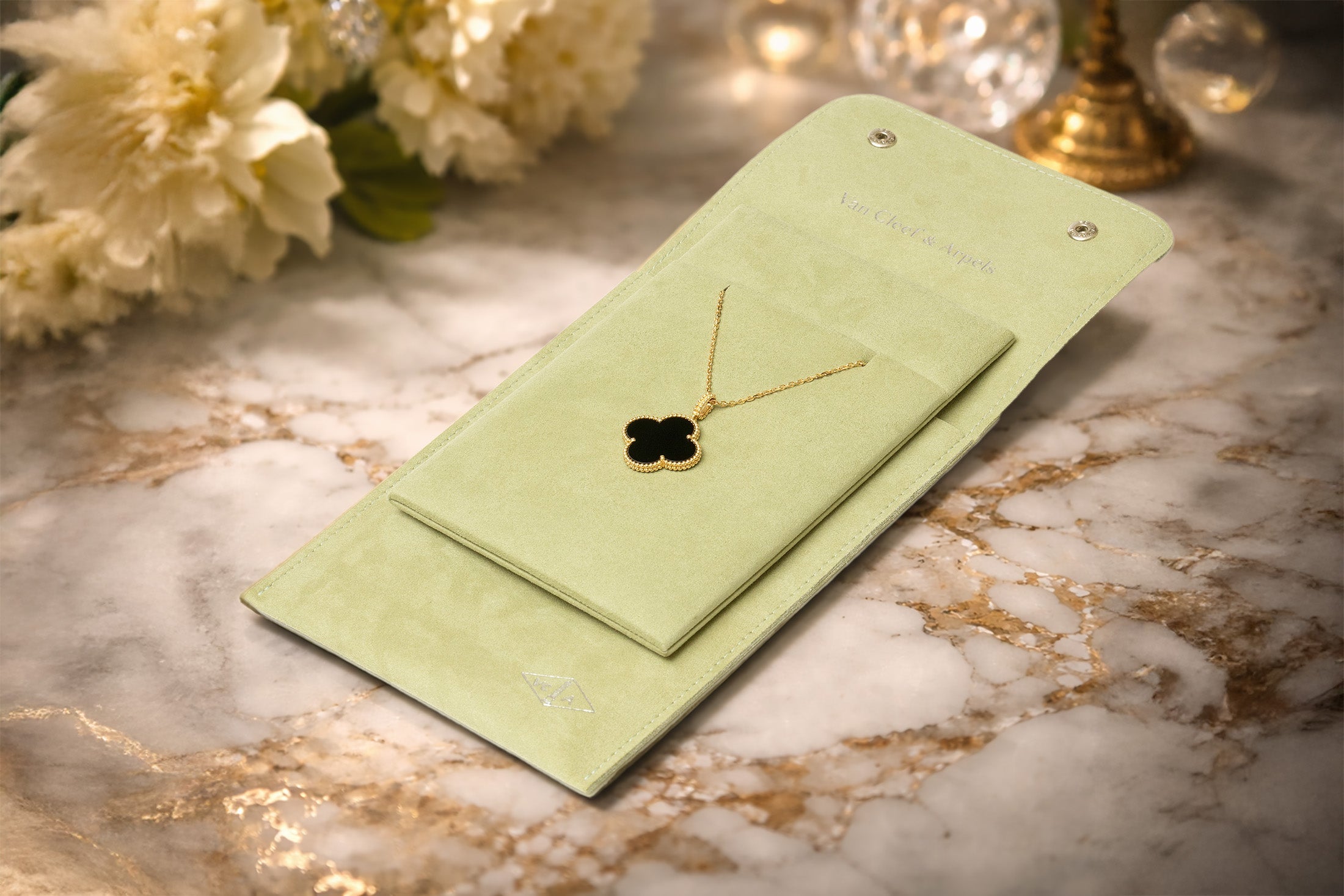
A lightly worn Vintage Alhambra 20-motif necklace in yellow gold and onyx usually sells for £8,500-£9,200, while heavily worn examples drop to £6,000-£7,000.
| Wear Level | Price Range (% of Retail) | Typical Characteristics |
|---|---|---|
| Pristine/Unworn | 90-100% | Original packaging, no visible use |
| Light Wear | 80-90% | Minor scratches, full structural integrity |
| Moderate Wear | 65-80% | Visible scratches, some gold thinning |
| Heavy Wear | 50-65% | Deep scratches, potential repairs needed |
Perlée collection pieces, especially bangles, show wear differently than Alhambra designs. The beaded gold construction means each bead can develop individual scratches or dents. A statement necklace with complex articulation points faces more wear stress than simpler designs.
If you plan to wear pieces regularly instead of storing them, it's smart to factor in anticipated wear when considering investment value.
Visible Wear on Popular Collections
The Alhambra collection's stone surfaces resist scratches pretty well, but the gold surrounds reveal the true story. Mother-of-pearl develops fine surface scratches that create a cloudy look under direct light. Onyx is more durable but can chip at the edges if struck.
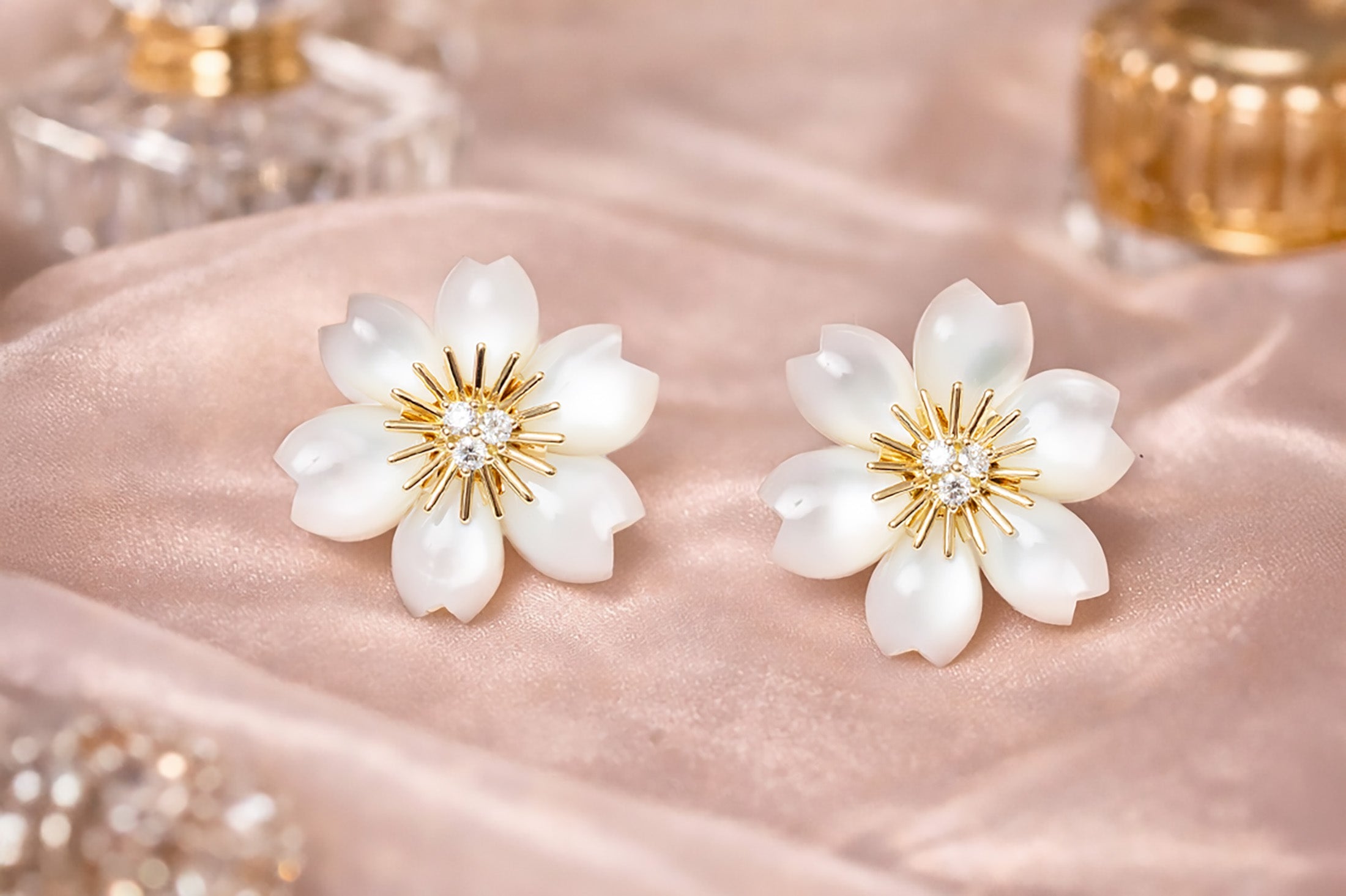
Frivole collection pieces have their own wear quirks. The delicate petal designs with sculpted gold forms show scratches clearly on curved surfaces. Between-the-finger rings from this collection wear down faster from constant contact with adjacent fingers.
Perlée collection wear patterns:
- Individual beads develop flat spots from repeated contact
- Clasp mechanisms loosen with frequent use
- Diamond settings need regular inspection
- Gold surfaces between beads pick up micro-scratches
Vintage Van Cleef pieces from the 1970s-1980s often feature thinner gold construction than modern pieces, making them more susceptible to wear. It's wise to get a professional inspection before buying heavily worn vintage items, as restoration costs can wipe out any initial savings. Chain links on longer necklaces stretch over time, affecting drape and potentially requiring expensive repairs that impact overall investment value.
Understanding Wear Patterns: What Buyers and Sellers Notice
Wear patterns on Van Cleef & Arpels jewelry act as material evidence of use, handling, and age. Collectors and dealers look for specific indicators to assess condition, verify authenticity, and determine fair market value.
Common Signs of Wear on Van Cleef & Arpels Pieces
The most telling wear appears on clasps, posts, and articulated elements where metal-to-metal contact happens during regular use. You'll often spot polishing loss on high points of gold bezels, microscopic scratches on polished surfaces, and thinning around pin stems and earring posts. These patterns develop based on how the piece is used, not just by chance.
Enamel pieces show edge wear where fingers naturally grip or where components move. Mother-of-pearl inlays develop subtle surface dulling from skin oils and environmental exposure. The back plates of Alhambra pendants typically show wear from rubbing against clothing.
Authentic wear follows functional logic. A clasp mechanism wears down at stress points, while fake distressing often looks randomly placed or too even. We look for progression and layering that matches the piece's claimed history. Stone settings reveal wear through prong thinning and basket smoothing at contact points.
The signature VCA hallmarks themselves can be pretty telling. Genuine wear around stamped marks appears gradual and directional, while artificially aged pieces often show inconsistent wear that doesn't match the surrounding metal's condition.
Importance of Original Components and Packaging
Original clasps, posts, and findings matter a lot in valuation because VCA's craftsmanship extends to every component. Replacement parts, even when well made, reduce market value by 15-30% depending on the piece's rarity and how visible the component is.
We check for originality by looking at hallmark placement, manufacturing techniques, and material consistency. VCA uses specific alloy compositions and finishing methods across different eras. A replaced clasp might stand out with mismatched hallmarks, a different metal tone, or odd attachment methods.
Original packaging and papers add measurable value:
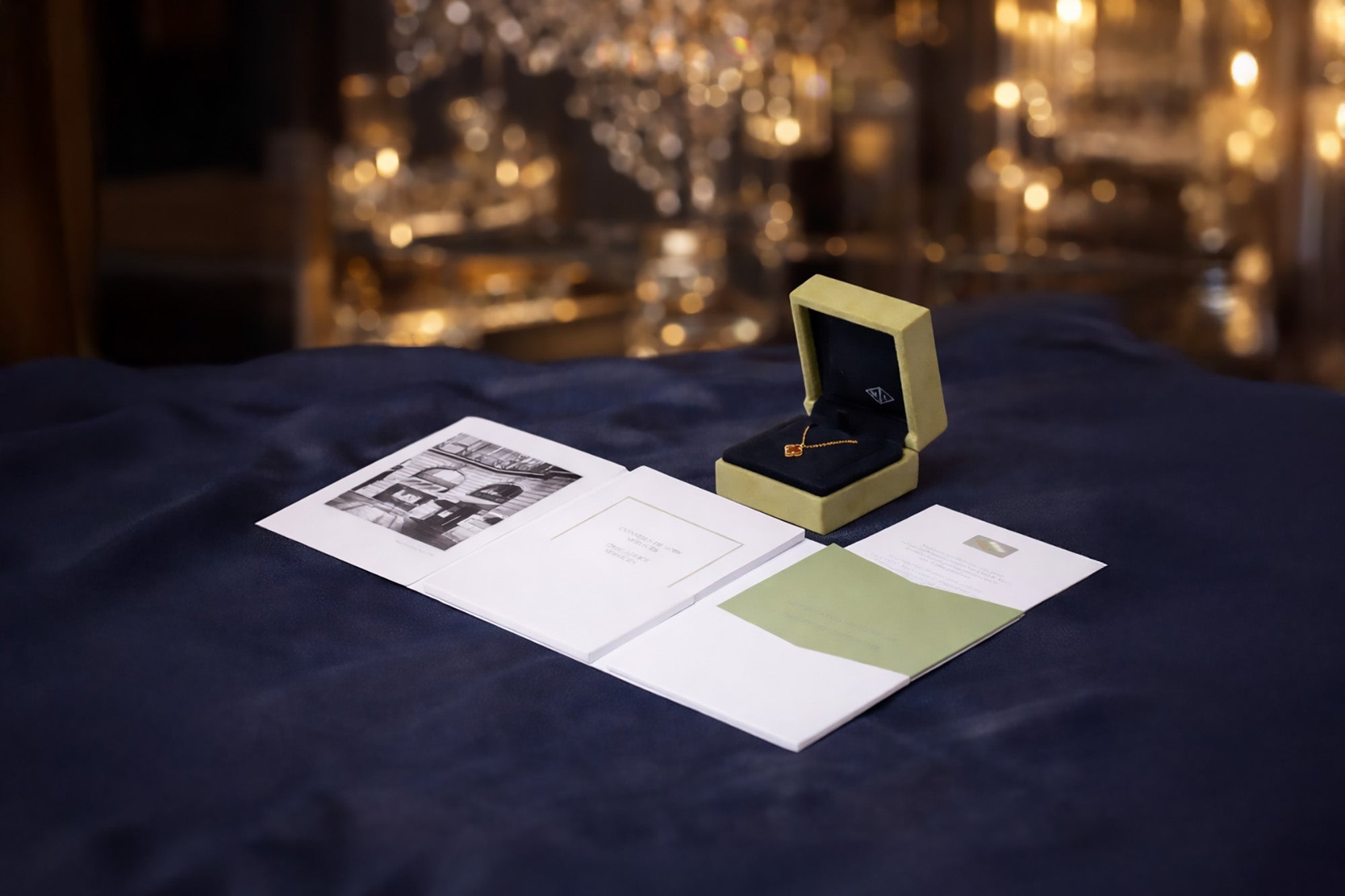
- Complete box, certificate, and service records: +10-20%
- Box only: +5-8%
- No packaging: baseline pricing
The certificate of authenticity confirms the piece's specs and purchase date, which matters when wear patterns should align with the claimed age. Sometimes, we see pieces with barely any wear being presented as decades-old, but the documentation reveals recent manufacture.
Service booklets documenting authorized maintenance support condition claims and show proper care history. This paperwork gets especially valuable if a piece has had professional restoration.
Restoration and Polishing: Pros and Cons
Professional restoration through VCA boutiques keeps craftsmanship standards high, but it also removes original surface character that collectors often value. A lightly polished vintage Alhambra loses the patina that proves age and authenticity. For collectible pieces, minimal intervention is usually the way to go.
Restoration considerations:
| Action | Benefit | Risk |
|---|---|---|
| Light cleaning | Removes buildup | Low risk if done properly |
| Repolishing | Restores shine | Removes metal, eliminates age indicators |
| Stone replacement | Addresses damage | May affect originality premium |
| Clasp repair | Maintains function | Can reduce value if not VCA-authorized |
Over-polishing removes metal volume and softens crisp details on guilloche work or milgrain edges. We've seen pieces where aggressive polishing wiped out the sharp definition that marks VCA's attention to detail. This matters more on vintage pieces where original surface finish helps with authentication.
Some wear tells a story worth keeping. A well-loved Alhambra with honest use patterns often sells better than an overly restored piece that makes you wonder about its history. It's always a balancing act between keeping a piece functional and preserving the material evidence that supports its narrative and authenticity.
How Materials Respond to Wear: Precious Metals, Gems, and More
Different materials in Van Cleef & Arpels pieces age in their own ways, affecting both appearance and value. Precious metals develop patinas and scratches, while gemstones face durability challenges based on their hardness and structure.
Gold, Platinum, and Metal Wear Dynamics
Gold and platinum respond differently to daily wear, which really matters when evaluating a piece's condition. Platinum develops a patina over time, creating a soft, frosted look that some collectors actually prefer. This natural aging doesn't remove metal, it just shifts it around on the surface.
Gold behaves differently based on its karat. 18k gold, which Van Cleef & Arpels uses most, is harder than higher karat gold but still picks up scratches and dents. Yellow gold hides wear better than white gold, which can lose its rhodium plating and show a warmer tone underneath.
Common metal wear indicators:
- Surface scratches (micro and macro)
- Dents from bumps
- Thinning at high-contact points
- Loss of rhodium plating on white gold
- Worn engravings or hallmarks
The thickness of gold settings plays a big role. Settings on bracelets worn daily thin out faster at clasps and hinges than those on pieces saved for special occasions.
Diamonds and Colored Gemstones Condition Issues
Diamonds rank 10 on the Mohs hardness scale, so they're highly scratch-resistant, but they can still chip if hit at the wrong angle. This happens most with emerald-cut diamonds and their exposed corners. The brilliance of a diamond fades when oil and dirt build up, but a good cleaning brings it right back.
Colored gemstones have more complicated wear patterns. Emeralds, rubies, and sapphires each have their own weaknesses. Emeralds are fragile due to their natural inclusions and often need oiling treatments that wear away over time. Sapphires and rubies (both corundum) are harder and handle daily wear better, though they can pick up surface abrasions.
Gemstone durability hierarchy:
- Diamonds (hardness 10)
- Sapphires and rubies (hardness 9)
- Emeralds (hardness 7.5-8, but brittle)
Rare gemstones in Van Cleef & Arpels pieces might have treatments that affect long-term wear. Heat treatment is stable, but surface treatments can break down.
Wear Patterns on Mother-of-Pearl and Other Materials
Mother-of-pearl, the heart of the Alhambra collection, shows wear differently than traditional gemstones. Its organic nature means it scratches easily (hardness 3.5-4.5) and loses its lustre when exposed to chemicals, perfumes, or even certain skin types. Worn pieces often have dulled surfaces or fine scratches that kill the iridescence.
The material can also crack if hit or exposed to temperature swings. Moisture can cause delamination over time, especially in older pieces. Storing it right and avoiding contact with cosmetics helps keep the material's distinctive sheen.
Other materials like onyx, malachite, and agate each have their own quirks. Malachite is especially soft and porous, so it gets damaged easily by both knocks and chemicals. Onyx is tougher but can still chip at the edges. These factors really affect pricing on the secondary market, where top condition always gets a premium.
Spotlight on Iconic Collections: How Wear Patterns Impact Signature Van Cleef Designs
Each Van Cleef & Arpels collection has its own vulnerabilities based on construction and materials. The Alhambra's smooth surfaces show different wear than Perlée's textured beads, while the Zip necklace faces functional concerns along with aesthetic ones.
Alhambra and Magic Alhambra: Motif Surface and Edges
The Alhambra collection, introduced in 1968 with its lucky four-leaf clover motif, shows wear mainly in two spots: the flat motif surface and the signature beaded edges. Mother-of-pearl and onyx versions highlight scratches more than malachite or carnelian because of their even coloring. The double beaded contour, though beautiful, is especially vulnerable to bumps and abrasion.
Price drops are most dramatic when those gold beads lose their shape or show flattening. A well-worn piece can lose 15-25% in value compared to one with crisp, rounded beads. Magic Alhambra pieces, being larger, actually hold value a bit better since their size means proportionally less wear impact on the overall look.
The guilloché versions introduced in 2018 need extra care. Their engraved sunburst patterns fade with polishing, and collectors pay top dollar for pieces with sharp detailing. Stone-set edges around the motifs chip easily, especially on rings and bracelets that knock against hard surfaces a lot.
Perlée and Frivole: Bead and Petal Wear
The Perlée collection stands out for its continuous line of gold beads, beautiful, but honestly, a bit vulnerable. Those tiny spheres get flattened with regular wear, so you lose that lively sparkle that makes them pop. Bracelets seem to take the brunt of it, probably because wrists are always bumping into things like desks and doorframes.
Frivole’s petal designs have their own issues. The thin petals bend or dent more easily than you’d expect, and diamond pavé settings can loosen as the metal flexes. Between-the-finger rings from both collections? They show wear the fastest. A Perlée ring worn daily for a couple of years can drop 20-30% in resale value if the beads get visibly flattened. Frivole petals that lose their curve face similar markdowns.
The Famous Zip Necklace: Functional and Surface Wear
Van Cleef & Arpels’ Zip necklace is a bit of a marvel, part jewelry, part mechanism. The zipper has to work smoothly or collectors just walk away. If it sticks or feels misaligned, you’ll see value drop by 30-40%. We’ve watched buyers pass on pieces the second the zip doesn’t glide.
The tassel at the zipper’s end wears down from handling, stones get loose, and the metal dulls. Each link and joint is a potential trouble spot, especially if the necklace keeps getting switched between necklace and bracelet. Oddly, if a Zip necklace looks like it’s never been zipped, buyers get suspicious about authenticity.
Craftsmanship and Brand Heritage: The Meaning of Wear on Van Cleef & Arpels
Van Cleef & Arpels has built a reputation for exceptional craftsmanship since 1906, and honestly, that legacy shapes how wear patterns hit the price tag. The Maison’s focus on longevity and their restoration services add a unique twist to pricing in the resale world.
The Maison's Approach to Longevity and Maintenance
Every Van Cleef & Arpels piece is designed with durability in mind, using techniques refined over generations. Their Mystery Set, for example, where stones seem to float with no visible prongs, takes wild skill, but also creates spots that are a bit more prone to wear.
The Maison insists on top-tier diamonds and vibrant colored stones, so even pieces with some wear still hold material value. Each Perlée bead is hand-finished by artisans using lost-wax casting, so you might see scratches, but the beads keep their basic structure.
Durability notes:
- Mother of pearl is delicate, handle with care
- Hammered gold holds up better for daily wear
- Diamond, sapphire, emerald, and ruby resist scratches well
- Onyx and malachite look great but need gentle treatment
Van Cleef provides care instructions, but everyday wear is expected and already influences pre-owned pricing.
Restoration Services and Their Influence on Pricing
Van Cleef & Arpels offers full restoration at their boutiques, and that really affects how we value worn pieces. Restoration can mean re-polishing, stone replacement, or fixing clasps and settings.
A piece restored through official channels usually sells for close to mint, maybe 10-15% less than unworn. But restoration isn’t free. Depending on what needs doing, you could pay a few hundred to a few thousand dollars.
Restoration pricing factors:
- Documented restoration boosts legitimacy and value
- Original components kept during service help authenticity
- Unrestored vintage pieces sometimes attract collectors who love patina
- Cost vs. value matters, especially for less expensive items
Iconic lines like Alhambra keep their value even with visible wear, since buyers know restoration is an option. The brand’s promise to service pieces from any era helps keep legacy and value alive in ways mass-market luxury jewelry just can’t.
Market Trends: How Wear Patterns Influence Demand and Auction Prices
Wear patterns shift auction results and collector behavior in real, measurable ways. Pristine vintage pieces can command 30-50% premiums over similar but worn items. The hierarchy of condition shapes both resale value and long-term investment, especially for Van Cleef & Arpels’ most sought-after collections.
Auction House Insights and Collector Preferences
Auction houses grade wear in standardized reports, from “like new” to “heavily worn.” Christie's and Sotheby’s data shows Van Cleef pieces with minimal wear often beat pre-sale estimates by 20-40%. In contrast, pieces with scratches or worn clasps sometimes can’t even hit reserve.
Collectors really focus on certain wear signs. Clasp integrity is huge, replacing a clasp can knock 25% off the value. Hallmarks need to be crisp and unpolished. Surface scratches on gold aren’t as big a deal as damage to enamel or stone settings, which can slash value by 40-60%.
Auction performance drivers:
- Original box and papers (adds 15-20% to the price)
- Unpolished surfaces with sharp edges and clear maker’s marks
- All original stones, no replacements
- Working mechanisms on moving pieces like brooches
The savviest collectors use condition as a kind of authenticity check. Honest wear for a piece’s age actually reassures buyers, while a suspiciously perfect vintage piece might raise eyebrows about refinishing.
Limited Editions and Vintage Rarity
Limited edition Van Cleef pieces behave differently in the market. Vintage Alhambra from the ‘70s and ‘80s can fetch huge premiums, even with some wear, because scarcity trumps condition. Mint vintage Alhambra motifs have sold for 300-400% of their original price; even worn ones get 200-250% premiums.
High jewelry from discontinued lines is another animal. Mystery Set pieces rarely come up at auction, so even worn ones are hotly desired. A lightly worn Mystery Set piece might sell for 80-90% of a pristine one’s value, compared to a 50-60% discount on more common collections.
Rarity changes what collectors will tolerate. Vintage cosmos clips and Zip necklaces keep strong resale value no matter the wear, simply because finding any example is tough. On the other hand, standard Alhambra necklaces get more scrutiny, since buyers can just wait for a better one.
These days, collectors actually see a little patina on vintage pieces as a plus, especially for designs from the 1950s-1970s when Van Cleef’s style was at its most distinctive.
Long-Term Resale and Investment Considerations
If you’re thinking about investment value, wear patterns are a real factor. A piece bought in pristine shape loses 5-10% of its value each ownership cycle if worn regularly, but vault-kept pieces can appreciate 8-12% a year for the most desirable collections.
We recommend purchasing lightly worn vintage Van Cleef pieces at a 20-30% discount. You skip the initial depreciation, and these pieces can still appreciate 6-8% a year, plus, you can actually wear them.
Investment tips:
- Rotate wear among pieces to slow down depreciation
- Get professional maintenance every 2-3 years
- Keep all service records from Van Cleef boutiques
- Update insurance appraisals yearly to reflect actual condition
Mint condition pieces usually sell within a month or two at full asking price. Worn examples take longer, three to four months, and often go for 10-15% less. Knowing these timelines can help you plan whether you’re buying or selling.
Frequently Asked Questions
Wear patterns affect pricing through surface condition, structural integrity, and how easily you can authenticate a piece. Restoration can help, but some wear creates permanent price drops, even after expert polishing.
What aspects of wear and tear most significantly affect the value of Van Cleef & Arpels jewelry?
Heavy scratches on hallmarks and serial numbers hurt value the most, since they make authentication tricky. If you can’t read the markings, buyers get nervous, and prices drop by 15-25%.
Structural problems like bent clasps, stretched chains, or loose stones are worse than surface wear. These issues are expensive to fix and suggest the piece wasn’t well cared for, which scares off collectors.
Stone condition is huge, especially for mother-of-pearl, onyx, or malachite. Deep scratches or chips on these can’t be polished out, and replacing them ruins originality. We’ve seen two identical Alhambra pendants differ by 30% in price just because of stone condition.
Can you still fetch a good price for a well-loved piece from Van Cleef & Arpels with visible signs of use?
Definitely, as long as the wear feels honest for the age. Light scratches and a bit of patina actually help prove authenticity, since precious metals age in predictable ways.
Collectors expect a ten-year-old Alhambra necklace to show some surface marks if it’s been worn. As long as hallmarks are clear and there’s no structural damage, a well-loved piece can sell for 70-85% of pristine value.
Discontinued designs with visible wear often get premium prices because rarity matters more than condition. Buyers are more forgiving on vintage than on current pieces.
Are certain types of Van Cleef & Arpels pieces more resilient to wear and how does that impact resale value?
Yellow gold with brushed or matte finishes hides scratches better than high-polish styles. That texture helps these pieces keep their value.
Perlée’s beaded edges spread wear more evenly, so scratches don’t stand out as much as they do on flat, polished pieces.
Onyx Alhambra pieces resist scratching better than mother-of-pearl. The harder stone stays smooth longer, which helps resale values. Mother-of-pearl is more delicate and shows every bump, so it depreciates faster when wear appears.
Does professional refurbishing make a big difference for the resale price of Van Cleef & Arpels jewelry?
Official restoration at Van Cleef boutiques can bump resale value by 10-20% for moderately worn pieces. Their artisans know how to restore finishes without erasing important details.
But over-polishing is a real risk. We’ve seen pieces lose value after aggressive third-party work that rounds off edges or fades hallmarks. Once those details are gone, even the best restoration can’t bring them back.
Restoration makes the most sense for high-value pieces, where the cost is a small slice of the total value. For lower-priced items, the cost of restoration might outweigh the price bump.
What maintenance tips can help preserve the value of Van Cleef & Arpels pieces over time?
Store each piece separately in its original pouch or box so metals don’t rub together. That single habit prevents most scratches.
Put jewelry on last, after makeup, perfume, and lotion, those things leave residue that attracts grit and causes abrasion. Take pieces off first before any physical activity or chores.
Wipe pieces gently with a microfiber cloth after wearing to remove oils and dust. For deeper cleaning, use lukewarm water and a drop of mild dish soap on the cloth, but never soak mother-of-pearl or porous stones.
How do collectors determine the price drop from wear when looking at pre-owned Van Cleef & Arpels jewelry?
Seasoned collectors usually start by checking the current boutique price for the same piece, then knock off some value depending on how much wear shows. If it’s just surface scratches or mild wear, you’ll often see about a 10-20% reduction. But if there’s anything more serious, like bent parts or a chipped stone, prices can drop by 25-40%.
Clear authentication matters a lot. If hallmarks and serial numbers still look sharp, even with some wear, the discount stays pretty modest. But if those markings get hard to see or tough to photograph, buyers get nervous and want a bigger price break to cover the risk.
Market demand twists things, too. Popular designs like the classic Alhambra tend to hold their value better, even when they’re not in perfect shape. On the other hand, less sought-after styles lose more value for the same amount of wear. We keep an eye on what people are actually paying in completed sales, not just what sellers hope to get.