

How to Identify Non-Original Stones in Van Cleef & Arpels Pieces
Check out our Van Cleef & Arpels collection!
Van Cleef & Arpels pieces command premium prices because of their exceptional gemstones and meticulous craftsmanship.
Authentic Van Cleef & Arpels stones should fit snugly within their settings without gaps, display consistent color and size matching across multiple gems, and show no cloudiness or abrasion. Unfortunately, counterfeiters often substitute genuine materials with glass, acrylic, or resin, making it critical to know what to look for.
Too many collectors end up with pieces containing replaced or non-original stones, which greatly affect both value and authenticity. The difference between genuine lapis or onyx and fake substitutes may not be immediately noticeable, but knowing what to look for can help you avoid costly mistakes.
This guide will walk you through practical ways to spot non-original stones in Van Cleef & Arpels jewelry. We'll get into stone quality, setting details, hallmarks, and paperwork, the basics you need to separate the real from the not-so-real.
Key Takeaways
- Stones in authentic Van Cleef & Arpels pieces fit perfectly in their settings; no gaps, no loose bezels
- Genuine pieces show consistent gemstone quality: matching colors, even sizing, clear surfaces
- Verifying authenticity means checking hallmarks, serial numbers, craftsmanship, and original documentation
Essential Markers of Authentic Van Cleef & Arpels Stones
You can spot authentic Van Cleef & Arpels stones by their precise setting, real gemstone properties, and symmetry. The maison's decades of expertise show up in details that fakes just can't quite nail.
Stone Setting Techniques
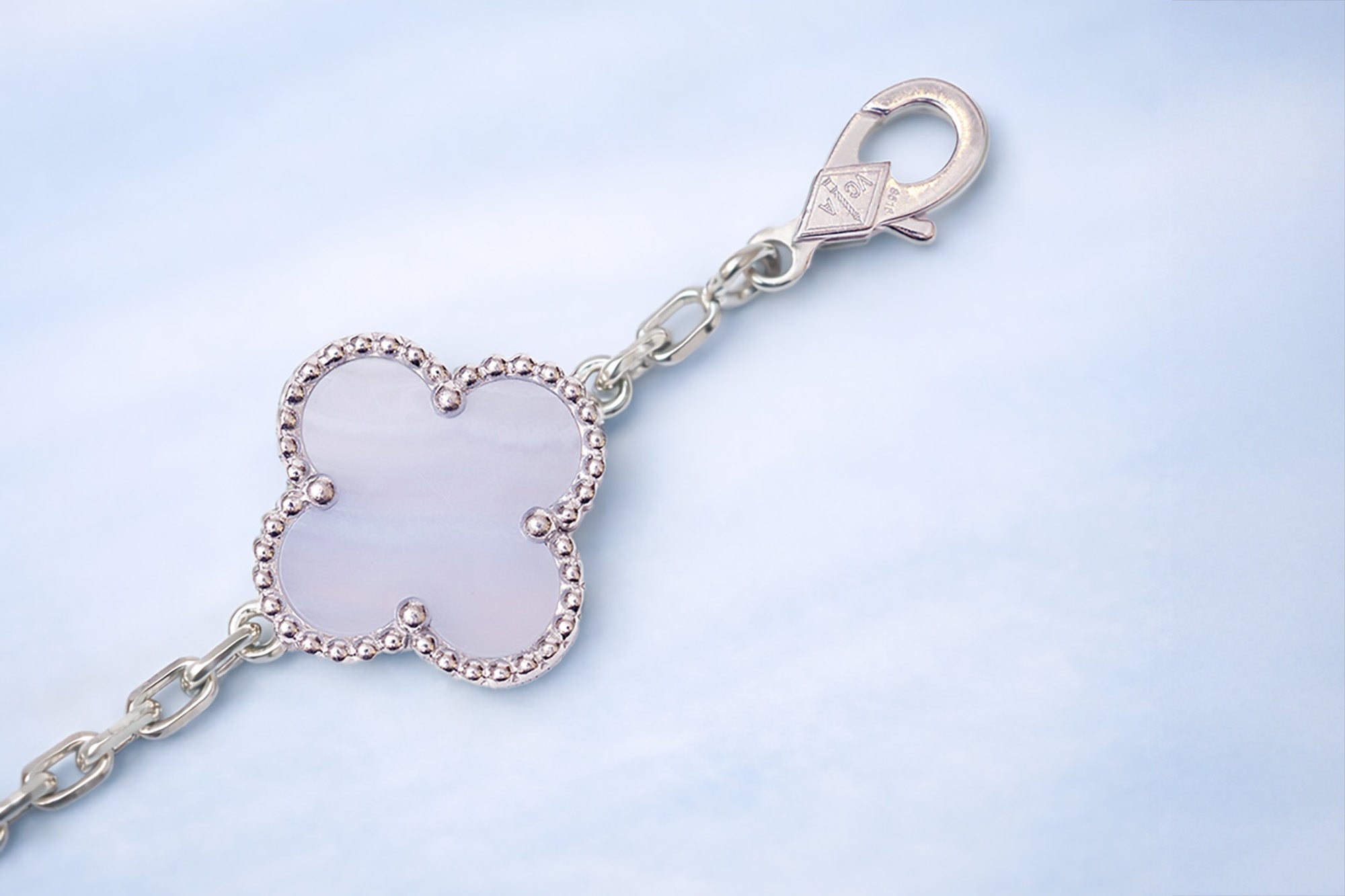
Van Cleef & Arpels uses a bezel setting, each stone sits flush against its gold frame: no gaps between stone and metal. You want to see seamless contact all the way around.
The gold beading around motifs should look uniform, with beads matching in height, width, and spacing. If you run your finger over real beading, it should feel smooth and even, not lumpy or uneven.
Look for:
- No glue or adhesive around stone edges
- Consistent metal thickness in bezel walls
- Stones cut to fit their frames exactly
- Hand-polished settings, no tool marks
For pavé pieces, every tiny diamond is set by hand. Prongs should be delicate but secure, with tips that don't stick up. Fakes often use machine settings, which look too identical and repetitive.
Flip a real piece over. The back should show proper finishing: smooth, no rough edges, no shortcuts.
Recognizing Natural Gemstone Characteristics
Real mother-of-pearl in Van Cleef & Arpels pieces has depth and a shifting play of color. You should see subtle pink, blue, or green undertones, and a silky, lively lustre.
Malachite shows natural banding that flows across the surface. Each piece has unique rings and waves in different shades of green. The patterns should look organic, not abruptly ending or repeating in a way that feels artificial.
Authentic onyx is a deep, even black, no grey patches or uneven color. The black stays true at every angle. Fake onyx sometimes shows surface treatments that wear off or reveal other colors underneath.
Carnelian and tiger's eye should show that silky band of light, chatoyancy, that moves as you tilt the piece. In Alhambra clovers, it should be centered in each petal, not off to the side or random.
Turquoise needs to have natural matrix veining that looks random and organic, not too perfect or symmetrical.
Symmetry and Placement in Original Pieces
The four-leaf clover motif demands spot-on symmetry. All four petals should match in size and shape, with stones that have the same color intensity and pattern.
Van Cleef & Arpels matches materials obsessively. In a five-motif Alhambra bracelet, all five stones should have similar characteristics, matching malachite banding, mother-of-pearl lustre, or onyx depth. They should look like they belong together, not like a random mix.
Spacing between motifs on bracelets and necklaces follows exact measurements. The links let the clovers move smoothly, so the chain doesn't twist or bind. If it does, that's a bad sign.
Each stone should sit perfectly centered in its bezel. Look straight at a genuine Alhambra clover and the stone should be smack in the middle, with equal gold showing all around. Even being a millimeter off-center can be a red flag.
When a piece uses multiple stone types, Van Cleef & Arpels arranges them with intention. Colors transition logically, patterns complement each other, and the overall look feels balanced.
Savoir-Faire and Signature Craftsmanship Indicators
Van Cleef & Arpels' legendary savoir-faire leaves marks that counterfeiters can't quite copy, especially in the way stones are set and finished. The maison's high standards create signs that help spot original stonework from replacements.
Van Cleef & Arpels Savoir-Faire Secrets
Craftspeople at Van Cleef & Arpels spend years mastering techniques refined over generations. They obsess over details, even on the parts you'll never see.
Check the underside and interior metalwork around the stones. Authentic pieces have smooth finishes, no roughness, no tool marks, no unevenness. The metal surrounding each stone should look seamless, with a consistent polish.
Prong work on genuine pieces is symmetrical. Each prong matches its neighbours in height, width, and curve. If you see retouching, new scratches, or uneven wear around a stone, it might be a replacement.
Craftsmanship Details in Stone Setting
Van Cleef & Arpels uses several setting techniques, each with its own quirks. The bezels on Alhambra pieces should show even metal all around the stone, with no gaps.
Original settings show:
- Uniform metal thickness around the stone
- Mirror-like polish with no buffing marks
- Stone sits flush, no visible gaps
- Prong tips are rounded and smooth
If stones were replaced, you might notice mismatched metal color where new gold was added. Solder joins could look a little different, or the metal around the stone may seem fresher than the rest. Non-original stones often sit too high or too low because they're not cut to the maison's specs.
The Mystery Setting and Its Distinction
The Mystery Set is one of Van Cleef & Arpels' most famous achievements. Since 1933, they've used a hidden rail system carved into the back of each stone, so the gems appear to float without visible prongs.
You can check authenticity by looking at the piece sideways under magnification. Original Mystery Set stones align perfectly, with hairline-thin gaps. Fakes or replacements show uneven spacing, visible metal, or stones set at odd heights. The real thing just looks seamless, any deviation stands out.
Examining Metal Purity Stamps and Brand Hallmarks
Authentic Van Cleef & Arpels pieces carry specific metal purity stamps and maison signatures. The way these hallmarks are placed, their depth, and their precision can tell you a lot about whether a piece is genuine, or if someone swapped in non-original stones.
Identifying Metal Purity Stamps
Van Cleef & Arpels uses only 18 karat gold, marked "750" or "Au750" on every real piece. That's 75% pure gold, the maison's standard.
You'll find these stamps near the signature and serial number, usually on clasps, ring bands, or little metal plates. On Alhambra pieces, the 750 mark sits on the clasp ring or gold edge closest to the fastener.
The stamp should be crisp and evenly engraved. Run your finger over it, a real stamp sits almost flush, deeply etched but smooth.
Look for:
- Always "750" for 18K gold
- Sometimes "Au750"
- Never 585 (14K) or 417 (10K)
- Platinum pieces say "950"
If a piece lacks a purity stamp or has a different karat weight, it's probably fake or has non-original parts.
Interpreting Maison Signatures and Engravings
The Van Cleef & Arpels signature can be the full name or just "VCA," depending on the era and type. Pieces from the 1970s and 1980s usually have the full name; modern items often use "VCA."
Check the font. Real signatures use clean serif letters, evenly spaced and aligned on a straight line. The engraving is sharp and even.
The French maker's mark matters too, a lozenge-shaped stamp with "VC" and "A" flanking the Place Vendôme column.
Each piece also has a unique serial number, a mix of letters and numbers, near the VCA stamp and gold mark. The serial engraving matches the signature in quality.
Spotting Common Counterfeit Hallmark Red Flags
Counterfeit pieces often get hallmarks wrong. You'll see stamps that look pressed, not engraved, or have a different feel.
Red flags:
- Shallow or uneven engraving
- Misaligned or crooked text
- Weird letter spacing or thickness
- Blurry or partial stamps
- Hallmarks in the wrong place
- Just "Van Cleef" (missing "Arpels")
Fake engravings sometimes wear off quickly or start out too light. Real hallmarks stay sharp, even on vintage pieces, though some wear is normal.
Font issues are a giveaway too. Fakes often use fonts that don't quite match, letter proportions are off, or stroke weights vary. If hallmarks are in odd spots or the serial number looks hand-scratched, that's a warning sign.
Assessing Packaging and Presentation for Authentic Stones
Real Van Cleef & Arpels pieces come with distinctive packaging and paperwork. These details are often your first line of defence when checking for genuine gemstones.
Original Packaging Features
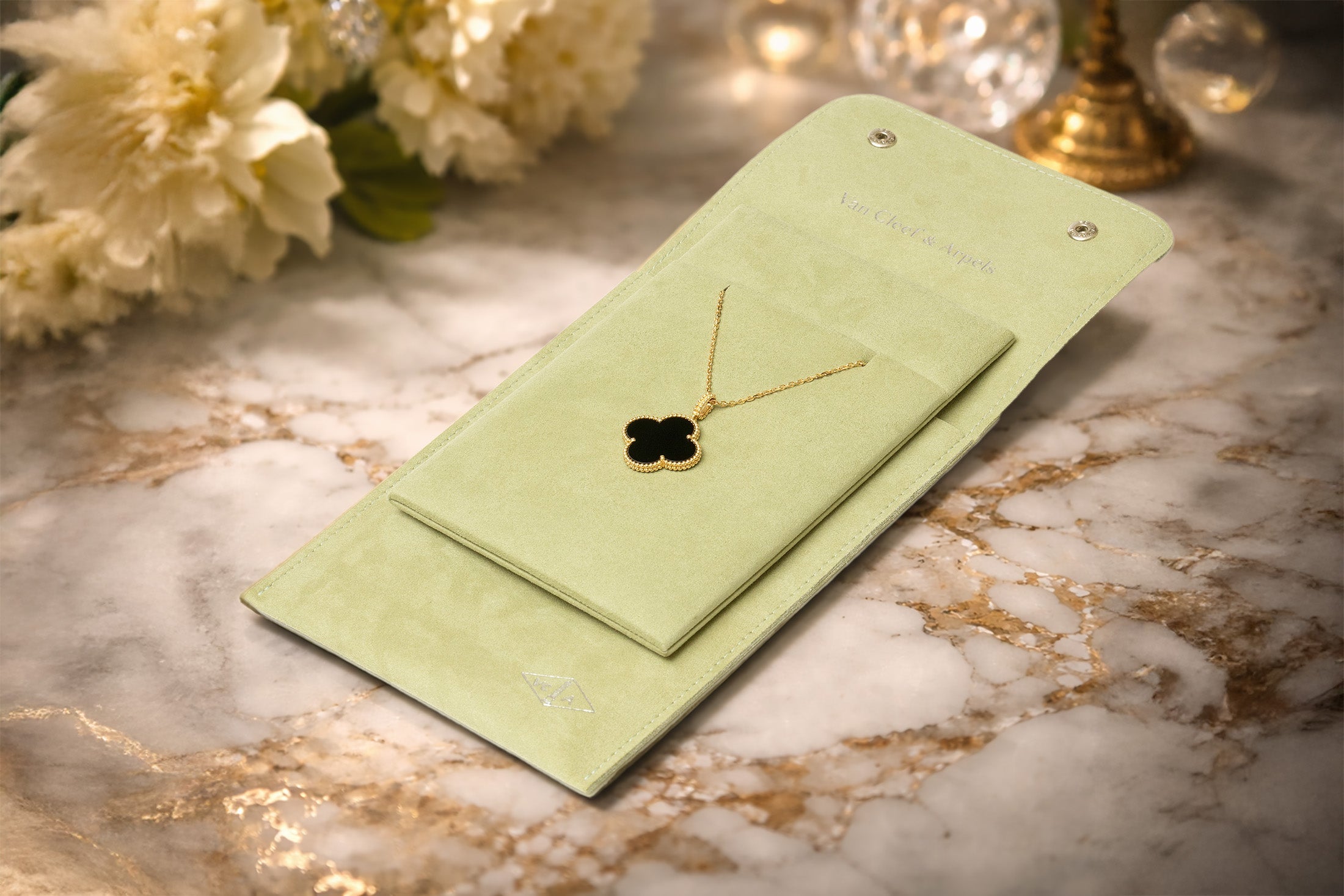
Van Cleef & Arpels uses signature cream or deep green boxes with the logo embossed in gold. The boxes feel solid and have soft suede or velvet interiors.
Authentic packaging shows properly aligned logos with crisp printing. The font and spacing should match across all materials. Fake boxes often have off-color shades or flimsy cardboard.
Jewelry sits in custom-fitted inserts, necklaces in necklace boxes, rings in ring boxes. Alhambra pieces have their own style. Shopping bags, if included, use thick paper with reinforced handles and matching colors.
Certificate of Authenticity and Paperwork
Every genuine piece with precious stones comes with a certificate of authenticity on heavy card stock. This lists gemstone details, type, weight, quality.
The paperwork includes a serial number that matches your jewelry. You can check this number with Van Cleef & Arpels boutiques or customer service. Fake certificates often have errors, wrong fonts, or vague gemstone descriptions.
Look for care instructions in multiple languages, with proper grammar and formatting. Real documents never arrive folded or creased.
Clues Hidden in Presentation Details
The dust bag has the Van Cleef & Arpels logo embroidered (not printed) with precise stitching. Real dust bags use soft fabric that won't scratch stones or metal.
Polishing cloths have the brand name woven into the fabric. Any stickers, tags, or inserts should have clean cuts and good printing. Every detail matters, from ribbon colors to the weight of booklets.
It's smart to photograph all packaging materials before wearing your piece. That way, you've got proof if you ever need to authenticate it or insure it.
Authentication Through Provenance and Documentation
When it comes to verifying that the stones in your Van Cleef & Arpels piece are original, documentation and provenance records are your best friends. Certificates, serial numbers, and professional appraisals create a paper trail that's tough for counterfeiters to fake convincingly.
Understanding Certificates and Serial Numbers
Every genuine Van Cleef & Arpels piece carries a unique serial number, etched right onto a small metal plate, usually a mix of letters and numbers. This serial number links back to the maison's own records, showing exactly what materials and gemstones went into that specific piece.
Original documentation should include:
- Purchase receipt from an authorized boutique or dealer
- Certificate of authenticity with matching serial number
- Detailed description of gemstones and their quality grades
- Original packaging and presentation box
You can check serial numbers directly with Van Cleef & Arpels boutiques, though it sometimes takes a bit of patience. The brand keeps meticulous records of every piece they've made. If the original stones have been swapped out, the specs in the documentation won't line up with what's actually in the jewelry.
Of course, counterfeit certificates are out there, so it's worth taking a close look at the paper quality, font, and official stamps. Authentic certificates use a specific paper stock and printing style that fakes rarely nail.
Independent Appraisal for Stone Verification
A certified gemologist can give you an unbiased assessment of the stones in your piece, comparing them to Van Cleef & Arpels' standards. This step is pretty crucial if you're buying pre-owned or if you have any doubts about stone replacement.
Gemologists use the 4 C's: color, clarity, cut, and carat weight, to see if the diamonds measure up to Van Cleef & Arpels' famously strict standards. The maison sticks to natural diamonds, only those with flawless or nearly flawless grades, and cuts that score excellent to very good.
Key appraisal services include:
- Gemstone identification and quality grading
- Comparison against brand specifications
- Detection of treatments or enhancements
- Documentation of current stone characteristics
It's smart to find a gemologist with experience in luxury brands. They know Van Cleef & Arpels won't use diamond simulants like cubic zirconia or treated stones that don't meet their quality bar.
Tracing Vintage Van Cleef & Arpels Pieces
Vintage Van Cleef jewelry is a whole different ballgame. Documentation standards have shifted over the years, so older pieces might not come with the detailed certificates we see today. That means tracking provenance is more like detective work.
We trace provenance through auction records, previous ownership docs, and even digging into brand archives. Good dealers keep thorough records of where their vintage pieces came from, building a chain of custody that backs up authenticity.
Hallmarks have changed over time. Depending on the age, you'll see either the full "Van Cleef & Arpels" or just "VCA" stamped on the piece, never partial versions. Knowing these quirks helps you verify age and originality.
Estate sales and family inheritances often come with stories or old photos that help prove provenance. We document everything, including repair records from authorized Van Cleef & Arpels service centers, which confirm the stones stayed original during maintenance.
Best Practices for Verifying Luxury Jewelry Purchases
Protecting your investment means keeping good records, getting expert verification, and checking directly with the brand when you need to.
Confirming Details with Payment and Receipts
We keep detailed records for every Van Cleef & Arpels purchase. Payment receipts should list the full description, serial number, metal, and gemstones.
Original receipts from Van Cleef & Arpels boutiques include details that counterfeiters just can't duplicate: model number, production year, metal purity. We hang onto both physical and digital copies, just in case.
Credit card statements add another layer, showing where and when you bought the piece. We cross-check these with the serial number. If we're buying pre-owned, we ask for the original receipt or authenticity certificate from the seller.
Bank records can help establish provenance if there's ever a dispute. We jot down the seller's info, including business registration and contact details. This comes in handy for insurance or if you ever want to resell.
Working with Trusted Dealers and Appraisers
We work with certified gemologists and appraisers who know Van Cleef & Arpels inside and out. These pros use tools like loupes, microscopes, and metal testers to check authenticity.
Reputable dealers have connections with Van Cleef & Arpels and can sometimes verify pieces directly. We always check their credentials and look for a solid track record. The best dealers provide written guarantees of authenticity.
Independent appraisers should hold credentials from recognized institutions and have real experience with French luxury jewelry. We ask for detailed written reports that cover hallmarks, metal, gemstone quality, and any authenticity concerns. These reports are great for insurance.
Accessing Brand Resources and Support
Van Cleef & Arpels boutiques offer authentication services for pieces bought through authorized channels. We contact the maison with serial numbers and photos to check production records and original specs.
The brand keeps detailed archives and can confirm if a piece matches their standards. We even subscribe to the Van Cleef & Arpels newsletter to keep up with new authentication methods and counterfeit alerts. Knowing about new security features helps us spot the real deal.
Van Cleef & Arpels customer service can verify warranty info and provide certificates of authenticity for pieces in their database. We use these resources before making big purchases, better safe than sorry.
Frequently Asked Questions
Authenticating Van Cleef & Arpels stones means looking for specific quality markers, checking the right paperwork, and knowing when to bring in a pro for specialized testing.
What telltale signs should I look out for to spot a fake Van Cleef & Arpels stone?
The biggest red flag is poor stone quality. Van Cleef & Arpels only uses gemstones that are flawless or nearly so, so if you spot big flaws, cloudy spots, or weird coloring, something's not right.
Fakes often use diamond simulants like cubic zirconia instead of real diamonds. The cut matters, too, VCA sticks to stones rated excellent to very good.
Check the stone settings. Authentic pieces have flawless metalwork, no rough edges or messy soldering. If the prongs look uneven or the stone is loose, that's a bad sign.
Can you give a rundown on the most effective ways to verify the authenticity of VCA gems?
Professional gemological testing is really the gold standard. XRF scanning checks the metal composition, should come back as 18K gold (75% pure) or platinum, never sterling silver. Counterfeits often use silver alloys, and the test picks that up fast.
We look at the 4 C's: color, clarity, cut, carat. Van Cleef & Arpels is strict about all four, so anything off is a warning.
Magnification lets us spot synthetic materials or low-quality stones that VCA would never choose. Real stones have the right traits for high-grade gems, not the obvious signs of lab-created or fake stuff.
What's the inside scoop on comparing the craftsmanship of real and faux Van Cleef stones?
Real VCA pieces have perfect stone placement, settings are symmetrical, and in collections like Alhambra, every stone sits at the same height and angle. Fakes usually mess this up.
The beading around stones (milgrain) should look even and precise. On fakes, it's often sloppy. Authentic stones are cut to catch light brilliantly, so if the sparkle seems off, that could be a clue.
Van Cleef stones are hand-selected and hand-set by skilled craftspeople. Each is positioned to show off its best side. Fakes just don't have that level of care.
Are there specific tests or gadgets for distinguishing knock-off Van Cleef & Arpels pieces?
XRF (X-ray fluorescence) scanners are great for checking metals. They analyze the elements without damaging the jewelry and confirm if it's really 18K gold or platinum, not the silver alloys you see in fakes.
A jeweler's loupe or microscope lets us check hallmarks, stone quality, and the details of the craftsmanship. We're looking for sharp engravings, the right font, and markings like "VCA Au750" (Au for gold).
Diamond testers separate real diamonds from simulants like cubic zirconia. Still, with sophisticated fakes out there, professional gemological equipment is a must for a thorough check.
Could you enlighten me on the proper documentation that comes with genuine Van Cleef & Arpels stones?
Authentic pieces come with a certificate of authenticity from Van Cleef & Arpels. This doc lists specifics about the piece, including the serial number that matches the hallmark stamped on the jewelry.
Packaging matters, too. Real VCA pieces arrive in high-quality boxes with the brand's signature look. You should also get care instructions and info on the materials.
For major purchases, especially those with diamonds or precious gems, VCA provides detailed gemological info. This paperwork outlines the stones' characteristics, quality grades, and origins.
What steps should I take if I suspect my Van Cleef & Arpels jewelry might be a sophisticated imitation?
Start by bringing the piece to a certified gemologist or a trusted authentication service with experience in luxury jewelry. These experts use specialized tools, think XRF scanners and hands-on gem analysis, to check for authenticity.
Reach out to Van Cleef & Arpels with the serial number. They keep detailed records for every piece they've made and can usually confirm if your serial number matches a genuine item.
If you bought the jewelry from a third-party seller, look over your purchase agreement and contact them right away. Good dealers typically guarantee authenticity and will accept returns if the item turns out to be fake. Take clear photos, save every bit of correspondence, and hang on to your paperwork, just in case you end up needing a refund or have to report the seller.