

How to Confirm Symmetry in Authentic Van Cleef & Arpels Alhambra Pieces
Check out our Van Cleef & Arpels collection!
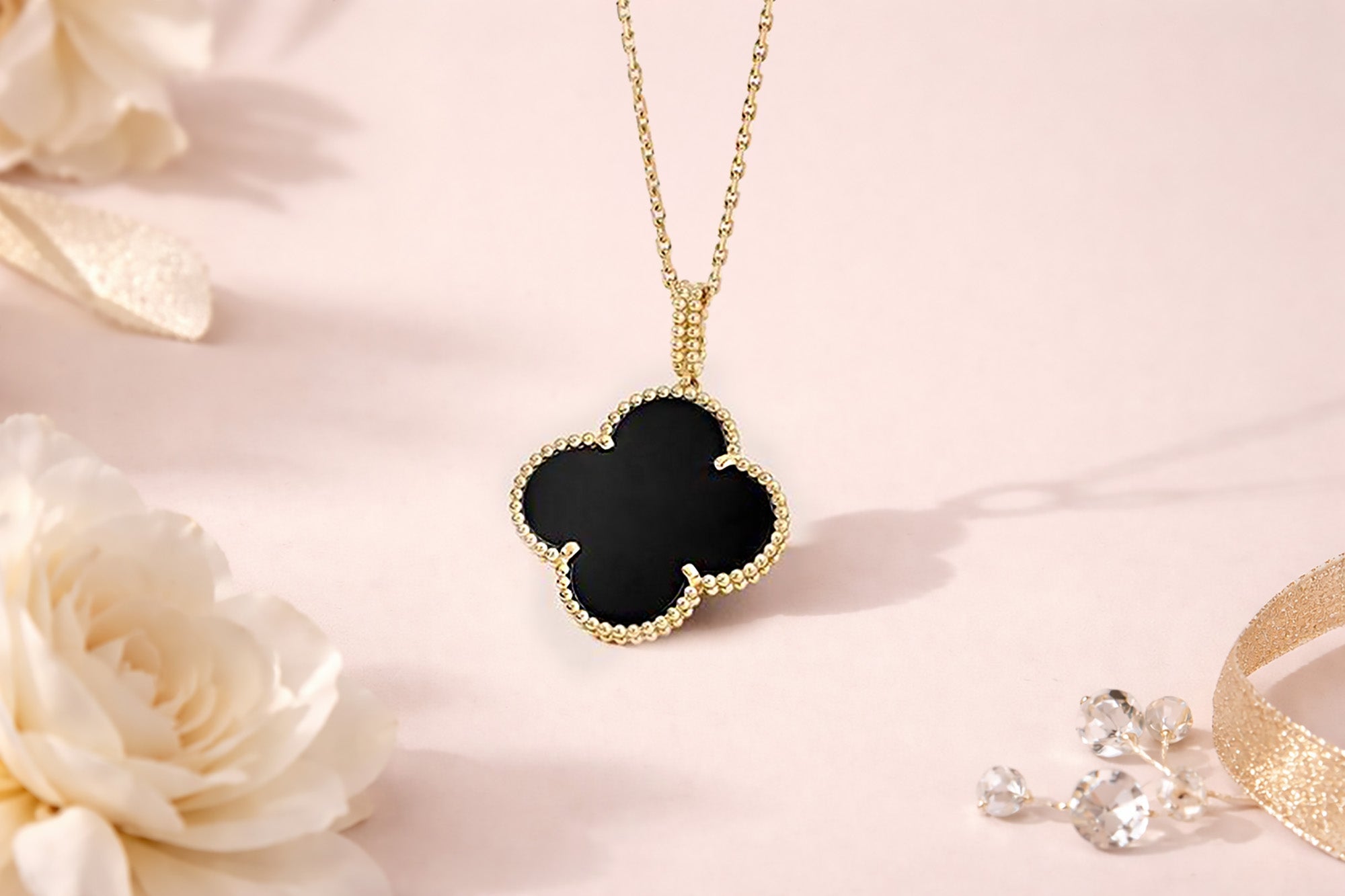
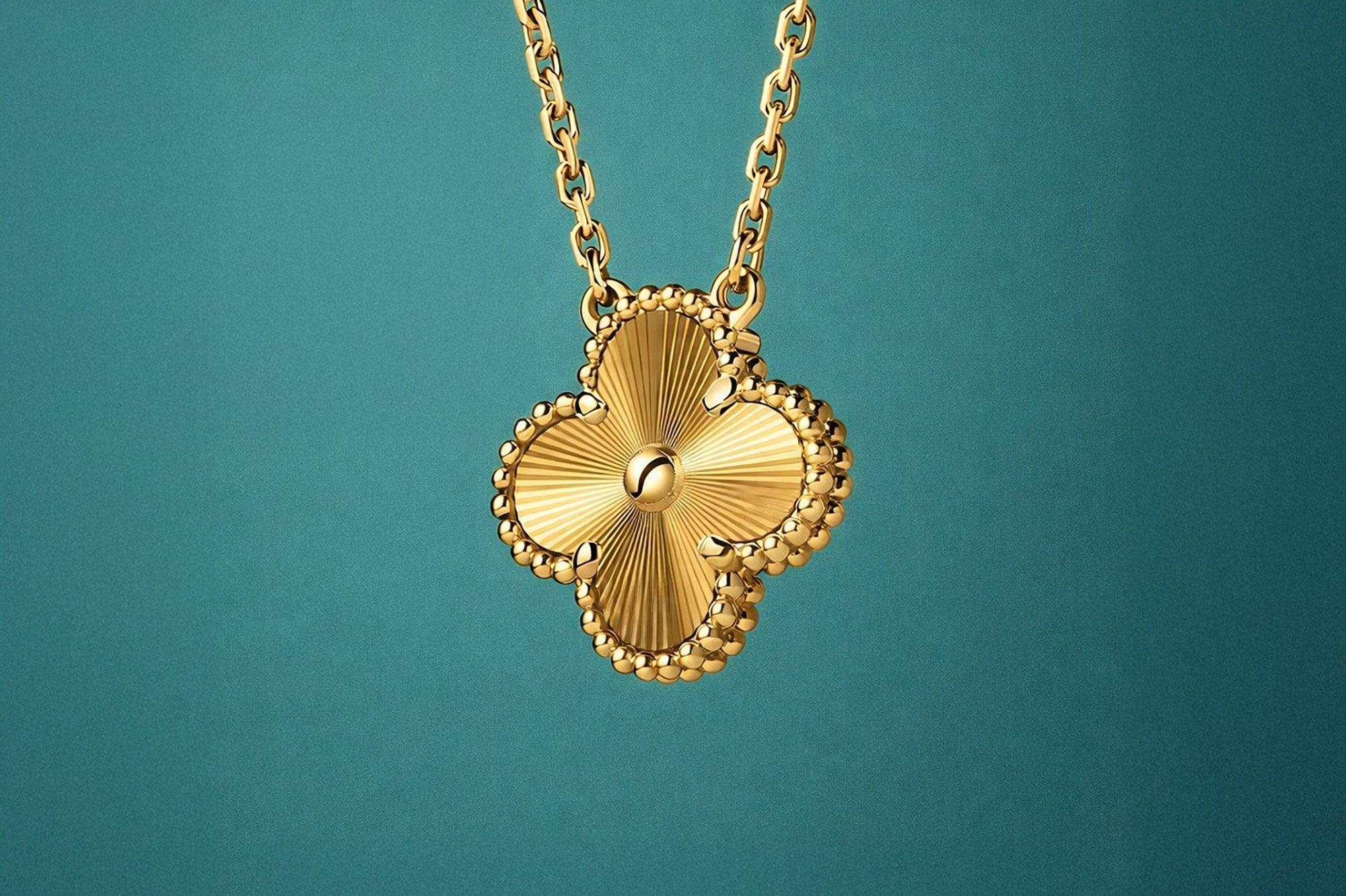
Van Cleef & Arpels Alhambra pieces stand among the most counterfeited luxury jewelry out there. If you want to spot a fake, symmetry is your friend. Authentic Alhambra motifs show off perfectly symmetrical designs. Think evenly spaced elements, tidy beading, and everything lined up just so.
Counterfeits? They usually slip up with odd spacing, crooked edges, or sloppy proportions. The brand’s reputation for flawless craftsmanship means symmetry isn’t just a detail, it’s a must.
Getting the hang of symmetry checks means knowing where to focus and what Van Cleef & Arpels expects. Whether you’re admiring the iconic clover shape or the dainty gold beading around each motif, every detail should look precise.
Even if you’re not an expert, you can spot these things with a little practice. Here’s what professionals look for when authenticating these pieces, so you can feel a bit more confident, whether you’re about to buy or just double-checking what’s already in your jewelry box.
Once you know what to watch for, asymmetry tends to jump out at you. Below, you’ll find tips for visual assessment, clues in the materials, and hallmark details that separate the real deal from the knockoffs.
Key Takeaways
- Authentic Alhambra pieces show perfect symmetry in motif alignment, beading, and edge finishing.
- Material quality and sharp engravings reinforce what your eyes see.
- If you’re still unsure, professional authentication services can run XRF scans or do gemological analysis.
Why Symmetry Matters in Authentic Van Cleef & Arpels Alhambra Pieces
Van Cleef & Arpels is almost obsessed with symmetry across every Alhambra piece. That obsession is a big reason symmetry is such a reliable authenticity clue. The perfectly balanced quatrefoil shape and those spot-on proportions are tough for counterfeiters to mimic.
Signature Symmetry in Alhambra Motifs
The Alhambra motif demands that all four lobes of its clover shape match perfectly, size, curve, and spacing. Van Cleef & Arpels has dialed in their processes to keep this balance, no matter the material: onyx, mother-of-pearl, carnelian, you name it.
Counterfeits often mess up here. You’ll spot uneven lobes or weird gaps. The beaded border should be uniform all the way around, the same size beads, and the same spacing. If you see beads that change size or gaps that aren’t even, that’s a warning sign.
Where the four lobes meet in the middle, those points should line up at clean 90-degree angles. If something feels off here, it’s worth a closer look.
Aesthetic Impact and Collector Value
Symmetry isn’t just about looks; it changes the way light bounces off each Alhambra piece. When everything’s balanced, gemstones reflect light evenly, giving that signature luminous effect. If something’s off, you’ll notice the sparkle just isn’t the same.
Noticeable symmetry issues can significantly reduce resale value, especially among experienced collectors. So, before you buy, take a good look at the symmetry, it’s just smart practice.
Iconic Quatrefoil Motif and Its Appeal
Since 1968, the quatrefoil has stood for luck and harmony in the Alhambra collection. That four-leaf clover look? It takes pretty serious math to get it right, and Van Cleef & Arpels has developed their own tricks to keep the geometry perfect, whether you’re looking at a tiny pendant or a bold statement piece.
People love these motifs partly because our brains just like balanced shapes. A symmetrical quatrefoil is simply more pleasing than a lopsided one. That’s probably why authentic pieces fetch such high prices.
Counterfeiters usually can’t nail the exact curves and ratios. The lobes should be rounded, yes, but not perfect circles; there’s a gentle taper toward the center. These subtle touches are what separate a true Van Cleef & Arpels from a copy.
How to Visually Assess Symmetry in Alhambra Motifs
Real Van Cleef pieces keep their symmetry across beading, bezels, and stone placement. You can spot problems by checking the motif’s edges, the prongs, and how well each clover lobe matches the others.
Checking for Even Beadwork and Bezel Precision
The beading around each motif should look uniform, same size, same spacing, same depth. Authentic pieces have beads that form a smooth, rounded edge, with no weird bumps or gaps.
Hold the piece up at eye level under good light. Does the beading make a clean, unbroken line? Each bead should match its neighbor, and the spacing should stay consistent.
The bezel (the metal rim holding the stone) should sit right inside the beaded border. If you spot beading that’s too tall, too flat, or uneven, that’s a red flag. Van Cleef’s team spends ages perfecting this, so any slip-ups suggest a fake.
Evaluating Motif Proportion and Mirrored Design
The four-leaf clover shape needs all four lobes to match in size and shape. Imagine drawing lines through the center, each side should mirror the other.
Van Cleef keeps these measurements tight. Compare opposite lobes; they should look like twins. Curves should be smooth, not lumpy or stretched.
Fakes often fail here. You’ll see lobes that look squished, stretched, or with uneven gaps between them. That’s usually a dead giveaway.
Inspecting Prong Setting and Stone Placement
On real Van Cleef Alhambra pieces, the prongs (those tiny metal arms holding the stone) are placed with precision. Each one should be the same angle and distance from the stone’s edge, giving a balanced, neat look.
Check that the prongs are uniform in thickness and height, and that each one presses down on the stone evenly. The stone itself should sit right in the middle of the bezel, with equal space all the way around.
Counterfeits? You’ll often see prongs at odd angles or different sizes. Stones might sit off-center or look tilted. Van Cleef doesn’t let these flaws slide, so if you see them, be suspicious.
Material Quality and Consistency as Indicators of Symmetry
Authentic Van Cleef & Arpels pieces keep material quality consistent throughout, gold color, gemstone quality, everything. If you notice differences between motifs, that’s a sign something’s off.
18K Gold Types: Yellow, White, and Rose Gold Consistencies
Van Cleef & Arpels only uses 18k gold, marked “750” or “Au750,” for all Alhambra pieces. That’s 75% pure gold, whether you’re looking at yellow, white, or rose gold.
Yellow gold should have a rich, warm hue, never greenish. Rose gold gets its color from copper, so it’s peachy-pink and shouldn’t fade. White gold uses palladium or nickel, then gets a rhodium coat for a bright silver finish.
The color should match across all parts. If the chain and the motif look like different shades, that’s a red flag. The metal should feel solid, not hollow or suspiciously light.
Beaded borders, chains, clasps, all should have the same color and shine when you hold them together under natural light.
Gemstone Uniformity: Agate, Malachite, Chalcedony, Onyx, Turquoise, Carnelian, Tiger Eye
Van Cleef & Arpels picks gemstones for color, cut, and natural patterns. Onyx should be a deep, pure black. no gray or cloudy bits. Malachite has green bands and natural swirls, never looking printed.
Chalcedony offers a soft, milky look in pale blue or gray. Turquoise should be vibrant blue with natural matrix patterns, but the color intensity should be steady across motifs. Carnelian is a warm orange-red, evenly saturated.
Tiger eye has golden-brown bands that catch the light, and agate shows layered earth tones, each stone is unique, but the colors should harmonize within a piece.
Stones should sit flush in the gold bezel, no gaps or overflow. Material thickness should stay the same across all clovers, and the polish should match. Fakes often use uneven stone quality or mismatched colors.
Evenness of Materials Across Motifs
If a piece has multiple motifs, each one should match the others in size, thickness, and finish. Spacing between clovers should be consistent all along the chain.
Mother-of-pearl needs special care, authentic pieces show similar iridescence and color play, though a little natural variation is normal. The shine shouldn’t jump from dull to glossy between motifs.
Gold beading around each clover should stay the same size, spacing, and height. Fakes often get lazy here, and you’ll see borders that look tighter or looser. The backing material should stay consistent in thickness and finish.
Lay a real necklace or bracelet flat, every clover should sit at the same height and angle. Tilt it under direct light to check if the polish and reflection match across the whole piece.
Examining Engravings, Hallmarks, and Serial Numbers for Authenticity
Van Cleef & Arpels keeps a close eye on their jewelry markings. Knowing where to find these stamps, and what they should look like, helps weed out fakes.
Identifying Deep and Even 'Van Cleef & Arpels' or 'VCA' Markings
Genuine Van Cleef & Arpels jewelry comes with crisp, deeply engraved marks that read “Van Cleef & Arpels” or “VCA.” If you see just “Van Cleef,” that’s not right.
On real pieces, the engravings are consistent in depth and have clean edges. You can usually feel the difference, authentic marks are sharper, while fakes tend to be shallow or uneven. Van Cleef’s craftspeople take pride in these details.
For Alhambra pieces, the VCA signature usually shows up on a small tag near the clasp or on the side of a motif close to the clasp. Placement might change depending on the collection, but the engraving should always look sharp and easy to read.
Locating and Interpreting Serial Numbers and Hallmarks
Every real Van Cleef & Arpels piece carries three marks: the brand name (Van Cleef & Arpels or VCA), a unique serial number, and a metal purity stamp. You’ll always find “750” or “Au750” on genuine pieces.
For Alhambra necklaces and bracelets, check the ring near the clasp for hallmarks. Earrings have markings on the closure, sometimes split between the pair. Rings show hallmarks on the outside of the shank near the bottom, though these can wear down over time.
The serial number is a mix of letters and numbers etched onto a small metal plate, and it should match the paperwork that came with the piece.
Spotting Fake Serial Numbers and Inconsistent Engraving
Fakes often have sloppy serial numbers, different font sizes, weird spacing, or uneven engraving depth. Real Van Cleef & Arpels keeps these marks neat and consistent.
Use a magnifier to check the hallmarks. Authentic pieces have crisp edges and proper depth, while fakes get blurry or look like the stamp was added later, not integrated during production.
If a hallmark is missing, that’s a big red flag. Some fakes skip the serial number or only put partial marks. Real Van Cleef & Arpels jewelry always has the full set: brand, serial, and purity mark, even on tiny pieces.
Notable Characteristics Across Alhambra Necklace, Bracelet, and Other Variations
Each Alhambra line has its own proportions and construction quirks, and these can affect how you check for symmetry. The way motifs connect and how the chain’s built can offer extra clues, details can shift between collections and production years.
Symmetry in Classic, Vintage, Magic, and Sweet Alhambra Lines
The Vintage Alhambra line uses 15mm motifs, with centered beading circling each clover. Authentic pieces really keep the spacing between the beaded edge and the inlay consistent across all four leaves, it's one of those details that's hard to fake if you know what to look for.
Magic Alhambra pieces feature oversized motifs in several large formats, noticeably bigger than Vintage or Sweet Alhambra designs. The jump ring is always right at the top curve of the clover, not off to the side.
Sweet Alhambra shrinks things down to 10mm. It’s trickier to check, but symmetry is just as crucial. Any unevenness in the beading stands out under magnification, so even these little clovers need to match the proportions of their larger siblings.
Classic Alhambra pieces without beading depend on perfectly finished gold edges. The border’s width should stay the same all the way around.
Details in Motif Chain Connections, Jump Rings, and Cable-Link Chains
Jump rings on real pieces have consistent size and connect at just the right angle to keep motifs hanging straight. Van Cleef solders these rings with seams that are almost invisible, placing them exactly at the balance point of each clover.
The cable-link chain between motifs on a necklace or bracelet keeps link counts and sizes identical. A five-motif bracelet uses specific chain segments to balance the weight. Fakes often have uneven links or the wrong number between clovers.
Where the jump ring attaches, it sits in a deliberate indentation on genuine pieces. This tiny detail keeps the clover from spinning or hanging weirdly. The chain should lie flat, no kinks or twists.
Differences Between Pre-Owned and New Pieces
Pre-owned Van Cleef & Arpels pieces might show wear, but the basic proportions stay the same. Beading wear spreads evenly around the motif, not just in spots, which helps you tell real aging from sloppy work.
Older runs used slightly different beading, still symmetrical but the feel changes a bit, hard to explain unless you’ve handled a few. The texture stays consistent across a piece, no matter its age.
Patina on the chain develops evenly, and the motif backing wears in the spots that touch skin most. If a piece’s been repaired, we look for any new asymmetry, since bad repairs can mess up the original specs. New jewelry has sharper beading and a brighter finish, so checking symmetry is actually a bit easier.
When to Consult Professional Authentication Services
Professional authentication services use specialized tools and trained eyes to spot details most people would miss. Some red flags need lab-grade equipment and deep knowledge of Van Cleef & Arpels’ production quirks over the decades.
Using Gemological Equipment and Expert Eyes
Authenticators use more than just jeweler’s loupes. XRF (X-ray fluorescence) scanners check if a piece really contains 18k gold or platinum, Van Cleef only uses those metals. We’ve seen fakes stamped “Au750” on silver, and only an XRF scan catches it.
Labs look at diamonds and gems under serious magnification to make sure they meet Van Cleef’s standards. The brand only uses natural diamonds, ranging from flawless to very slightly included, with excellent or very good cuts. Macro photos reveal things you’d never see otherwise, like low-grade stones or fake diamonds.
These services also keep reference libraries of authentic pieces from every era. That helps them spot wrong hallmark fonts, serial numbers, or outdated stamps, mistakes forgers make all the time.
Benefits of Third-Party and Maison Van Cleef & Arpels Authentication
Third-party authenticators issue detailed reports and certificates, which can bump up insurance value and make resale smoother. The certificates list your piece’s metal, stones, and any production markers.
Van Cleef & Arpels boutiques can inspect pieces submitted for servicing, though formal authentication documentation is typically handled through the brand’s official service process. Taking your piece to a boutique gives you access to people who know every detail and have access to internal archives for checking serial numbers and production records.
Authentication is especially helpful for pre-owned pieces, counterfeits are more common in the resale market. Authenticated Alhambra jewelry tends to sell faster and for more because buyers trust the paperwork.
Red Flags Only Professionals Spot
Some issues only show up to trained eyes. Experts spot hallmarks with fonts Van Cleef never used or serial numbers that don’t fit the era. They know when the brand switched from “Van Cleef & Arpels” to “VCA,” and that partial versions never show up on real pieces.
Gemologists see when stone settings have tiny gaps or when bezels aren’t as smooth as Van Cleef’s. They can tell if gold beading in Perlée or Alhambra pieces varies in size, a dead giveaway, since real pieces are made with crazy precision.
Weight is another tell. Fakes rarely match the heft of solid 18k gold. Pros weigh pieces and compare them to known specs for each style and size. Metal analysis can also reveal if a “gold” piece actually has too much copper or nickel, Van Cleef would never use those in their 18k.
Frequently Asked Questions
Real Van Cleef & Arpels Alhambra pieces have specific symmetry in the clover motifs, precise hallmarks, and even beading. The clasp and serial number format are also pretty reliable tells.
What tells can I look for to spot genuine Van Cleef & Arpels Alhambra pieces?
First thing we check: the “Au750” stamp and VCA signature. They should be deeply and sharply engraved, always in the same spot and at the same depth.
Weight matters. Genuine pieces feel solid, Van Cleef uses real 18k gold, not hollow stuff.
Edges should be smooth and polished, no rough spots or jagged lines. Sloppy finishing is a red flag.
How can I differentiate between real and counterfeit Van Cleef & Arpels jewelry based on their symmetry?
On real pieces, the clover motifs are perfectly symmetrical. Each lobe of the quatrefoil matches the others in size and spacing.
Fakes often have little asymmetries you notice when you look closely. Uneven spacing or lobes that don’t quite match are pretty common.
Beading around the motif should be uniform. On genuine pieces, every gold bead is the same size and attached at regular intervals.
Can the clasp design of Van Cleef & Arpels Alhambra necklaces indicate their authenticity?
We always look at the clasp. Authentic ones have the VCA signature engraved dead center and at the right depth.
The clasp should click shut smoothly, not too tight or loose.
Gold color and finish around the clasp should match the rest of the piece. We’ve seen fakes where the clasp and chain are slightly different shades.
What symmetry checks should I perform when examining a Van Cleef & Arpels Alhambra bracelet?
Measure the distance between motifs along the chain. The spacing should be exactly the same all the way.
Each clover should lay flat and face forward when the bracelet’s on a surface. If motifs twist or tilt, that’s a sign of poor construction.
Check the chain links too. Count them between motifs and make sure they’re all the same size and shape.
Do authentic Van Cleef & Arpels pieces have a signature symmetry in their clover patterns?
The four-leaf clover design splits into four equal parts. If you imagine drawing lines through the center, you’ll see each section matches the others.
You'll notice the beaded border keeps a steady rhythm all the way around each motif. The beaded border follows a highly consistent pattern, with evenly sized beads spaced uniformly around the motif.
When you look at the stone settings in genuine pieces, whether it’s onyx, malachite, or mother-of-pearl, the stone sits right in the center of its gold frame, with even borders on every side.