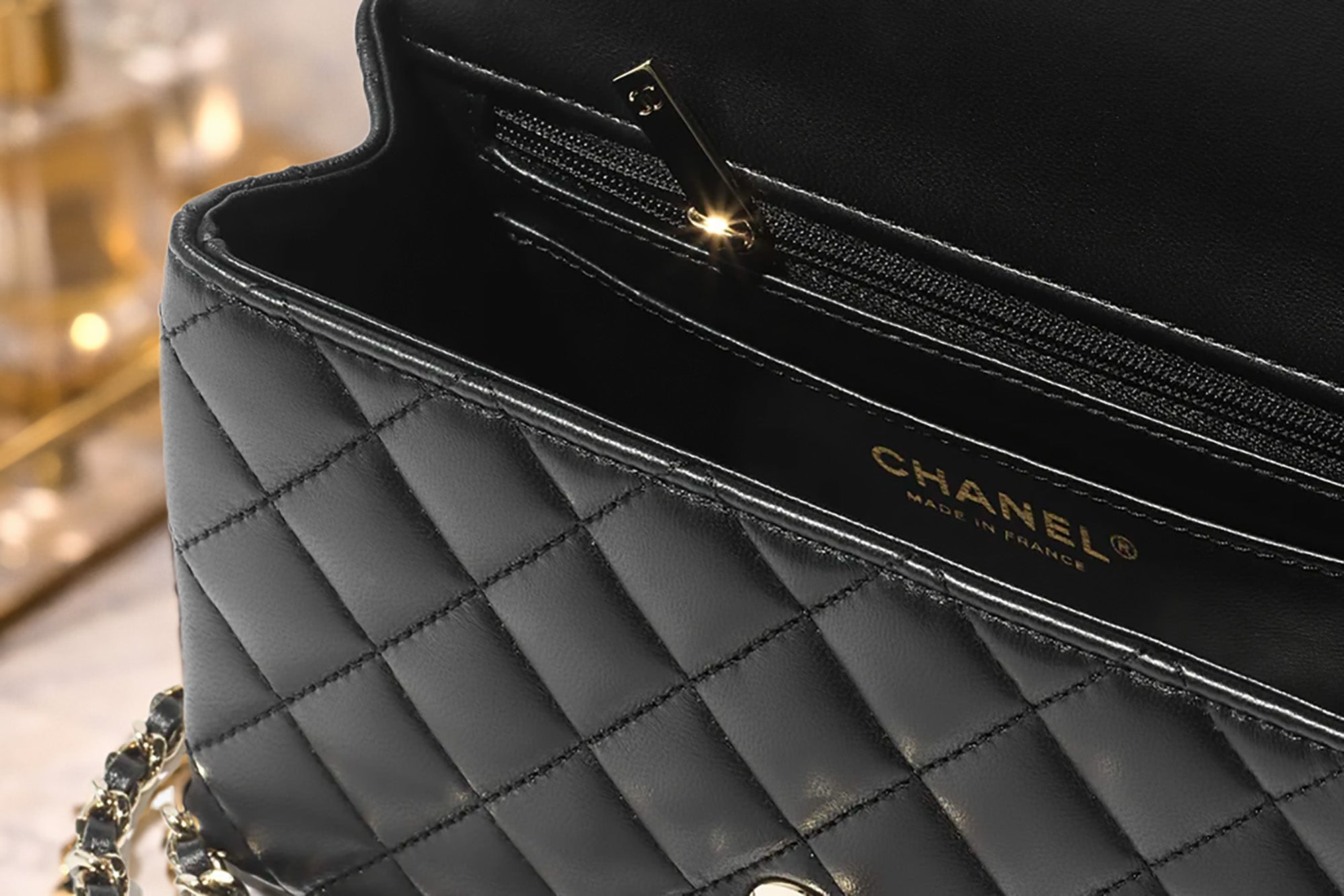
How Stitch Count Can Help Authenticate Chanel Quilted Bags
Check out our Chanel collection!
Chanel's quilted bags are legendary and expensive, so they're a favorite target for counterfeiters. While most folks obsess over serial numbers and hardware, one of the most trustworthy ways to spot a fake often gets ignored: stitch count. Real Chanel bags have 10 to 11 tight stitches per inch, a level of detail that fakes rarely match.
We've seen so many fakes that pass quick checks but fall apart under close scrutiny, especially when it comes to stitching. It's not just about looks, either.
The dense stitch count actually keeps the bag's shape and stops the leather from sagging or puffing out. Fakes usually have only 6 to 8 stitches per inch, which leaves the quilting loose and uneven, kind of a dead giveaway.
Once you know what to look for, stitch count changes how you see Chanel bags. It's an objective check that works for vintage classics and brand-new models alike. Getting familiar with this detail can save you a lot of grief (and money).
Key Takeaways
- Real Chanel bags: 10 to 11 stitches per inch; fakes: 6 to 8 stitches
- Tight stitching keeps the bag structured and crisp
- Stitch count is a reliable check, no matter the bag’s age or style
Why Stitch Count Is Crucial in Authenticating Chanel Quilted Bags
Stitch count stands out as one of the most reliable ways to spot a real Chanel. It’s a direct reflection of the brand’s obsession with detail and durability. The number of stitches per diamond not only shows off the craftsmanship but also helps weed out even the slickest fakes.
How Stitch Count Distinguishes Genuine Chanel Craftsmanship
Chanel’s stitching isn’t just for show. Each stitch holds the bag together, keeping the leather from warping as you use it.
Real Chanel bags have a stitch density that’s tough for counterfeiters to copy. Achieving this level of detail takes time and skill, two things most fakes just don’t have.
When we handle authentic Chanel bags, the stitching gives them a firm, structured feel. The leather keeps its shape, and you don’t get sagging or puffiness between the quilting. That solid quality comes straight from the high stitch count.
What sets authentic Chanel stitching apart:
- Stitches are the same length all over
- Tension stays consistent, so the quilting lies flat
- No loose threads or weird gaps
- Entry and exit points for stitches are clean
You can see Chanel’s decades of expertise in these tiny details. Fakes usually slip up with uneven spacing or sloppy thread tension.
Typical Stitch Count for Iconic Chanel Styles
Most authentic Chanel bags made before 2011 have about 10 to 11 stitches along each diamond’s edge. That’s been a calling card for the brand.
In 2011, Chanel shifted to around 9 stitches per edge on their quilted bags. This tweak applied to the main lines but didn’t compromise the structure.
Stitch count by style:
- Classic 2.55 and reissue: 10-11 stitches per edge (pre-2011)
- Modern classic flap: 9 stitches per edge (post-2011)
- Smaller bags and some limited editions: sometimes fewer stitches
It’s worth noting that some legit smaller bags or special editions may have fewer stitches. Size and design play a role.
When checking stitch count, always consider the bag’s year and style. A lower count isn’t an instant deal-breaker, but it does mean you should look closer at other details.
Implications of Incorrect Stitch Density
Bags with low stitch counts just don’t have that signature Chanel structure. The leather feels loose, and you might notice bulging between stitches.
Counterfeiters cut corners with fewer stitches because tight, even sewing takes time and skill. Compare a fake to a real one, and the shortcut becomes obvious.
Low stitch count problems:
- Quilting loses its crispness
- Bag feels floppy, not firm
- Leather warps more easily
- Overall build looks sloppy
If you see a stitch count way below what’s expected, it’s a red flag. Check the hardware, leather, and stamps to be sure.
If a bag claims to be from a certain year, the stitch count should match what Chanel used then. For example, a “2008” bag with only 7 stitches per diamond edge? That’s suspicious.
The Art of Quilting Alignment and Symmetry
Authentic Chanel bags nail the symmetry in their diamond quilting. Each stitch forms a perfect geometric pattern that flows across the entire bag. Fakes usually mess this up, with misaligned diamonds and overstuffed, puffy quilting.
Diamond Quilting Precision: What to Look For
Look at how the diamond quilting lines up across the whole bag. On real Chanels, the diamonds stay the same shape and size everywhere. The surface is flat and even, never puffy.
Stitching lines should meet exactly at the corners where diamonds connect. Pay attention to the symmetry between the front flap and the body, that’s where a lot of fakes stumble. The pattern should flow without weird breaks or mismatches.
Precision cues:
- Diamonds are uniform across all panels
- Stitches meet perfectly at corners
- Quilting lines are evenly spaced
- The surface looks structured, not padded
The back pocket on a 2.55 Flap is a great place to check. Real bags line up the pocket’s quilting with the main body’s pattern, showing off Chanel’s manufacturing skill.
Misalignments and Puffy Quilts: Classic Counterfeit Flags
Fakes are easy to spot when the quilting on the back pocket doesn’t match the rest of the bag. This sloppiness shows a lack of proper templates and quality control.
Another tell? Puffy, overstuffed quilting. Fakes often use too much padding between stitching, making the diamonds look pillowy instead of flat. This usually goes hand-in-hand with a low stitch count and too much filling.
If you see diamonds that are different sizes or shapes, some wide, some narrow, or a pattern that shifts around the hardware, that’s a red flag. Vintage bags might relax a bit over time, but the diamond geometry should still look intentional.
Serial Numbers, Hologram Stickers, and the Role of Stitch Quality
When we look at secondhand Chanel bags, the serial number sticker and hologram work together with stitch quality to create a three-pronged check. Each reveals something about the bag’s history, and fakes often miss the mark on at least one.
Reading Chanel Serial Numbers and Stickers
Chanel serial numbers follow a clear pattern. Bags from 1986 to 2005 have 7 digits; from 2005 to 2020, they have 8. The first digit (or two) tells you the production year.
A real serial number sticker has several security features. Look for iridescent speckles, CC logos, and an X-shaped cut that makes removal tough. “Chanel” should be on the side, not at the top or bottom.
The hologram sticker sits on a leather tab or right on the lining. Fakes often use plain stickers, missing the reflective bits or proper CC marks. Make sure the serial number fits with the bag’s style and age.
Since 2021, Chanel has switched to NFC chips instead of the old hologram stickers.
Comparing Stitching Around Serial Number Areas
Check the stitching around the serial number tab. Real bags keep the same stitch quality inside as outside, neat, tight, and consistent.
If the stitching around the serial tab looks sloppy but the rest is perfect, that’s a bad sign.
Look at the leather tab’s edges, too. Chanel finishes or heat-seals them, while fakes often leave them raw or rough. The serial sticker should be tucked into a logical spot, not stuck out in the open.
Material Matters: Leather Type, Quilting Height, and Stitch Perfection
Chanel’s leather choice affects how the stitches look and feel. Lambskin and caviar need different techniques, which you can see if you know what to look for.
Lambskin Versus Caviar Leather: Unique Stitching Characteristics
Lambskin is thinner and softer, usually 0.6mm to 0.8mm thick. It allows for finer stitching, typically 9 to 11 stitches per inch on quilted seams. Stitches sit flush, creating clean lines that catch the light.
Caviar leather is thicker and pebbled, around 0.9mm to 1.2mm. It needs a slightly wider stitch spacing, usually 8 to 10 SPI. The texture can hide stitches from a distance, but real Chanels keep the spacing consistent, no matter the grain.
Counterfeiters often use the same stitch count on both leathers, which is a giveaway. Chanel adjusts for the material. Quilting height differs, too, lambskin gives softer, lower puffs, while caviar holds taller, more defined diamonds.
Leather Quality: Signs of Authentic Chanel Touch
A real Chanel uses full-grain leather with even thickness. When you check the quilted panels, the leather should feel supple but substantial, not thin or plasticky.
Stitch holes are sized just right for the thread, usually 0.45mm to 0.6mm depending on the model. Fakes often have big holes or thread that’s too thin, leading to loose, wobbly stitches. The leather around real stitches stays intact, no tearing or puckering.
Lambskin develops a gentle patina but keeps its shape at the seams. Caviar is tougher and resists scratches, holding its form at stress points. You shouldn’t see layers separating when you look at the quilted channels’ edges.
Logo, Stamps, and Hardware: How They Relate to Stitching
The CC logo, hardware, and interior stamps all tie directly into the surrounding stitchwork. These spots are tough for fakes to get right.
CC Logo and Stitch Alignment
The interlocking CC logo sits centered on a leather square on the Classic Flap. The quilting around it follows strict geometric rules. Diamonds should align perfectly on all sides, with no mismatched panels.
The right C overlaps on top; the left C goes under. The stitching for the lock plate is hidden from the front, with only flat screws visible inside. The Cs have flat edges, and the width matches the gap between them.
On real bags, the quilting flows seamlessly around the logo, no puckering or distortion. The diamonds by the CC keep the same stitch count as the rest.
Engraved Hardware and Chain Strap Construction
The chain strap shows off some of Chanel’s best stitching. Leather strips are woven through metal links and stitched with care. Check for loose threads, uneven tension, or bumps.
Genuine hardware feels heavy and solid, with crisp engravings that sit flush. The stitching where hardware meets leather should be perfect, no gaps.
Leather in the chain stays the same width, and the stitches are just as precise as on the bag itself. Counterfeit chains often have messy stitching, glue, or crooked lines.
Interior Chanel Stamps and Stitch Alignment
The Chanel stamp inside the bag is embossed, not printed, and the stitching around it keeps proper distance. On the 2.55 flap, the logo sits about 1.5cm below the quilted C.
“Made in France” or “Made in Italy” usually mirrors the Chanel logo on the other side. In caviar bags, it might sit below the logo. The stamp color must match the hardware.
Stitching near these stamps should never pull or distort the leather. The Chanel logo measures 3.3cm wide, and the quilting near it keeps the diamond pattern going. The embossing is deep and the font is bold, with sharp, even letters.
Modern Identification: Microchips, Authenticity Cards, and Stitch Count Crosschecks
Chanel’s authentication systems have changed a lot in recent years. Since 2021, microchips have taken over from serial number stickers and authenticity cards, though older bags still use those classic markers. If you bring stitch count analysis into the mix, you get a layered approach to spotting fakes, it’s a lot harder for counterfeiters to nail every detail at once.
Understanding the Role of Microchips Post-2021
Chanel shook things up in 2021 by rolling out a microchip system for their bags. No more hologram stickers or authenticity cards. Instead, each new bag gets a small, rectangular metal plate inside.
This plate, about 1.2 inches wide, holds an engraved code. There’s a microchip inside, and Chanel boutiques can scan it to check if the bag’s legit. The plate matches the bag’s hardware, gold or silver, and always shows the signature CC logo.
What to look for in Chanel’s microchip era:
- Engraving should be sharp, centered, and evenly spaced
- The metal plate should sit flush with the bag’s lining
- No hologram sticker anywhere, if you see one, it’s not right
- Code format lines up with Chanel’s post-2021 system
If you see a “2021 or newer” Chanel bag with a hologram sticker, that’s a big red flag. Some fakes also have plates with messy or misaligned engraving. When checking a post-2021 bag, it’s worth comparing the microchip’s details with the bag’s stitching, Chanel’s quilting usually has about 10-11 stitches per inch. Both the tech and the craftsmanship should be on point.
How Authenticity Cards and Stitch Inspecting Work Together
For bags made between the 1980s and 2020, Chanel used serial number stickers inside the bag, paired with matching authenticity cards. The numbers on both should match exactly.
Serial numbers by year:
| Production Period | Serial Number Range |
|---|---|
| 2015-2020 | 21XXXXXX to 31XXXXXX |
| 2010-2014 | 14XXXXXX to 20XXXXXX |
| 2005-2009 | 9XXXXXX to 13XXXXXX |
The sticker’s font should be crisp, never blurry or pixelated. The hologram shifts cleanly under light, and the numbers should make sense for the bag’s age. If the sticker and card don’t match, something’s off.
But even if the numbers look right, you can’t ignore the stitching. If the quilting only has 6-8 loose stitches per inch (instead of 10-11), that’s a sign of trouble. Counterfeiters might get the serial number right but mess up the craftsmanship. By checking both the card details and the stitching, you catch fakes that might slip past a more casual glance.
Geographical Details and Vintage Authentication Clues
Where and when a Chanel bag was made can affect its stitching, and spotting those details can help you weed out fakes. Production location brings its own quirks, and vintage bags from different decades have distinct stitching patterns that counterfeiters often overlook.
Made in France or Made in Italy: Stitching Variations by Origin
Chanel makes bags in both France and Italy, and you can usually tell by the stamp inside. If there’s a small hallmark in the top left corner of the CC lock, the bag was made in France and should say “Made in France” on the interior.
The stitching quality is high no matter the country. Expect 10-11 stitches per diamond panel, regardless of origin. Sometimes, French bags from certain years might have slightly tighter stitches than their Italian counterparts, but it’s subtle.
What really matters is that the country marking matches the stated origin. If a bag claims to be French, it should have the right hallmark and stamp inside.
Specifics for Vintage Chanel Stitching
Vintage Chanel bags have their own quirks. After 1970, Hermès added “Made in France” beneath their logo, and Chanel followed similar habits with their interior stamps.
Bags from the mid-1980s onward include serial numbers you can match to production years. Older vintage bags might have a slightly lower stitch count (maybe 9-10 per diamond), but the stitches should still be neat and evenly spaced.
One detail: authentic vintage Chanel quilting should line up perfectly with the back pocket, even on older bags. Fakes often get this wrong, with misaligned rear quilting. Even if the leather’s softened with age, the stitch holes should look clean, no tearing or stretching around the thread.
Frequently Asked Questions
A lot of people have questions about authenticating Chanel bags by stitch count, what to check, how many stitches there should be, and whether thread quality makes a difference.
What subtle clues in the stitching reveal the authenticity of a Chanel bag?
The tightness and evenness of the stitches say a lot. Real Chanel bags have dense, consistent stitching with steady tension all around. If you spot frayed threads, skipped stitches, or wobbly lines, that’s a problem.
Thread quality counts, too. Chanel uses thick, strong thread that holds up for years. Fakes usually use thinner thread that might look okay at first, but falls apart under close inspection.
How can you tell if the diamond pattern on a Chanel bag is the real deal?
Diamond alignment is where fakes usually trip up. Authentic Chanel keeps the diamonds perfectly lined up across seams and panels, no weird warping or mismatched edges. The quilting stays consistent from front to back, and the diamond sizes don’t change.
Check the puffiness, too. Real Chanel diamonds keep their shape and volume. Fakes often have flat or overstuffed sections. That high stitch count keeps everything crisp and structured.
What’s the deal breaker in a Chanel’s quilted pattern that separates the fakes from genuine pieces?
If the quilting doesn’t line up at pocket seams, that’s a dead giveaway. Real Chanel bags keep the diamond pattern perfectly aligned, even where pockets meet the body. That takes serious skill. If you see diamonds that break, shift, or look off at those points, you’re probably looking at a fake.
This symmetry isn’t just for show, it’s everywhere. Each diamond should mirror the one on the opposite side. Counterfeiters rarely get this right, especially across multiple panels or curves.
Is there a magic number for stitch counts on an authentic Chanel handbag?
Yep, 10 to 11 stitches per inch is the sweet spot for authentic Chanel. That density is what gives the bags their durability and keeps the quilting sharp. It’s not random; it’s the result of years of refinement.
Most fakes have only 6 to 8 stitches per inch, sometimes even less. That lower density makes the stitching look chunky and less refined. You can actually count the stitches with a ruler, one of the most straightforward ways to check authenticity.
How do discrepancies in stitch count per panel signify a knock-off?
Lower stitch counts mean weaker structure. Fakes with fewer stitches per inch tend to look puffier and less defined, losing that crisp Chanel look. The diamonds start to sag, and the whole bag gets a slouchy vibe you just don’t see on the real thing.
If you notice different stitch counts on different panels, that’s another red flag. Chanel keeps a steady 10-11 stitches per inch everywhere, front, back, sides. If the density changes from one section to another, that’s a sign of mass production, not careful craftsmanship.
Could the thread quality and tension in stitching give away a counterfeit Chanel purse?
Thread quality stands out right away if you take a closer look. Real Chanel bags use premium thread, it's smooth, feels sturdy, and keeps the same thickness along every seam. Fakes? They might go for thread that's oddly shiny, a bit waxy, or just inconsistent in width.
Tension's another giveaway. Authentic Chanel stitching lines up with even tension, so the stitches look neat and uniform. But if you spot loose stitches mixed with tight ones, or the leather looks puckered where it shouldn't, that's a red flag. It usually means the bag skipped the kind of quality control Chanel insists on.