

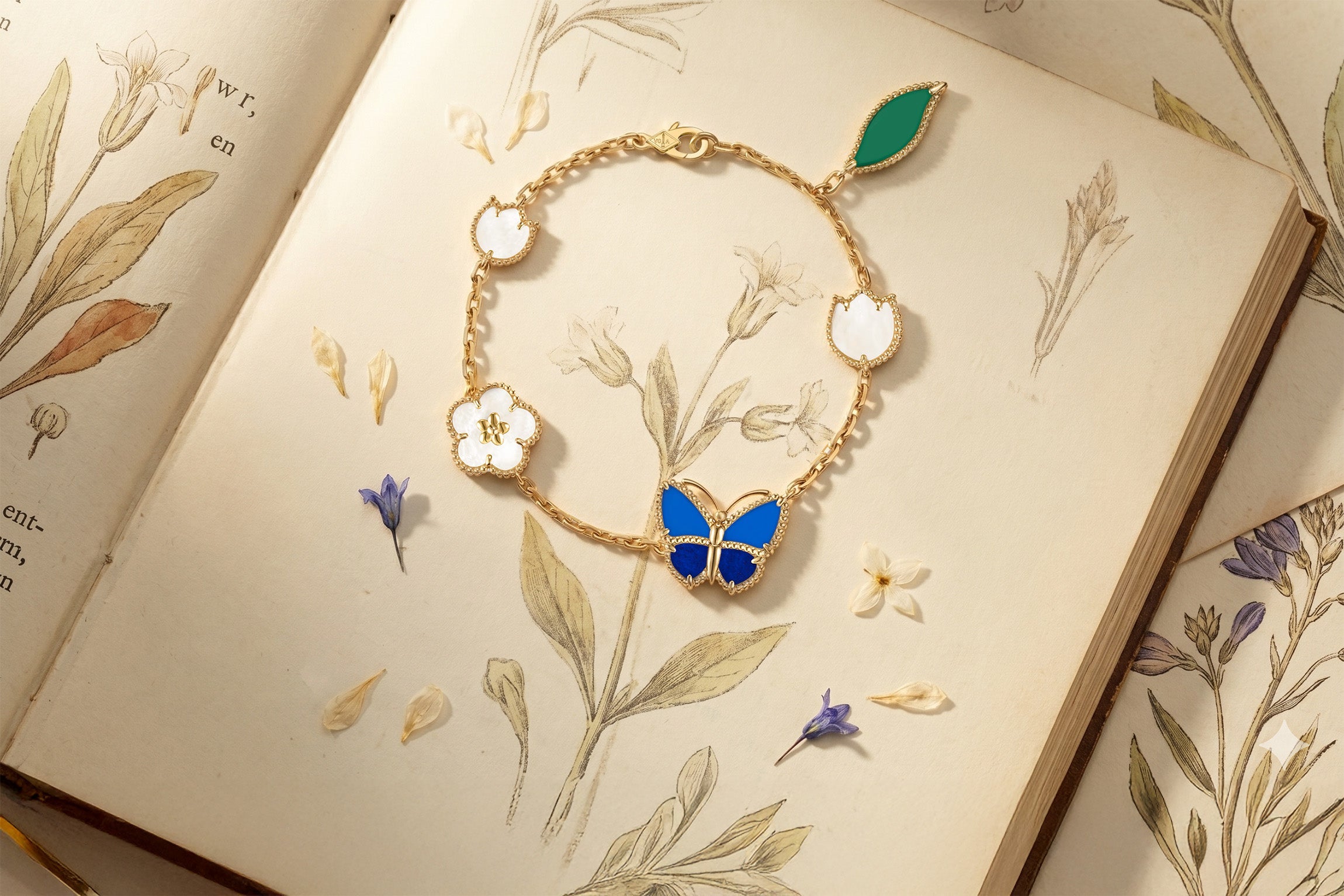
How Smart Buyers Evaluate Wear on Van Cleef Jewelry
TL;DR
Smart buyers evaluate wear on Van Cleef jewelry by looking at condition patterns, material vulnerabilities, clasp strength, hallmarks, service history, and original paperwork. Balanced wear usually suggests authentic use and careful ownership, while odd, inconsistent, or overly polished surfaces can raise questions. Knowing how 18K gold, mother-of-pearl, onyx, malachite, diamonds, and moving parts age over time makes it easier to buy pre-owned Van Cleef & Arpels jewelry with confidence and less risk.
Check out our Van Cleef & Arpels collection!
Pre-owned Van Cleef & Arpels jewelry sits in a unique place in the luxury resale world. Buyers who know how to spot real wear can find pieces with true value and avoid expensive mistakes. When evaluating wear on Van Cleef jewelry, the most informed buyers look for balanced, consistent signs of careful use, not untouched perfection that may suggest over-polishing or heavy damage that could require costly repairs.
Looking for wear is not just about counting scratches. It is about knowing how each material ages, which mechanical parts deserve a second look, and what the overall wear suggests about the piece’s story. Each Van Cleef collection, from Alhambra to Perlée, wears differently because of its design and materials.
After handling countless pre-owned Van Cleef pieces, Rome Station has learned that smart evaluation takes more than a quick glance. Original clasps, even patina, clear hallmarks, and the right paperwork all add confidence. This guide walks through the details that matter when you are considering a pre-owned piece.
Key Takeaways
- Balanced wear across gold, stones, clasps, and links usually points to authentic use and is more reassuring than either flawless-looking over-polishing or obvious structural damage.
- Different Van Cleef materials, including mother-of-pearl, onyx, malachite, carnelian, and 18K gold, age in their own ways and should be assessed individually.
- Original moving parts, clear hallmarks, secure settings, and strong documentation can support buyer confidence, even when normal wear is present.
Understanding How Condition Affects Value
Condition directly affects how buyers judge pre-owned Van Cleef & Arpels pieces. Gold wear, surface damage, maintenance history, and originality all influence desirability. The strongest pieces are not always the ones that look newly polished. They are often the ones that show consistent, honest wear while keeping their original shape, proportions, and details intact.
Assessing Visible and Invisible Wear
Visible wear includes scratches, dents, and thinning on parts like clasps, chain links, bezels, and ring shanks. These areas show how the piece was handled, worn, and stored. Deep gouges or flattened edges on Perlée beading can affect desirability more than light scratches on smooth gold because they change the design’s original texture.
Invisible wear takes a closer look. Clasps can weaken internally with little outside damage. Hinge pins on bracelets may loosen over time. Jump rings connecting chain segments can thin at stress points where wear is not immediately obvious.
Main wear zones to check:
- Lobster clasps and spring parts
- Bracelet links where they bend
- The underside of ring shanks
- Earring posts and backs
- Jump rings connecting motifs or chain sections
Hallmarks also matter for proving authenticity. Over-polished pieces can lose sharp VCA stamps, making them harder to verify and less appealing to careful buyers. Clear, crisp hallmarks usually help support resale confidence.
Why Balanced Patina Matters
Patina splits opinions among collectors. Some want a freshly polished look, while others value the original finish that shows age and authenticity. A soft, even gold finish can signal careful use in a way that heavy refinishing cannot copy.
Collectors often prefer subtle, even patina over pieces that have been heavily refinished. With vintage pieces, original surface character can be part of the charm. With newer or current boutique pieces, buyers usually expect a cleaner look with little visible wear.
If refinishing is needed, it is usually best for buyers to understand who performed the work and how much was done. Aggressive polishing can change the shape, soften edges, thin gold, and blur details that support authenticity.
Wear Patterns in Popular Van Cleef Collections
Alhambra pieces show wear mostly around the clover edges, motif connections, and chains. The Vintage Alhambra necklace’s thicker gold borders generally tolerate daily use better than more delicate pieces. Buyers should check whether the beaded borders remain even and whether each motif still sits securely within its frame.
Perlée’s beading brings its own issues. The small gold beads can flatten or lose shape if they repeatedly hit hard surfaces. Bracelets and bangles often show the most wear because they come into contact with tables, doorframes, and other surfaces during daily use.
Frivole pieces, with their delicate petals and open metalwork, wear differently. Thin petal edges can bend more easily, and the airy construction means repairs can be more complex. Pre-owned Frivole jewelry needs careful inspection because the design depends on crisp shape, balance, and polish.
Evaluating Materials and Their Vulnerabilities
Van Cleef & Arpels uses refined gold alloys, natural hardstones, mother-of-pearl, and gemstones. Each material reacts differently to wear. Knowing how these materials age helps buyers separate normal use from alteration, poor care, or possible repair concerns.
Gold Surfaces and Loss of Finishing
Many Van Cleef & Arpels pieces are made in 18K yellow, rose, or white gold. Each gold tone should look consistent across motifs, chain links, clasps, and other original components. Any noticeable mismatch in tone may suggest replacement parts, repairs, or mixed components.
Yellow gold often develops a soft patina over time and should age evenly across the piece. Rose gold can show warmer tones as it ages. White gold may show plating wear at friction points, especially near clasps, chain undersides, and areas that rub against skin or clothing.
Wear usually starts at edges, clasps, and contact points. Buyers should look for slow, even softening of edges, not sudden flat spots or sharp transitions that suggest aggressive polishing.
Over-polishing strips away the original finish and can leave uneven surfaces. The gold may look shinier at first, but it can lose the texture, depth, and edge work associated with fine production.
Mother-of-Pearl, Onyx, Malachite, and Other Stones
Van Cleef & Arpels uses materials such as mother-of-pearl, onyx, malachite, carnelian, lapis lazuli, diamonds, emeralds, rubies, and sapphires across different collections. Each has its own vulnerabilities.
Hardstones like onyx and carnelian can hold up well, but they may chip at the edges if hit. Malachite is softer and can scratch more easily. Mother-of-pearl may develop fine surface lines over time, which can be normal, but deep cracks, dullness, or separation from the backing may point to impact, moisture, or poor care.
Gemstones like diamonds are generally stable, while colored stones such as emeralds need more careful evaluation. Buyers should check where the stone meets the gold bezel for gaps, movement, visible glue, or signs of resetting.
Loose settings are a major concern. Stones should sit firmly without movement. If prongs or bezels look worn, the piece may need professional service before it can be worn confidently.
Scratches, Chips, and Surface Blemishes
Surface condition shows both how a piece was worn and how it was cared for. Light scratches on gold are normal and expected in pre-owned jewelry. Deep gouges, dents, flat spots, or uneven shine suggest rough handling or over-servicing.
Stone surfaces can reveal even more than gold. Chips along edges, surface abrasions, cloudiness, or dull patches may suggest hard knocks, chemical exposure, or poor storage. Mother-of-pearl should keep its natural glow without major discoloration or separation.
Chain links should also be checked one by one for kinks, stretching, solder repairs, or uneven color. Factory links usually show consistent size and spacing. Repaired or swapped links may appear slightly different in shape, tone, or movement.
Key Signs of Authentic Craftsmanship
When evaluating Van Cleef & Arpels jewelry, buyers should look closely at the areas where the maison’s standards are hardest to imitate. Hallmarks, articulation, construction quality, stone setting, and finishing all help distinguish strong examples from questionable ones.
Hallmarks, Stamps, and Serial Numbers
Genuine Van Cleef & Arpels pieces typically include metal hallmarks and brand stamps appropriate to the piece, material, and period. Buyers often look for VCA or Van Cleef & Arpels markings, along with gold purity marks such as Au750 for 18K gold.
Serial numbers are usually etched in discreet areas, depending on the item. The engraving should look crisp and consistent, with clean spacing and no spelling errors. Older pieces may show different marking styles because the maison’s systems have evolved over time.
Hallmark details to check:
- Font sharpness and even depth
- Gold or platinum purity marks where applicable
- Serial number style that fits the production period
- Placement that makes sense for the piece type
- No signs of re-engraving or unusual spacing
Faint marks do not automatically mean a piece is not authentic, especially if the jewelry is older or has been worn for years. However, missing, blurred, or inconsistent markings should always be reviewed carefully.
Signature Articulation and Design Language
Van Cleef & Arpels pieces are known for graceful movement and refined proportions. Alhambra collections use articulated links that should flex naturally without sticking, pulling, or feeling loose. Buyers should look at how chains attach to clasps and how each part moves during wear.
The Alhambra motif is defined by balanced curves, even borders, and clean finishing. Each lobe should feel proportionate, and the metal frame should sit neatly around the material. Inconsistent bezel width, uneven polish, or distorted shapes can signal wear, repair, or quality concerns.
More technical pieces, such as Mystery Set designs, pavé work, and transformable jewels, require even closer review. Stone placement should be precise, metal should appear refined, and moving parts should feel intentional rather than forced.
Construction Quality and House Techniques
Strong construction is often visible under magnification. Solder joints should appear clean. Prongs should be evenly spaced and similar in height. Chain links should be uniform, without rough tool marks or obvious repairs.
The quality of finishing often goes deeper than most buyers notice at first. Clasp springs should retain good tension. Jump rings should close fully with no gaps. The polish on gold should have depth and evenness, not a flat or overly bright surface that suggests heavy refinishing.
Buyers should also compare symmetry across matching motifs, earrings, or bracelet links. Small variations may occur with age and wear, but obvious mismatches deserve closer attention.
Inspecting Clasps, Hinges, and Mechanisms
Moving parts often tell the most about how a Van Cleef piece has been worn and cared for. Spring tension, clasp alignment, hinge movement, and metal fatigue affect both wearability and resale confidence. These details are especially important for bracelets, necklaces, earrings, and transformable jewelry.
Signs of Wear on Moving Parts
Van Cleef clasps should feel smooth and controlled. When testing a clasp, buyers should look for steady resistance as it opens and closes, not abrupt clicking, looseness, or uneven movement.
Worn clasps may show stretched holes, visible gaps when closed, side-to-side movement, or weak spring action. On Alhambra pieces, the clasp should close securely and hold without wobbling.
Hinges on transformable jewelry should move smoothly, not grind, stick, or feel stiff. Buyers should check for thinning metal, visible gaps, or misalignment in hinge barrels, which may suggest repeated stress or poor repair.
Edge sharpness around clasps also tells a story. Authentic pieces should retain crisp borders, while heavy wear or over-polishing can round the edges and blur important details.
Common Clasp, Prong, and Setting Issues
Clasps that close too easily or need too much force usually require caution. Weak springs can make a piece risky to wear, while overly stiff replacements may suggest non-original parts or improper servicing.
Prongs and bezels should sit evenly and securely. Bent, lifted, or re-tipped prongs can point to lost stones, past damage, or amateur repairs. Buyers should check for uniform height, symmetry, and tight contact around each stone or motif.
Engravings inside clasps should match the expected font, depth, and spacing for the piece. Shallow or oddly spaced marks may appear with replaced parts or questionable components. Missing or mismatched hallmarks are also important warning signs.
How Repairs or Replacements Affect Desirability
Replaced clasps can reduce desirability, even when the repair is functional. Collectors often prefer original parts, and any replacement should be disclosed because it matters for buyer trust.
Transformable jewels with repaired hinges require extra scrutiny. Buyers want to know that the mechanism still works correctly and that repeated repairs have not weakened the structure. Convertible features should be tested carefully for smooth operation and secure closure.
Over-polishing to hide wear can create its own issues. While it may improve surface shine, heavy polishing can thin metal, blur engravings, and remove the patina that helps show age and originality. Honest visible wear is often more reassuring than altered surfaces.
Verifying Documentation and Provenance
Original paperwork, service records, and traceable ownership can add real confidence to pre-owned Van Cleef jewelry. Documentation does not replace physical authentication, but it helps confirm the piece’s history and shows how carefully it was maintained.
Certificates and Original Paperwork
A Van Cleef & Arpels certificate or original paperwork may list details such as the piece type, material, gemstone information, serial number, and purchase date. Buyers should check that the details on the paperwork match the jewelry itself.
Receipts from Van Cleef & Arpels boutiques can be especially valuable because they support a clear purchase history. Any mismatch between the serial number, description, or materials should be treated carefully.
Paperwork formats can also vary by period, so older pieces may not always come with the same documents as newer boutique purchases. A missing certificate does not automatically mean a piece is not authentic, but strong documentation can increase confidence.
Service Records and Packaging
Service records from Van Cleef & Arpels boutiques can help show professional care. Notes about cleaning, stone tightening, clasp repair, or polishing may explain visible changes and support a clearer maintenance history.
Original packaging, including the box, pouch, and care booklet, adds presentation value and may suggest careful ownership. Packaging alone does not prove authenticity, but a complete set can help reassure buyers when it aligns with the piece and its era.
Provenance and Ownership History
Provenance, or documented ownership history, can increase buyer trust. Records from estates, private collections, galleries, or auction catalogues can help create a traceable story for a piece.
Appraisals from qualified gemologists may also be helpful, although they often focus on insurance value rather than brand authentication. Buyers should treat appraisals as supporting documents, not as a complete substitute for expert authentication.
Recognizing Value in Key Van Cleef Collections
Van Cleef & Arpels collections hold value differently depending on design, rarity, materials, and condition. Buyers should evaluate each collection according to how it was built and how it is meant to wear.
What to Look for in Alhambra Pieces
The Alhambra collection is built around the maison’s iconic clover-inspired motif. Buyers should check the beaded border, surface material, motif alignment, and how secure the gold frame is around each element.
Material-specific wear patterns include:
- Mother-of-pearl and onyx: Look for chips, cracks, dullness, and even polish across motifs.
- Carnelian and malachite: Watch for scratches, surface marks, and consistent color.
- Guilloché or textured surfaces: Check for dullness, flattening, or uneven shine.
- Diamond pavé: Make sure all stones are present and settings are tight.
Wear on Alhambra necklaces and bracelets often appears where motifs connect. Buyers should check jump rings for stretching, clasps for proper closure, and bezels for thinning metal. A long Alhambra necklace with many motifs may naturally show more wear than a smaller pendant or bracelet because it has more moving parts and contact points.
Desirable Features in Perlée and Frivole
Perlée pieces use gold beading as a key part of the design. Buyers should check rings, bracelets, and bangles for bead uniformity, smooth metal, crisp detail, and proper hinge action where applicable.
Wear appears as flattened beads, lost definition between beads, and thinning at stress points. A Perlée bangle should open and close smoothly, with no resistance, looseness, or uneven alignment.
Frivole pieces use polished flower motifs, diamond centers, and delicate petal forms. Buyers should look for petal edges that are not rounded or bent, secure diamond settings, and a silhouette that still holds its intended shape.
Both collections are made to be worn, so some surface wear is expected. The key question is whether the design remains crisp and the metalwork stays true to the original form.
High Jewellery and Limited Editions
High Jewellery pieces are evaluated differently because rarity, history, craftsmanship, and provenance may carry as much weight as surface condition. Buyers should still inspect mechanisms, stone setting, symmetry, and documentation with care.
Transformable pieces deserve extra attention. A necklace that converts into a bracelet, a brooch with moving parts, or a piece with a complex closure must function as designed. If the mechanism does not work smoothly, both usability and desirability may be affected.
| Element | What Buyers Should Assess |
|---|---|
| Mystery Set surfaces | Stone continuity, color consistency, chips, and replacements |
| Transformable mechanisms | Smooth use, secure closures, proper alignment |
| Diamond necklaces | Flexibility, matching stones, and finished undergallery |
| Figural brooches | Shape, complete pavé, secure pins, and moving parts |
Limited editions and numbered pieces benefit from paperwork that supports rarity. Buyers should check signatures, serial numbers, certificates, and any supporting documents that confirm the piece’s identity and history.
Market Dynamics and Buyer Confidence
Van Cleef jewelry enters the resale market shaped by condition, rarity, buyer psychology, material appeal, and professional assessment. The strongest buying decisions come from combining visual inspection with documentation and expert review.
How Buyer Psychology Affects Pricing
Collectors often tolerate minor wear on vintage or discontinued pieces, especially when the design is difficult to find or has historical appeal. For current pieces still available through boutiques, buyers usually expect cleaner condition and may be more cautious about visible wear.
Provenance builds buyer trust. Service records, original boxes, certificates, and clear condition reports can help buyers feel more comfortable with normal surface wear. These details do not erase condition concerns, but they help explain the piece’s history.
Rarity and Desirability
Discontinued materials and limited releases can attract strong attention in the resale market because buyers may not be able to access them through current boutique inventory. In these cases, condition still matters, but availability may become a major part of desirability.
Rare designs, older references, and pieces with complete documentation can create more confidence for collectors. However, scarcity alone does not guarantee value. Buyers should still examine authenticity, wear, structure, and service history.
Condition Grading in Luxury Resale
Professional grading separates surface wear from structural problems. Light gold scratches are not the same as cracked mother-of-pearl, loose prongs, weakened clasps, or replaced parts. Buyers should look for detailed condition notes that describe exactly where wear appears and how significant it is.
Fragile materials require extra care. Mother-of-pearl, enamel, and certain natural stones cannot always be refinished without affecting originality. Honest grading protects both buyers and sellers by setting realistic expectations before purchase.
Final Thoughts
Smart buyers evaluate Van Cleef jewelry by looking beyond shine and surface beauty. Balanced wear, secure settings, original parts, clear hallmarks, and strong documentation all help reveal whether a piece has been carefully owned.
For buyers in Canada seeking authenticated pre-owned Van Cleef & Arpels jewelry, Rome Station offers a trusted, customer-first resale experience with authentication expertise, select luxury inventory, and a lifetime authenticity guarantee.
Fact Check and Data Sources
This guide is based on professional luxury resale assessment, condition review, authentication practices, and widely accepted jewelry evaluation standards. Brand-specific collection names, product language, and care considerations should be verified through official Van Cleef & Arpels sources when current details are needed.
- Official Van Cleef & Arpels website: Van Cleef & Arpels
Any resale value discussion in this article is intentionally framed in general terms because market pricing can change based on condition, rarity, documentation, material, demand, and availability.
Frequently Asked Questions
How should I evaluate wear on pre-owned Van Cleef jewelry before buying?
Is light scratching normal on pre-owned Van Cleef & Arpels jewelry?
What type of wear is most concerning on Van Cleef Alhambra pieces?
Does polishing a Van Cleef piece improve its resale appeal?
How important are original papers when buying pre-owned Van Cleef jewelry?
Where can buyers in Canada purchase authenticated pre-owned Van Cleef jewelry?
Why do collectors care about original clasps, hinges, and parts?
Love Hermès? See More from Rome Station
Add us to your Preferred Sources on Google to see our newest Hermès guides and insider tips first.