
How Does Stitch Count Help Authenticate Chanel Quilted Bags?
Check out our Chanel collection!
When you're dropping thousands on a Chanel bag, you want to feel sure it's the real deal. Authentic Chanel quilted bags are known for tight, uniform stitch density, which creates firm, even quilting that holds its shape and resists puffiness.
Counterfeits usually have fewer or less consistent stitches, so their quilts look loose, uneven, or overly puffy. This detail stands out as a reliable way to spot a fake, because precision like this is tough for counterfeiters to nail.
After handling hundreds of Chanel bags, I've noticed that stitch count is where even the best fakes start to crumble. The difference between tight, even stitching and sloppy construction might sound minor, but it totally changes how the quilting looks and feels.
Real Chanel quilting sits flat, keeps sharp diamond shapes, and lines up from flap to body. Replicas often look warped at the corners, with seams that don’t match up, and panels that feel either too floppy or weirdly stiff.
Knowing about stitch count helps you check condition, spot repairs, judge resale value, and make smarter buys, whether it’s vintage, pre-owned, or from a boutique. So, how do you count stitches right? What else should you look for? Let's dig into the details.
Key Takeaways
-
Authentic Chanel bags are known for dense, even stitching that counterfeit bags rarely match
-
Stitch count affects the bag’s structure, diamond alignment, and shape
-
Pairing stitch count with checks on hardware, serial numbers, and leather gives you the best shot at authenticating
Why Stitch Count is a Game-Changer in Chanel Authentication
Stitch count gives you a clear, measurable way to separate real Chanel bags from fakes. The level of precision Chanel uses is just hard for counterfeits to copy.
Stitches Per Inch: The Gold Standard
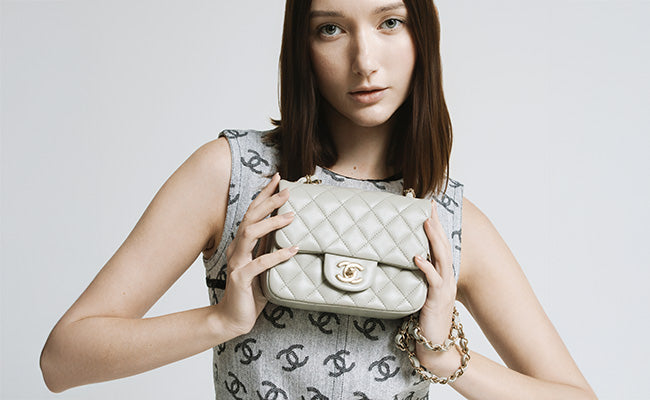
You’ll usually find dense, even stitching on authentic Chanel quilted bags, with classic styles often showing a tighter stitch count than replicas. That’s not random. Chanel wants their bags to be sturdy and look sharp.
When I’m checking a Chanel, I count stitches along one diamond’s edge and compare a few panels. Fakes usually show fewer or less consistent stitches. That lower count means weaker structure and a puffier, less crisp look.
High stitch counts help the quilting keep its shape. More stitches spread out tension, so the bag holds its form for years.
The Story Behind Stitch Density
Chanel’s quilting style actually comes from jockeys’ quilted jackets. Coco Chanel wanted handbags that were both practical and chic.
The high stitch density keeps the bag from getting too puffy, stops the batting from shifting, and keeps the lines clean. This takes skilled machine work and tight quality control, which most counterfeiters just can’t pull off.
Even the best fakes struggle to get this right across the whole bag. That’s why stitch count remains one of the most trustworthy ways to check for authenticity.
Role of Stitch Count in Real vs Fake Chanel
Stitch count exposes shortcuts in fake bags. Counterfeiters cut back on stitches to save time, use less thread, or because their materials can’t handle tight sewing.
On real Chanels, you’ll see the same stitch density throughout the bag: front, flap, back pocket, and sides. Fakes often get lazy. Some spots look okay, while others have way fewer stitches.
You don’t need fancy tools to check. Just count stitches along a diamond edge in good light, try a few spots, and see whether the density stays high and even. This simple check weeds out most fakes before you even look at hardware or serial numbers.
Mastering the Quilted Pattern: Diamonds, Alignment, and Structure
Chanel’s diamond quilting follows strict geometry. Fakes usually botch this. Every diamond should be the same size, with seams meeting exactly at the corners and patterns lining up from one panel to the next.
Diamond Quilting and Consistency
Real Chanel bags have diamonds that are the same width and height everywhere, front, back, sides, you name it.
When you check an authentic bag, the quilting feels structured, not squishy or overstuffed. Fakes often cram in too much padding, so the bag looks pillowy and off. Chanel uses just enough fill to keep things crisp.
What to check:
-
Diamonds match in size across all panels
-
Quilting sits flat, with no weird puffiness
-
Pattern density stays even from top to bottom
-
No shrinking or stretching near hardware or edges
Classic flaps really show this off. If you run your hand across and some diamonds bulge, or the pattern looks cramped or stretched, that’s a red flag.
Quilting Alignment and Flap-Body Symmetry
The pattern should flow from the flap onto the body without a break when the bag’s closed. On real Chanels, the diamonds on the flap line up perfectly with the ones on the main body.
Most fakes mess this up. The back pocket on a 2.55 should continue the diamond pattern from the body, with no skips or mismatches. Counterfeiters often ignore this because it’s tricky to get right.
Check the sides, too. The pattern should wrap around without distortion, and the stitch density should stay the same. If the quilting shifts or warps as it goes from front to back, that’s sloppy work.
Edge and Corner Stitching Details
Stitching lines need to meet exactly where the diamonds connect, with no gaps and no overlaps at the corners.
On real Chanels, the tension is spot on at these points. The leather doesn’t pucker, and the stitches stay dense right up to the edge. Look closely around the CC logo and hardware. These spots need extra precision, and Chanel delivers.
Fakes usually give themselves away at the edges. Watch for uneven stitches as the pattern nears the seams, or threads that drift off course. Real bags keep the diamonds locked in from centre to seam.
Model-by-Model Stitch Counts: What's Normal for Different Chanel Bags?
Different Chanel models have their own stitch count patterns, and classic quilted bags can vary by year, leather, and size. Vintage bags vary more, and minis or limited editions sometimes break the rules altogether.
Classic Flap and 2.55 Reference Stitch Counts
The Classic Flap and 2.55 are the go-to models for checking stitch counts. Many older classic quilted bags show very tight, even stitching, and fakes rarely get this right.
Later quilted bags can read a little differently depending on the year and model. This wasn’t necessarily a drop in quality, just a variation in construction. So if you’re looking at a newer bag, consistency matters more than chasing one exact number.
The 2.55 Reissue follows the same logic. Always check the back pocket. Its quilting should match the main body’s stitch density. Fakes often miss this and use a different density on the pocket.
Typical stitch patterns by era:
| Production Period | Typical Stitch Density |
|---|---|
| Older classic quilted bags | Usually tighter and denser |
| Later classic quilted bags | Still even, but can vary a bit more by model |
Lambskin bags might look like they have finer stitching than caviar because the leather’s thinner, but the overall consistency should still match.
Variations in Vintage Chanel Bags
Vintage Chanel bags from the '80s and '90s can be trickier. Techniques changed over time, and early bags sometimes show small differences.
I’ve seen legit vintage bags with slightly different counts from edge to edge, especially on older pieces. What matters most is consistency. If the flap looks neat but the body drops off dramatically, that’s a warning sign.
Older bags might have softer quilting from years of use. The diamonds can lose some shape, but the stitch holes should still be evenly spaced. For the best read, count on a less-worn spot, like the back panel.
With vintage, hardware and leather matter more. Pair your stitch check with a look at the chain, CC lock, and inside stamps.
Mini, Limited Editions, and Curveballs
Mini bags and special editions can break the usual stitch count rules. Smaller bags often show slightly different counts simply because the panels are smaller.
Limited editions with unusual quilting, like chevron or mixed textures, don’t always stick to the same pattern as classic diamond quilts. These need a bit more research, since Chanel tweaks the technique for different designs.
Boy Bags use a totally different quilting style, with rectangular or square panels. Stitch density still matters, but you can’t use the Classic Flap’s count as your benchmark. Focus on evenness and tension, not a set number.
When I’m checking an oddball model, I always cross-reference the stitching with other markers: serial number, hardware, and leather. A lower stitch count on a limited edition doesn’t mean it’s fake, but it does mean you need to double-check everything else.
Beyond Stitch Count: Supporting Features for Authenticating Chanel Bags
Stitch count is a great start, but real Chanel bags show off a bunch of other details that fakes just can’t get right. Leather, hardware, and zipper details all tell their own stories.
Leather Quality and Quilting Integrity
Chanel uses high-quality leather that feels soft but substantial. Lambskin feels smoother and softer, while caviar feels firmer and more textured. The feel should stay consistent across the bag.
Real Chanel leather develops a natural patina over time but keeps its structure. The quilting stays defined, never mushy or overly puffy. Between the diamonds, the leather should feel firm, not saggy.
What you want to see:
-
Even texture everywhere
-
No weird plastic shine or smell
-
Consistent grain
-
Supple leather that still holds its shape
-
No layers separating
Fakes often use thin, coated leather that feels stiff or plasticky. Their quilting looks puffy because the padding’s too thick and the stitch count is too low.
The Interlocking CC Logo and Hardware
The interlocking CC logo follows strict rules. The right C overlaps the left at the top, and the flat edges are the same width as the gap between them. The logo sits centred on its leather square.
Chanel hardware feels heavy, and the engravings are sharp. The metal finish matches throughout, whether gold or silver. Screws are flat-headed and flush.
Chain straps mix leather and metal with precise stitching. Each leather section is the same width, and you won’t see glue or messy stitching where the leather threads through the chain. The hardware feels solid, not hollow or cheap.
Authenticity in Zippers and Logo Stamping
Chanel zippers come from specific makers, depending on the era. The zipper pull and branding should look crisp and centred.
Interior branding should be clean and sharply finished, with bold, evenly spaced lettering. The font should look precise, not blurry or shallow.
Look for:
-
Zipper teeth line up perfectly when closed
-
Pull tab glides smoothly
-
Logo stamp matches the bag’s overall quality
-
"Made in France" or "Made in Italy" is spaced properly
-
Letters have clean edges, not fuzzy ones
The leather around stamps and zippers should stay smooth, not puckered. Fakes often have fuzzy letters, weird fonts, or stamps that sit crooked compared to the quilting.
The Serial Game: Hologram Stickers, Numbers, Microchips, and Cards
Chanel’s authentication markers have changed a lot over the years, from serial stickers to microchip-enabled metal plates. Knowing how to read these details helps you verify a bag before you buy.
Decoding Chanel Serial Numbers and Date Codes
Chanel serial numbers tell you a lot about when your bag was made. From the mid-1980s through the mid-2000s, the brand used early 6-digit and then 7-digit serial formats. Later bags used 8-digit serials until Chanel moved to microchip-enabled metal plates in 2021.
The serial number range helps date the bag, but it should be read as part of the full series, not just by glancing at the first one or two digits. Always double-check this against the bag’s style, hardware, and overall construction.
Serial number timeline:
| Production Period | Serial Number Format |
|---|---|
| 1986-1988 | 6 digits |
| 1989-2005 | 7 digits |
| 2005-2021 | 8 digits |
| 2021 onward | Microchip-enabled metal plate |
You’ll find the serial sticker inside the bag, usually attached to a leather tab or directly to the lining. Real stickers have iridescent speckles, tiny CC logos, and an X-shaped cut that makes them hard to peel off. The word "Chanel" should run along the side, never at the top or bottom.
If the serial number doesn’t match the authenticity card, or the format doesn’t fit the bag’s supposed age, something’s off.
Spotting Real vs Fake Hologram Stickers
Real Chanel hologram stickers pack in security elements that fakes rarely get right. You should see reflective bits that shimmer when you tilt the sticker. The CC logo needs to look sharp, not fuzzy or pixelated.
Edges on the sticker should be neatly cut with that signature X pattern. Fakes often use plain, shiny stickers with no real texture. Genuine holograms also show a faint rainbow effect as you move the bag.
Check how the sticker’s attached. It should be fixed firmly to a leather tab or the lining, not floating or peeling at the corners. The serial number should be printed crisply, with even spacing and a consistent font.
Authenticity cards for pre-2021 bags have to match the serial number exactly. The card will have a matte finish, embossed Chanel logo, and a hologram. If the numbers don’t line up, or the card feels cheap and glossy, that’s a red flag.
NFC Microchip and 2020s Evolution
Starting with 2021 collections, Chanel phased out hologram stickers and authenticity cards in favour of microchip-enabled metal plates. Now, each bag comes with a small metal plate inside, with an engraved code tied to Chanel’s internal system.
The plate matches the bag’s hardware, gold or silver, and always has the CC logo. You won’t get a physical card anymore.
What to check on microchip plates:
-
Engraving should be sharp, centred, and evenly spaced
-
Plate sits flush with the lining
-
No hologram sticker anywhere in the bag
-
Code format fits post-2021 standards
If someone tries to sell you a "2022" Chanel with an old-style hologram sticker as its main authentication marker, take a closer look. Some fakes add cheap metal plates with off-centre text or sloppy CC logos. Always compare the plate’s quality to the rest of the bag, especially the stitching.
The microchip system makes life harder for counterfeiters, but you’ll still want a full authentication when buying pre-owned.
Collecting Pre-Owned: Stitch Count's Role in Resale, Value, and Buying Smart
Pre-owned Chanel bags are still some of the safest bets in luxury resale, but their value depends on real authenticity and solid structure. Stitch count gives buyers a clear way to check both, helping you avoid costly mistakes and spot bags that’ll actually hold up.
How Pre-Owned Chanel Bags Hold Up
Chanel bags with dense, even stitching tend to keep their shape better over time. Tight stitching helps the quilting stay crisp, even decades later. Vintage pieces with proper stitch density don’t sag or lose their shape as easily.
Lambskin bags with the right stitch count age better than you’d think. The stitches spread tension across the leather, so you get a nice patina instead of puffiness or weird distortion. Caviar leather fares even better, since its thicker grain and tighter feel fight off wear at stress spots.
Bags from the ’80s and ’90s can show up in amazing shape if the stitching was right from day one. Original craftsmanship matters way more than age. A 30-year-old bag with correct stitching beats a five-year-old fake, hands down.
What Stitch Integrity Means for Resale
Resale buyers pay more for bags with solid, original stitching. When the stitch count fits Chanel’s standards and the threads aren’t loose or frayed, collectors and boutique resellers offer top dollar.
A Classic Flap with messed-up stitching, loose threads around the quilting or hardware, can lose 20% to 40% of its value just like that. Repairs eat into profits, and buyers know it. Even if the serial number and hardware look fine, bad stitching screams fake or damaged.
Stitch factors that affect resale value:
-
Even stitch count across all quilted panels
-
No skipped stitches or weird gaps
-
Thread color matches the leather, with no fading
-
Stitching around hardware stays tight and tidy
Collectors often walk away from real bags if the stitching looks like it’s been repaired by an amateur or is rotting. Original stitch work, even if a little worn, always beats sloppy fixes.
Best Practices for Second-Hand Authentication
Start by counting stitches along one diamond edge before anything else. Use a jeweller’s loupe or just your phone camera to get a good look. If a quilted bag shows obviously low or inconsistent stitch density, check every other detail even more closely.
Look at stitch alignment where the quilting meets hardware, especially around the CC logo and chain attachments. Real bags have smooth transitions, with no puckering or bunched thread. Compare the exterior stitch quality to the interior, like around the serial number tab or microchip plate. Chanel keeps the same standards everywhere.
If you’re buying online, ask for close-up photos of the back pocket quilting. This area shows bad alignment and poor stitch quality faster than anywhere else. The diamonds should flow from the pocket right into the main body, with no broken patterns.
Whenever you can, get a professional authentication service that checks stitch count as part of a full inspection. Combine that with serial number checks, hardware review, and leather assessment before you drop thousands.
Frequently Asked Questions
People have a lot of questions about stitch count, how to measure it, what’s normal for different eras, and how to spot fakes. Here’s what comes up most when using stitching to authenticate Chanel bags.
What indicators can I look for in the stitching of a Chanel bag to verify its authenticity?
Look for tight, even stitches across the quilted surface. Authentic Chanel bags usually show consistent spacing, steady tension, and no loose threads or skipped areas.
The quilting should look structured, not overly puffy. Also check how the diamonds meet at corners, seams, and pockets. Misalignment or messy stitching is a common warning sign.
Can you explain why the stitch count per inch is significant when assessing a Chanel bag?
Higher stitch density helps the bag keep its shape and gives the quilting a flatter, sharper look. It also spreads tension more evenly across the leather.
Fakes often use fewer stitches, which makes the bag look puffier or less refined. That’s why stitch count is such a useful first check.
What are some common discrepancies in stitch count that could signal a Chanel bag might be a counterfeit?
The biggest red flags are low stitch density, uneven counts from panel to panel, and sloppy stitching near corners or hardware.
A fake might look fine on the front but fall apart on the back pocket or sides. If the quilting density changes noticeably across the bag, be cautious.
Is there a specific range for stitch counts that Chanel uses on their quilted bags?
Classic quilted Chanel bags are known for dense, even stitching, but the exact count can vary by model, year, and size.
That’s why it’s smarter to compare the bag against the right reference model and production era, rather than relying on one universal number alone.
How does the inspection of stitch uniformity contribute to the authentication of Chanel bags?
Uniform stitching reflects strong quality control. When stitches stay even in length, spacing, and tension, it usually points to better construction.
Counterfeits often slip up here. You’ll see uneven lines, bunching, or weak finishing in harder areas like corners, chain threading, and around hardware.
Could you provide tips for a newbie on how to check stitch quality on Chanel quilted bags?
Use good lighting and focus on one diamond at a time. Count stitches along one edge, then compare a few other panels to check for consistency.
Run your fingertips gently over the quilting. Real Chanel usually feels smooth and structured, not floppy or overstuffed. If you can, compare the bag with reliable reference photos from the same model and era.
Love Hermès? See More from Rome Station
Add us to your Preferred Sources on Google to see our newest Hermès guides and insider tips first.