
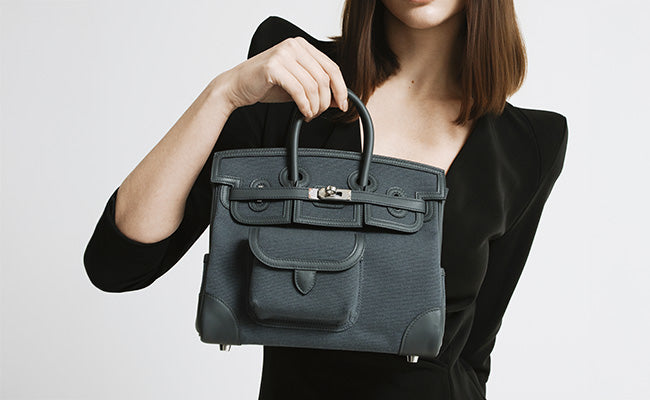

Hermès Birkin Blind Stamp Guide for Resale Buyers
TL;DR
A Hermès Birkin blind stamp is a small debossed production code that can help resale buyers understand a bag’s approximate year, era, and workshop-related markings. It is useful, but it is not an authenticity guarantee on its own. The safest way to evaluate a pre-owned Birkin is to read the blind stamp in context, then cross-check the bag’s leather, stitching, hardware, interior construction, condition, and seller documentation. For buyers, the Hermès Birkin blind stamp should be treated as an important starting point, not the final answer.
Check out our Hermès collection and Birkin bags!
If you are eyeing a pre-owned Hermès Birkin, one of the first details you should check is the blind stamp. This tiny embossed mark can tell you when the bag was made and may include workshop or craftsman-related markings. While some luxury brands rely on authenticity cards, Hermès uses subtle markings pressed directly into the leather.
The Hermès Birkin blind stamp is especially important in resale because it helps buyers compare the bag’s claimed age against its physical details. A correct stamp can support confidence, but it does not prove authenticity by itself. Counterfeiters can copy date codes, placement, and even signs of wear with increasing accuracy. This guide explains how the blind stamp system works, where to look, how to read the key eras, and what else matters before buying a pre-owned Birkin.
Key Takeaways
- Hermès blind stamps can help identify a Birkin’s approximate production era, but they should never be treated as the only proof of authenticity.
- Stamp locations vary by production period, so buyers should check placement against the bag’s claimed age and model details.
- The most reliable resale evaluation combines blind stamp review with leather, stitching, hardware, construction, condition, and seller credibility.
Featured Products


Understanding the Hermès Blind Stamp System
Hermès blind stamps are part of the brand’s production language. They are small, discreet, and often difficult to see without the right light, which is exactly why they matter so much in resale authentication.
What Is a Blind Stamp?
A blind stamp is a debossed mark pressed into the leather. It is not printed with ink, and it should not look painted or added on top of the surface. On a Birkin, the stamp usually includes a letter linked to the production year, sometimes framed by a shape depending on the era, plus additional characters that may relate to workshop or craftsman identification.
Buyers often use the stamp to support authentication because it can help confirm whether a bag’s year, leather, hardware, and construction make sense together. However, the stamp is only one piece of the puzzle. A real-looking blind stamp on a poorly made bag is still a serious warning sign.
How Hermès Date Stamp Eras Are Commonly Read
Since the mid-20th century, Hermès date stamps have been commonly interpreted through letter sequences and shape changes. These references are widely used by luxury resale experts, although Hermès does not publish a complete public authentication chart for buyers.
| Common Period | Stamp Format | Buyer Meaning |
|---|---|---|
| 1945 to 1970 | Plain letter | Earlier production era |
| 1971 to 1996 | Letter inside a circle | Vintage circle-stamp era |
| 1997 to 2014 | Letter inside a square | Square-stamp era often seen in resale |
| 2015 onward | Plain letter with newer coding practices | Modern production era |
The “Hermès Paris Made in France” mark is separate from the blind stamp and does not identify the production year. When checking a Birkin, make sure the date stamp aligns with the bag’s claimed age, condition, leather type, and hardware style. If a bag appears heavily worn but is presented as a very recent piece, or if the stamp format does not match the stated year, the bag needs closer review.
Where to Find the Blind Stamp on a Birkin
Finding the blind stamp can be simple on some Birkins and frustrating on others. Placement depends on the production period, leather texture, lighting, and how much wear the bag has experienced.
Common Blind Stamp Locations
On many Birkins from the late 1990s through the mid-2010s, the stamp is usually found on the underside of the front leather strap, also known as the sangle. Once you know where to look, it is often easier to spot by tilting the bag in natural light rather than shining harsh light directly onto the leather.
On newer Birkins, the blind stamp is often located inside the bag, commonly along the interior side panel near the upper edge. Because the stamp is heat-pressed directly into the leather, it can be subtle, especially on textured hides.
Older Birkins may be less predictable. Vintage examples can have stamps in slightly different areas, and age, repairs, or relining can make the impression harder to read.
How Placement Supports Authentication
Stamp placement should make sense for the bag’s claimed era. A square-enclosed letter generally points to the 1997 to 2014 period, while circle-enclosed letters are associated with earlier vintage production. Modern plain-letter stamps should be interpreted carefully because plain letters also appeared in older periods.
This is why placement matters as much as the letter itself. A stamp that uses the right letter but appears in the wrong location for the stated year can be a red flag. A reputable seller should be able to provide a clear photo of the blind stamp and explain how it relates to the bag’s production era.
Common Blind Stamp Red Flags
Counterfeit Birkins often get the obvious details right, such as the year letter or general format, but fail on placement, pressure, depth, or context. Some fakes have stamps that look too sharp, too uniform, or more like laser engraving than natural heat embossing.
Wear can also hide a legitimate stamp. On well-used Birkins, the embossing may become faint or flattened over time. This is not automatically a problem, but it means the rest of the bag needs to be checked more carefully. Be cautious with sellers who cannot provide a clear stamp photo or who avoid discussing the bag’s year, leather, and condition in detail.
What to Check Beyond the Blind Stamp
A blind stamp can support confidence, but authenticating a Birkin requires a broader review. The strongest resale evaluations look at the bag as a complete object, not as a single code.
Saddle Stitching and Construction
Hermès is known for hand-applied saddle stitching, a technique closely tied to the house’s leather craftsmanship. On a genuine Birkin, the stitching should show consistent rhythm, controlled tension, and a refined slant. It should not look loose, messy, overly shiny, or machine-flat.
The thread should sit naturally into the leather rather than floating on the surface. Thread ends should be finished cleanly, and the seams should feel precise without appearing artificially perfect. Poor stitching can quickly undermine a blind stamp that otherwise looks correct.
Hardware Weight and Engraving
Hermès hardware should feel substantial and refined. Closures, plaques, locks, keys, zipper pulls, and feet should not feel flimsy or hollow. Engravings should be crisp, balanced, and properly aligned.
Buyers should look for consistency across the hardware. Color differences, uneven engraving, shallow markings, or mismatched lock and key details may suggest replacement, alteration, or counterfeit construction. Hardware should always be reviewed alongside the stamp year and the bag’s overall condition.
Leather Grain and Material Consistency
Leather texture is one of the clearest ways to check whether a Birkin makes sense. Box calf is smooth and polished, while Clemence is softer, matte, and more grained. Togo, Epsom, Swift, and exotic skins each have their own feel, structure, and way of showing wear.
Authentic Hermès leather should show natural character, but the grain should still feel consistent across related panels. If the leather looks plastic, overly uniform, strangely stiff, or inconsistent from panel to panel, the bag needs further review. The blind stamp should also appear naturally pressed into that specific leather type.
How Blind Stamps Affect Resale Value
The blind stamp matters to resale buyers because it helps establish age, context, and confidence. It does not determine value alone, but it can influence how buyers understand a bag’s desirability and condition.
Age and Era as Value Signals
A Birkin from the square-stamp era may be evaluated differently from a vintage circle-stamp Birkin or a more recent plain-letter example. The year can help buyers understand expected wear, hardware style, leather aging, and whether the seller’s description is credible.
Older bags may be rarer and more characterful, but they often require closer condition review. Newer bags may show less wear, but buyers still need to verify that the stamp, leather, hardware, and construction all align. The best resale decisions come from consistency, not from the stamp alone.
Condition Still Leads the Conversation
A desirable stamp does not outweigh poor condition. Handle darkening, corner wear, base sag, scratches, interior marks, hardware tarnish, and loss of structure can all affect buyer confidence. On smooth leathers such as Box calf, scratches and water marks may be more visible. On softer leathers such as Clemence, buyers should watch for slouching and shape loss.
For a buyer-focused guide, the practical takeaway is simple: use the blind stamp to date the bag, then use condition to understand whether the price and presentation make sense.
Seller Documentation and Transparency
A strong resale listing should include clear photos of the blind stamp, full exterior and interior views, hardware close-ups, leather details, corners, handles, base, and any accessories included with the bag. If the bag has been repaired, restored, or relined, that information should be disclosed clearly.
At Rome Station, the blind stamp is treated as a starting point within a broader authentication process. That process considers rarity, condition, construction, and long-term value, helping buyers approach rare Hermès pieces with more confidence.
Risks and Realities of Stamp Replication
Blind stamps are important, but they are also one of the most copied details on counterfeit Birkins. Buyers should understand the limits of stamp-based authentication before making a major resale purchase.
Why a Correct Stamp Is Not Enough
Counterfeiters can study public reference charts, resale photos, and known placement patterns. Some copied stamps may show the right year format, believable spacing, and convincing wear. That is why a blind stamp should never be used as the only deciding factor.
A bag can have a stamp that appears correct while still failing on stitching, leather, hardware, interior finishing, or proportions. The more convincing the counterfeit, the more important expert review becomes.
Multi-Factor Authentication Matters
| Element | What Buyers Should Review |
|---|---|
| Blind stamp | Year format, placement, depth, and consistency with the claimed era |
| Stitching | Angle, tension, spacing, thread quality, and hand-finished details |
| Hardware | Weight, engraving, finish, alignment, and matching components |
| Leather | Grain, feel, flexibility, wear pattern, and consistency across panels |
| Condition | Handles, corners, base, interior, structure, and repair history |
Professional authentication reviews these details together. If two or more elements contradict each other, the bag should be approached with caution, even if the blind stamp looks convincing.
Final Thoughts
The Hermès Birkin blind stamp is one of the most useful details a resale buyer can review, but it should never be read in isolation. The safest purchase is supported by consistent production details, strong condition, transparent documentation, and expert authentication.
For buyers seeking rare Hermès pieces with confidence, Rome Station offers a refined resale experience built around authenticity, rarity, and trusted expertise.
Fact Check and Data Sources
This guide treats blind stamp information as a buyer education tool, not as a standalone authentication guarantee. Hermès does not provide a public buyer-facing chart for every historical date stamp sequence, so era references are based on widely used resale authentication practices and comparison against authenticated inventory.
Brand-specific craftsmanship claims are kept selective and aligned with official Hermès sources. Hermès describes its bags as the result of artisan leatherwork and hand-applied saddle stitching on its official leather stories page: Hermès Leather Stories. Hermès also recommends entrusting leather care and repairs to its craftspeople through official care guidance: Hermès Leather Care. Information about the Birkin as an official Hermès collection can be reviewed here: Hermès Birkin Collection.
Frequently Asked Questions
Where is the blind stamp located on a Hermès Birkin?
Does a Hermès Birkin blind stamp prove authenticity?
Why does the blind stamp matter when buying a pre-owned Birkin?
What should I ask a seller to show before buying a Birkin resale?
Can a blind stamp become hard to read over time?
How does Rome Station use blind stamps during authentication?
Why buy a pre-owned Birkin from a Hermès resale expert in Canada?
Love Hermès? See More from Rome Station
Add us to your Preferred Sources on Google to see our newest Hermès guides and insider tips first.