

TL;DR
When downsizing a luxury closet, start with the Hermès and Chanel pieces you no longer use, would not buy again today, or own in duplicate. Among those candidates, excellent condition, complete accessories, recognizable models, and current resale demand can make some bags more practical to quote first. Rare, inherited, unusual, or highly sentimental pieces deserve individual evaluation rather than an automatic sell decision. Toronto and GTA sellers can begin remotely with photographs and item details, then proceed to physical inspection and authentication if they accept an offer.
Check out our Chanel collection!
A move, a smaller home, a wardrobe reset, or simply too many unused bags can turn a luxury collection into a practical question: what should go first?
The answer is not automatically your most valuable Birkin or your least expensive Chanel. A useful closet audit starts with what you actually use and what you would miss. Only then should resale demand, condition, completeness, and the specific configuration of each piece enter the decision.
That distinction matters. Selling a bag simply because it is marketable can create regret. Keeping an untouched bag because it once felt important can leave substantial value sitting in a dust bag for another five years. For Toronto sellers reviewing several Hermès and Chanel pieces at once, a clear sell-first order makes the process considerably easier.
Key Takeaways
- Start with unused, duplicate, or no-longer-relevant pieces before deciding based on brand or resale value alone.
- Among the bags you are comfortable releasing, condition, configuration, current demand, and completeness help determine which are worth quoting first.
- Rare, inherited, exotic, or unusual pieces should be evaluated individually rather than grouped with ordinary closet-clearout items.
Featured Products


Start With a Personal Audit Before a Market Audit
The strongest resale candidate is not necessarily the right bag for you to sell. Before looking at marketability, divide the collection according to actual use and attachment. This removes much of the emotion from the later pricing decision without pretending that sentiment is irrelevant.
Sell-first candidates: pieces you already live without
Begin with bags that have effectively left your rotation. These might be duplicates in similar colours or sizes, an untouched purchase that never suited your lifestyle, or a Chanel seasonal piece bought for an occasion that has not been carried since.
A useful test is simple: if this bag disappeared from your closet tomorrow, would your daily wardrobe change? If the answer is no, it belongs near the top of the quote list.
Store-fresh and lightly used pieces deserve particular attention. If you already know you are unlikely to carry them, preserving their current condition may be more sensible than keeping them indefinitely and eventually introducing storage wear, handling marks, or other signs of age.
Quote-next candidates: valuable pieces you like but rarely use
This group requires more thought. Perhaps you still admire the bag but reach for something else every time. Perhaps a Birkin 30 suited your life several years ago but no longer fits the way you travel or dress. Perhaps a Chanel Classic Flap remains beautiful to you but has been carried twice in three years.
Requesting a quote does not commit you to selling. It gives you another piece of information. Once you know what the current offer looks like, you can compare the financial value of selling with the personal value of keeping it.
Review carefully: sentimental, inherited, rare, or unusual pieces
An inherited Kelly, an unusual special-order Hermès bag, an exotic piece, or a Chanel bag with significant family history should not be treated like an ordinary duplicate. These pieces may require more research, specialist authentication, or a deeper market comparison.
The same applies when you are unsure what you own. Do not discard packaging, receipts, repair records, straps, clochettes, keys, locks, booklets, or other accompanying material while clearing the closet. None of these items proves authenticity by itself, but they can help establish completeness and make an eventual evaluation more precise.
Which Hermès Bags Should Enter the Quote List First?
Hermès resale is highly configuration-specific. Two bags with the same model name can receive very different evaluations because of size, leather, colour, hardware, year, condition, rarity, and completeness. That makes broad rules such as "always sell the smaller bag first" unreliable.
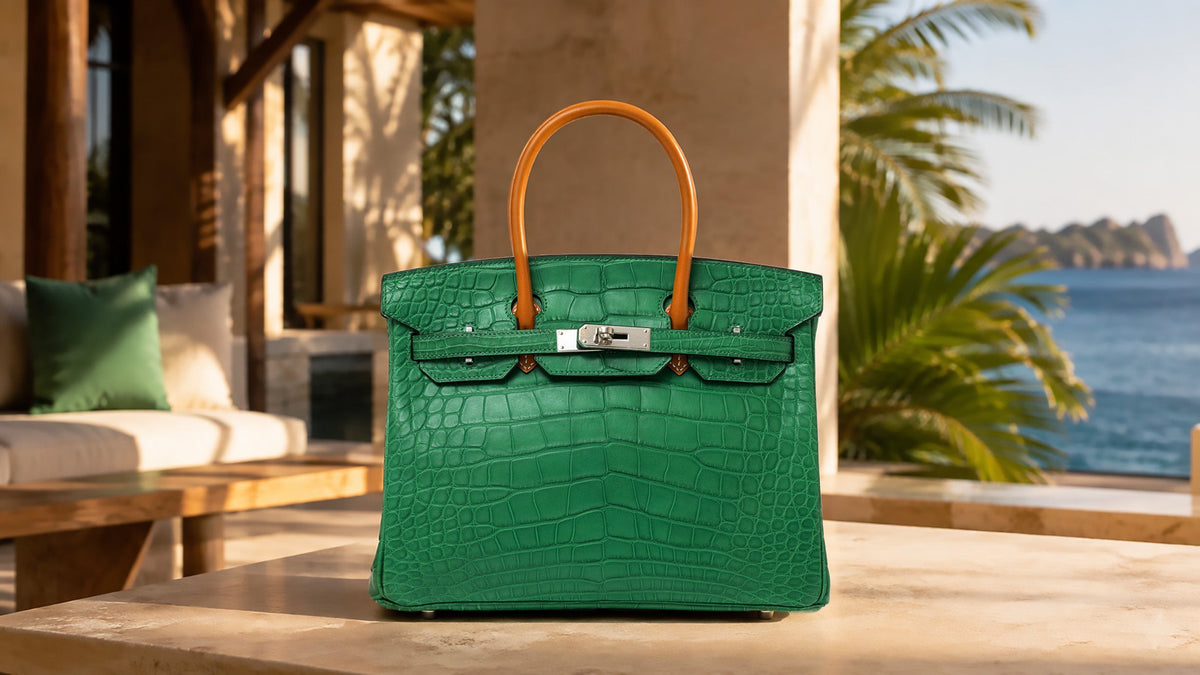
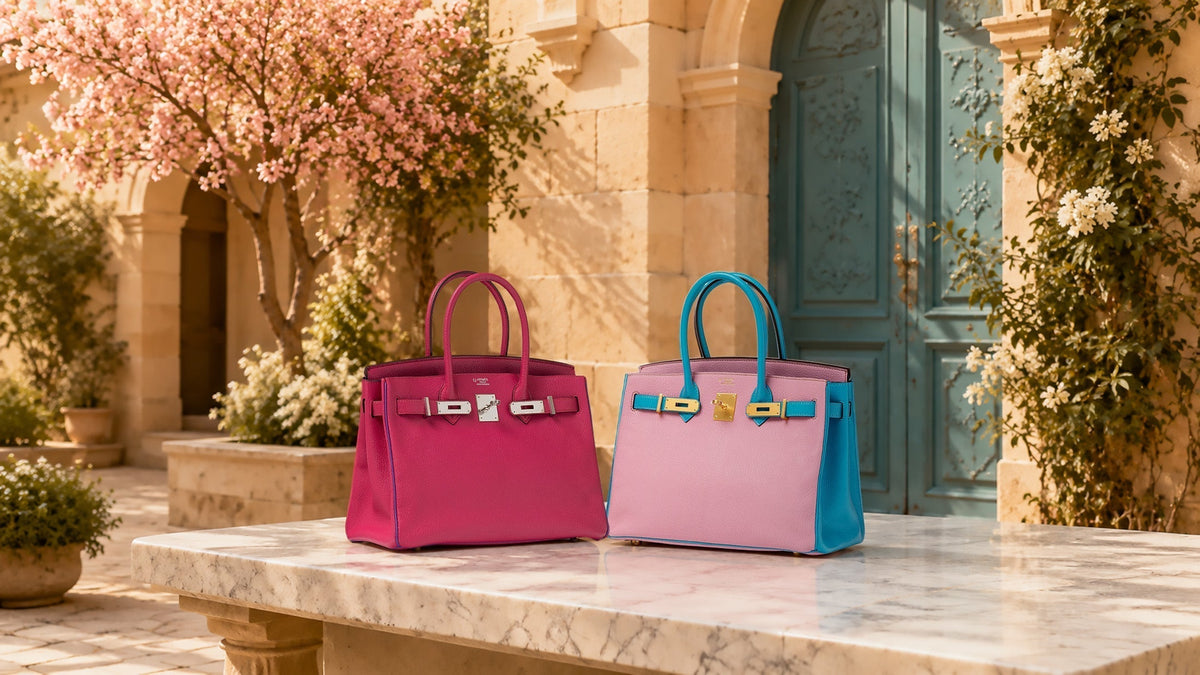
Start with the Birkin or Kelly you no longer use
Birkin and Kelly bags are obvious places to look during a closet audit because they are established Hermès models with active resale markets. That does not mean the highest-value example should automatically leave first.
If your Birkin 25 is the bag you still enjoy most, keeping it while requesting a quote on an unused Birkin 30 may make more sense. The same logic applies to Kelly bags. A frequently carried Kelly should not be sacrificed simply because another model is currently receiving attention in resale.
Once personal use has been considered, specialists can assess the configuration itself. Size, leather, colour, hardware, age, overall condition, repairs, included accessories, and current buyer demand all influence an offer.
Do not overlook Constance, Picotin, Lindy, and other Hermès styles
A closet audit can become too focused on Birkin and Kelly. If your collection also includes Constance, Picotin, Lindy, Evelyne, or other Hermès styles, include the pieces you no longer use in the same review.
A less famous bag that has become completely redundant may be a more sensible sale than an iconic piece that remains central to your wardrobe. Current marketability should help rank the bags you are already willing to release, not decide your entire collection for you.
Separate unusual Hermès pieces from the ordinary quote pile
Special Orders, uncommon colour and hardware combinations, older examples, exotics, and unusual limited pieces deserve their own evaluation. Their value can depend on details that are easy to miss in a general closet audit.
A specialist should also inspect condition carefully. Corner wear, glazing, handles, hardware, interior condition, shape, odour, repairs, and alterations can all matter. Avoid trying to improve a bag before evaluation through repainting, aggressive cleaning, or undisclosed restoration.
Which Chanel Bags Should You Consider Selling First?
Chanel requires the same separation between personal relevance and resale potential. Start with the pieces you are comfortable letting go, then compare models and condition.
Review unused Classic Flaps and 2.55 bags
The Chanel Classic Flap, officially represented by Chanel's Classic 11.12 line, and the 2.55 are established house designs and natural candidates for a resale review. If you own several sizes, colours, or materials, look first for the version that rarely leaves its dust bag.
Do not assume that black, a particular size, gold-tone hardware, or one leather automatically makes a bag the correct one to sell. These details influence market interest, but the complete configuration and condition need to be assessed together.
If two Chanel bags serve nearly the same role in your wardrobe, the duplicate test is useful: which one would you choose if you could keep only one?
Let condition guide the order when two bags are equally expendable
If you are equally comfortable selling two pieces, the better-preserved one may be worth quoting sooner because its current condition is an advantage that cannot be restored once wear occurs.
Inspect corners, quilting, structure, chain and strap condition, interior wear, hardware, closures, odour, and any previous repair or restoration. Be candid when submitting photographs. Accurate condition information makes an initial quote more meaningful and reduces the chance of a revision after physical inspection.
Seasonal Chanel can require more market context
Seasonal materials, unusual colours, limited designs, and discontinued styles can be harder to compare than core bags. Some attract a very specific buyer, while others may have a narrower resale audience.
If a seasonal piece has been unused for years, that uncertainty is not necessarily a reason to keep it. It is a reason to request a current evaluation instead of relying on an old retail price or an optimistic online asking price.
A Practical Sell-First Order
For a larger Toronto closet audit, the following framework keeps the decision focused on both use and resale practicality.
| Priority | What to Review | Why It Belongs Here |
|---|---|---|
| 1. Quote first | Unused duplicates and bags you would not purchase again today | Low emotional cost and little effect on your current wardrobe |
| 2. Quote first | Store-fresh or excellent-condition pieces you realistically will not use | Their present condition is worth preserving rather than gradually wearing through storage and handling |
| 3. Compare offers | Birkin, Kelly, Chanel Classic Flap, 2.55, and other recognizable pieces that have fallen out of rotation | A current valuation can help you decide whether keeping the bag still makes sense |
| 4. Evaluate individually | Rare configurations, Special Orders, exotics, inherited pieces, unusual Chanel designs | Specialist review is more useful than a generic resale rule |
| 5. Keep for now | Frequently used or strongly sentimental pieces | A strong resale offer does not compensate for a sale you are likely to regret |
Condition and Completeness Matter, but They Are Not Authentication
One of the easiest mistakes during a luxury closet audit is to treat a complete set as proof that the bag is genuine. Packaging and paperwork can be useful, but authentication is a separate process.
Document condition before requesting a quote
Photograph the exterior from several angles, corners, base, handles or straps, hardware, interior, and any visible wear. Include identifying details requested by the evaluator. For a multi-bag submission, keep each bag's photographs in a separate folder so accessories and documentation do not become mixed.
Avoid hiding flaws. Physical intake can reveal differences that were not visible in photographs, and an initial quote remains subject to final verification.
Gather the original accessories that actually belong to each bag
Boxes, dust bags, receipts, straps, locks, keys, clochettes, booklets, felt protectors, and other original accessories may contribute to completeness. They can also help identify the exact version of a piece.
A missing receipt does not automatically make an authentic bag unsellable, and a receipt does not independently authenticate a bag. The same principle applies to Chanel authenticity cards, serial information, NFC identifiers, and Hermès stamps. They are evidence to examine, not standalone proof.
Physical authentication comes before a final sale
A photograph-based quote is an initial commercial evaluation. Final acceptance requires the physical item to match the submitted information and pass the seller's inspection and authentication process.
That sequence is especially important for inherited or secondhand pieces. The stages should remain distinct: photo submission, initial offer, physical intake, inspection and authentication, final approval, then payout or consignment according to the chosen agreement.
Moving or Downsizing? Audit Several Bags as One Collection
If the closet audit is tied to a move, estate organization, downsizing, or a major wardrobe cleanout, evaluating each bag in isolation can become unnecessarily slow. Prepare the collection as one project even if individual pieces ultimately receive separate valuations.
Create a simple multi-bag inventory
For each item, note the brand, model, approximate size, colour, material, purchase year if known, condition, and accompanying accessories. Add one line explaining whether you want to sell, might sell, or are only requesting a valuation.
This prevents an excellent quote on one bag from pushing you into decisions about the rest of the collection before you are ready.
Photograph everything before packing
Take clear photographs before any item leaves your possession. Keep a record of the bag, included accessories, visible condition, and packaging. If several pieces are being evaluated, label each photo group consistently.
For remote transactions, confirm shipping, insurance, tracking, and signature requirements before sending high-value items. Rome Station's current process allows Toronto and other Canadian sellers to begin remotely rather than travelling to British Columbia for the initial quote.
Choose Buyout, Consignment, or Trade-In Based on Your Actual Goal
Selling first is only half of the decision. The right transaction type depends on whether your priority is liquidity, a predetermined consignment payout, or replacing one piece with another.
| Route | Best Suited To | What to Expect |
|---|---|---|
| Direct buyout | Sellers prioritizing a faster, defined exit | An initial offer is followed by physical verification, authentication, and final approval. Same-day payout may be available after an approved buyout completes final intake and authentication. |
| Guaranteed-price consignment | Sellers comfortable waiting for the item to sell | The seller agrees to a fixed payout amount under the consignment agreement rather than relying on an unknown percentage of the eventual retail sale price. |
| Trade-in | Collectors who want to reduce one part of the collection while upgrading another | Rather than treating the closet audit purely as liquidation, eligible pieces can be evaluated toward an upgrade opportunity. |
Rome Station states that specialists provide an offer within 24 business hours after reviewing an online submission. Any photo-based offer remains subject to final verification when the actual item is received. Same-day buyout payout applies after the item has completed final intake and authentication, not before.
What Toronto Sellers Should Know Before Sending Anything
Rome Station does not operate a Toronto retail location. Its in-person store is in Richmond, British Columbia. Toronto and GTA sellers can, however, begin the selling process remotely with photographs and item information rather than travelling west for an initial assessment.
Keeping the transaction within Canada can also eliminate the customs paperwork involved in sending a bag to a U.S. resale business. That does not remove the need for careful shipping. Rome Station's current FAQ states that sellers are responsible for shipping and insurance until the package has been received and signed for, so those arrangements should be understood before high-value items are sent.
For a large closet audit, there is no reason to begin with the assumption that every item must be sold. Requesting valuations on the strongest candidates first gives you enough information to make the second round of decisions with greater confidence.
Final Thoughts
The best Hermès or Chanel piece to sell first is usually the one you have already stopped choosing, especially when it remains in strong condition and has a current resale audience. Rare or emotionally significant pieces deserve more patience and individual review.
If you are downsizing a collection in Toronto or the GTA, you can start with a private Rome Station quote request and have the pieces you are genuinely prepared to release evaluated before making decisions about the rest of the closet.
Fact Check and Data Sources
-
Rome Station Sell & Consign for the current photo-submission, offer, physical intake, buyout, consignment, and payout process.
- Hermès Canada and the official CHANEL Classic 11.12 and CHANEL 2.55 pages were used to confirm official model terminology.