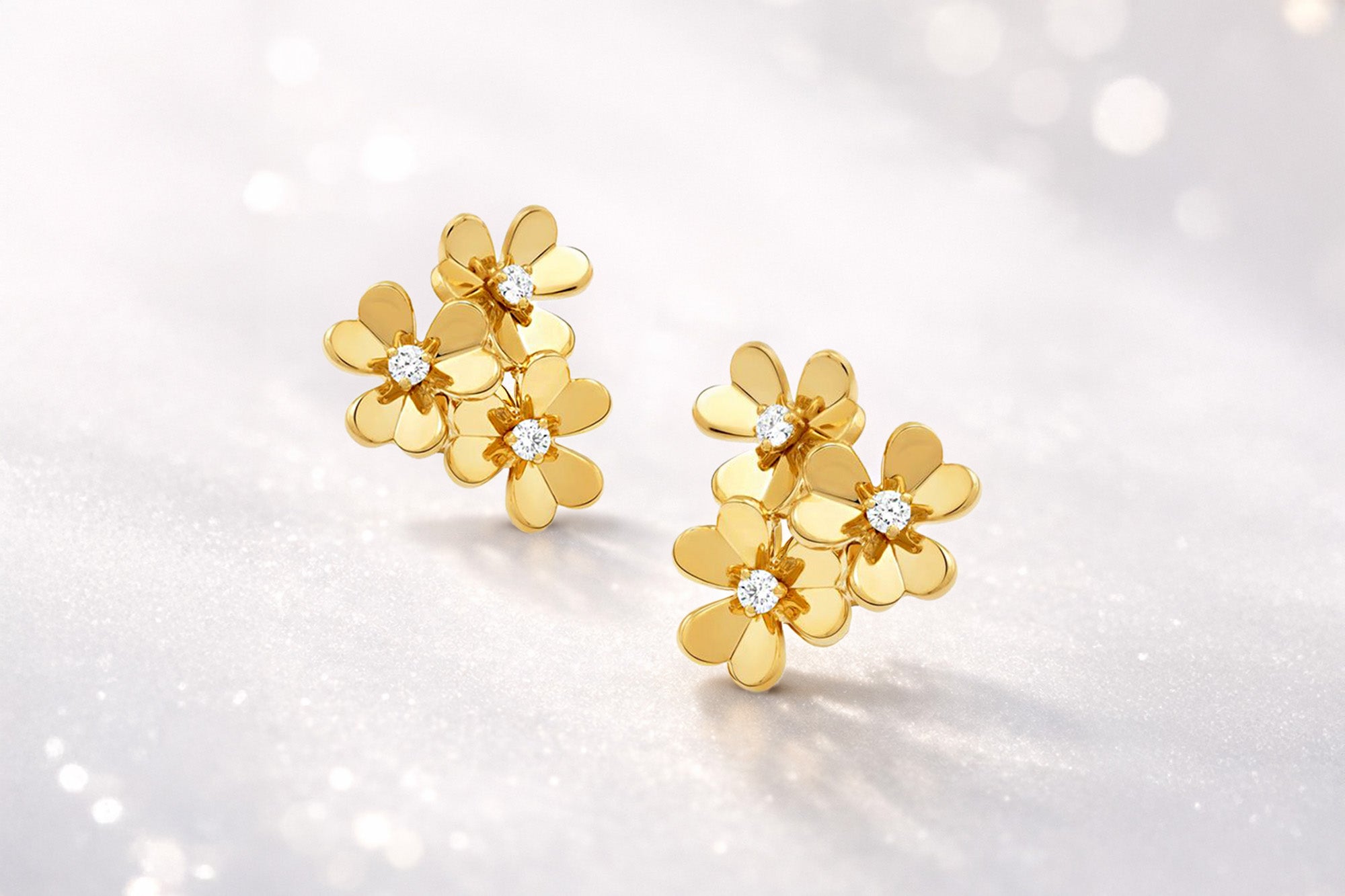

How Storage Conditions Affect Van Cleef & Arpels Stone Integrity
Check out our Van Cleef & Arpels collection!
Van Cleef & Arpels pieces are investments that deserve more than just being tossed in a drawer. The stones that make these pieces so special can lose their brilliance, develop surface damage, or even crack when stored incorrectly. Too many collectors have discovered scratches on their mother-of-pearl Alhambra or cloudiness in once-clear gemstones, all because storage conditions weren't quite right.
Improper storage conditions like humidity, temperature swings, and contact with other jewelry can permanently damage the stones in your Van Cleef & Arpels pieces. Different materials react in their own ways. Malachite is highly sensitive to moisture, while onyx is generally more stable but can still be affected by prolonged humidity and chemical exposure.
Knowing how storage affects stone integrity helps us protect these pieces for decades. The best part? Preventing damage is pretty straightforward once you know what each material needs. Let's dig into the vulnerabilities of Van Cleef's signature stones and how to store them right.
Key Takeaways
- Store Van Cleef & Arpels pieces individually in soft pouches to avoid scratches and contact damage.
- Keep jewelry in dry, temperature-stable places; humidity and heat swings can ruin sensitive stones like mother-of-pearl and malachite.
- Different stones have their own hardness and quirks, so storage isn't one-size-fits-all.
Why Stone Integrity Matters for Van Cleef & Arpels Jewelry
Stone integrity is everything; it affects the value, beauty, and lifespan of Van Cleef & Arpels pieces. When stones deteriorate, the investment potential drops, and the brand's legendary reputation takes a hit.
Defining Stone Integrity in High-Jewelry
When we talk about stone integrity, we mean the physical and optical condition of gemstones used in fine jewelry. For Van Cleef & Arpels, this covers a few key things:
Key Components of Stone Integrity:
- Surface condition – no scratches, chips, or cracks
- Color stability – original hue and saturation stay put
- Lustre quality – shine and light reflection are preserved
- Structural soundness – stones stay secure in their settings
Van Cleef & Arpels gemologists pick stones with strict standards for clarity, color, and cut. If these stones lose their pristine condition through careless storage, the piece just doesn't reflect the Maison's vision anymore.
Mother-of-pearl, malachite, and turquoise are especially vulnerable to environmental damage. They can dull, crack, or discolor if exposed to moisture, temperature swings, or sunlight. Even diamonds need proper care to keep their sparkle.
Impact on Resale Value and Heirloom Potential
Van Cleef & Arpels jewelry with compromised stones just doesn't sell for much on the secondary market. Pristine mother-of-pearl Vintage Alhambra pieces typically sell faster on the secondary market than comparable pieces with visible stone wear.
The most desirable pieces keep their original condition. A 10-motif necklace in flawless mother-of-pearl fetches a premium compared to one with visible wear. Collectors hunt for pieces that show no signs of deterioration.
Value Retention Factors:
- Stone appearance – original lustre and color intact
- Setting condition – no loosening or metal damage
- Authentication ease – clear hallmarks and signatures
- Documentation – original boxes and certificates
Heirloom pieces lose both sentimental and market value when stones degrade. A damaged malachite Alhambra bracelet isn't something you'd want to pass down. Storing pieces properly keeps them in the kind of shape you'd want for future generations.
The Alhambra, Perlée, and Frivole collections are built to last. If you store them carelessly, though, that promise doesn't mean much.
Links to Craftsmanship and Brand Reputation
Van Cleef & Arpels has built its name on meticulous stone selection and setting since 1906. Alfred Van Cleef and his father-in-law set standards for diamond cutting and stone sourcing that still hold up today.
The Maison's artisans spend real time hand-polishing each piece. Their "mystery set" technique makes diamonds seem to float, hiding the prongs. This level of detail deserves some respect, at least enough to store the jewelry properly.
Damaged stones don't just hurt the piece, they reflect badly on the brand's legacy. A scratched onyx or cracked carnelian says the owner didn't really value the work that went into it. Van Cleef & Arpels gemologists select each stone individually, checking quality before it goes into a piece.
The brand's ties to royalty and celebrities come from flawless execution. Princess Grace of Monaco picked the Alhambra collection for its subtle elegance. That elegance fades fast if the stones lose their integrity.
Signature Stones and Materials: What Needs Protection
Van Cleef & Arpels relies on carefully chosen materials, from semi-precious stones selected for color harmony to diamonds and 18k gold settings. Each material reacts differently to storage, so it's worth knowing what you're actually protecting.
Overview of Precious and Semi-Precious Stones
Van Cleef & Arpels uses both precious and semi-precious stones, all chosen for color, clarity, and consistency. Diamonds, sapphires, and emeralds show up in high-jewelry and accents. Semi-precious stones really define the brand's look, especially in signature collections.
For storage, the stone's physical properties matter more than whether it's "precious" or "semi-precious." Hardness, porosity, and chemistry decide how vulnerable it is. Diamonds (Mohs 10) are tough, while malachite (3.5 to 4) scratches easily.
Semi-precious stones usually need more careful storage. Mother-of-pearl, turquoise, and malachite are all sensitive to humidity, chemicals, and temperature changes.
Popular Stones in Alhambra and Other Collections
The Alhambra collection rotates through materials that really set Van Cleef apart. Mother-of-pearl, in white and grey, offers a gorgeous iridescence but is actually pretty fragile. It can dry, crack, or yellow if exposed to heat or stored wrong.
Onyx and black onyx bring those dramatic dark tones. They're fairly durable (Mohs 7), but can still scratch if they rub against harder stones.
Carnelian, agate, and blue agate are types of chalcedony and also sit around 7. Tiger's eye is similar. These stones handle daily wear but still benefit from being stored separately.
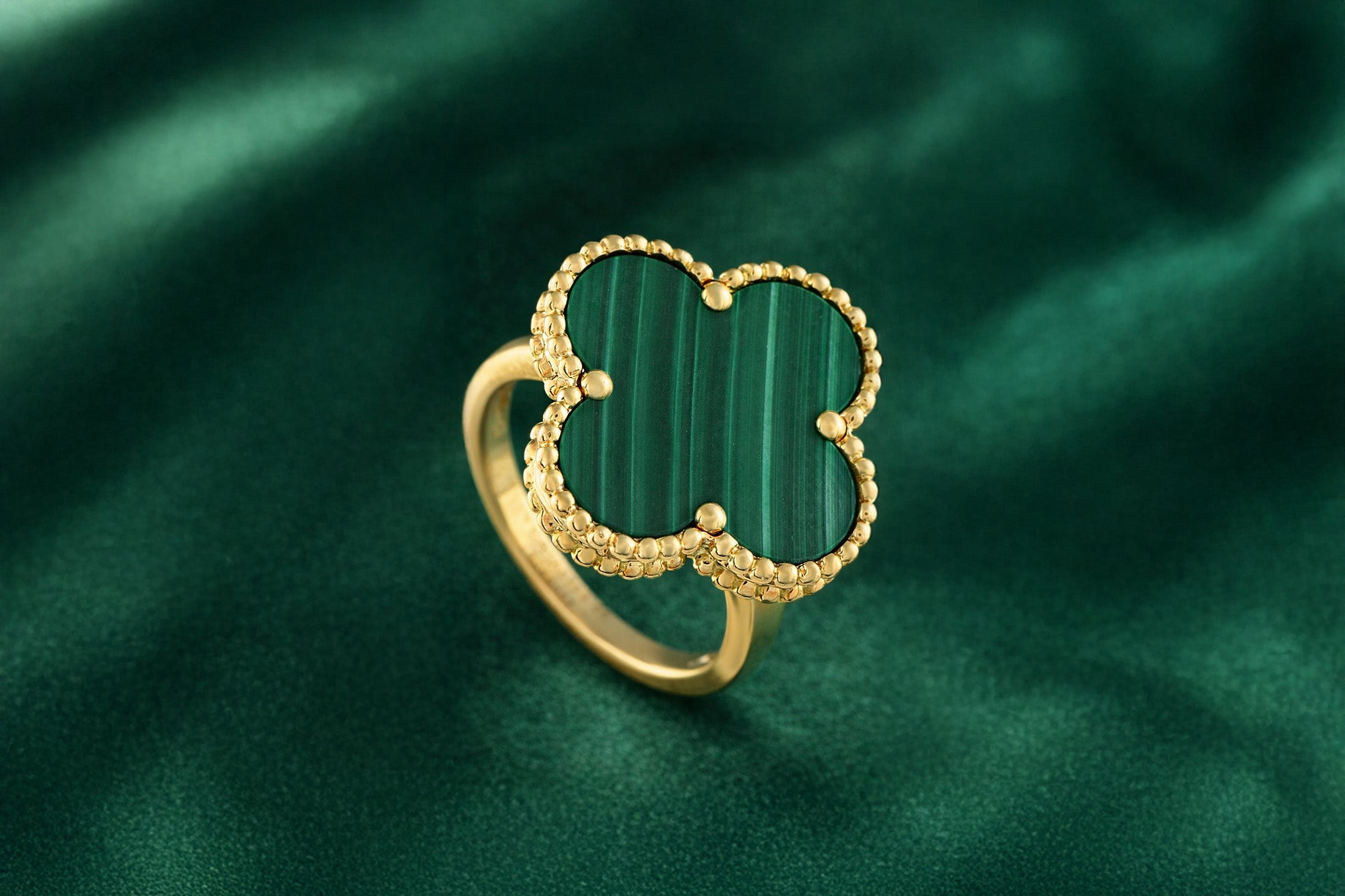
Malachite with its bold green bands, needs special care. It's soft and reacts badly to acids, including skin oils. Turquoise and lapis lazuli are also porous and can absorb oils and chemicals, which might permanently change how they look.
The Role of 18K Gold and Settings
Van Cleef & Arpels uses 18k gold for all its collections, yellow, white, and rose gold. With 75% pure gold, it's luxurious but still softer than lower-karat options.
The gold settings keep stones safe and give that signature look. Yellow gold hides scratches better than white gold. Settings can loosen if you wear pieces a lot, so storing them properly between wears is smart.
The beaded edges and polished bezels Van Cleef is known for can dent or scratch if pieces knock together. It's best to keep each piece separate, especially if you're mixing gold colors or stone types.
Sourcing and Selection at VCA
Van Cleef & Arpels has stuck to strict selection standards since 1906, picking stones for consistency and color harmony, not just rarity. This means you can match pieces bought years apart, but it also means replacements have to meet exact specs.
They source globally, choosing stones that fit specific color and quality ranges. For Alhambra, this lets you coordinate pieces easily. Mother-of-pearl comes from certain shells, onyx from particular deposits, and each carnelian or agate matches set color standards.
Because of this, proper storage becomes even more important. If a stone gets damaged, you can't just swap it out with any replacement. The right shade of turquoise or pattern of malachite might only come from one place.
How Storage Conditions Affect Stone Longevity
Storage conditions really do decide how well Van Cleef & Arpels pieces keep their beauty over time. Temperature swings, humidity, light, and air quality all threaten the structure and appearance of these stones.
Temperature and Humidity Risks
Van Cleef pieces don't like temperature swings. Quick changes make stones expand and contract differently than their metal settings, which can loosen prongs or cause tiny fractures.
Ideally, store jewelry in a stable, moderate indoor environment, avoiding extreme temperature changes and excessive humidity. Mother-of-pearl is sensitive to prolonged dryness, which can reduce its lustre or contribute to surface stress over time.
Opals and pearls have similar issues. They're porous and can soak up moisture, leading to crazing (fine cracks) or cloudiness. Storing jewelry near vents, air conditioners, or in attics and basements is a recipe for problems.
A hygrometer in your storage area helps. Toss in some silica gel packets to keep humidity stable inside jewelry boxes, but don't overdo it. Delicate stones need a little moisture.
Light Exposure and UV Impact
Ultraviolet light can fade certain gemstones in Van Cleef collections. Amethyst, kunzite, and some colored pearls lose their color if left in sunlight or under strong lights for too long.
Even stones you think are safe can suffer. The polish on mother-of-pearl breaks down under UV, turning chalky and losing value. If you want to display your pieces, use cases with UV-filtering glass, but honestly, darkness is safest for long-term storage.
Store high-jewelry in lined boxes inside drawers or cabinets. If you must display them, rotate the pieces and use museum-grade LED lighting, it gives off almost no UV.
Contact with Chemicals and Air Pollutants
Air pollutants attack stones and metal settings. Sulphur in city air tarnishes metal and leaves a film on porous stones, dulling their look.
Household chemicals are worse. Hairspray, perfume, cleaning products, and pool chlorine can all wreck stone integrity and dull the polish on softer materials. Mother-of-pearl and opals are especially at risk since their pores let chemicals in.
Put on cosmetics and fragrances before your Van Cleef pieces. Take jewelry off before swimming, cleaning, or using beauty products. Store each piece in a soft pouch or its own compartment to avoid contact with anything that might leave residue.
Air quality matters, too. Don't keep jewelry in bathrooms, humidity and chemical vapours from personal care products hang around there. Well-ventilated, stable spaces keep stones and settings in better shape than closed, steamy rooms.
Stone Durability: Mohs Hardness, Everyday Wear, and Vulnerable Gems
Van Cleef & Arpels pieces use stones with a wide range of durability, from super-hard diamonds to soft malachite and onyx. Knowing the differences helps protect your investment and avoid damage.
Mohs Scale and VCA Stone Hardness Ratings
The Mohs scale ranks minerals from 1 (softest) to 10 (hardest) based on scratch resistance. Diamond is a 10 on the Mohs scale, the hardest natural material, making it highly resistant to scratches, though not immune to chipping or impact damage. Sapphire and ruby are 9, which is why they're common in pieces meant for frequent wear, like Magic Alhambra necklaces.
Emerald is 7.5 to 8, a bit softer than sapphire and ruby, so it's more prone to scratches. Onyx, carnelian, tiger's eye, and agates are around 6.5 to 7, not super soft, but not immune to scratches either.
Malachite is way down at 3.5 to 4, one of the softest stones Van Cleef uses. The difference between a 9 and a 4 is huge. A sapphire will scratch malachite easily, but malachite can't even scratch itself.
Stones Most Prone to Damage
Malachite is especially delicate in Van Cleef pieces. Its softness means it scratches easily, even from dust particles that contain quartz (hardness 7). Malachite pieces can show surface dullness more quickly than harder stones if worn frequently without care.
Emeralds bring a different challenge. They're harder than malachite, but often have internal fissures that make them less tough. Van Cleef sources high-quality emeralds, but even the best can chip or crack from a bump. Many emeralds are traditionally treated with oils to enhance clarity, and excessive heat or chemical exposure can reduce the effectiveness of these treatments over time.
Letterwood, sometimes used in special collections, needs careful handling because it's sensitive to moisture and temperature changes. Onyx and carnelian are harder, but still pick up scratches if they rub against tougher materials.
Everyday Wear: What Survives and What Suffers
Diamond, sapphire, and ruby pieces stand up to daily wear with ease. A Sweet Alhambra diamond pendant can handle years of constant use and still look great. These stones shrug off scratches from just about anything you’ll run into day-to-day.
Onyx, carnelian, and tiger's eye are fine for frequent wear, though they need a bit more mindfulness. It’s best to take these off before rough activities or anything likely to cause a knock. A Vintage Alhambra onyx bracelet will show its age eventually, but storing it properly slows that down.
Malachite and emerald need more selective wearing. Save them for times when you know they won’t bump into hard surfaces. Slipping off a malachite ring before washing your hands or cooking keeps it away from chemicals and knocks. Emeralds? Definitely not for the gym or gardening.
Best Storage Practices for Van Cleef & Arpels Jewelry
Good storage shields Van Cleef & Arpels pieces from scratches, chemicals, and the elements. We’ve got to think about temperature, humidity, light, and how we separate different materials if we want these treasures to last.
Recommended Storage Environments
Van Cleef & Arpels jewelry does best in places where temperature and humidity stay steady. Aim for 18-22°C and humidity around 45-55%.
Big swings in temperature make metals expand and contract, sometimes loosening stones. High humidity can accelerate tarnish on gold alloys due to reactions with trace metals such as copper, particularly in enclosed environments. Sunlight? That’s another threat, UV rays can fade colored stones and harm organic materials like mother-of-pearl.
Dark, stable spots are ideal. Bathrooms, kitchens, and windowsills, where heat and light fluctuate, aren’t great homes for fine jewelry.
Choosing Jewelry Cases, Boxes, and Display Solutions
The original Van Cleef & Arpels boxes are purpose-built, with soft linings and compartments to keep everything in place. Those are always a safe bet.
For other pieces, pick jewelry boxes with soft linings, velvet, suede, felt. Hard surfaces can scratch 18k gold and delicate stones. Use individual pouches or divided compartments to keep things from bumping together.
Display cases are nice for showing off a collection, but keep them closed and in the dark when you’re not admiring them. Glass tops are good for dust and visibility. Anti-tarnish strips or sachets inside help keep metal finishes looking fresh.
Separation by Material and Stone Type
Store each Van Cleef & Arpels piece by itself, sorted by material and hardness. Diamonds will scratch softer stones like onyx, malachite, or carnelian, so keep those apart.
Mother-of-pearl needs extra care, it's delicate compared to mineral stones. Tuck these in soft pouches, away from harder pieces. Same goes for enamel work, which chips if it knocks around.
Give each piece its own compartment or pouch. This also makes it easier to keep track of serial numbers and hallmarks, snap a photo while organizing for insurance or peace of mind.
Common Signs of Storage-Related Stone Damage and What To Do Next
Bad storage habits leave their mark on Van Cleef & Arpels pieces, from dull surfaces to loose settings. Spotting these early means you can fix things before they get out of hand.
Visual Clues: Cloudiness, Cracking, and Discoloration
If a stone looks cloudy or hazy, moisture might be the culprit. You’ll notice this most on polished gems, like in an Alhambra necklace, where the shine should be obvious. Hard water or humidity leaves a film that dulls the sparkle.
Fine cracks, tiny lines, often come from temperature swings or being stored in a weird position. They might start small but can get worse, threatening the stone’s strength. Check stones in good light, especially around the edges and settings.
Discoloration shows up as yellowing, browning, or fading that doesn’t match the original color. Carnelian and turquoise, especially in four-leaf clover motifs, are prone to this if stored in sunlight or extreme heat. Chemicals from nearby materials or cleaners can also stain for good.
Stone Settings and Structural Weakness
Prongs and bezels can loosen if pieces go through temperature swings or get jostled around. Test stones gently with your fingertip; if they wobble, that’s a red flag.
Mystery set pieces need even more attention. Their hidden rail systems can shift if stored badly, messing up both the look and the security. Check the edges where stones meet for any gaps.
Metal fatigue shows up as thinning prongs or stress marks by attachments. This happens faster if jewelry is crammed together or stacked, creating pressure points that weaken the metal over time.
Engaging Van Cleef & Arpels for Repairs
Van Cleef & Arpels boutiques offer professional checkups for pieces showing signs of storage damage. Book an appointment at an official location; their artisans know the collections inside out and keep records for precise restoration.
Van Cleef & Arpels boutiques may offer inspections during maintenance visits, depending on the piece and location. Their specialists check stone security, polish, and settings with specialized tools. You can schedule these once a year or after any incident that might have hurt your jewelry.
Authorized repairs keep your warranty intact and help preserve resale value, something third-party work can’t guarantee. Van Cleef & Arpels sources matching stones and uses original techniques, so repairs blend right in.
Frequently Asked Questions
Storage conditions make a huge difference in how long your Van Cleef & Arpels stones keep their beauty. Temperature, humidity, light, and how you store them all play a part.
What's the best way to store my Van Cleef & Arpels jewelry to ensure the stones remain fabulous?
Store each piece separately in a soft pouch or its original box. That keeps them from scratching or chipping each other, especially delicate stones like mother-of-pearl or onyx.
This is extra important for pieces with different hardness levels. If you put a diamond bracelet next to a malachite necklace, odds are the malachite will lose.
Keep your jewelry in a dry, stable spot out of sunlight. A jewelry box with compartments or a lined drawer works well.
Can temperature swings cause a cold shoulder from my precious stones?
Yes, temperature swings can mess with stones. Fast changes make them expand and contract faster than their metal settings, which can loosen prongs or cause cracks.
Opals and emeralds are especially sensitive, but even tough stones can crack inside if they go through this too often.
Store pieces somewhere with stable temperature, not in bathrooms or near heaters. Room temperature, minimal change, that’s what you want.
How does one keep their sparklers sparkling, does humidity play a role in tarnishing the shine?
Humidity absolutely affects both the metal and some stones in Van Cleef & Arpels jewelry. Too much moisture tarnishes gold and damages porous stones like turquoise or lapis lazuli.
Mother-of-pearl, which shows up a lot in Alhambra pieces, really doesn’t like humidity. It can lose its shine and go dull in damp conditions.
Use silica gel packets in your storage boxes to soak up extra moisture. Keep humidity between 45-55% to protect both stones and metals.
How might light exposure be throwing shade on my gemstone's brilliance?
Direct sunlight and harsh artificial light can fade certain colored stones over time. Amethyst, kunzite, and some types of topaz are especially prone to losing color from UV.
Even tough stones can change at the surface if they’re in strong light for too long. Some adhesives in settings can also break down with too much UV.
Best move? Store pieces away from windows and bright lights. Dark boxes or drawers are your friends here.
Is there a secret vault tip for keeping those stones from feeling rough around the edges?
It’s all about soft cushioning and separation. Line compartments with velvet or microfiber so stones don’t rub on anything hard.
Hang necklaces to keep them from tangling and bumping into each other. For bracelets and rings, use individual slots or pouches to stop metal parts from pressing against stones.
Travel needs extra care. Go for padded jewelry rolls with separate sections, not a single pouch where everything bangs together.
What are some no-no's when it comes to storing my bejeweled treasures that could lead to a fashion faux pas?
Don’t keep your Van Cleef & Arpels pieces in the bathroom. Humidity, sudden temperature changes, and all those cosmetics and perfumes? That’s just asking for trouble.
Watch out for wood surfaces, too. Some woods have sneaky acids that can tarnish metals or mess with stones, especially if you’re using an unlined wooden box. Honestly, it’s not worth the risk.
Tossing all your jewelry into one compartment or stacking them up? Not a great idea. That’s how you end up with scratches, chips, or loose settings. And steer clear of storing jewelry near household chemicals or in places with strong smells, porous stones can soak that stuff right up.
Love Hermès? See More from Rome Station
Add us to your Preferred Sources on Google to see our newest Hermès guides and insider tips first.