

How Quilting Alignment Reflects Chanel Manufacturing Standards
Check out our Chanel collection!
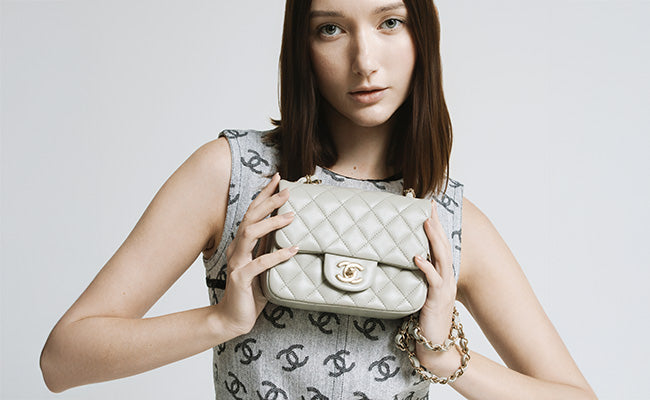
Quilting alignment on a Chanel bag isn't just for looks. It's a window into the brand's obsession with precision and quality control, honed over decades. When you check how those diamond patterns line up across seams, flaps, and pockets, you're seeing one of the clearest signals of authenticity and real craftsmanship.
On genuine Chanel bags, the quilting typically aligns cleanly across key sections. Even slight misalignment, sometimes just a millimeter or two, can raise red flags about authenticity or production shortcuts.
Achieving this level of accuracy takes specialized construction, careful material choices, and skilled artisans who know exactly what they're doing with every stitch. The pattern should flow smoothly from panel to panel, keeping the diamonds and stitch density consistent throughout.
When authenticating Chanel, quilting alignment is always one of the first things we look at. It gives away, almost instantly, whether a bag was made under Chanel’s strict standards or if someone took the easy way out. Knowing these details helps collectors, buyers, and sellers make smarter choices about which bags to trust.
Key Takeaways
- Quilting on authentic Chanel bags lines up precisely across panels and seams
- Stitch density and diamond uniformity are reliable signs of authenticity
- Understanding these standards protects collectors and keeps resale value strong
Chanel's Manufacturing Benchmarks: Why Alignment Matters
Chanel’s standards grew out of Coco Chanel’s original vision for functional luxury, eventually becoming a system where quilting alignment is a key quality marker. The brand’s haute couture roots demand that each diamond meets strict geometric rules, making it much easier to spot the real thing.
Historical Evolution of Chanel Quilting
The quilted pattern began in February 1955 with the 2.55 bag, inspired by equestrian gear and jockey jackets. The diamond motif delivered both strength and style, a signature that’s lasted generations.
The original method, called piqué retourné (stitch and turn), involved layering leather with padding and stitching before turning everything inside out. This time-consuming process gave Chanel bags their signature three-dimensional look. Each diamond was topstitched with a straight stitch (point droit de couturière) that demanded steady hands and consistent tension.
In the 1980s, under Karl Lagerfeld, the Classic Flap (style 11.12) kept the same focus on diamond symmetry and placement.
Coco Chanel's Vision for Quality
Chanel’s house codes treat alignment as non-negotiable. It’s a baseline expectation, not a bonus detail.
Quilting does more than just look good. It helps the bag hold its shape and protects what’s inside. The padded diamonds spread out weight and stress, helping the bag resist sagging over time.
On Classic Flaps, the interlocking CC lock is typically centered and should sit cleanly against the quilting grid.
Haute Couture Approach in Modern Production
Chanel still makes many of its iconic bags at Les Ateliers de Verneuil-en-Halatte in France, using techniques straight from haute couture. Artisans handpick leather, quilt each piece individually, and assemble bags using the bag-in-the-bag technique, building the interior structure separately before inserting it.
The stitch count stays consistent on authentic bags, usually around 9 to 11 stitches per inch on many quilted seams, depending on the leather and model. Even today, leather is woven through the chain links with no shortcuts to speed things up.
Every craftsperson often trains for years to reach Chanel’s level of precision. Quilting isn’t just a production step. It’s an art form, and Chanel treats it that way.
The Science of Quilting Alignment and Diamond Perfection
Diamond quilting is all about geometry. Each stitch has to land just right, or the whole pattern falls apart. The way these stitches line up creates that signature puffy look and separates the best from the rest.
What Defines True Diamond Quilting
True diamond quilting means a grid of diamonds formed by parallel lines of stitching, crossing at consistent angles. On Chanel bags, the diamonds are kept consistent in size and spacing within a bag, and the stitch count stays uniform, giving that plush, even surface.
The diamond pattern comes from two sets of lines, one running diagonally from top left to bottom right, the other from top right to bottom left. Where they cross, you get those crisp diamond points.
Structural Role of Stitching and Alignment
The stitching in diamond quilting isn’t just for show. It locks together multiple layers, keeping everything in place.
Each stitch compresses the padding between the outer leather and the lining, making those diamonds pop. If the tension isn’t even, you’ll see lumpy or flat spots.
The strength of the bag depends on keeping the depth and height of the diamonds consistent. Skilled makers use careful, even pressure to make sure every diamond stands out the same way.
When alignment is off, it’s usually obvious at the intersections. If the points don’t line up, it can mean the material was cut off-grain, or the seam allowance was handled inconsistently.
Comparisons of Quilted and Matelassé Techniques
Matelassé is a French term that refers to a quilted, padded effect. In Chanel terms, the signature diamond quilting you see on many bags is often described as matelassé.
What matters for collectors is consistency: clean alignment across seams, even puffiness, and uniform stitch spacing. When those fundamentals slip, the bag looks off, and it can raise authenticity concerns.
Stitch Count and Stitches Per Inch: The Key to Authenticity
Real Chanel bags keep their stitch density precise, both for structure and looks. Counterfeiters have a hard time getting this right. It’s not just about the numbers. It’s how the stitch count works with the leather and the bag’s longevity.
Chanel's Stitch Density Across Eras
Chanel has always demanded high stitch density, though the exact numbers can shift slightly over time and by leather. Many authentic quilted bags fall around 9 to 11 stitches per inch, while some can be a bit higher.
The Classic Flap typically falls in that 9 to 11 range, no matter when it was made. Smaller styles can be a bit lower, just because of scale.
Why bother with so many stitches? Tighter stitching helps the leather resist stretching and helps the quilting stay sharp year after year. It’s a big reason these bags hold up so well.
Vintage Chanel from the 1980s and 1990s can still match these same standards, so this isn’t some new thing. It’s long been part of Chanel’s DNA.
Stitch Count in Classic and Vintage Chanel Bags
To check authenticity, we count stitches along a consistent section of a quilting line, often one inch. Many Classic Flaps land around 9 to 11 stitches per inch, while some smaller styles can be slightly lower.
Anything noticeably lower than that, especially if it’s consistent across the bag, is a warning sign. Fewer stitches let the leather move too much, making the quilting look soft and puffy instead of crisp.
It’s important to measure the same way each time. That way, you’re comparing apples to apples across different bag sizes and quilting layouts.
Vintage Chanel bags still benefit from stitch count checks, especially when other details like hardware and serial stickers vary by era.
Implications of Incorrect Stitching
Bags with only 7 to 8 stitches per inch often raise concerns, though a bad repair job can sometimes affect stitching in one area. If it’s low everywhere, that’s a huge red flag.
Counterfeiters cut corners here because fewer stitches save time and money. Hitting 10 to 11 stitches per inch takes patience and real skill.
Low stitch density isn’t just a cosmetic issue. It affects how the bag holds up. Panels can cave in, quilting can lose its shape, and the leather can develop stress marks. Authentic Chanel bags avoid all that by engineering the stitches properly.
We also look at stitch quality. If the spacing is off, the tension is uneven, or you see needle marks, that’s a sign of sloppy work, not something you’d expect from Chanel, even if the count is technically close.
Signature Features and Materials That Signal Alignment
Quilting alignment is just the start. Other details, like the interlocking CC logo, leather choice, hardware, and interior, fill out the full picture of Chanel’s standards.
Interlocking CC Logo Precision
On a real Chanel, the interlocking CC logo lines up with the quilting underneath. For Classic Flaps, the CC hardware is typically centered and should sit cleanly on the quilting grid. You won’t see it floating between rows or obviously off the pattern.
Authentic bags keep the CC proportions consistent. The right C overlaps the left at the top, and the left C overlaps the right at the bottom.
Fakes often get lazy here. We’ve seen knockoffs where the CC is crooked compared to the quilting lines. That’s a dead giveaway that the bag didn’t come from Chanel.
Leather Quality and Quilting Retention
Chanel commonly uses lambskin and caviar leather because they hold the quilted shape so well. Lambskin stays puffy thanks to its thickness and the way it’s stitched and backed.
Caviar leather, with its pebbled texture, gives extra strength to the diamonds. The grain helps each shape stay defined even after years of wear. If you gently press on a real Chanel, the quilting should bounce back. If it stays flat or uneven, something’s off.
The layer between the outer leather and lining is crucial. It needs to be thick enough to keep the pattern, but flexible so the bag doesn’t feel stiff. On authentic bags, the puffiness is even all over, while fakes often have lumpy or flat spots.
Hardware, Chain Strap, and Interior Details
The chain strap shows off Chanel’s attention to detail. Leather is woven through metal links at consistent intervals, and that pattern should feel even in the hand.
Hardware finish, gold-tone or silver-tone, should match across every metal part. Zippers, turn locks, CC logos, chain links, and snaps all need to look and age the same way. Good hardware develops patina in the right places, not just randomly.
Inside, the stamp, serial sticker or microchip, and lining matter too. The stamp sits in a certain spot depending on the model and year, and it should look clean and intentional. Quilted interiors echo the exterior’s precision, with corners and pockets finished so they don’t fray.
Authenticity Verification: Beyond Stitch Lines
Chanel authentication goes way beyond just looking at the quilting. It takes checking era-specific paperwork, serial codes, and serial sticker details, all of which are tough for counterfeiters to replicate perfectly. We look at everything together, cross-referencing production windows, materials, and documentation.
Authenticity Cards and Serial Stickers
Authenticity cards and serial stickers have changed a lot over the years. Serial stickers were introduced in the mid-1980s. Early stickers were relatively simple and protected by an opaque film, without the later hologram-style security tape.
From the early 1990s onward, Chanel added more security elements. Later stickers can feature clear tape with interlocking CC logos, cut-lines designed to discourage removal, and other era-specific details. Authentic stickers can age too, but unusual print quality, placement, or mismatched wear can be a concern.
Common serial sticker red flags:
- Sticker is noticeably crooked or poorly placed
- Wear on the sticker doesn’t match the bag’s overall condition
- Pristine sticker on a bag that looks heavily used
- Missing security details expected for that production era
You won’t see the later hologram-style security tape on a 1980s Chanel. We always check every piece of documentation and sticker details against known production windows, not just on their own.
Serial Codes and Model-Year Matching
Serial numbers give us a rough idea of production windows, but on their own, they don’t prove a bag’s authenticity. We check if the serial makes sense with the model’s release period, hardware, and leather details.
Serial format by era:
| Period | Serial Range | Documentation Type |
|---|---|---|
| 1986 to 1991 | 0 to 1 series | Serial sticker, no hologram-style security tape |
| 1991 to 2005 | 2 to 9 series | Serial sticker with evolving security features |
| 2005 to 2021 | 10 to 31 series | Serial sticker with clear tape and added security details |
| 2021 and later | Microchip | No physical authenticity card |
If someone claims a Chanel bag is from a year before that model existed, that’s a red flag. Timeline mismatches like this are dead giveaways. We also look closely at the serial sticker itself. Even if a replica uses a “correct” number, the print quality, tape, or sticker placement often gives it away.
Sticker designs and printing changed over time. When you line up serial era, model history, and hardware details, the fakes start to fall apart.
Holistic Inspection and Common Pitfalls
People trip up when they zero in on just one detail instead of looking at the whole picture. We’ve seen bags with a real-looking serial, but hardware details that don’t match what Chanel used in that era.
Trusting your eyes alone is risky. Authentic bags feel different when you hold them. The leather keeps its shape but softens gracefully. The hardware feels heavy and dense, never hollow. Quilting ages in ways you can spot if you know what to look for.
Critical verification layers:
- Serial era lines up with hardware finish and construction details
- Logo stamping depth and foil match the production period
- Leather ages naturally, not artificially distressed
- Wear is consistent across all parts
Superfakes are getting better. They use real leather and even convincing sticker details. But when you start comparing how all the parts relate, the cracks show. For example, a serial that suggests one production window paired with hardware details known from much later can signal either a fake or a poorly documented repair. We focus on the relationships between components, not just isolated features. Counterfeiters struggle to fake that interplay.
Collector and Resale Insights: Why Standards Endure
Chanel’s quilting standards are a big reason vintage bags keep their value. Collectors and authenticators obsess over alignment because it’s a clear line between true craftsmanship and sloppy production. And honestly, who wants to risk that kind of money on a gamble?
How Alignment Affects Resale Value
When we’re evaluating a Chanel for resale, the first thing we check is the quilting alignment. Even diamonds and consistent stitches signal factory-level workmanship, and collectors love it. If the seams are off or the quilting looks uneven, the value can drop sharply.
Vintage Chanel from the 1980s and 1990s can command strong prices partly because the quilting often holds up to modern expectations. We’ve seen Classic Flaps from those decades sell extremely well because the stitching is still sharp. Some resale platforms and authenticators may reject or downgrade bags if the alignment issues are obvious.
Serious collectors look for this consistency. They know alignment isn’t just about looks. It’s one of the clearest signs the bag was made with care, which is why demand and prices stay high.
Wear Patterns, Patina, and Long-Term Appeal
Chanel’s quilting ages in a way that can make bags more appealing to collectors. The leather develops a patina, but the stitching stays strong. We see vintage bags where the leather softens at the corners, but the threads are still tight and the seams hold.
Collectors want bags where the quilting has kept its shape after years of use. That’s more than just looks. It proves the quilting and alignment were built for durability, too. The leather might get darker and the hardware might pick up some warmth, but those diamonds should stay defined.
Wear patterns help us spot fakes, too. Real Chanel often ages more evenly across the whole bag. Fakes can show odd wear or threads that break down too soon. That kind of predictable aging is a big part of why Chanel’s standards matter for long-term value.
Frequently Asked Questions
Quilting alignment comes up over and over in authentication, consignment, and collector chats. Here’s how we break down the key markers and practical tips that set real Chanel apart.
What stitch techniques does Chanel use to maintain its high standards of quilt alignment?
Chanel uses hand-guided machine stitching, with consistent stitch density on quilted seams. Many authentic quilted bags land around 9 to 11 stitches per inch, depending on the era, leather, and model. That consistency helps keep diamond shapes uniform and reduces warping.
Stitch depth and tension matter, too. Every stitch should look even, so the puffiness stays consistent. This isn’t an accident. It’s the result of strict production controls Chanel has refined over decades.
How do seasoned Chanel collectors assess the precision of quilted alignments when authenticating?
We start by checking if the diamond pattern lines up when the flap closes. The pattern should flow without a break from the flap to the body of the bag.
Corners and side seams are big tells. The diamonds should keep their shape, even where the leather curves. We run our fingers along the quilting to feel for depth and padding. Sometimes you can’t see small problems, but you can feel them.
Counting stitches with a magnifying glass is normal. Anything far below that typical stitch density range is a red flag. We also check that the stitching looks clean, tight, and consistent across the bag.
Can you distinguish the quality of a Chanel piece by looking at the quilt patterns?
Absolutely. The quilting pattern is like a signature. Real Chanel has evenly spaced diamonds, consistent depth, and the pattern continues right across the flap. Whether the bag is open or closed, the alignment should hold.
Lower-quality bags have misshapen diamonds, uneven puffiness, or the pattern stops abruptly at seams. Fakes can be too flat or too puffy. Good lighting makes these flaws obvious. Real quilting casts even shadows in every diamond.
What are the tell-tale signs of Chanel's superior craftsmanship in its quilt designs?
It’s all about continuity. Genuine Chanel keeps the diamond pattern running smoothly from front to back. That means cutting and assembling the leather with serious precision. When you close the flap, the lines should match up.
Thread and stitching are key, too. We want to see even tension and consistent spacing. The quilting should be just as defined at the edges as it is in the middle, with no sagging or bunching. Hardware should sit cleanly on the quilting grid, not awkwardly between lines.
How does Chanel's attention to detail in quilt alignment enhance the overall value of their handbags?
When the quilting is perfectly aligned, it shows the bag was made right, and that’s what drives up resale value. Collectors will pay more for bags that meet Chanel’s standards because it proves the craftsmanship is real.
This kind of precision also means the bag lasts. Quilting with the right stitch density spreads out stress, so the leather doesn’t wear out or lose its shape. Bags that keep their pattern and structure over decades hold their value way better than ones that start to sag or twist.
What should you look for in quilt alignment when considering a Chanel piece for consignment?
Start by looking at the flap closure alignment. The quilting pattern should flow smoothly from the flap onto the body, with no obvious gaps or mismatched lines. Even with vintage bags, you want to see that consistency. Sure, a little stretching happens over time, but the overall pattern should still look intentional and aligned.
Take a closer look at the stitch density. Grab a magnifier if you need to. On many quilted Chanel bags, you’re often looking for about 9 to 11 stitches per inch, depending on the era and leather. The stitching should look neat, with no fraying or loose bits poking out. Check those diamond shapes, too. They should look consistent, not warped or squished at corners and seams.
Feel the quilting depth with your hand. Real Chanel padding feels even and a bit springy, not flat, lumpy, or sagging. If you notice anything odd in the pattern, the spacing of stitches, or the way everything lines up, it’s a red flag. It can hurt consignment value and it may also signal authenticity issues.
Love Hermès? See More from Rome Station
Add us to your Preferred Sources on Google to see our newest Hermès guides and insider tips first.