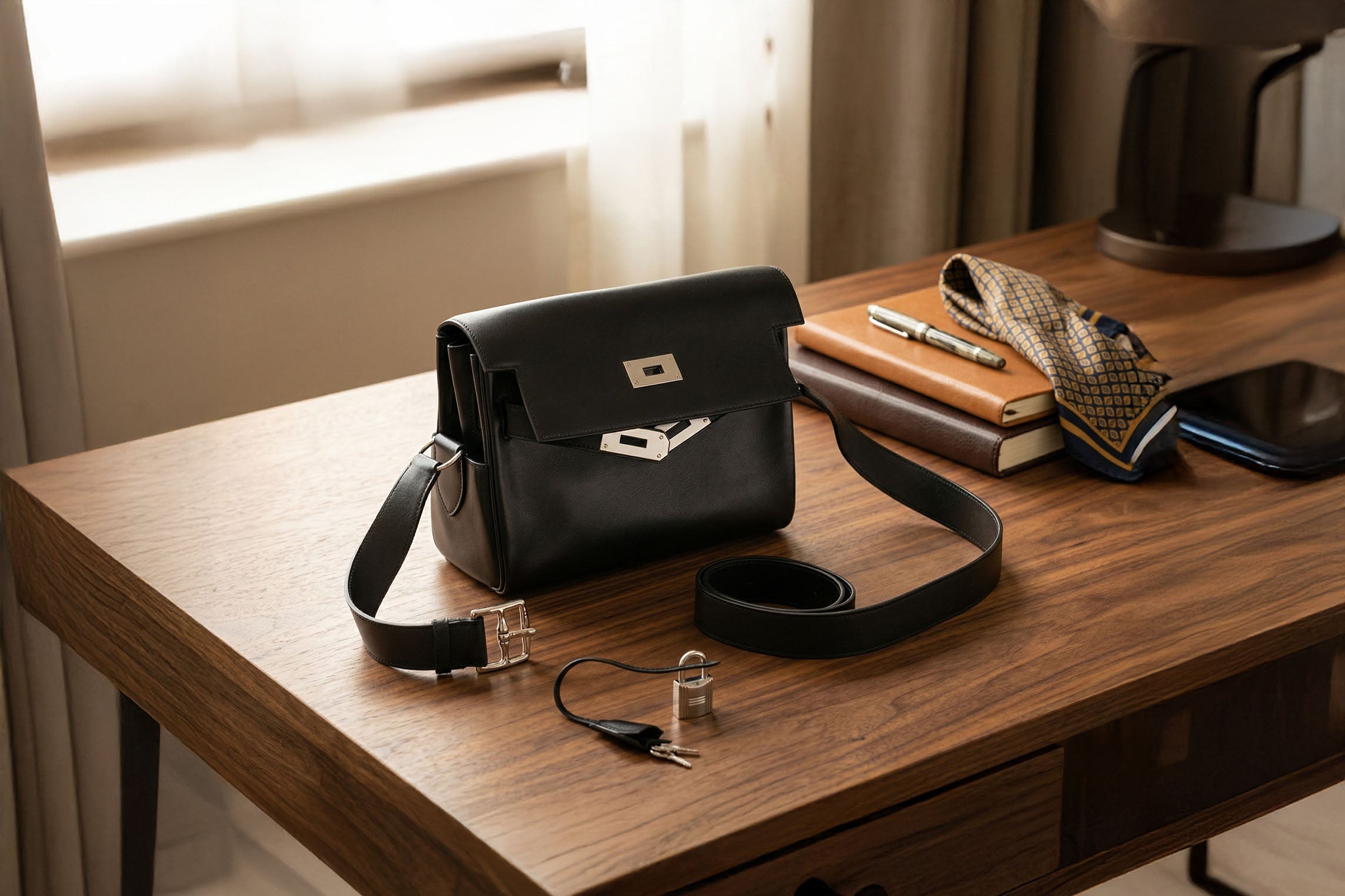
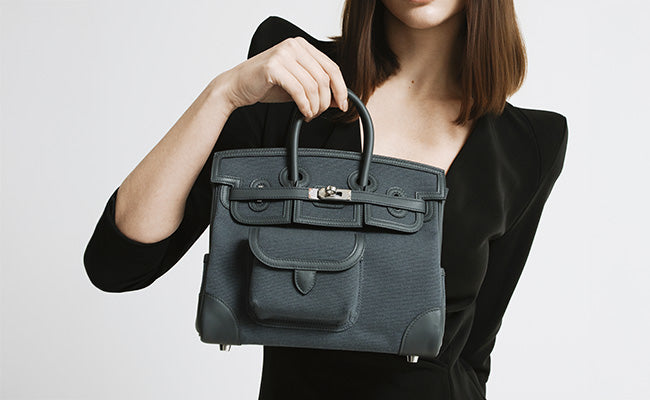


Why Certain Hermès Bags Command Instant Buyer Interest in Luxury Resale
TL;DR
Buying a Hermès bag on consignment can be a smart move, but only if you evaluate risk before you fall for the listing. The strongest buyers look beyond the headline photos and ask harder questions about authenticity, condition, provenance, seller credibility, return terms, and long-term desirability. A Hermès bag on consignment should come with enough detail for you to understand what you are buying, how it has been cared for, and whether the price reflects its real condition. The goal is not simply to secure a sought-after bag. It is to buy with confidence, protect value, and avoid expensive surprises later.
Check out our Hermès collection and Birkin bags!
Buying a Hermès bag on consignment opens the door to sought-after styles without relying entirely on boutique access, but it also introduces risks you do not face when buying directly from Hermès.
Hermès itself notes that the Kelly, Birkin, and Constance handbags are sold exclusively in Hermès stores, which helps explain why the secondary market matters so much to collectors and first-time buyers alike.
The smartest buyers do not treat consignment shopping like a simple luxury purchase. They approach it like due diligence. Authenticity, condition, provenance, seller transparency, and after-sale protection all matter.
Here’s an inside look at how informed buyers judge these factors before deciding, so you can clearly see what decreases risk, what raises it, and which specifics make the real difference.
Key Takeaways
- Prioritize authenticity, provenance, and seller credibility before style preference or perceived deal value.
- Read condition with discipline by focusing on wear, materials, hardware, and any missing accessories or repairs.
- Choose resale sources with clear authentication standards, transparent policies, and enough documentation to support buyer confidence.
Foundations of Hermès Consignment Buying
Before you assess a listing, it helps to understand why Hermès bags attract so much attention in the first place and why certain risks feel more consequential in this category than they do elsewhere.
Why the secondary market attracts smart buyers
Hermès built its reputation around craftsmanship, artisanal transmission, and objects designed to last. Official Hermès materials also position Birkin, Kelly, Evelyne, Constance, and Picotin among the house’s iconic bag lines, which helps explain why demand stays strong across both boutique and resale channels.
That allure is exactly why risk matters. On the secondary market, you are not simply deciding whether you like a bag. You are deciding whether the listing tells the whole story. A smart buyer wants to know how the bag entered the resale market, whether the description reflects reality, and whether the source has earned the right to be trusted.
Hermès bags reach the consignment market for all sorts of legitimate reasons. Some owners rotate out pieces they no longer use. Others resell gifts, estate pieces, or past boutique purchases. None of that is inherently concerning. What matters is whether the bag comes to market with enough transparency for you to evaluate it properly.
Understanding models and what drives attention
Different Hermès models carry different expectations, which affects how buyers think about risk. Official Hermès descriptions frame the Kelly as a structured icon available from larger formats to mini sizes, the Evelyne as a lighter, more relaxed bag, and the Constance as a practical yet timeless city style.
That distinction matters on consignment. A buyer considering a Birkin or Kelly may care deeply about structure, hardware, and completeness of accessories. Someone looking at an Evelyne may focus more on strap condition, casual wear, and practicality. The risk profile changes with the model. So does the definition of what feels acceptable.
In other words, not every Hermès bag should be evaluated through exactly the same lens. A rare or highly coveted model can make buyers more emotionally vulnerable to overlooking flaws. That is often where mistakes begin.
Assessing Authenticity and Provenance
If you want to avoid the most expensive mistakes, you need to evaluate both the bag itself and the story that comes with it. Physical details matter. Paperwork matters. The seller’s willingness to provide both matters even more.
Recognizing provenance and documentation
Provenance is the bag’s backstory. It includes where it was purchased, how ownership changed over time, and what documentation still exists. Original packaging can be helpful, but it is not proof on its own. A dust bag or box may support a listing, yet neither should replace a serious review of the bag itself.
The strongest documentation usually includes an original Hermès receipt or invoice, service records, or prior written authentication reports. Those details help the buyer cross-check the narrative against the bag’s visible features and production era. When provenance is clear, risk drops. When it is vague, your margin for caution should rise.
Before buying, it is reasonable to ask for:
- Any original receipt or invoice that remains with the bag
- Dust bag, box, clochette, lock, keys, strap, or other original accessories, if applicable
- Any Hermès service or repair history
- Any prior written authentication or appraisal documentation
Missing documentation does not automatically mean a bag is problematic. It does mean you should rely more heavily on the physical evaluation, the credibility of the seller, and the consistency of the listing as a whole.
Deciphering third-party authentication
Third-party authentication can strengthen buyer confidence, but not all authentication is equally persuasive. A serious report should feel specific, recent, and tied to the actual bag in front of you. Vague reassurance is less useful than a document that addresses details such as stamps, hardware, construction, and overall consistency.
Smart buyers pay attention to who performed the authentication, whether the report is detailed, and whether the opinion is backed by any form of guarantee. A seller who relies on professional authentication and is comfortable sharing documentation usually inspires more confidence than one who offers only a general promise that the bag is real.
Authentication should also be read alongside the listing itself. If a report says one thing but the photographs, accessories, or condition notes suggest something else, do not ignore the mismatch. Confidence comes from alignment, not from paperwork alone.
Warning signs and common red flags
Some red flags are subtle. Others are not. A listing that avoids close-up photos, stays vague about condition, or becomes evasive when asked basic questions deserves extra caution. The same goes for a bag that seems inconsistently described across title, images, and seller notes.
When examining the bag itself, buyers typically pay close attention to stitching consistency, leather feel, edge finishing, hardware engraving, stamp clarity, and overall symmetry. You are looking for coherence. If several details feel off at once, that is more concerning than one isolated quirk on an older bag.
Common warning signs include:
- Photos that avoid corners, interior, or hardware close-ups
- Descriptions that sound broad but say very little
- Stamps or engravings that appear inconsistent, shallow, or awkwardly placed
- Leather that feels unusually stiff, coated, or synthetic
- Missing accessories without any explanation
One oddity may call for a second look. Several at once should slow you down considerably.
Evaluating Condition, Craftsmanship, and Materials
Condition affects more than appearance. It shapes value, future wear, and how confident you should feel about the asking price. Smart buyers do not read condition labels casually. They test them against the evidence.
Reading condition reports realistically
Terms like pristine, excellent, very good, and good can be useful, but they should never replace close scrutiny. One seller’s “excellent” can still include softened corners, hairline hardware scratches, interior marks, or handle darkening. A condition label is only the starting point.
Look closely at high-stress areas. Corners, base, handle attachments, closure points, strap hardware, and the interior base usually reveal more than front-facing photos do. Ask how the bag was stored. Ask whether the bag has been repaired, refurbished, conditioned, or cleaned. Those details may not be deal breakers, but they should shape how you interpret both condition and price.
It is also worth paying attention to what is not shown. Natural light, multiple angles, and close-up images tend to build trust. Stylized photos alone do not.
Understanding craftsmanship and hardware quality
Hermès is closely associated with artisanal leatherwork and careful finishing, which is why buyers tend to scrutinize construction details so closely. Official Hermès materials repeatedly emphasize craftsmanship and transmission of savoir-faire, and that context is part of what makes construction quality so important in resale evaluation.
In practice, buyers usually inspect stitching regularity, edge paint, handle shape, engraving sharpness, lock and clasp action, and the way hardware sits against the leather. Wear is normal on a used bag.
Inconsistency is what deserves closer attention. If the hardware finish looks uneven, the edges appear overly thick or newly redone, or the structure seems at odds with the model, more questions are justified.
Hardware should also make sense in context. A small amount of surface scratching may be expected on a pre-owned piece. More serious plating wear, tarnish, loose elements, or mismatched parts should be clearly disclosed and reflected in the price.
Leather types and precious skins
Hermès states that it uses full-grain leather and that natural features such as wrinkles, veins, and pores remain visible. The house also notes that leather changes, softens, and gains patina over time. That is helpful context for resale buyers, because natural evolution should not automatically be mistaken for poor quality.
Still, different leathers age differently, and that should shape your expectations. Some buyers prefer more structured finishes. Others are comfortable with a softer silhouette and a more visible patina.
Togo, Epsom, Clemence, and other familiar Hermès leathers do not wear in exactly the same way, so condition needs to be judged in relation to the material rather than in the abstract.
For precious skins, caution should increase. Hermès identifies crocodile, alligator, lizard, and ostrich among its precious leathers, each with distinctive natural texture. On consignment, those materials demand a more exacting review of surface condition, dryness, repairs, and supporting documentation.
A buyer does not need to be alarmist. But a buyer should be realistic. The more delicate or more expensive the material, the less room there is for vague answers.
Navigating Model, Size, and Long-Term Desirability
Market insight matters most when it helps you buy more clearly, not more emotionally. Model, size, colour, and hardware all influence desirability, but none of them should be treated as a shortcut that overrides authenticity or condition.
Choosing between Birkin, Kelly, Evelyne, and other models
The Birkin and Kelly tend to attract the most scrutiny because they sit at the center of Hermès collecting culture. That can be helpful, since strong buyer awareness often means more comparative information is available. It can also make buyers overly eager, especially when a familiar size or colour appears at what seems like a compelling price.
Other models call for a slightly different mindset. A Constance may appeal to someone seeking structure and everyday polish. An Evelyne may attract a buyer who values ease and practical wear. The right purchase is not always the most famous one. It is the one whose condition, price, and intended use align cleanly.
That is why smart buyers ask a simple question before they buy: do I want this because it is the right bag, or because it is the chance to own a famous bag? The answer often changes the level of risk you should accept.
How size, colour, and hardware affect demand
On the secondary market, certain combinations generally feel more liquid than others. Classic neutrals, familiar sizes, and traditional hardware finishes often appeal to a broader pool of buyers. More unusual combinations can still be desirable, but they may require stronger personal conviction because the resale audience may be narrower.
This is where discipline matters. A beautiful bag with a highly specific colour, an uncommon hardware pairing, or a size that does not suit your lifestyle can still be the wrong buy if you are relying on future flexibility. Smart buyers do not assume every Hermès bag will be equally easy to live with or equally easy to resell.
In practical terms, the safest purchase is usually the one that works for you first and the market second. When both line up, risk tends to feel more manageable.
Selecting a Trusted Resale Source and Protecting Yourself
Where you buy matters almost as much as what you buy. The strongest listing means less if the seller is opaque, the policy is restrictive, or the post-sale support disappears the moment payment clears.
Established resellers versus auction houses
Established resale businesses and auction houses operate differently, and that affects buyer risk. A curated reseller may offer more standardized grading, more detailed photography, and clearer customer service. An auction house may offer access to unusual pieces, but the buyer often assumes more responsibility for interpreting condition, timing, and final sale terms.
Neither route is automatically wrong. What matters is whether the source is transparent about authentication, condition reporting, commissions, fees, shipping, and return eligibility. Buyers tend to do best when they read the platform as carefully as they read the bag.
Return policies, payment protections, and hidden costs
Return language deserves careful attention. A policy may sound reassuring until you notice that returns are limited to authenticity disputes, subject to a very short window, or dependent on the item remaining in precisely the same state and packaging. That may still be workable, but only if you understand it before purchase.
Payment method matters too. Buyers generally feel more protected when the transaction provides a clear record and a formal path for dispute resolution. Hidden costs should also be reviewed early. Shipping, insurance, duties, taxes, currency conversion, and any follow-up authentication can change the true cost of the bag more than expected.
The goal is simple: eliminate surprises while you still have the power to walk away.
Aligning the bag with lifestyle and long-term desirability
A Hermès bag is not just a collectible object. It is a physical item that must fit your life, your storage habits, and your tolerance for maintenance. A structured bag that looks perfect in photos may be less compelling if you rarely carry it, worry constantly about wear, or do not have a realistic plan for storing it properly.
This is especially important for delicate leathers, lighter shades, and precious skins. Hermès itself advises that leather evolves over time and should be protected from humidity, prolonged light, and extreme heat. Buyers who understand those realities tend to make better long-term decisions.
Smart risk evaluation is not about becoming fearful. It is about making sure the bag you buy is one you can enjoy, care for, and feel good about owning after the excitement of the purchase fades.
Final Thoughts
The smartest Hermès consignment buyers do not chase certainty where certainty is impossible. They reduce risk by demanding clarity, reading details carefully, and choosing sellers and bags that can stand up to scrutiny.
If you are considering a Hermès purchase on the secondary market, Rome Station can help you approach it with a more discerning eye and a more confident standard.
Fact Check and Data Sources
Where this article refers to Hermès craftsmanship, iconic bag lines, leather care, precious leathers, and boutique availability for certain models, those points are grounded in official Hermès materials. Market commentary about desirability, liquidity, and buyer behavior is interpretive and should be read as informed guidance rather than a guarantee of future resale outcome.
- Leather Care Instructions and Care and Repair FAQ for official guidance on leather behavior and care.
- Hermès Precious Leather for official references to precious skins and store availability of select handbag lines.
Frequently Asked Questions
What should I ask for before buying a Hermès bag on consignment?
Ask for clear photos in natural light, a full condition report, any original receipt or service history, and a written explanation of authentication. You should also confirm what accessories are included and what the return terms actually cover.
Is original packaging enough to make a bag feel safe to buy?
No. Boxes, ribbons, and dust bags can be helpful supporting details, but they are not proof of authenticity. They should strengthen a listing, not carry it.
How much should missing accessories affect my decision?
It depends on the model and your goals. Missing keys, straps, clochette pieces, or dust bags may not make the bag unbuyable, but they can affect completeness, price logic, and future resale appeal.
What parts of the bag deserve the closest condition review?
Focus on corners, base, handle attachments, closure hardware, interior base, strap hardware, and any area where the leather folds or rubs. These zones usually reveal wear more honestly than front-facing photos do.
When is it smarter to walk away from a listing?
Walk away when the seller avoids direct questions, the photographs leave out important angles, the condition description feels inconsistent, or the documentation and physical details do not align. On consignment, hesitation is often cheaper than regret.
Love Hermès? See More from Rome Station
Add us to your Preferred Sources on Google to see our newest Hermès guides and insider tips first.