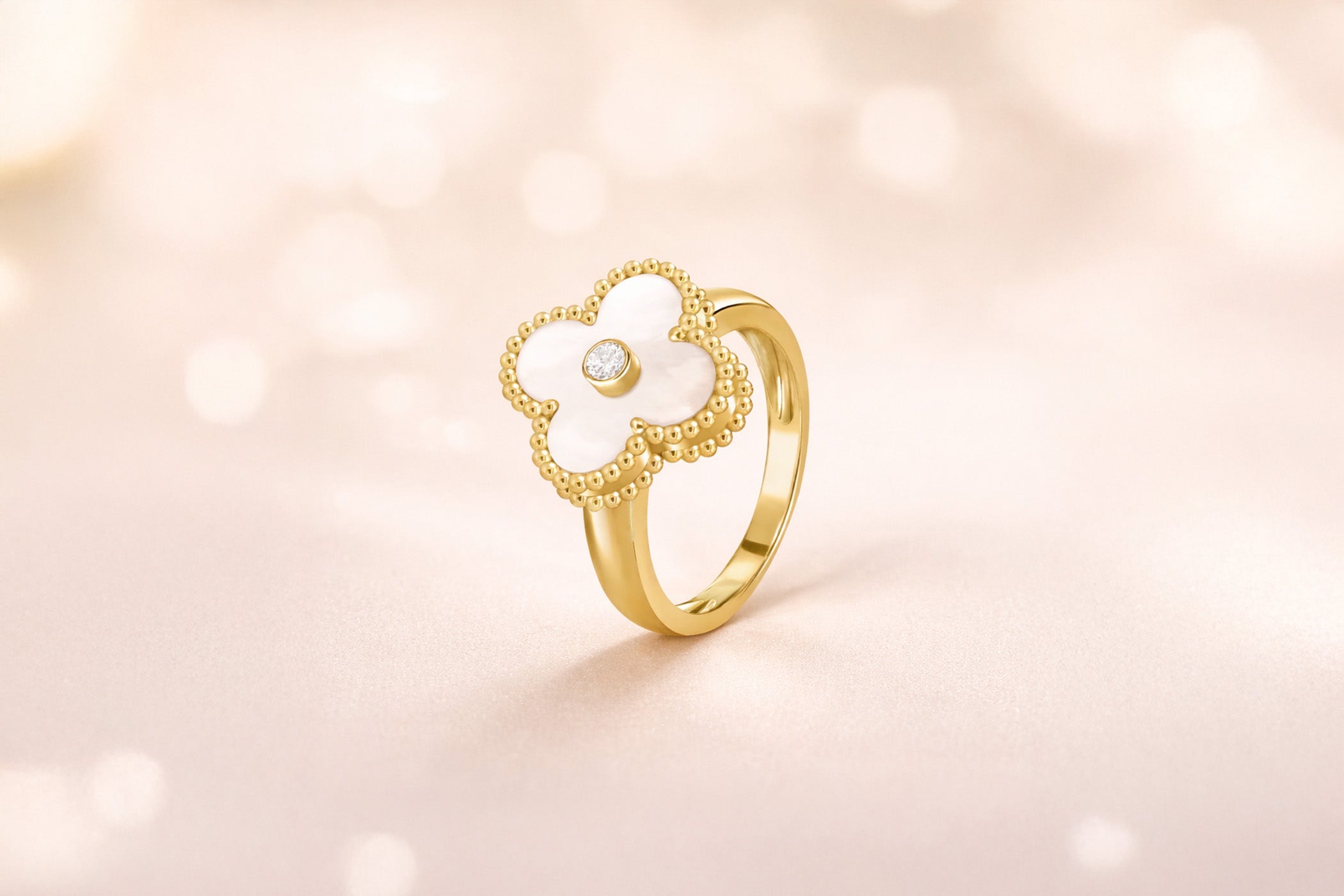



What Natural Aging Looks Like in Authentic Van Cleef Jewelry
Check out our Van Cleef & Arpels collection!
Authentic Van Cleef & Arpels pieces don’t stay flawless forever, and honestly, that’s part of their charm and a clue to their authenticity. Real Van Cleef jewelry ages with a gentle patina on the gold, softened beaded edges, and those honest, lived-in scratches that line up with years of actual wear. Fakes are usually either suspiciously perfect or weirdly beat up in ways that just don’t add up. Collectors sometimes panic when their vintage Alhambra looks a bit worn, worried they’ve bought something damaged, but those little marks are often the best evidence you’ve got the real deal.
The way Van Cleef’s materials age tells its own story. Mother of pearl gets a softer glow, yellow gold deepens and warms, and even the clasps wear in ways that make sense for how people use their jewelry. If you know what real, decades-old wear looks like, it’s a lot easier to spot a genuine 1970s piece compared to a modern fake that’s been artificially roughed up.
Let’s dig into the specific aging markers you’ll see on authentic Van Cleef, including how gold shifts color, how chains pick up tiny kinks, and what old packaging and paperwork actually look like after thirty years in a drawer. If you’re shopping vintage or just worried about your own collection, these details really do matter.
Key Takeaways
- Authentic wear looks like soft gold patina, muted gemstone shine, and use patterns that make sense for how the jewelry’s worn
- Vintage pieces show hand-finishing quirks and construction details that fakes can’t quite nail
- Clasps, chains, and beaded edges wear naturally, while counterfeits tend to miss those details or fake them badly
Fundamental Markers of Authentic Van Cleef & Arpels Jewellery
There are three things you’ll typically find on an authentic Van Cleef & Arpels piece: the brand’s full name or the VCA abbreviation, a 750 or Au750 stamp for 18K gold, and a unique serial number. These are placed in specific locations depending on the piece, with sharp, precise engraving that’s hard to fake.
Signature Hallmarks and Branding
Every real Van Cleef & Arpels piece carries either the full “Van Cleef & Arpels” signature or just “VCA.” If you see only “Van Cleef,” that’s a red flag.
The VCA logo uses a clean, even font. We’ve handled hundreds of these, and the engraving depth is consistent. Letters feel crisp, not shallow or stamped.
A lot of pieces have the French maker’s mark too: a lozenge-shaped stamp with VC and A beside the Place Vendôme column. It’s a nod to Paris and a detail fakes often get wrong.
The 750 or Au750 stamp sits with the signature, confirming the piece is 18K gold. Van Cleef does not use 14K or 10K for its fine jewelry. If you spot marks like 585 or 417, walk away.
Serial Numbers and Engraving Quality
Van Cleef & Arpels pieces carry a unique serial number. These help trace the piece’s history and can be checked at Van Cleef boutiques or authorized service centers.
Engraving quality separates the real from the fake. On authentic pieces, serials are deeply engraved with even depth and spacing. The precision is impressive.
Fakes usually have shallow, uneven numbers that look pressed, not engraved. Characters might be crooked, uneven, or the wrong height. Genuine VCA engraving keeps a straight line and uniform thickness.
For pre-owned pieces, there may be a certificate of authenticity. But the hallmarks and engraving quality are still among your best first checks.
Hallmark Placement by Jewellery Type
Hallmarks go in specific spots, depending on the piece. Knowing where to look saves a lot of guesswork.
Rings have hallmarks inside the band, protected from heavy wear but still easy to check.
Necklaces and bracelets place their marks on tiny tags near the clasp or right on the clasp ring. Alhambra pieces often have the VCA stamp, Au750, and serial number on a small plate next to the clasp.
Earrings stamp their hallmarks on the closure, sometimes split between both clips. You’ll find the VCA, Au750, and serial on the post or clip back.
Placement should look intentional and should not disrupt the design. If you see hallmarks in odd places or breaking the visual flow, it’s smart to get a professional opinion.
Natural Ageing of Van Cleef & Arpels Materials
Real Van Cleef pieces age in ways that make sense. They pick up a soft patina, not random damage. The metals mellow, stones change a bit on the surface, and signature details like the Alhambra motif wear in ways that match how they’re made and used.
18k Gold and Platinum: Patina, Wear, and Shine
Van Cleef uses 18k gold (yellow, white, rose) or platinum marked pt950. These high-purity metals age in ways you can spot.
18k gold gets a soft patina over the years, especially on raised edges. Yellow gold shows the most change, turning warmer and a bit muted as tiny scratches scatter the light. Rose gold can darken as the copper oxidizes. White gold stays white longer but can show a slightly warmer tone where rhodium plating wears down.
The polish on real Van Cleef dulls a bit in high-contact spots, like bracelet links, pendant backs, and earring posts. The beaded edges keep their shape but lose some sharpness.
Platinum ages differently. It picks up a greyish patina faster but does not scratch as deeply as softer metals. Real pt950 pieces can end up with a frosted look from fine scratches, not deep gouges. Collectors often like this because it shows the piece has been worn and loved.
Gemstones: Surface Changes and Setting Maturity
Van Cleef uses stones like malachite, carnelian, turquoise, and tiger eye. These are softer than diamonds, so they can show wear sooner.
Malachite (hardness 3.5-4) gets fine scratches and can lose some shine. The green bands stay, but high spots dull. Carnelian and agate (both harder, 6.5-7) hold polish longer. Turquoise is more fragile and porous. It can shift in color or show cracks if exposed to oils, heat, or harsh chemicals.
Mother-of-pearl ages in its own way. The shine can develop fine lines or slight discoloration where it meets the metal, but this happens slowly and is not the same as sudden cracks from impact.
Stone settings on real Van Cleef should remain secure, even as pieces age. Bezels on Alhambra motifs can develop tiny gaps as the gold compresses and relaxes over time. Prong settings on diamond pieces can wear down at the tips but should still hold stones firmly. Sometimes you’ll see polish loss on prongs where a jeweler has retipped them. That’s maintenance, not automatically a flaw.
Motif and Prong Aging
The Alhambra motif picks up wear that’s helpful for authentication. The beaded gold border gets rubbed down where it touches skin or clothes. If someone wore it a lot, all four petals will show it. On a bracelet, the wear can be uneven, matching how it sits on the wrist.
Flip the motif over and you’ll see more clues. Real Van Cleef backs are smooth and can develop an even patina. The signature and serial number should remain readable, though they can soften slightly with time. Fakes often have wear patterns that look forced or inconsistent with real use.
Prong settings in Magic Alhambra and other diamond pieces can round off at the tips as they age, but the stones should stay secure. Sometimes there’s a bit of gold compression at the base from retipping. That’s part of the piece’s story.
Clasps on bracelets and necklaces can loosen slightly with use but should still function properly. Jump rings might get slightly out of round from years of movement. These changes can be normal signs of long-term wear.
Recognizing Age in Alhambra and Frivole Collections
The Alhambra and Frivole lines develop their own personalities over time. Aging can tell you a lot about authenticity. You can spot real wear in the way surfaces change, motifs evolve, and how each collection’s quirks show up after years.
Surface Texture and Patina in Alhambra Pieces
Alhambra pieces pick up a natural patina on their 18k gold bezels over time. The mirror polish on new pieces softens to a warmer, more matte look. It does not stay blindingly shiny forever.
Those gold beaded edges show some of the most obvious age. The tops of the beads get micro-wear, while the dips between them often stay shinier. This uneven patina is tough to fake and can be a strong sign you’re looking at the real thing.
Mother-of-pearl, onyx, and other stones age differently. Older mother-of-pearl can develop fine surface lines or a bit of yellowing at the edges. That can be normal aging, not automatically damage.
Gold chains on Alhambra bracelets and necklaces can wear at friction points, especially near the clasp. Authentic pieces show wear that matches how they’re worn, like right or left wrist, rather than random scuffing.
Evolution of the Alhambra Motif Over Time
Van Cleef’s Alhambra collection has stayed pretty consistent since 1968, but subtle changes can help date pieces. The original Vintage Alhambra sticks to classic proportions, Sweet Alhambra uses smaller motifs, and Magic Alhambra goes larger.
Early pieces from the 1970s and 80s often show slightly chunkier bezels and more pronounced beading than many modern pieces. The quatrefoil shape remains, but manufacturing and finishing can vary by era.
Serial number styles and placement can vary over the years. Older Alhambra pieces may show different formats or placements than newer ones. The VCA or Van Cleef & Arpels stamps also vary in font and size depending on the era.
Stone selection and matching can differ by period. Older pieces sometimes show more natural variation in stones, like tiger’s eye or malachite, than what buyers may expect from newer production.
Frivole Collection: Ageing and Distinct Features
Frivole’s mirror-polished gold and curved, heart-shaped petals age a bit differently. The big, shiny petals pick up micro-scratches all over, especially on high points. Authentic pieces show scratches in multiple directions, not a perfectly uniform sanded look.
Frivole’s pavé diamond settings age in their own way. The tiny prongs that hold the stones can wear down slightly, and the metal between stones can look softer, while the diamonds stay bright. That mix of aged metal and sparkly stones can be a good sign the piece has been worn for years.
The moving parts, like hinges in earrings or bracelets, pick up wear that can slightly change how the petals drape and move. These subtle changes are difficult for fakes to replicate convincingly.
Jewellery Construction: Chains, Clasps, and Links with Age
Real Van Cleef pieces show their age in the details. Chains, clasps, and links all develop wear that’s really tough to fake. Years of use leave their mark in ways that don’t look random or forced, just the kind of honest aging you see on jewelry that’s actually been loved and worn.
How Real Chains and Links Show Use
Van Cleef chains can take on a relaxed, lived-in feel after years of wear. Movement at each link smooths and polishes the metal, so the chain often drapes more fluidly than a brand-new one.
You’ll spot genuine wear as a soft, natural polish on the outside of links, where they brush against skin and fabric. The insides typically look less worn, creating subtle contrast. Replicas often miss this. Gold chains can also show faint compression where links press together over time.
Van Cleef’s chain construction is designed to be durable, so links should keep their shape over time with normal wear and care. You generally should not see wildly stretched jump rings or misshapen links on a well-cared-for authentic piece. The gauge and shape should look uniform from end to end.
Authentic chain characteristics:
- Even, gradual patina on exposed areas
- Smooth pivots where links rub together
- Consistent link alignment all the way through
- Slight shine at spots that see the most contact
Clasps: Signs of Authentic Wear vs. Replicas
Van Cleef clasps can age gracefully. The spring mechanism should stay smooth and hold tension, unlike many replicas that quickly get floppy or stiff.
Check the clasp tongue for real use. On authentic pieces, you can find a polished spot where the tongue slides in and out, while the clasp still feels precise. Inside the clasp box, the metal can get gently burnished where the tongue makes contact.
Even with age, Van Cleef hallmarks inside clasps should remain readable. Replicas often have shallow stamps that blur quickly or look oddly aged.
Look at where the clasp is soldered onto the chain. Authentic joints should look neat and seamless. Poor replicas can show messy soldering, gaps, or odd discoloration.
Motif Connections and Joint Wear
Van Cleef’s clover motifs connect with carefully made jump rings and joints. Over years, the connections can loosen a touch so the motifs move naturally, but they should not look floppy or broken.
Motifs should hang in a smooth, even pattern, even as the piece gets older. Real Van Cleef bracelets and necklaces should not twist or dangle awkwardly because the attachment points were designed for movement from the start.
Stone settings at connections tell their own story. The metal bezels around stones in Alhambra pieces can show tiny compression marks where motifs bump into each other during wear. These marks should make sense if you picture how the jewelry moves.
Replicas often get the joints wrong. Motifs might hang at odd angles, or the connections show wear that does not match how the piece should naturally age.
Aged Packaging and Documentation: Authentic Traits
Old Van Cleef & Arpels pieces from the 1980s to early 2000s can come with packaging and paperwork that have aged in their own way. Knowing what that looks like can help you spot the real thing and weed out modern fakes trying too hard.
Original Packaging Materials and Signs of Age
The classic sage green boxes develop their own patina over time. The velvet or suede inside can fade where it’s been exposed to light, usually around the edges and under the lid. The black velvet lining often shows little dents from where the jewelry sat for years. Those marks should roughly match the shape and weight of the piece.
Older boxes can fade evenly. The green may turn lighter or slightly yellowed, but it should look like gradual aging, not blotchy staining. The cardboard can soften, and you might see gentle wear at the corners.
Older VCA pouches can pill and soften with use. Drawstrings can fray at the tips, and the fabric can feel broken-in. Printing on bags and boxes should show fonts and logos that fit the era, so a 1990s piece should not come with packaging that clearly uses a newer logo style.
Certificate and Paperwork: Wear Patterns
Van Cleef’s older certificates and receipts can have a distinct feel. Paper stock from different eras can vary in texture and weight. Natural yellowing often starts at the edges and can spread inward after decades. Ink usually holds up, though it can fade if left in sunlight.
Authentic certificates often show worn-in fold creases if stored that way, not sharp, fresh folds. Paper can get slightly more brittle over time but should not look artificially aged.
Look for details like old phone numbers, outdated boutique addresses, and warranty terms that match the era. The formatting, fonts, and paper quality should line up with what Van Cleef used for that period. Fakes often use modern templates with backdated info that does not add up.
Common Age-Related Concerns vs. Signs of Fakes
Real Van Cleef pieces pick up certain patina and wear marks over time. Counterfeits, on the other hand, tend to show manufacturing flaws, or fake aging that looks inconsistent. Knowing the difference protects you from expensive mistakes.
What Time Should (and Should Not) Change
Van Cleef & Arpels jewelry ages in predictable ways. Gold can develop a gentle patina and pick up small scratches from years of wear. Stones should stay secure, though prongs can thin slightly if the piece has been polished over the years.
Key features should stay true even as pieces age. Hallmarks should remain readable and in the correct location. Enamel can show fine crackling on some older pieces, but color should remain stable when properly cared for.
What shouldn’t change:
- Where hallmarks are and how they’re executed
- Stone quality and how precisely they’re cut
- Clasp design
- Weight and metal content
- Overall proportions and symmetry
Fakes often show “aging” where it doesn’t make sense. Sellers might add patina to newer pieces or scratch them up in ways that do not match real wear patterns.
Differences Between Natural Wear and Counterfeit Flaws
Genuine wear shows up on clasps, the backs of pendants, and chain links, places that rub against skin or clothing. These marks build up slowly and look consistent. An authentic Alhambra necklace can have soft smoothing on the clover edges and light scratches on the gold, not deep gouges or rough patches.
Fake Van Cleef pieces often give themselves away with sloppy details. You might see misaligned settings, stones that do not sit evenly, or rough metal edges. Hallmarks are often a dead giveaway under magnification.
Counterfeit Alhambra pieces can have stones that sit unevenly or bezels with gaps. Real ones should look clean and precise, even with age. Some fakes try to mimic wear by roughing up the edges, but you may spot casting marks underneath, something you should not see on authentic finishing.
Check proportions. Authentic pieces keep measurements consistent, while counterfeits can be off by a millimeter or two from one motif to the next.
Professional Authentication and Resale of Aged Van Cleef
Getting a professional to authenticate Van Cleef & Arpels pieces is crucial, especially with older jewelry. Natural aging can hide problems or look like damage to the untrained eye. Experts know what’s desirable patina and what’s deterioration, and they can tell you if restoration will help or hurt the value.
Using Authentication Services for Pre-Owned Pieces
We always suggest professional authentication for any pre-owned Van Cleef & Arpels, especially when it shows signs of age. Certified gemologists and brand experts check hallmarks, metal content, gemstones, and construction, details counterfeiters rarely get right.
Reputable jewelry dealers may use tools like XRF scanners to confirm metal purity. Van Cleef uses 18K gold or platinum for its fine jewelry, not sterling silver. Diamond quality is also generally high, and cutting standards are typically strong, but authentication should still rely on construction, hallmarks, and stone setting details rather than a single claim.
Authenticators also look at hallmarks for correct fonts and stamps like “VCA Au750.” Older pieces may show “Van Cleef & Arpels” in full instead of “VCA,” and experts know which periods used which. Worn engravings can be fine, but spelling mistakes or half-stamped names like “Van Cleef” are warning signs.
For collectors of high-end jewelry, authentication adds peace of mind and helps with resale. Certificates of authenticity can make transactions smoother and boost buyer confidence.
Evaluating Value and Collectability Over Time
Pre-owned Van Cleef can go up in value if it shows the right kind of aging and has a clear history. Collectors often like vintage Alhambra pieces with honest patina on the gold or slight natural changes in stones like onyx or malachite.
What makes a piece more collectible:
- Original, consistent wear, not over-polished
- Discontinued or limited editions
- Unusual materials like tiger’s eye or rarer stones
- Clear hallmarks, even if gently worn
- Original papers and boxes
Van Cleef & Arpels jewelry is known for holding value strongly in the pre-owned market compared to many fine jewelry brands. The Alhambra motif, especially, stays popular year after year, and authenticated vintage pieces can sometimes command strong premiums.
Resale value comes down to honest condition. Light scratches and gentle dulling usually do not hurt much if you document them. But repairs with incorrect materials, swapped clasps, or replaced stones can hurt collectability, even if the piece functions better.
When to Seek Maintenance or Restoration
We recommend going to Van Cleef & Arpels for service if something’s broken or unsafe, but cosmetic aging is usually best left alone. Their workshops know how to fix things without erasing what makes vintage pieces special.
Get maintenance for broken clasps, loose prongs, or weak chain links. Van Cleef’s techniques are specialized, and outside repairs can compromise original details.
Good reasons to restore:
- Safety issues (failing clasps, weak links)
- Major damage that affects structure
- Rhodium plating that’s fully worn through, if you want the bright white look back
- Missing stones that disrupt the design
Probably skip restoration for:
- Surface scratches that match age and wear
- Natural gold color changes
- Slight stone cloudiness that fits the piece’s age
- Lightly worn hallmarks that remain readable
Some buyers want untouched originals, even if they look aged. Others prefer pieces that look close to new. Knowing your audience matters before you sell.
Frequently Asked Questions
Van Cleef & Arpels jewelry ages in ways that collectors should know, including gold patina, stone surface changes, and wear marks that tell a story. Figuring out what’s normal and what’s damage helps you buy and care for your pieces wisely.
How should I expect the patina to develop on Van Cleef & Arpels gold pieces over time?
18k gold takes on a softer, warmer shine as it ages. The high-gloss finish dulls a bit, replaced by a gentle glow from years of contact with skin.
Yellow gold from the ‘60s and ‘70s can look deeper and richer than newer pieces. That is not tarnish. It can come down to alloy variation and decades of natural surface oxidation.
White gold is different because of rhodium plating. Over time, plating can wear down, showing a slightly warmer tone beneath. That’s normal, and you can have it replated at Van Cleef & Arpels if you want the bright white look back.
Rose gold can darken a little with age, picking up a more coppery hue. The copper in the alloy naturally oxidizes, especially on pieces worn often.
What signs of wear are typical in older Van Cleef & Arpels pieces?
Clasps and closures usually show the most wear since they get used constantly. You might see smoother edges and a bit of play, but they should still function well.
Chain links pick up fine scratches and can drape a bit differently than when new. The beaded gold borders on Alhambra motifs sometimes flatten slightly where they rub against clothes or other jewelry.
Prongs and settings can wear down over years, especially on rings and bracelets. Claw tips and bezels can get smoother in pieces that have seen regular use.
The underside of jewelry often shows more wear than the top. Rings get visible marks on the shank, and pendant backs can show light scratches from contact with chains or fabric.
Can you point out the subtle changes in Van Cleef & Arpels gemstones due to natural aging?
Mother of pearl tends to mellow out as the years go by. Its iridescence can soften, and you might spot fine lines or a bit of surface crazing. That can be normal for this organic material.
Onyx can pick up tiny scratches from daily wear. The shine can fade a bit, but the deep black usually remains strong.
Turquoise and coral, both porous and often seen in vintage pieces, can absorb oils over time. Turquoise can shift or deepen in tone, and coral can look a bit richer and warmer.
Diamonds do not “age” in the same way, but they can collect oils and residue that dull sparkle. That is not aging, it is buildup, and careful cleaning can restore brilliance.
Natural pearls from older pieces can show changes in glow. Nacre can warm over time and show minor surface quirks.
Are there any hallmarks of age that actually enhance the value of Van Cleef & Arpels jewelry?
Hand-finishing marks and small, era-specific details in older pieces can support authenticity and craftsmanship, and collectors often value that.
A natural patina on gold can be a plus for many collectors. A 1970s Alhambra bracelet with a soft, lived-in glow can appeal more than a heavily polished piece, depending on buyer preference.
Wear patterns from actual use, especially on rare or discontinued designs, can add to the story. Mystery Set pieces from the ’50s and ’60s, for example, can be desirable with honest age to collectors who prioritize originality.
Vintage hallmarks and serial-number formats tied to specific decades can add interest. Period-correct French assay marks, like the eagle’s head on certain pieces, can also support the historical profile of an item.
What maintenance practices are key to preserving the natural beauty of Van Cleef & Arpels items?
Gentle cleaning goes a long way, like lukewarm water, mild soap, and a soft brush for gold and many stones. Avoid this approach for turquoise or pearls, which are more sensitive.
Every few years, it’s smart to get a professional checkup. Van Cleef & Arpels boutiques can inspect clasps, tighten settings, and catch issues early.
Storage matters. Keep each piece in its own soft pouch to reduce scratches, and store away from sunlight and major temperature swings.
Take jewelry off before swimming, cleaning, working out, or applying perfume. Chemicals and abrasion can do more harm than most people expect.
Maintenance depends on taste. Some people love aged patina and leave it alone, while others prefer occasional polishing. There’s no single right answer.
How do I distinguish between normal aging and damage in Van Cleef & Arpels jewelry?
Normal aging tends to show up as gentle, even changes across the whole piece. You’ll notice a soft patina developing and subtle wear in spots that naturally get touched, while the structure stays sound.
Damage stands out, like deep scratches, bent prongs, cracked stones, or a clasp that no longer stays shut. Those signs usually mean you should consult a jeweler.
A few surface scratches on gold are normal. But dents or dings that change the metal’s shape point to real damage. For mother of pearl, fine surface lines can be aging, while chips or sharp cracks are more concerning.
If a stone feels loose, that’s a red flag no matter the age. Stones should sit securely in their settings.
If you’re not sure, it’s smart to ask a certified appraiser or visit a Van Cleef & Arpels boutique. They can help you tell charming signs of age from issues that could affect value or wearability.
Love Hermès? See More from Rome Station
Add us to your Preferred Sources on Google to see our newest Hermès guides and insider tips first.