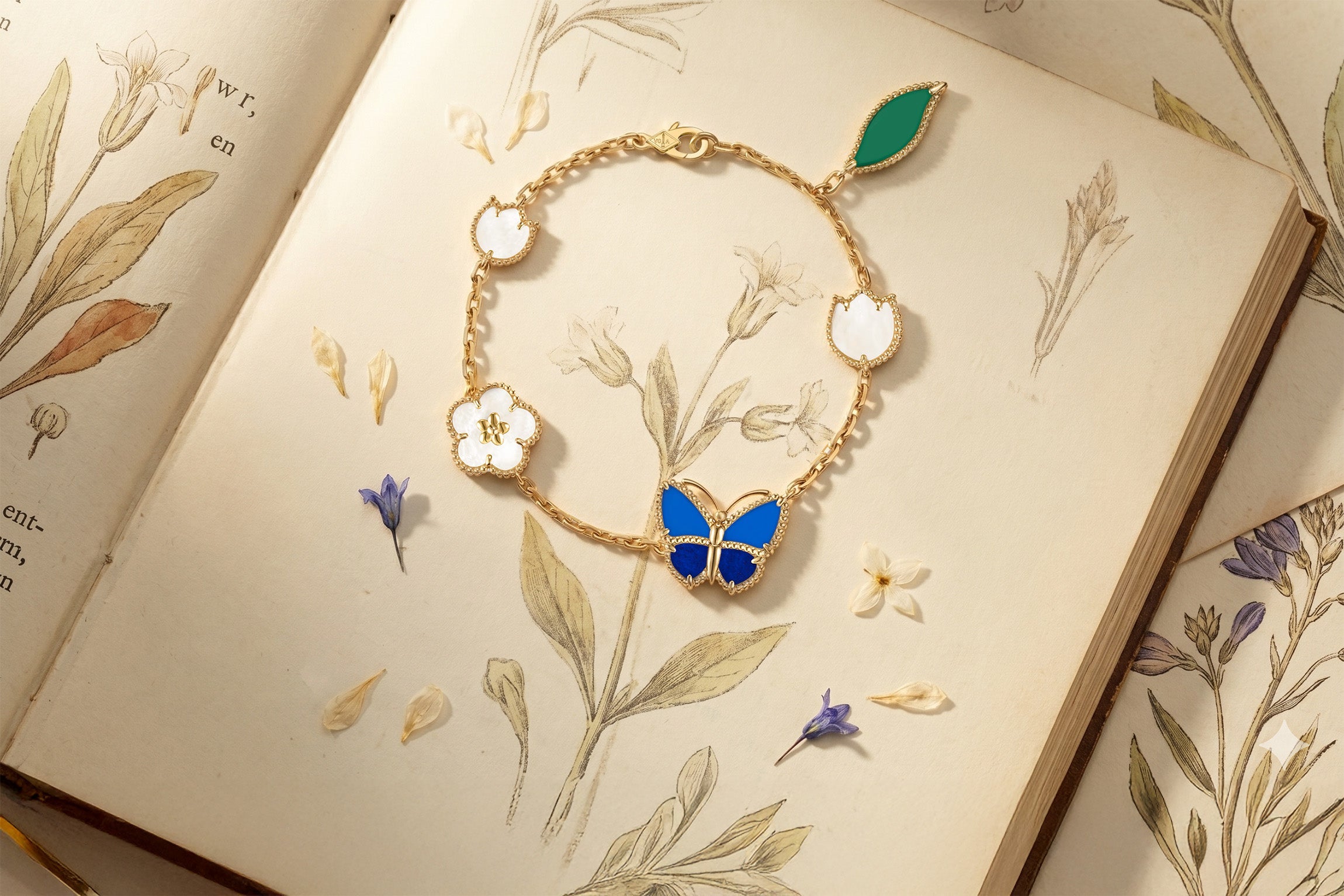



What Makes Van Cleef a Low-Risk Luxury Jewelry Purchase
TL;DR
Van Cleef & Arpels jewellery is often viewed as a low-risk luxury jewellery purchase because of its recognizable design language, strong craftsmanship, steady resale demand, and clear authentication markers. Signature collections like Alhambra, along with technical achievements such as the Mystery Set, help the brand stay desirable across generations. For buyers, the main pricing factors include collection, condition, material, documentation, rarity, and seller credibility. While no luxury purchase is risk-free, well-kept Van Cleef pieces from trusted sources tend to offer stronger confidence than trend-led jewellery with weaker resale recognition.
Check out our Van Cleef & Arpels collection!
Some luxury jewellery is bought for the moment. Van Cleef & Arpels is often bought with a longer view. For buyers comparing value, wearability, and future resale confidence, Van Cleef stands out as a low-risk luxury jewellery purchase because its designs are easy to recognize, its craftsmanship is highly regarded, and its best-known collections have remained relevant for decades.
Unlike trend-based jewellery that can fade quickly, Van Cleef’s signature motifs have kept buyers interested over time. The Alhambra collection is a strong example. Since its debut in 1968, the four-leaf clover motif has remained one of the maison’s most recognizable designs.
This guide explains what makes Van Cleef & Arpels jewellery appealing to careful buyers, how condition and documentation affect pricing, and which factors support long-term confidence in the resale market.
Key Takeaways
- Van Cleef & Arpels jewellery benefits from timeless design, strong brand recognition, and respected craftsmanship.
- Condition, material, documentation, rarity, and collection type are the main factors that shape buyer risk and resale confidence.
- Buying authenticated Van Cleef jewellery from a trusted resale source can help reduce uncertainty around authenticity, pricing, and long-term value.
Featured Products


Understanding Van Cleef & Arpels Jewellery Value
Van Cleef & Arpels keeps a strong resale position through steady brand recognition and consistent design across collections. Value comes from the maison’s technical reputation and the ongoing demand for signature motifs that stay relevant for decades.
Market Recognition and Brand Prestige
Van Cleef & Arpels is one of a few jewellery houses where the brand name itself can support resale confidence. With a long production history, buyers can compare design evolution, techniques, and quality standards by looking at construction, finishing, and collection details.
Brand recognition matters because it creates wider demand in the secondary market. Van Cleef & Arpels pieces are actively traded through auction houses, estate jewellery channels, and luxury resale specialists. Sellers are often speaking to a broad group of buyers rather than a narrow collector audience. This wider recognition helps reduce the risk of a piece feeling difficult to resell.
The maison’s reputation also relies on technical achievements that set it apart. The Mystery Set, patented in 1933, and transformable designs such as the Zip necklace, first created in the early 1950s, show house-specific skill and creativity. Well-kept examples with original signatures and solid construction carry extra weight because they represent both jewellery value and design history.
Iconic Collections and Timeless Appeal
Some Van Cleef & Arpels design families stay popular across generations, which keeps demand steady in the pre-owned market. The Alhambra collection, launched in 1968 with its four-leaf clover motif, is one of the most recognized. Current Alhambra pieces are luxury purchases rather than guaranteed investments, but discontinued versions or rare stone combinations can attract stronger interest when they come with original paperwork and packaging.
Beyond Alhambra, the maison’s high jewellery, including ballerina clips, Mystery Set jewels, and transformable pieces, is highly prized by collectors. These pieces combine technical complexity with clear design signatures, which helps keep them relevant. Mid-century diamond necklaces with flexible, articulated settings and refined finishing also draw interest because they are wearable and show the maison’s skill with movement and light.
Timeless appeal at Van Cleef & Arpels is not only about ignoring trends. It is more about design coherence. Pieces that clearly reflect the maison’s style, with solid craftsmanship and the right materials, tend to stay relevant because they fit into the broader story of luxury jewellery.
Why Van Cleef Can Be a Lower-Risk Luxury Purchase
Van Cleef & Arpels jewellery is not risk-free, but several practical factors make it easier for buyers to evaluate. Recognizable designs, clear signatures, known materials, and strong demand all help buyers understand what they are purchasing.
Recognizable Design Reduces Buyer Uncertainty
Recognizability is one of the strongest demand drivers for pre-owned Van Cleef jewellery. The Alhambra motif, Perlée details, Frivole florals, and technical signatures like the Mystery Set give buyers clear visual cues. When a design is widely known, it is easier to compare condition, materials, pricing, and authenticity across the market.
This is especially helpful for buyers who want jewellery they can enjoy now but may sell or trade later. A highly recognizable Van Cleef piece usually has a clearer buyer audience than a lesser-known design from a less established house. That does not mean every piece performs the same, but it does make the buying decision easier to research.
Craftsmanship Supports Long-Term Confidence
Craftsmanship is another reason buyers often view Van Cleef as a more stable luxury jewellery purchase. Strong finishing, secure settings, clean hallmarks, and thoughtful construction all matter in the resale market. These details help a piece hold up to wear and give buyers more confidence during authentication.
For more complex pieces, craftsmanship becomes even more important. Mystery Set designs require carefully cut stones fitted into hidden metal channels. Transformable pieces need smooth movement, precise engineering, and secure closures. When those details are preserved, they can support both collectability and buyer trust.
Serviceability Adds Practical Reassurance
Another practical advantage is the availability of professional servicing. Van Cleef & Arpels offers care and repair services for its jewellery, which gives buyers a clearer path if a piece needs attention. This can reduce anxiety around normal wear, mechanical issues, or surface concerns.
Still, restoration should be approached carefully. Too much work can affect originality, especially with vintage pieces where patina, period details, and original components may matter. Buyers should understand what can be restored, what should be preserved, and how any repair history may affect value.
Pricing Factors Buyers Should Evaluate
Van Cleef & Arpels pricing is shaped by more than brand name. Collection, condition, material, rarity, paperwork, and seller credibility all play a role. Buyers who understand these factors can compare pieces with more confidence.
Collection and Model Recognition
The collection is often the first pricing factor buyers notice. Signature collections such as Alhambra tend to have stronger market visibility because many buyers already understand the design. This makes comparison easier across pre-owned listings, private sales, and resale boutiques.
Discontinued designs and limited materials can behave differently from standard current-production pieces. When Van Cleef stops making a certain stone, motif, or design variation, buyer interest may rise if the piece remains desirable and well documented. Rare stone pairings, holiday editions, and older references can attract collectors who want something more distinct than a current boutique piece.
Material and Stone Combination
Materials can strongly influence pricing. Mother-of-pearl, onyx, malachite, carnelian, lapis lazuli, diamonds, and gold all age differently. A standard yellow gold Alhambra piece may be easier to evaluate than a rare stone combination with more limited market examples.
Hardstones and organic materials need close inspection. Onyx, malachite, and carnelian can show chips or edge wear, while mother-of-pearl can be sensitive to moisture, oils, and surface damage. These material differences matter because they affect both beauty and future maintenance.
Diamond-set pieces introduce another layer of evaluation. Buyers look at setting quality, stone security, symmetry, and overall condition. When a piece has important gemstones or high jewellery construction, documentation and provenance become even more valuable.
Documentation and Provenance
Documentation can make a meaningful difference in buyer confidence. Original receipts, certificates, service papers, branded boxes, and archive-related documents help support authenticity and provide a clearer ownership story.
A piece without documentation is not automatically a poor purchase, but it requires stronger authentication and more careful pricing. Buyers should look for clean hallmarks, accurate signatures, correct construction, and a seller who can explain how the piece was authenticated. In the pre-owned market, transparency matters as much as presentation.
Role of Condition and Wear Patterns
Condition affects buyer confidence and resale pricing more than some collectors expect. Visible wear can lower interest, especially when it affects structure, stones, clasps, or the original look of the piece. The best examples show careful ownership without signs of heavy alteration.
How Visible Wear Affects Pricing
Condition impacts pricing in predictable ways. Scratches on polished gold, thinning at clasps or pin stems, loose stones, and damaged surfaces can all reduce value. The effect depends on the design, age, material, and repair options.
Buyers usually prefer honest wear over extremes. A piece that shows gentle use but is still solid suggests careful ownership. Heavily worn items raise concerns about repair costs and durability. Oddly, unworn vintage pieces can also raise questions if the storage history, condition, or provenance is unclear.
Wear patterns affect different designs in different ways. High jewellery with complex settings or calibré-cut stones is more sensitive to condition than simpler gold pieces. Mystery Set items, for example, can lose appeal if stones are chipped or replaced, since the seamless look is central to the technique.
Materials and Designs Most Sensitive to Wear
Some Van Cleef & Arpels materials and constructions show wear faster and need closer evaluation. Hardstones like onyx, malachite, and carnelian in Alhambra pieces can scratch or chip at the edges. Mother-of-pearl can develop surface cracks, dullness, or discoloration if exposed to moisture and oils.
Gold alloys and finishes should also be reviewed carefully. Over-polishing can remove scratches, but it may soften edges, reduce crispness, or change the character of the piece. A heavily polished item may look bright at first glance while losing some of the definition buyers expect from original finishing.
Mystery Set and pavé-set diamond pieces are especially condition-sensitive. Mystery Set designs need precisely cut stones fitted into hidden metal. Pavé settings, common in floral and figural pieces, lose appeal if diamonds are missing or prongs have been rebuilt without care. Transformable pieces also need smooth movement. Stiff hinges, misaligned parts, or worn clasps can hurt both wearability and collector interest.
Authentication and Traceability
Van Cleef & Arpels pieces have physical markers and construction details that help with authentication. These details do not replace expert review, but they give buyers a stronger framework for assessing whether a piece is consistent with the maison’s standards.
Signatures, Hallmarks, and Serial Numbers
Van Cleef & Arpels jewellery often includes signatures, serial numbers, and hallmarks that help support authenticity. Many pieces carry the Van Cleef & Arpels name, often with numbers or marks that should align with the period, design, and production style of the piece.
What matters is that these marks match the construction and design. A signature alone does not guarantee authenticity. Buyers should look for crisp hallmarks, quality metalwork, appropriate proportions, and construction that fits the period or collection. A piece with clear marks and the right build is easier to evaluate than one with weak provenance or inconsistent details.
Why Seller Credibility Matters
In the pre-owned market, seller credibility is a major part of buyer confidence. A trusted resale specialist should be able to explain authentication steps, condition details, material considerations, and any available documentation. This is especially important with high-value jewellery, where small differences in condition or originality can affect both pricing and long-term confidence.
Buyers should be cautious of vague descriptions, unclear photos, missing condition notes, or sellers who cannot explain how a piece was reviewed. Good authentication is not just about saying a piece is authentic. It is about showing why the piece is consistent with the brand, the collection, and the expected construction details.
Market Liquidity and Buyer Confidence
Van Cleef pieces tend to hold up well on the secondary market because recognizable designs attract steady buyer interest. Resale timelines and pricing are still influenced by condition, documentation, and market demand, but established collections are generally easier for buyers to understand.
Ease of Selling Well-Known Styles
Van Cleef’s signature collections, especially Alhambra and select high jewellery lines, get immediate recognition from resale buyers. This familiarity can help pieces attract stronger attention on secondary market platforms, especially when they are realistically priced and supported by clear documentation.
The brand’s controlled design language also supports liquidity. Buyers can compare similar pieces, understand common materials, and recognize when a design is more unusual. That makes it easier to evaluate whether a listing is priced fairly.
Clear provenance and complete documentation can streamline the selling process. Pieces with original receipts, certificates, service papers, or branded packaging may attract more serious interest because buyers have more information to work with.
Market Responsiveness to Iconic Models
The market tends to respond best to heritage designs with strong collector recognition. Alhambra pieces appeal to buyers who want an iconic daily-wear design, while rare high jewellery and transformable pieces appeal to collectors who value technical achievement.
Not every Van Cleef piece will perform the same way. Current-production pieces, discontinued references, high jewellery, and vintage designs each follow different pricing patterns. The strongest long-term performers usually combine signature design, preserved condition, strong materials, and credible provenance.
For buyers, the goal is not to chase every rare piece. It is to choose jewellery that has clear demand, trustworthy authentication, and condition that supports long-term enjoyment.
Long-Term Desirability and Collectability
Van Cleef & Arpels has managed to keep demand strong over many decades. The house built its reputation on design signatures and technical methods that remain difficult to replicate. Collectors often look for discontinued pieces that show the maison’s best craftsmanship, especially when structure and historical coherence are preserved.
Historical Demand for Discontinued Pieces
Some Van Cleef & Arpels designs become more desirable after production ends, especially when they showcase the house’s most distinctive techniques or creative eras. Mystery Set jewels, ballerina clips, and mid-century transformable pieces appear in auction and resale settings because they combine rarity, technical complexity, and recognizable design.
Patented innovations help drive this interest. The Mystery Set uses calibré-cut stones set within a hidden structure. These jewels remain sought after because the technique is labor-intensive and the final look is highly distinctive. When a Mystery Set clip keeps its sharp geometry and even color, it is not just old. It is scarce in a meaningful way.
The Zip necklace shows how mechanical ingenuity can keep collectors interested. Examples that still transform smoothly, with working articulation and secure closures, are more appealing than heavily restored or non-functioning pieces. Provenance and documentation help further, especially when a piece has clear ownership history or archive-related support.
Elements That Sustain Interest Across Decades
Collectible Van Cleef & Arpels jewels tend to share a few traits. Recognizable motifs let people place pieces within the house’s evolving style. Naturalistic florals, figural themes, lucky symbols, and couture-inspired shapes create visual links across generations.
Material quality also matters. Strong color in gemstones, careful matching, and precise cutting help preserve the design’s impact over time. Craftsmanship is just as important. Clean undergallery finishing, secure settings, and smooth articulation in flexible pieces show the jewel was built with long-term quality in mind.
The best examples combine signature design, technical difficulty, and preserved condition. A ballerina brooch with intact pavé, original details, and crisp sculptural form will usually inspire more confidence than one that has been heavily altered. Likewise, a signed and numbered piece with original documentation is easier to understand than one sold with little supporting information.
Final Thoughts
Van Cleef & Arpels can be a low-risk luxury jewellery purchase when buyers focus on recognizable collections, preserved condition, credible documentation, and trusted authentication. The strongest pieces offer both emotional appeal and practical resale confidence.
For Canadian buyers seeking authenticated luxury jewellery with a customer-first resale experience, Rome Station offers a trusted way to explore select pre-owned pieces with confidence.
Fact Check and Data Sources
This article uses widely accepted brand history, resale-market observations, and condition-based buying principles. Specific hard resale percentages, auction sell-through rates, and future price predictions have been avoided or softened because they can vary by year, region, condition, and seller channel.
- Official Van Cleef & Arpels product, heritage, craftsmanship, and care information can be reviewed at Van Cleef & Arpels.
- Collection history, including Alhambra and the maison’s technical jewellery traditions, is treated as brand heritage rather than future investment advice.
- Condition and authentication guidance is based on standard luxury resale evaluation practices, including review of hallmarks, construction, documentation, materials, and wear patterns.