
How to Verify Chanel Interior Linings During Authentication
Check out our Chanel collection!
When you're dropping serious money on a Chanel bag, the interior lining can tell you more about authenticity than the outside ever will.
Real Chanel linings use top-notch fabric or buttery leather, with clean stitching, well-placed pockets, and zero wrinkles or obvious flaws. Counterfeiters sometimes get the outside right, but they almost always skimp on the inside; most people just don't check closely enough.
We've watched plenty of collectors get fooled by slick fakes that seem perfect at first. The inside is where craftsmanship and practicality really show up, and Chanel doesn't let anything slide. Lining material, texture, serial number placement, and interior stitching, every bit counts when you're checking a piece that's supposed to last a lifetime.
Knowing what to look for inside your Chanel bag protects your investment. Whether you're eyeing a vintage score or something new, from a boutique or resale, understanding Chanel's interior tells you if you're really getting what you pay for.
Key Takeaways
- Real Chanel linings use high-quality materials with clean, even stitching and no cheap, plasticky feel
- Serial numbers and authenticity tags should be neatly engraved on leather tags, stitched securely inside
- Interior pockets, compartments, and hardware are precisely placed, finished uniformly, and feel solid
Essential Features of Chanel Interior Linings
Genuine Chanel interiors show off careful craftsmanship, specific materials, spot-on stitching, and deliberate colour choices. These details set real bags apart and give you solid ways to spot a fake.
Signature Materials and Lining Textures
Chanel lines its bags with high-quality lambskin, canvas, twill, or grosgrain. Grosgrain is a durable, ribbed fabric that is the signature lining for the Chanel Boy Bag and many seasonal textile collections. It should feel firm and structured, never thin or easily snagged.
Canvas feels soft, never stiff or plasticky like the fakes. Twill linings have a visible diagonal weave, run your fingers over it, you'll notice the direction and smoothness. Some luxury models use leather inside, and it's just as supple as the exterior.
The lining should fit tightly, flush against the bag's walls, no bubbling or sagging. If you feel any roughness or see loose spots, that's a bad sign. Authentic linings stick close to the seams, giving everything a seamless look.
Counterfeits often go for cheap synthetics that feel scratchy or look shiny. If you compare a questionable bag to a real one, the difference in texture jumps out fast.
Signature Stitching and Carpentry
Chanel's interior stitching matches the exterior for neatness. Every stitch is the same length and spacing, with no loose ends. Look along the seams and pocket edges, stitching should be tight and even.
Inside pockets and compartments have clean, straight lines. Pocket placement follows exact specs for each model. Zippers should move smoothly, and pulls should have proper Chanel branding.
Thread colour matches the lining, so nothing looks out of place. Stitching reinforces high-stress spots with extra care. Even hidden areas where lining meets hardware show careful work, not shortcuts.
Colour Consistency and Lining Variations
Chanel sticks to certain interior colours, which change by collection and era. Black linings are common in classics; burgundy (Bordeaux) pops up in vintage bags. Beige or cream linings go with lighter exteriors.
The lining colour stays the same throughout the whole interior, no weird patches or fading between pockets and compartments. Dye should look even, not blotchy or streaky.
Collectors recognize signature lining colours for different styles. Classic Flaps often have burgundy or black; totes might use canvas in matching tones. Chanel updates materials and colours over time, so production year matters.
It's smart to check that the lining colour matches what you'd expect for that model and year. Some wear or fading is normal in vintage bags, but the original colour should still be clear and fit Chanel's standards.
Serial Numbers and Interior Authentication Codes
Chanel's interior codes are a key way to check if a bag is real. The look, placement, and style of these codes have changed since the '80s, so knowing the details helps you spot fakes right away.
Placement and Appearance of Serial Number Stickers
The serial sticker usually sits in a bottom corner of the lining, but exact placement depends on the bag. Classic Flaps? It's often on the left interior. Other styles might stick it on the right or near a pocket.
The sticker should be flat, no bubbles or peeling. Real Chanel stickers (before 2021) have a hologram that shifts clearly in the light, not a blurry mess. Numbers use a crisp, even Chanel font.
Fakes mess this up a lot: crooked stickers, numbers that smudge, or holograms that barely shift. Fonts on counterfeits can look too thick, too thin, or just... off. Once you've seen a few real ones, the fakes stand out.
How to Read Chanel Serial Codes
Chanel's serial codes changed over the years. From 1984-1986: 6 digits. 1986-2004: 7 digits. 2005-2020: 8 digits.
The first digit (or two, for 8-digit codes) tells you the production year. "21" at the start? That's 2015. "28"? 2018. Here's a quick breakdown:
| Serial Code Format | Production Years | Example Code |
|---|---|---|
| 6 digits | 1984-1986 | 123456 |
| 7 digits | 1986-2004 | 1234567 |
| 8 digits (2X) | 2005-2014 | 12345678 |
| 8 digits (2X-3X) | 2015-2020 | 21345678 |
Starting in April 2021, Chanel began transitioning from serial stickers to microchips. Because this was a rolling change, authentic bags from early-to-mid 2021 (often with 31-series codes) may still feature the traditional hologram sticker and authenticity card. If your bag is from 2022 or later, however, the metal microchip plate is the standard.
Verification with Chanel Serial Number Database
There are online tools to check Chanel serial numbers against known production ranges, though none are official. They can tell you if a code matches the right year and format.
Use these as a guide, not gospel. Counterfeiters copy real serial numbers all the time. What matters more is if the code matches the bag's hardware, leather, and construction.
Serial numbers should fit with hardware style, leather, and build. A 2018 code on a bag with 2010 hardware? That's weird. The authenticity card (if you have it) must match the sticker exactly, both in numbers and font. Mismatched numbers between card and sticker are a dead giveaway for a fake.
Assessing Lining Stitching and Construction
Interior stitching shows the quality that sets a real Chanel apart. Two big things to check: stitch count and pattern, plus signs of sloppy work.
Stitch Count and Pattern Alignment
Real Chanel bags have tight, even stitches inside. Usually, you'll count 10-12 stitches per inch on the seams, way more than most fakes bother with. Thread should match the lining, and every stitch should look the same.
Where the lining attaches, real bags have it anchored with reinforced stitching, so the inside stays smooth and taut. Even in old bags, the material shouldn't sag or bunch. Where lining meets leather, the stitching should be straight, no gaps or puckers.
If the lining has a pattern, it should line up at the seams. Chanel's teams cut and place lining fabric to keep patterns continuous across panels.
Common Red Flags for Counterfeit Stitching
Fakes often give themselves away with messy interiors. You might spot loose threads, uneven stitches, or lines that wander. Sometimes the thread looks thin or shiny, usually a sign of cheap synthetic.
If the thread colour doesn't match the lining, that's a warning sign. Counterfeiters sometimes use whatever thread is handy, so things can look off. Saggy or wrinkled linings are common in fakes, where the fabric wasn't tightened right.
Glue marks or sticky residue near seams? Not a good look. Chanel relies on skilled stitching, not glue. If you see raw edges or stitching that stops and starts in weird places, you're likely holding a fake.
Spotting Vintage Chanel Bags and Their Linings
Vintage Chanel bags have their own lining quirks and construction methods that changed a lot over the years. Knowing these details helps you tell old originals from modern knockoffs or fakes that mix up features from different eras.
Unique Features in Vintage Chanel Bags
Before 2000, Classic Flaps mostly had burgundy lambskin linings, a signature look from the late '80s through the mid-'90s.
Vintage linings feel different from modern ones. Real old lambskin interiors get a soft patina and natural creases, especially near pockets and flap edges. This kind of wear can't really be faked.
Vintage authenticity cards (1986-1991) have small square stickers, no holograms. From 1991-2005, cards got holographic stickers with two Chanel logos and a thick shiny film.
Interior pocket shapes in vintage bags follow era-specific curves. Pre-1995 zip pockets have softer curves; later bags got sharper angles. Zipper brands also changed by era.
Older bags might show some natural sagging in the lining at the bottom seams.
Differences Between Modern and Vintage Linings
Modern Chanel bags mostly use black or red lambskin linings, moving away from the classic burgundy. The leather finishing process has changed, too, so the feel is different.
Newer linings use thinner, softer lambskin, while vintage ones feel a bit thicker. This affects how the interior falls and how fast it shows wear.
Stitching density went up in modern bags. Vintage interiors usually have 8-9 stitches per inch; since 2010, it's more like 10-12 per inch. Thread in old bags often looks a bit faded or oxidized, normal with age.
Logo placement in vintage bags sits lower inside than in modern versions, which center the stamp above the pocket. Heat-stamped logos in old interiors can look less crisp than the laser-sharp modern ones.
After 2021, Chanel dropped physical authenticity cards and switched to microchips, probably the biggest change in their authentication game.
Hardware Elements in Chanel Interiors
Interior hardware is a hot spot for authentication, counterfeiters often mess it up. Chanel's metal parts inside, from plaques to zipper pulls, stick to strict standards year after year.
Signature Chanel Hardware Finishes
Chanel uses specific metal finishes, 24K gold-plated, silver, ruthenium, or aged. The interior hardware colour should match the exterior exactly, and the lining colour should work with the hardware tone.
Interior metal parts should feel solid, not light or flimsy. Zipper pulls should move easily and feel sturdy.
If your bag has interior chains, they should match the quality and weight of the exterior chains. Links should be even, no rough spots or odd gaps.
Key hardware finish indicators:
- Metal colour matches exterior hardware exactly
- No fading, flaking, or weird discoloration
- Consistent finish across all interior metal bits
- Vintage pieces should show natural aging, not fake distressing
Engravings and Interior Plaque Details
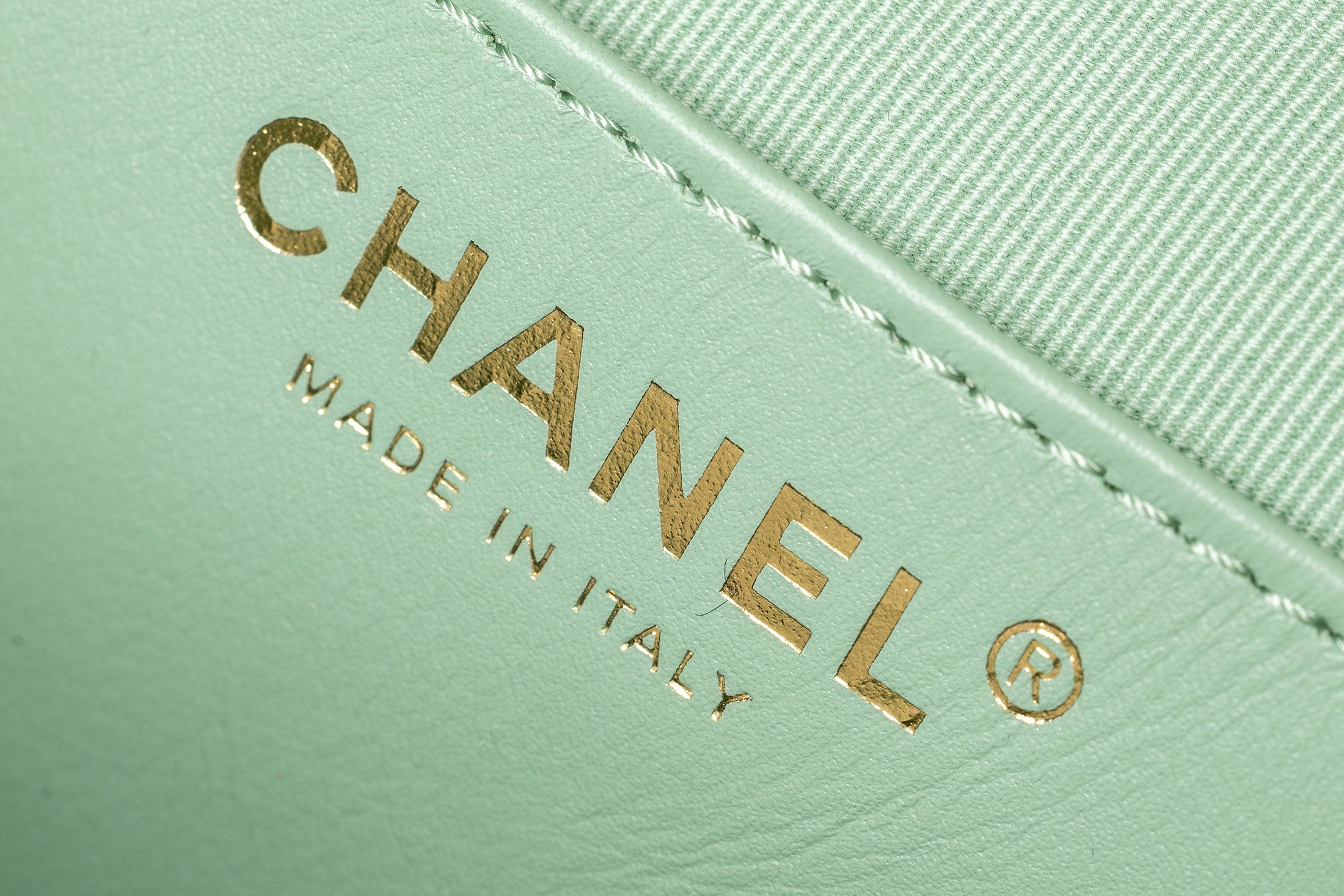
Interior plaques show sharp engravings and well-defined lettering. When you look at the Chanel name or logo, the depth and spacing should appear uniform, no fuzzy edges or odd impressions. Counterfeits usually mess this up, with engravings that look shallow or just plain sloppy.
Font matters. Every interior stamp or plaque should use the right typeface for its era, and those interlocking C’s need to keep their classic proportions. Serial number stamps inside the bag should line up neatly and show even ink pressure.
Check how the interior pocket hardware attaches. Authentic bags use sturdy rivets or tight stitching that keeps hardware snug against the leather. Pay close attention to the screws on the back of the CC lock plate. Authentic vintage pieces typically use flathead screws, while modern production has shifted to proprietary six-point star screws (Torx). If you see a Phillips-head (cross-shaped) screw, it is one of the most common indicators of a counterfeit.
Metal plates and attachments should sit perfectly flush with the leather. If anything wobbles or looks off-center, that’s usually a sign of poor craftsmanship, something counterfeiters rarely get right.
Microchips and Modern Chanel Authentication
In 2021, Chanel switched to microchip technology. Out went the old serial number stickers and authenticity cards people had relied on for years. Now, a metal plate with a hidden microchip is the main way to authenticate a bag. Knowing where to find it, and what this means for buyers, makes a big difference if you want to shop Chanel without second-guessing yourself.
Microchip Locations in Interior Linings
You’ll find the microchip tucked inside a small metal plate, attached to the bag’s interior lining. Usually, it’s in a discreet corner or along a seam, about where the old serial number stickers used to be.
The plate’s finish always matches the bag’s hardware. Gold hardware? Gold-toned plate. Silver hardware? Silver-toned plate. There’s a unique code engraved on the plate, and the microchip is hidden inside, you won’t see it.
You can’t scan these microchips at home. Only Chanel boutiques and authorized service centers have the right equipment. But you can still check the plate: authentic ones have crisp, deep engraving, and the plate should feel solidly attached, not loose or rattling.
If you’re looking at a bag with a microchip plate, focus on the engraving, the quality of the metal, and how well it’s fixed to the lining.
Transition from Serial Numbers to Microchips
Chanel phased out serial number stickers and authenticity cards in early 2021. Bags made before then still have the old hologram stickers with 7- or 8-digit codes; newer ones only have the microchip plate.
So, how you authenticate depends on the bag’s age. For pre-2021 bags, check the serial number, hologram quality, and whether the card matches. For newer bags, you have to rely on the metal plate’s craftsmanship, engraving, and the bag’s overall build, you can’t scan the chip yourself.
Chanel stopped using removable authenticity cards because counterfeiters got too good at faking hologram stickers. Microchips are more secure, but now buyers have to pay even closer attention to things like stitching, hardware, and leather quality.
If you’re shopping for a Chanel bag made after 2021, keep in mind that sellers can’t offer the old-school authenticity checks unless they have access to Chanel’s scanning tools. It’s even more important to buy from reputable dealers or use trusted authentication services.
Frequently Asked Questions
Chanel interior linings reveal a lot: the stitching, the feel of the material, the texture, even where the serial number sits. Counterfeit bags often get several of these details wrong, stitching tension is off, the fabric looks synthetic, or the serial number is just stuck on haphazardly.
What tell-tale signs should I look for in the stitching of a Chanel bag's lining to confirm its authenticity?
Thread tension is the first thing to check. Authentic Chanel linings have consistent, even stitching, stitches are about 2-3mm apart, with no loose threads or weird gaps. The thread should match the lining fabric perfectly and sit flat, not pull or bunch.
Where the lining meets the leather, seams should be clean and straight, no glue marks or fraying. Counterfeits usually slip up here, with uneven stitches or thread that just doesn’t suit the fabric.
Can the texture and sheen of a Chanel bag's interior give away its realness, and if so, how?
The feel and look of authentic Chanel lining is unique. Real linings have a subtle, elegant sheen from high-quality fabric. They’re smooth but not slippery, with a bit of grip and warmth, something cheap synthetics can’t mimic.
Fakes often use fabric that’s too shiny and plasticky, or just dull and lifeless. They might feel too slick or too rough, and under natural light, the reflection looks off, either too glossy or too flat.
What are the common discrepancies in counterfeit Chanel bag linings compared to the real deal?
Fakes usually use polyester or cheap synthetics instead of real lambskin or premium fabrics. If a bag smells strongly chemical when new, that’s a warning sign, real Chanel has a gentle leather or neutral scent. The weight gives it away, too; fake linings are often flimsy or stiff, lacking the natural drape of the real thing.
The quilting pattern is another giveaway. On genuine bags, the quilting on exterior pockets should align perfectly with the body of the bag.
Note that for the Classic Flap, the interior lining itself is smooth, not quilted. If the interior leather lining of a Classic Flap is quilted, it is a clear sign of a fake. Counterfeits usually mess up the alignment or have distorted patterns.
Color matters as well. Authentic Chanel uses specific lining colors, burgundy, black, or fabric-matched shades, consistent across years and models. Fakes often get the color just a bit wrong: burgundy too red, black too faded.
Is there a secret in the serial number placement within Chanel linings that can affirm the bag's legitimacy?
Serial number stickers or stamps are usually inside a pocket or along a lining seam. Chanel places them carefully, on a rectangular sticker with crisp, clear print and no bubbles or peeling. Placement varies by style and year, but it’s always neat and intentional.
Bags made after the mid-1980s have serial numbers that follow strict formats by production date. The sticker’s backing is white or matches the lining, and the hologram shifts in the light, three-dimensional, not flat. Fakes often stick serial numbers in random spots or use stickers that don’t stick well and look cheap.
The stitching around the serial number should match the rest of the lining. If you spot different thread or patterns, that’s suspicious.
How can I spot the difference between genuine and fake Chanel lining materials without seeming like a rookie?
Quietly feel the lining between your fingers. Real Chanel lining has substance, never too thin or bulky. It flexes naturally with the bag, without creasing or leaving marks.
Look at how the edges are finished. Genuine Chanel linings have clean, bound edges or neatly turned hems where they meet seams. Fakes often leave raw edges, uneven hems, or glue residue.
Check the pocket construction inside. Authentic interior pockets are just as well-made as the exterior, with reinforced corners and matching stitches. The pocket fabric should match the main lining in both color and quality. If it doesn’t, something’s off.
Are there specific patterns or features in the Chanel lining that a seasoned collector would never miss checking?
The Chanel stamp or logo on the lining usually follows certain rules, depending on the bag model and when it was made. You’ll want to see crisp, clear lettering with the right font and a consistent depth, no smudgy or uneven marks. The color should feel right for the bag’s age and style, too.
Interior care labels and authenticity cards stitched into the lining are worth a close look. Genuine bags have these sewn in with matching thread, placed in just the right spot for that model. The font, spacing, and info on these tags need to line up with what Chanel used during that production period, no weird typos or off-kilter text.
I always check how the lining acts around hardware attachment points. Where chains hook in or clasps snap shut, real Chanel bags have reinforced lining, extra stitching or a bit of leather backing, usually. This spot takes a beating over time, so Chanel adds support here. Most fakes just skip that step to cut corners, which is honestly pretty telling.