

How to Spot Over-Polished Van Cleef & Arpels Jewelry
Check out our Van Cleef & Arpels collection!
Van Cleef & Arpels pieces are indeed designed to age gracefully, retaining their distinctive craftsmanship and elegance. When you over-polish, you strip away those fine details: sharp engravings, defined motif edges, and that subtle satin finish that sets real Van Cleef apart from imitators. Aggressive or frequent polishing blurs the dimensional precision collectors love.
Plenty of sellers don’t seem to realize there’s a line between proper care and outright damage. A well-kept Van Cleef piece still has deep hallmarks, clean borders on every clover, and even thickness across chains and bezels. If those details start to fade or look mushy, you’re not preserving, you’re erasing.
Knowing what over-polishing looks like protects your investment and keeps your collection authentic. Whether you’re shopping pre-owned or caring for your own, spotting the signs keeps your jewelry, and its value, intact.
Key Takeaways
- Over-polishing erases the sharp engravings and crisp edges that make Van Cleef & Arpels jewelry authentic
- Too much buffing thins the metal and blurs hallmarks, which tanks resale value
- Checking motif borders, serial numbers, and chain symmetry will tell you if a piece’s been cared for or overworked
Understanding Over-Polishing in Van Cleef & Arpels Jewellery
Over-polishing takes off too much metal, messing with the original design and lowering value. This usually happens when pieces get hit with repeated or heavy-handed polishing, which strips away the precise details Van Cleef & Arpels put so much effort into.
Definition of Over-Polishing
Over-polishing means someone’s gone beyond basic upkeep, removing layers of gold or platinum that really should’ve stayed put. Van Cleef & Arpels designs rely on specific dimensions, crisp edges, and intentional surface finishes.
If a jeweler uses too much pressure or does it too often, those subtle details disappear. The metal gets thinner, corners round off, and engravings start to fade or even vanish.
We mostly notice this on high-traffic spots, bracelet clasps, ring shanks, pendant edges. Once over-polished, a piece loses its architectural sharpness. Gold or platinum wears away with every session, which is why Van Cleef & Arpels says to get professional servicing only when you really need it, not as a routine.
Why Over-Polishing Happens
A lot of owners think frequent polishing keeps their jewelry valuable, but that’s just not true. Some jewelers don’t get Van Cleef & Arpels’ construction and use techniques meant for sturdier pieces.
Resellers sometimes try to make vintage pieces look “new” by over-polishing, wiping away the patina that actually helps prove authenticity. That kind of “restoration” just erases hallmarks, maker’s marks, and the subtle wear that shows a piece’s age and story.
High-speed buffing wheels and harsh polishing compounds make things worse, stripping off way more metal than hand-polishing ever would. Some repair shops even over-polish to cover up damage or fixes instead of actually solving the problem.
Differences Between Proper and Excessive Polishing
When Van Cleef & Arpels polishes a piece, they keep the original specs in mind. Their team uses gentle methods to smooth out surface scratches but leaves all the design elements, hallmarks, and structure untouched.
A properly serviced piece still has:
- Sharp, defined edges on bezels and settings
- Deep, clear hallmarks and serial numbers
- Consistent metal thickness
- Original matte or brushed finishes where they’re supposed to be
- Crisp decorative details
But over-polished pieces? You’ll see wavy or uneven metal, rounded edges where there should be definition, and hallmarks that look shallow or half-missing.
The proportions tell the real story. Bracelet links might look thinner than usual, or a ring’s shank might be noticeably narrow. Sometimes, the high-polish finish even creeps into spots that should have a contrasting texture, blurring the special interplay of surfaces Van Cleef is known for.
Key Signs of Over-Polished Van Cleef & Arpels Pieces
Over-polishing slowly wipes away the details that make Van Cleef & Arpels jewelry recognizable and collectible. Here are four signs we always check for when judging if a piece’s been through too much polishing.
Loss of Sharp Edges and Original Shape
Van Cleef & Arpels crafts their motifs with crisp, defined edges that give each piece its signature look. If a piece’s been polished too many times, those edges go soft and rounded, changing the whole vibe.
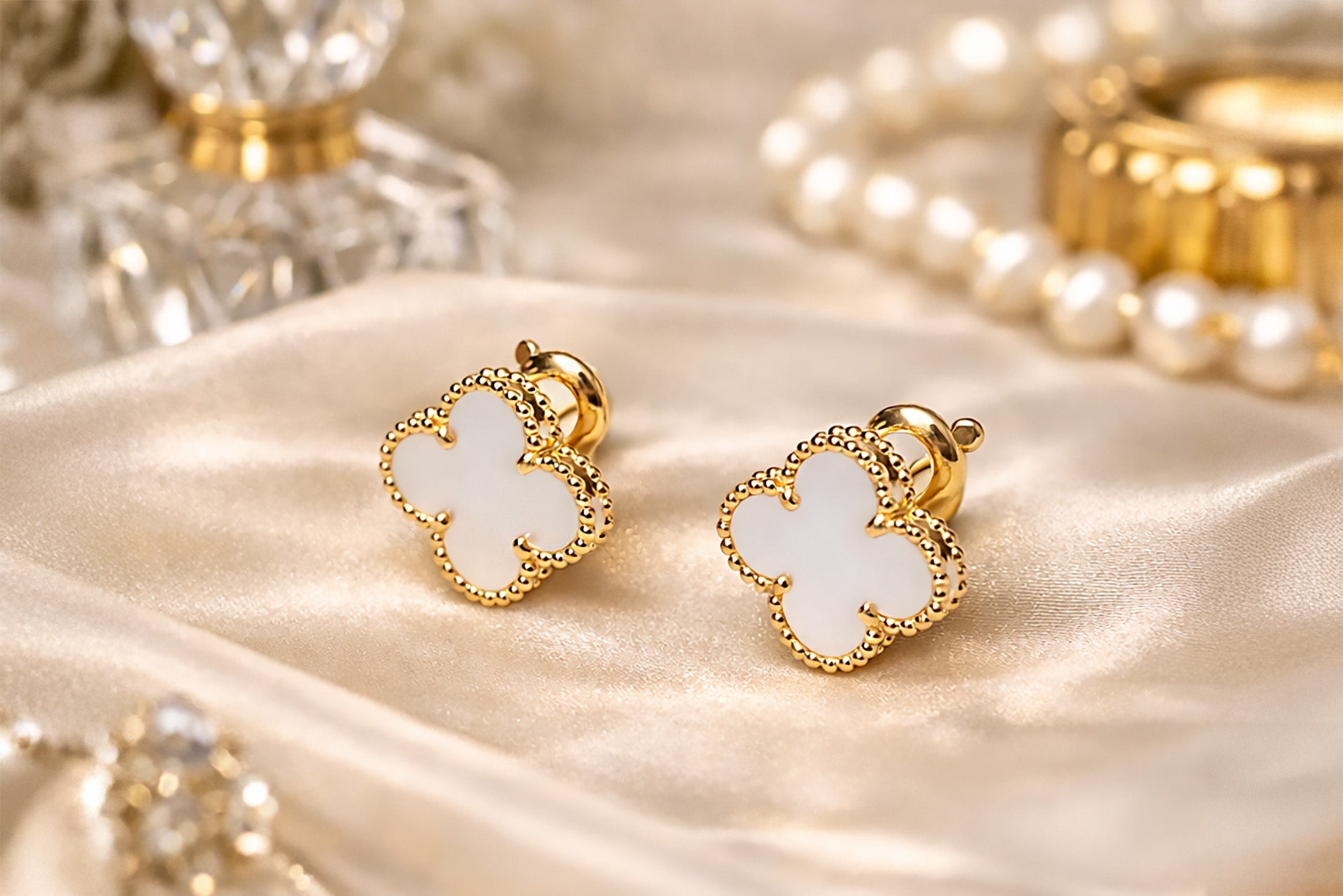
Take the Alhambra clover: it should have four distinct lobes, each with precise beveled edges where the gold meets the stone or mother-of-pearl. Over-polished clovers have rounded corners and a beaded outline that’s flattened and dull.
Chain links get hit hard, too. Originally angular profiles end up looking smooth and almost cylindrical, losing that careful geometry. Sometimes, oval links start to look almost round.
The gold bezel around stones should have a clear ridge where it meets the setting. If that edge fades into a slope, it’s a sign the metal’s been ground down by polishing.
Distorted Motif Proportions
Each Van Cleef motif follows strict dimensions to keep the look balanced. Over-polishing takes off metal unevenly, so proportions start to look off, even if it’s subtle.
You’ll notice the gold surrounds get thinner, especially in spots that see more wear, like the bottoms of pendants or the outer edges on bracelets.
Common proportion changes:
- Beaded borders shrink (from about 1.2mm to 0.8mm or less)
- Motif depth gets reduced, so the relief isn’t as dramatic
- Lobes or curves lose symmetry
- Connecting links between motifs get thinner
The gap between the gold bezel and the stone inlay can also change. We’ve seen pieces where polishing brought the metal so close to the stone, it’s risky for both looks and durability.
Worn or Faded Hallmarks and Engravings
Van Cleef & Arpels stamps every piece with deep, crisp engravings, maker’s mark, metal purity, serial numbers. Even though these sit in recessed spots, over-polishing can still wear them down.
The “VCA” signature should have sharp, even letters. If it’s faint or shallow, a buffing wheel’s probably skimmed it too many times. The “Au750” or “750” gold mark is often the first to fade since it’s usually in high-contact areas.
Serial numbers are important. Authentic ones have uniform depth and clean edges. If the numbers look faint, uneven, or partly missing, the piece’s been polished a lot. Sometimes, only part of the serial number’s left.
Strong, clear hallmarks tell you a piece is legit. If they’re gone, it’s either a fake or a victim of heavy-handed polishing.
Uneven Surface Texture
Van Cleef & Arpels gold comes with a specific satin or polished finish, depending on the collection. Over-polishing messes with that, leaving behind weird textures.
Real pieces have even finishing everywhere. We look for spots where the texture jumps from the intended look to an overly shiny, mirror-like polish, usually on bracelet motifs, pendant backs, or anywhere someone lingered with the wheel.
The boundary between different finishes should stay crisp. If polished bezels and brushed areas blend together, something’s off.
Texture red flags:
- Light reflects differently across similar surfaces
- Shiny spots on areas that should be matte
- The signature Van Cleef satin finish is missing
- Visible polish marks or circular buffing lines
The gold should feel smooth but not slick. If it’s glassy or shows obvious polish lines under magnification, it’s been overworked.
Impact of Over-Polishing on Value and Collectibility
Over-polishing takes away the metal and fine details that make Van Cleef & Arpels pieces so desirable. Crisp edges and clear engravings? That’s what collectors pay for.
Decreased Resale Value
Over-polished pieces usually sell for 20-40% less than ones with original finishes. The market doesn’t like aggressive polishing, it means metal’s been lost, sometimes for good.
When we’re looking at Van Cleef for resale, we want to see sharp bevels on Alhambra clovers and crisp Perlée beading. Rounded edges from too much polishing are a red flag. These pieces linger on the market and fetch less, even if they’re genuine.
Every time you polish, hallmarks and serials fade a bit more. If the VCA Au750 stamp is shallow or the serial’s worn, buyers get suspicious. Authenticating gets trickier, and prices drop.
Things that hurt value:
- Rounded or soft edges
- Faded hallmarks
- Uneven metal thickness
- Finish textures that don’t match between areas
Buyers who know what to look for will skip over over-polished pieces, no matter how shiny they seem.
Loss of Historical Integrity
Van Cleef pieces build up a patina that tells their story. Over-polishing wipes away that history, taking out the natural wear that proves a piece’s age.
Older Alhambra necklaces from the ’70s and ’80s should show gentle wear on clasps and links. If those spots look too perfect, it raises questions, has the piece been altered or is it even real?
Maker’s marks and date codes get thinner with every polish. Sometimes, the stamps are so faint you can’t confirm when or where the piece was made without lab testing.
Gold tells a story, too. 18k wears in predictable ways, and that pattern is part of what makes a piece authentic. Strip it off, and you lose evidence that helps tell real from fake.
Reduced Appeal to Collectors
Collectors care about originality more than perfection. A piece in original condition, with some honest scratches, will always beat an over-polished one at auction.
They look for “honest wear”, tiny scratches, gentle patina in high-touch spots, and crisp finishes in protected areas. Over-polishing says someone cared more about shine than long-term value.
The most desirable pieces age well. Vintage Alhambra with original finish and just the right amount of wear gets top dollar from collectors who appreciate untouched examples.
Collectors want:
- Original brushed or satin finishes
- Sharp engravings and marks
- Natural patina in the right spots
- Even metal thickness
If a piece shows obvious over-polishing, savvy buyers will wait for a better one.
Inspecting Specific Van Cleef & Arpels Motifs and Materials
Van Cleef & Arpels designs each have unique details and materials that show over-polishing in their own ways. The Alhambra’s clover shape and beaded borders need special attention, and different metals or gemstones reveal over-polishing differently.
Alhambra and Other Iconic Motif Definitions
The Alhambra collection uses a four-leaf clover motif with a signature beaded border, tiny, evenly spaced spheres that should be uniform in height and definition.
Over-polishing flattens these beads, turning them into bumps instead of crisp spheres. We check for any loss of the sharp channel between beads; that’s a sure sign of too much buffing. The gold bezel around stones or materials like mother-of-pearl should have sharp, clean edges right where it meets the inlay.
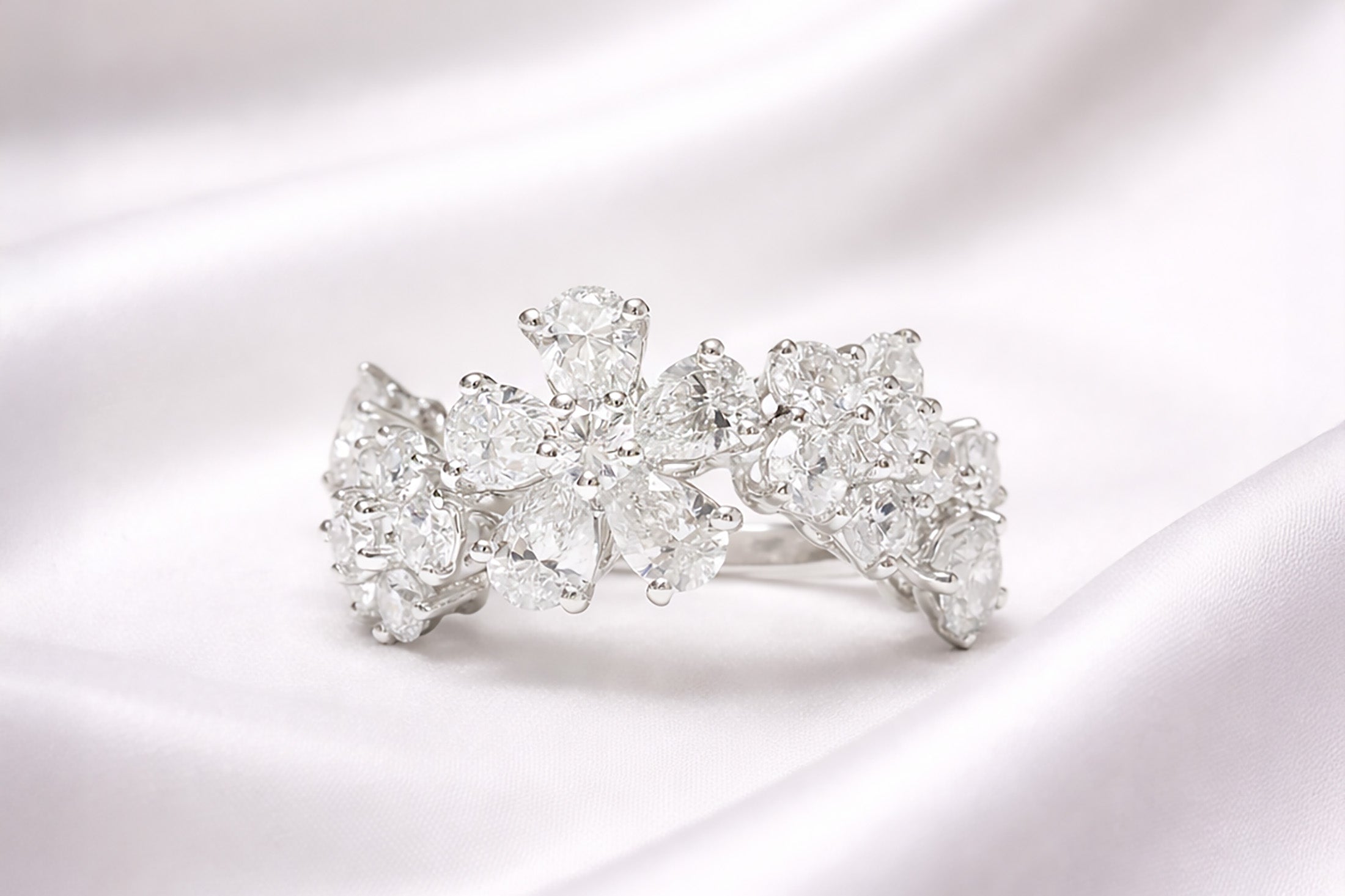
Other motifs, like Frivole (flower petals), Perlée (single beaded edge), and older butterfly or floral designs, also rely on precision. Too much polishing blurs the Frivole’s petal veining or Perlée’s beaded texture.
Real pieces keep crisp transitions between polished and textured surfaces. If those lines look soft or fuzzy, the piece probably got overworked.
Detecting Over-Polishing on Different Precious Metals
Van Cleef & Arpels sticks to 18k gold (marked Au750) and platinum, never sterling silver. With yellow gold, over-polishing shows up as thinning on raised areas and a weirdly bright, almost glassy shine. It loses that gentle warmth you get from well-cared-for gold.
Rose gold’s trickier. If you polish off too much, you start messing with the copper alloy, and the color can shift. We look for spots that seem a bit too pink or oddly orange compared to the rest.
White gold always gets rhodium plating, which wears away gradually. But if someone’s buffed it too much, you’ll see patchy spots where the yellowish base peeks through. The right way to care for white gold is gentle re-plating, not heavy-handed polishing.
What to watch for:
- Hallmarks (VCA, Au750, serials) that look faded or blurry
- Edges on jump rings and clasps that feel rounded
- Bracelet links or chain connections that look skinny or worn
- Surface texture that’s all over the place
Platinum holds up better than gold, but it’s not immune. Too much buffing flattens its natural sheen, so it starts looking lifeless instead of subtly glowy.
Caring for Mother-of-Pearl and Gemstone Surfaces
Mother-of-pearl inlays on Alhambra pieces should sit flush in the gold, with that dreamy iridescence and no scratches. If you polish the bezel too aggressively, it’s easy to nick the mother-of-pearl, those tiny scratches really kill the shine.
We steer clear of polishing compounds near these inlays. Mother-of-pearl’s organic and porous, so it soaks up chemicals from harsh cleaners or buffing agents. That can leave it discolored or chalky, and there’s no going back.
With chalcedony, onyx, carnelian, or malachite, check the stone for haze or dullness. Each one has its own hardness, and abrasive polishing can wreck the surface.
Diamond pavé settings need extra care. Over-polishing around those tiny prongs can loosen stones, and a heavy buffing wheel might even chip diamond edges. Just use lukewarm water, mild soap, and a soft brush for detail work.
Store each Van Cleef piece in its own pouch. Letting them bump into each other causes more damage than you’d think, and you can’t polish away deep scratches anyway.
Tips for Avoiding Over-Polished Van Cleef & Arpels Jewellery
If you want to avoid over-polished pieces, you’ve got to shop smart. Ask questions, check documentation, and don’t be afraid to get a second opinion.
Buying from Trusted Sources
It’s always safest to buy Van Cleef & Arpels from established retailers who know the luxury market. VCA boutiques and certified pre-owned dealers keep high standards and don’t go overboard with restoration.
Consignment platforms and auction houses usually document what work’s been done. Sellers who really know VCA understand the brand’s tolerances for wear and won’t try to “fix” things that shouldn’t be touched.
Read reviews, if people complain about polishing issues or weird conditions, take note. Sellers with solid return policies usually stand behind their authentication and restoration work. Ask them directly about how they polish and finish their pieces.
Requesting Detailed Photos and Documentation
Don’t settle for blurry pictures. Ask for sharp, close-up shots of hallmarks, clasps, and stone settings, these spots show over-polishing first. Compare those details to official VCA photos.
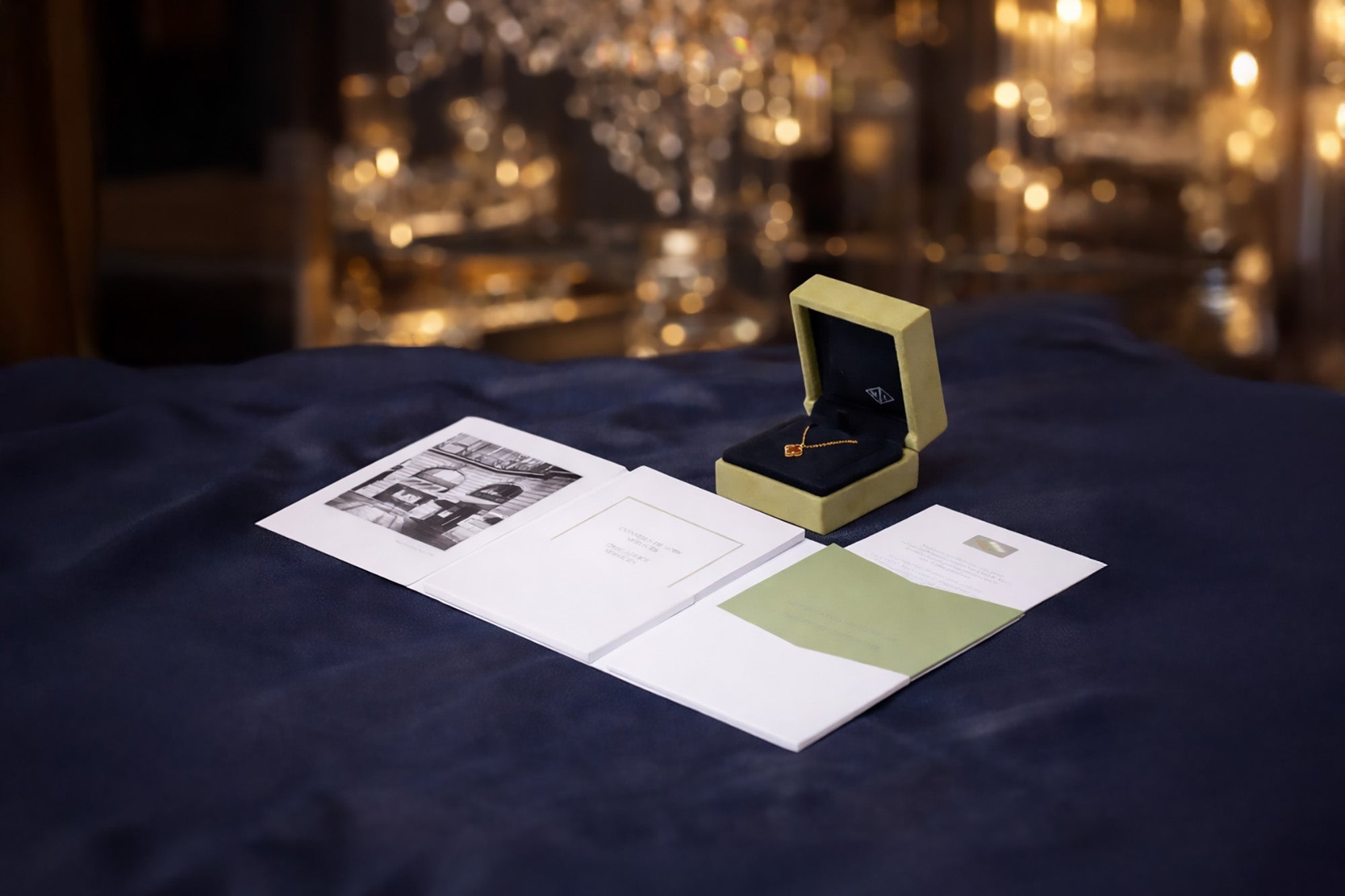
Paperwork matters. Certificates, service records, and receipts tell you how often a piece’s been worked on. We always ask for macro shots of hallmarks; if the stamps look fuzzy or shallow, that’s a red flag.
Request photos in natural light, from several angles. Pay close attention to where gold meets stones, over-polishing can create gaps or unevenness there.
Consulting Independent Experts
Independent appraisers who know estate jewellery can check pieces before you buy. They’ll measure gold thickness, inspect settings, and compare everything to factory specs. Expect to pay $150-300 for this, but it’s worth it to avoid costly mistakes.
Look for an appraiser certified by a respected gemmological institute who doesn’t have a stake in the sale. They spot things photos can’t, like weight changes or altered dimensions.
Some high-end consignment shops offer authentication with condition reports. Use these, especially if you’re spending more than $5,000.
Preserving the Original Beauty of Your Van Cleef & Arpels Pieces
Keeping your Van Cleef & Arpels jewellery looking great mostly comes down to gentle care at home, knowing when to call in a pro, and storing things the right way so you don’t need constant restoration.
Proper Cleaning Methods
Stick with mild cleaning. Lukewarm water plus a little phosphate-free dish soap does the trick for everyday dirt.
Dip a soft microfiber cloth in the soapy water and wipe gently. Skip paper towels, tissues, or anything rough, they’ll scratch the surface, even if you can’t see it right away.
For tricky spots, a baby toothbrush with soft bristles works well. Use gentle, circular motions and don’t press hard. Rinse with clean water and pat dry with a lint-free cloth.
Don’t use ultrasonic cleaners at home, especially on mother-of-pearl, malachite, or other soft stones. Those need special care. Also, avoid household cleaners, toothpaste, baking soda, or anything gritty.
When to Seek Professional Refinishing
Van Cleef & Arpels has a Shining service that removes light scratches and patina without heavy polishing. We recommend this over local jewellers, who might not know the brand’s techniques.
If you see scratches that catch your nail, discoloration that won’t budge, or loose stones, it’s time for a professional. Most pieces only need this every two or three years with normal wear.
VCA’s technicians know exactly how much metal to remove, and they’re careful to keep hallmarks and structure intact. Independent jewellers sometimes overdo it, chasing that mirror finish and taking off too much.
When you bring something in, ask for minimal intervention. Make it clear you want the original surfaces preserved, not a full-on refinish.
Best Practices for Jewellery Storage
Always store each Van Cleef piece in its own box or soft pouch. Letting them touch is a recipe for scratches, and that’s why so many people end up over-polishing.
Keep jewellery away from sunlight, heat, and humidity. We keep ours in a cool, dry spot, usually a drawer or jewellery box, not out on display. Take pieces off before swimming, exercising, cleaning, or putting on cosmetics.
Some quick storage tips:
- Clasp chains so they don’t tangle
- Store rings upright in rolls or slots
- Lay bracelets flat to protect clasps
- Separate metals so they don’t react
We usually put jewellery on last and take it off first. It’s a simple habit, but it really cuts down on exposure to chemicals and knocks that lead to wear.
Frequently Asked Questions
Over-polishing can blur hallmarks, round off edges, and ruin the crisp finish that makes Van Cleef & Arpels special. Knowing what to look for helps you protect both beauty and value.
What signs should I look for to tell if my Van Cleef & Arpels piece has been over-buffed?
Start with the edges and borders. Genuine Van Cleef & Arpels pieces have sharp, well-defined edges, especially around Alhambra beads. If they look soft or rounded, someone’s gone overboard with the buffer.
The shine should be even and controlled. Over-polished pieces sometimes get an “orange peel” look, wavy or uneven instead of smooth. You might also spot areas that are shinier than others, usually where a polisher focused too much.
Check how thick the metal is, especially on bracelets and chains. If it feels lighter or looks thin at the clasp or high-wear spots, it’s probably been polished too many times.
Are there tell-tale details that reveal a Van Cleef piece has lost its original lustre due to excessive polishing?
Look at the Alhambra beads. They should be uniform and well-separated. Over-polishing flattens them out, making everything look a bit melted together.
Stone inlays like mother-of-pearl should sit level with the gold border. If the stones stick up higher than the frame, the metal’s been worn down around them. Sometimes you can even catch your nail on the edge.
The overall finish matters. Van Cleef & Arpels uses a specific mirror polish that reflects light evenly. When a piece loses that, it starts to look dull or buttery instead of crisp.
How can I tell if the hallmark on my Van Cleef & Arpels jewelry has been compromised from over-polishing?
Hallmarks should be deep and easy to read without a magnifier. If you’re squinting or need a loupe to see the Au750 or VCA stamps, they’ve probably been buffed down too far.
Try running your fingernail over the hallmark. You should feel grooves from the stamp. If it’s smooth or the letters barely rise above the surface, that’s not good. Original engravings have depth and sharp edges that don’t wear away with normal use.
Compare the depth of the serial number, hallmark, and brand stamp. If one’s way fainter, it’s a sign someone polished unevenly and damaged the authentication marks.
What are the common mistakes to avoid when caring for Van Cleef & Arpels jewelry to prevent over-polishing?
Don’t take your Van Cleef pieces to just any jeweller. Some use harsh buffing wheels that strip off more metal than needed. Go to a Van Cleef & Arpels boutique or a specialist who knows their finishing.
Skip at-home polishing cloths with abrasives. They might seem handy, but over time, they wear down the metal and soften those crisp details. For regular cleaning, a soft, untreated cloth is enough.
Ultrasonic cleaners are a no-go for mother-of-pearl, onyx, or delicate stones. Vibrations can loosen settings and damage stones. Warm water, mild soap, and a soft toothbrush are safer.
Don’t polish your jewellery every time you wear it. Van Cleef & Arpels pieces develop a lovely patina over time, that’s part of their appeal. Unless something really needs attention, once or twice a year for professional cleaning is plenty.
Can professional jewelers restore the original finish on an over-polished Van Cleef & Arpels piece, or is it a lost cause?
It’s a bit of a toss-up. If the damage is light and the hallmarks still show, a skilled restorer who specializes in luxury jewellery can sometimes bring back the right finish and sharpen up softened edges.
Van Cleef & Arpels boutiques offer restoration, but they’ll be up front about what’s possible. If important details, like beaded edges or stamps, are gone, there’s only so much they can do. Sometimes it’s better to just accept the piece as-is rather than risk even more material loss.
When a piece is really over-polished and the structure or hallmarks are shot, it’s tough to fix. You can’t add back metal, and without clear marks, the value drops a lot. In those cases, maybe just enjoy it for what it is, a personal treasure, not an investment.
How does over-polishing affect the value of Van Cleef & Arpels jewelry, and what can I do about it?
Over-polishing hits resale value hard. Collectors and dealers want pieces with sharp details and clear hallmarks, so anything that's been buffed down just loses its charm. I've watched over-polished Alhambra necklaces go for 20-30% less than similar pieces that still have their original finish.
When hallmarks fade or edges get too soft, authentication gets a lot tougher. Some auction houses or pre-owned luxury shops might even refuse pieces they can't verify, which really limits your selling options. Insurance companies can get fussy too if the jewelry's missing clear authentication marks.
If you've got an over-polished piece already, the best thing you can do is stop any more polishing right away. Take it to a Van Cleef & Arpels boutique for a professional assessment and get documentation of its current state. That paperwork helps if you ever need to make an insurance claim or decide to sell it as-is.
When you're buying in the future, always ask about the piece's service history. If it's been polished several times or you spot obvious over-buffing, keep that in mind when making an offer. Original-condition pieces with minimal restoration, those are the ones that tend to hold their value best.
Love Hermès? See More from Rome Station
Add us to your Preferred Sources on Google to see our newest Hermès guides and insider tips first.