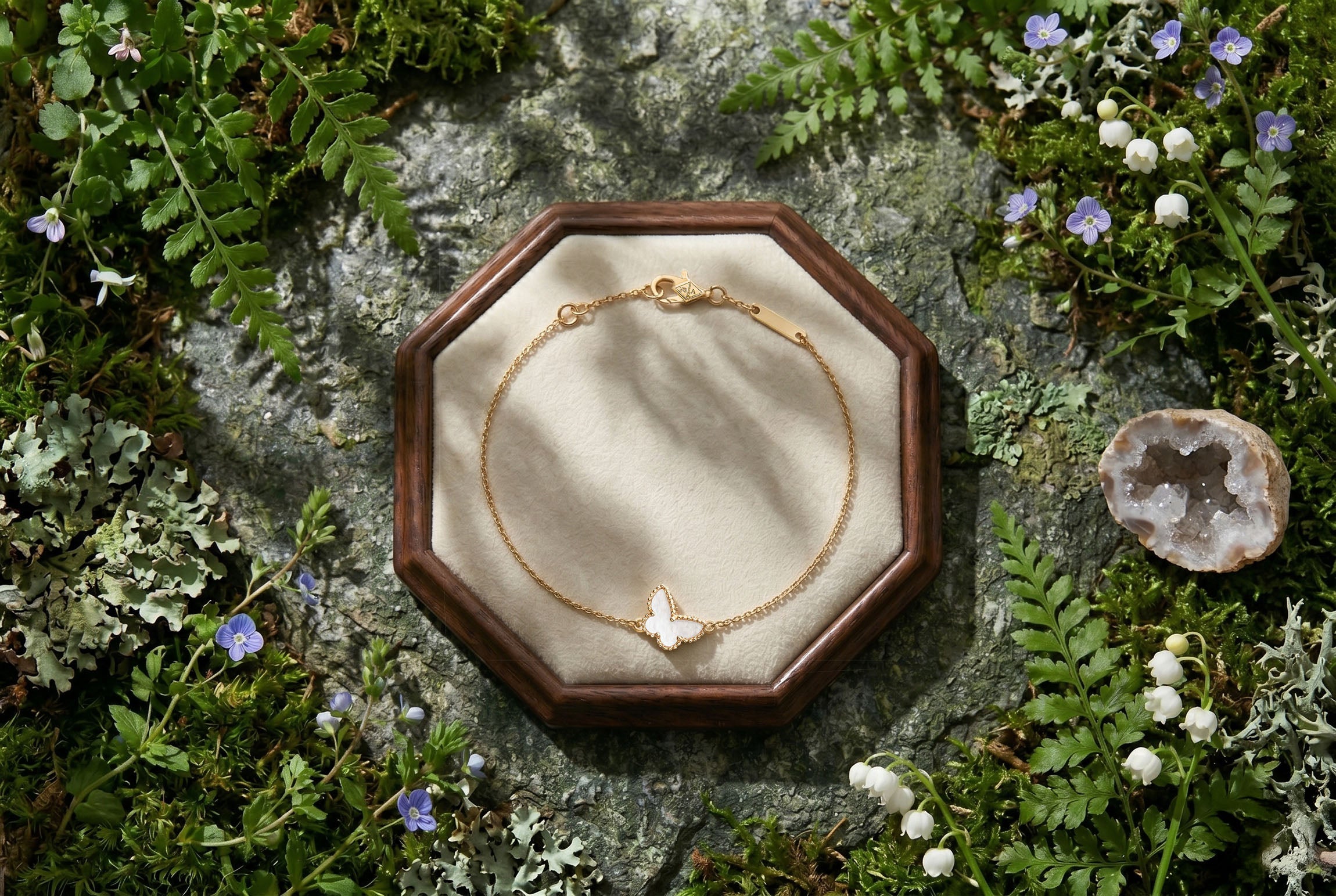


How to Identify Fair Pricing on Pre-Owned Van Cleef Jewelry
TL;DR
Pre-owned Van Cleef jewelry can maintain strong resale appeal when priced fairly, but fair pricing depends on more than the name alone. Buyers should look closely at authentication markers, condition, collection rarity, material choice, documentation, and seller transparency. A Vintage Alhambra bracelet with complete paperwork and clean hardware will not be valued the same way as a similar piece with worn prongs, replaced parts, or unclear provenance. This guide explains how to compare pre-owned Van Cleef & Arpels pieces with confidence, understand what really drives value, and spot warning signs before purchasing in the secondary luxury market.
Check out our Van Cleef & Arpels collection!
Van Cleef & Arpels is one of the most recognizable names in luxury jewelry, but knowing whether a pre-owned piece is fairly priced is not always simple. The secondary market is active and sometimes unpredictable, with prices shaped by authenticity, condition, collection, rarity, material, paperwork, and buyer demand.
For anyone considering pre-owned Van Cleef jewelry, the question is not only whether a piece is beautiful. The more important question is whether the price reflects its real market position. A Vintage Alhambra pendant, a Sweet Alhambra bracelet, a mid-century brooch, and a rare discontinued stone variation can all follow different pricing logic.
This guide breaks down how to assess craftsmanship, check provenance, compare collections, and identify warning signs. By the end, you will have a clearer framework for judging whether a pre-owned Van Cleef & Arpels piece is priced fairly for its authenticity, condition, rarity, and long-term desirability.
Key Takeaways
- Fair pricing starts with authenticity, condition, and clear documentation, not the collection name alone.
- Collection, motif size, stone type, rarity, and discontinued materials can significantly influence resale demand.
- Buyers should compare similar pieces by condition, paperwork, hardware quality, and seller credibility before deciding.
Understanding the Secondary Market for Van Cleef & Arpels
The pre-owned Van Cleef & Arpels market runs across a few main channels, each with its own pricing habits and buyer expectations. Some buyers value immediate access to coveted pieces, while others focus on discontinued materials, original packaging, or collectible heritage designs.
Why Fair Pricing Is Not Always Obvious
Fair pricing depends on confirming authenticity, looking closely at condition, and knowing which collections hold stronger resale demand. Buyers who take the time to evaluate these things can avoid overpaying for pieces with issues, unclear backgrounds, or weak documentation.
Whether you are eyeing a Vintage Alhambra bracelet or a mid-century brooch, knowing what to look for in craftsmanship, hardware, and documents gives you a better chance of making a smart purchase. Condition, authenticity signals, and realistic market context all matter.
Common Secondary Market Channels
The secondary market works through three main routes. Auction houses may list authenticated pieces with condition reports, often from significant estates. These venues can offer strong transparency, but bidding can also push prices higher than expected.
Specialized luxury resellers curate inventory, provide authentication, and grade condition. They tend to focus on detailed documentation so buyers know what they are getting. This route is often more practical for buyers who want confidence, convenience, and a clearer purchase process.
Private sales and estate deals make up the third channel, but these need extra caution. Without expert verification, buyers can run into authenticity issues, hidden repairs, or incomplete information.
What Drives Supply and Demand
Collectors often focus on design, material rarity, and production period. Demand stays strong for highly recognizable Van Cleef & Arpels designs, especially pieces that blend heritage with wearability.
Supply can be limited by smaller production runs, retired designs, discontinued materials, and vintage pieces that are difficult to restore. Current buyers often look for items with original clasps, intact surfaces, minimal wear, and paperwork that supports provenance.
Pre-Owned Van Cleef Pricing Comparison Table
A comparison table helps clarify why two Van Cleef & Arpels pieces from the same collection may be priced very differently. The strongest comparison is usually between pieces with similar collection, size, metal, stone, and condition.
| Pricing Factor | Higher Value Signal | Lower Value Signal | Why It Matters |
|---|---|---|---|
| Authenticity | Clear hallmarks, correct engraving, verified serial number, trusted authentication | Inconsistent stamps, unclear serials, missing or questionable markings | Authenticity is the foundation of fair pricing and buyer confidence. |
| Condition | Minimal wear, secure settings, crisp edges, intact stone surfaces | Deep scratches, chips, loose stones, dents, over-polishing, visible repairs | Condition directly affects both beauty and long-term resale appeal. |
| Collection | Highly recognizable or collectible lines such as Alhambra, Perlée, Frivole, or rare heritage designs | Less sought-after configurations or pieces with limited buyer demand | Collection recognition can influence liquidity and desirability. |
| Material | Rare stones, discontinued materials, diamond-set versions, strong color consistency | Common materials in heavily worn condition or stones with visible damage | Material choice can create major price differences within the same design. |
| Documentation | Original certificate, receipt, service records, matching box and pouch | No paperwork, unclear provenance, mismatched packaging | Documentation reduces uncertainty and supports resale confidence. |
| Hardware | Secure clasp, smooth chain, correct hallmarks, clean bezels, original parts | Loose clasp, stretched links, replacement parts, rough repairs | Hardware quality reveals care history and can affect durability. |
| Seller Credibility | Transparent condition report, professional images, clear authentication process | Vague descriptions, limited photos, pressure tactics, no return or verification process | A trustworthy seller makes pricing easier to assess. |
Key Indicators of Authentic Van Cleef & Arpels Jewellery
Genuine Van Cleef & Arpels pieces have certain markings and construction details that set them apart from copies. Hallmarks, engraving quality, motif shape, and finishing should all be reviewed before judging price.
Signature Hallmarks and Serial Numbers
A real Van Cleef & Arpels piece usually includes a signature stamp, which may read “Van Cleef & Arpels” or “VCA” depending on era and collection. Many fine jewelry pieces are also marked for 18-karat gold, often shown as “750” or “Au750.”
The serial number should be finely and evenly engraved. This detail matters because counterfeit pieces often use stamping that leaves thick, uneven lines instead of the delicate engraving expected on genuine pieces.
On many Alhambra items, markings appear near the clasp or jump ring. Authentic pieces should be checked carefully against the correct era and design, as placement can vary.
Engravings and Quality Stamping
Engraving on genuine Van Cleef & Arpels jewelry should look sharp, uniform, and delicately etched, not rough or inconsistent. The depth and width of each letter or number should feel controlled and refined.
Authentic pieces should have crisp edges and smooth metal around engravings. Raised edges, rough texture, misspellings, or uneven spacing can point to poor tooling or authenticity concerns. Font consistency matters too, since Van Cleef & Arpels markings should match the piece’s line and era.
Common Red Flags for Replicas
A few physical signs can flag a questionable Van Cleef & Arpels piece. On Alhambra items, the shape of clover prongs is important. Real pieces should appear rounded, balanced, and carefully finished, while copies can look stretched or uneven.
The decorative beading around center stones should be uniform in size and spacing. Replicas often get this wrong, with beading that appears too large, too small, or irregular.
Side profiles matter as well. Genuine pieces should have clean edges and consistent thickness. Pieces that look thin, rough, or poorly finished should be inspected by a qualified professional before purchase.
| Feature | Authentic Signal | Possible Red Flag |
|---|---|---|
| Serial number engraving | Fine, even, delicate | Thick, uneven, roughly stamped |
| Clover prong shape | Rounded and symmetrical | Elongated, uneven, or distorted |
| Decorative beading | Uniform size and spacing | Irregular or inconsistent beading |
| Hallmarks | Correct placement for era and piece type | Missing, incorrect, or poorly finished markings |
| Side profile | Crisp and correctly proportioned | Thin, messy, or poorly finished |
Evaluating Condition and Craftsmanship
Condition and craftsmanship play a major role in whether a pre-owned Van Cleef piece is priced fairly. Stone quality, metalwork, hardware, and signs of use should all be considered together.
Assessing Stone Quality and Settings
Van Cleef & Arpels is known for refined materials and careful construction, so buyers should check clarity, color, and how securely stones are set. Diamonds should look bright and intact. For Alhambra pieces with onyx, malachite, mother-of-pearl, turquoise, or carnelian, surfaces should be clean and free from obvious cracks or deep scratches.
Mother-of-pearl and turquoise are especially delicate. Even small scratches can affect value, particularly on flat pendants or bracelets where the surface is highly visible.
Mystery Set pieces require special care. Stones are set so closely that no metal is visible between them, which makes condition and craftsmanship especially important. Any lifting, chipping, or gaps may indicate structural issues or repairs.
Prong settings should hold stones securely. Bent or worn prongs, loose stones, or visible repair work are red flags that should affect the price.
Metal Purity and Finish
Van Cleef & Arpels fine jewelry is commonly made in 18k gold, often marked Au750 or 750. Buyers should check that these hallmarks match the piece’s age, origin, and design. Genuine items should also carry the correct Van Cleef & Arpels signature.
The gold’s finish tells a story about past care. Light scratches are normal on pre-owned and vintage pieces, but deep gouges, dents, thin areas, or softened edges may suggest heavy wear or repeated polishing.
Polishing can restore shine, but it can also remove metal. Over-polished pieces may have softened beading, faded hallmarks, or less defined edges, which can affect collectability and price.
Wear, Repairs, and Alterations
Visible wear helps determine whether the price fits the piece’s state. Some patina is expected on older jewelry, but structural damage is different. Buyers should look for mismatched solder, replaced clasps, resized rings, shortened chains, or swapped stones.
Enamel, often found in vintage jewelry, can chip and can be difficult to restore properly. Cracks, lifting, or color differences may show repair attempts. Original enamel usually has a depth and evenness that patches cannot fully match.
Good sellers are upfront about repairs and issues. If a seller avoids giving details, refuses clear images, or provides vague descriptions, that is a warning sign.
Collection, Rarity, and Motif Value Signals
Van Cleef & Arpels pieces can command different prices based on collection, material, and market availability. The Alhambra family is the most recognizable, but size, stone, production era, and rarity all create different value tiers.
Understanding the Alhambra Family
The Alhambra clover motif, introduced in 1968, appears across several collection tiers, each carrying different price expectations in the pre-owned market. Vintage Alhambra follows the classic clover design with the signature beaded gold border. Sweet Alhambra uses smaller, daintier clovers that work well for layering or subtle styling. Magic Alhambra uses larger motifs and often combines multiple motif sizes in one piece.
Each line brings a different look, but Vintage Alhambra usually receives the most recognition and often attracts strong resale interest. The clover motif itself remains instantly recognizable, regardless of size.
When checking a pre-owned Alhambra bracelet, necklace, or pendant, the exact line matters. Magic Alhambra pieces may be priced higher because they are larger and use more materials, while Sweet Alhambra can be a more accessible entry point. This distinction matters for both authentication and pricing.
Valuable Editions and Materials
Material choice has a major impact on price, even within the same Alhambra line. A Vintage Alhambra pendant with mother-of-pearl will not be priced the same way as one with diamond pavé, malachite, turquoise, or another sought-after material.
Commonly compared materials include mother-of-pearl, onyx, malachite, carnelian, tiger’s eye, lapis lazuli, turquoise, and diamond-set versions. Demand can shift based on availability, condition, color quality, and whether the material is still regularly offered by the brand.
Limited editions, unusual stone combinations, and seasonal colors may draw stronger interest in the pre-owned market because buyers may not be able to find them through boutiques. Other collections such as Perlée and Frivole also price differently depending on material, scale, craftsmanship, and availability.
Desirability of Vintage and Discontinued Pieces
Discontinued designs or stone combinations no longer commonly available can be especially attractive to collectors who want something different. Scarcity may support stronger pricing when a piece is authentic, well preserved, and supported by documentation.
Older pieces can show slight differences in craftsmanship, beading, clasp style, or finish. These details may help date and authenticate a piece, though they do not always increase value on their own.
Collectors often seek pieces that balance rarity with wearability. A rare piece in poor condition may be less desirable than a more common piece that is pristine, complete, and easier to wear.
Mechanisms, Clasps, and Hardware Quality
The quality and condition of clasps, chains, and bezels are useful indicators of authenticity and fair value. How the hardware feels and functions says a lot about care history and whether a piece still meets the level expected from Van Cleef & Arpels.
Examining Clasps, Chains, and Bezels
Authentic Van Cleef & Arpels clasps should have precise engravings and appropriate metal hallmarks for the piece. Buyers should look for sharp, even markings with no misspellings, missing letters, or rough edges.
Chain links should be uniform and smooth, with no sharp edges, kinks, or stretched sections. Bezels should sit cleanly against the metal, with no obvious lifting or gaps. Any separation between bezel and stone may suggest poor assembly, damage, or repair work.
A Van Cleef bracelet should have the same quality hallmarks as necklaces and pendants. The clasp, hinge, and chain should feel secure, balanced, and consistent with the overall quality of the piece.
Functionality and Feel in Hand
A good clasp should close securely and feel stable. If it feels loose, weak, gritty, or overly stiff, it may need professional attention before purchase. Hardware should move smoothly without catching or slipping.
The weight and balance of genuine pieces should feel substantial without feeling awkward. Counterfeit pieces often feel too light, uneven, or poorly balanced, especially when compared with authentic examples.
Spring rings, lobster clasps, and adjustable chains should function freely and close securely. If hardware feels unstable, that issue should be factored into the price.
Documentation, Packaging, and Professional Support
Proper documentation and original packaging help support authenticity and fair pricing in the pre-owned Van Cleef market. These items are not the only proof of value, but they can reduce uncertainty and improve buyer confidence.
Certificates, Receipts, and Provenance Records
A Van Cleef & Arpels certificate or original purchase record is valuable when reviewing pre-owned pieces. These documents may include serial numbers, metal details, item descriptions, purchase dates, and boutique information that can be checked against the piece.
Original receipts provide a clearer purchase history. Service records and appraisals can add extra context, especially when they come from credible professionals with fine jewelry experience.
Pieces with full documentation often feel more transparent to buyers because there is less uncertainty around origin, age, and ownership history. That confidence can influence pricing, especially for rare or investment-grade pieces.
Importance of Original Packaging
Original Van Cleef packaging can support the overall presentation of a piece, particularly when it matches the era and collection. A complete set may include the box, pouch, care booklet, and boutique materials.
Missing packaging does not automatically mean a piece is not authentic. Many genuine vintage pieces no longer have their original boxes. However, complete packaging can make a piece feel more collectible and easier to present for future resale.
The condition of the packaging matters too. Worn, mismatched, or damaged packaging carries less value than a complete and well-preserved set.
Professional Authentication
For high-value items, professional authentication is essential. A qualified specialist should review construction, materials, weight, hallmarks, serials, stone quality, and finishing against known genuine examples.
Reputable luxury resale specialists with in-house authentication teams can be especially useful because they combine product knowledge with direct market experience. Their role is not only to confirm authenticity, but also to explain how condition and completeness affect fair pricing.
Buyers should be cautious with sellers who rely only on vague claims, low-quality photos, or incomplete descriptions. For pre-owned Van Cleef & Arpels jewelry, transparency is part of the value.
Final Thoughts
Fair pricing on pre-owned Van Cleef jewelry comes down to authenticity, condition, rarity, documentation, and trusted seller expertise. A beautiful piece should also make sense when compared against similar examples in the market.
For buyers in Canada looking for confidence, convenience, and immediate access to rare luxury pieces, Rome Station offers a trusted resale experience rooted in authentication, expertise, and customer-first service.
Fact Check and Data Sources
This article avoids unsupported hard statistics and focuses on practical, verifiable pricing factors such as authenticity, condition, material, documentation, and seller transparency. Brand history and collection context should be checked against official Van Cleef & Arpels sources when available.
- Van Cleef & Arpels official website: VanCleefArpels.com
- Alhambra collection context and current product references: Van Cleef & Arpels Alhambra Collection
- For high-value purchases, buyers should rely on professional authentication, detailed condition reports, and verified seller expertise rather than market claims alone.