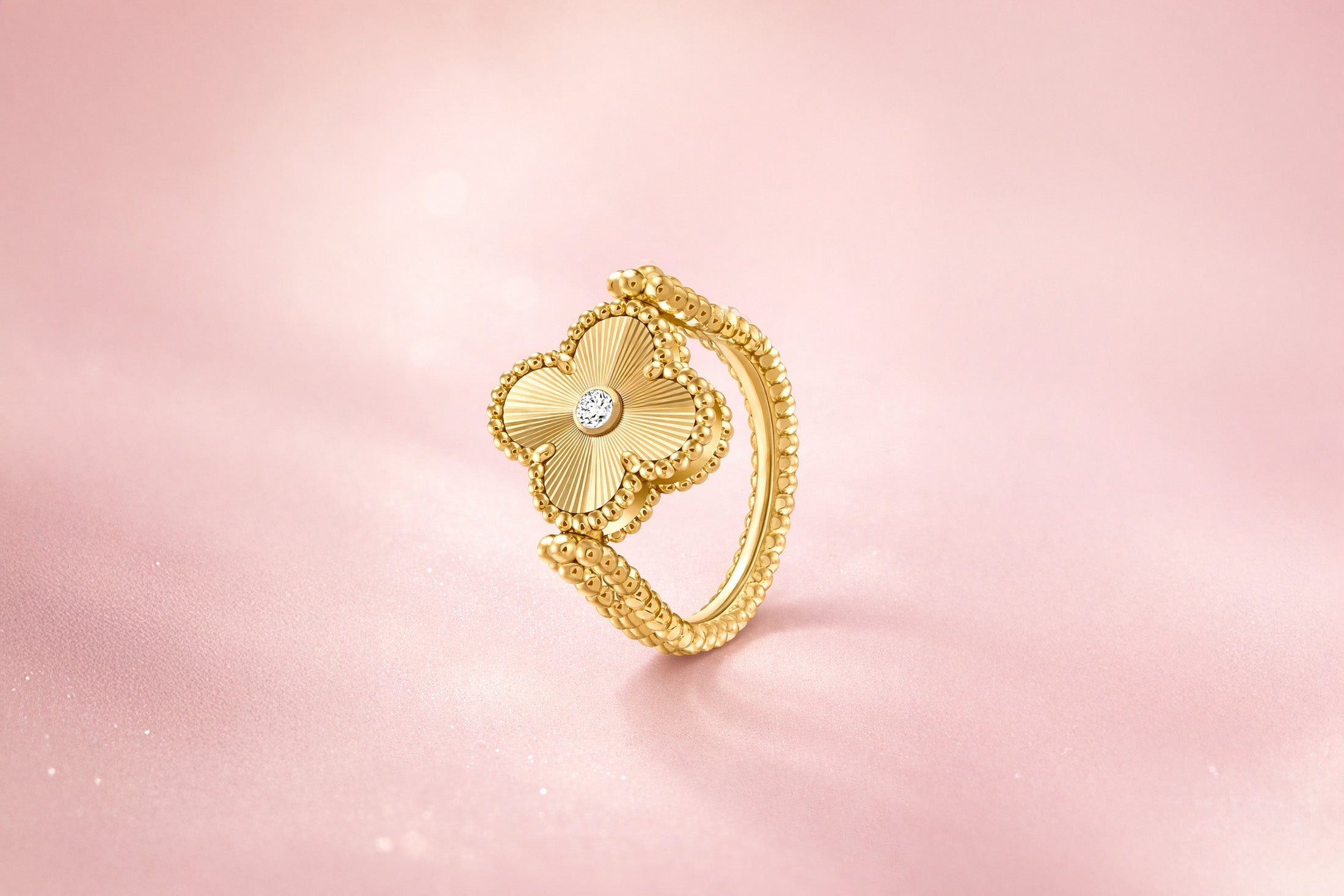



How to Detect Structural Weakness in Van Cleef & Arpels Chains
Check out our Van Cleef & Arpels collection!
Van Cleef & Arpels chains are made to last, but even the best jewelry can develop issues over time. Authentic VCA chains sometimes get weak at connections, show stretched links, or have worn clasps, especially if you wear them a lot or they've been passed down. Spotting these problems before they turn into broken chains or lost pendants is pretty much essential if you own or want to buy these classic pieces.
Thing is, structural weakness rarely shouts for attention. Maybe it’s just a tiny bend in a link, a clasp that feels a little lazy, or a chain that hangs differently than when it was new. Those little changes can hint at bigger problems with the metalwork. Catching them early means you might save yourself from losing a cherished Alhambra motif or dealing with a snapped chain.
Here’s a practical guide to help you check out the structural health of your Van Cleef & Arpels chains, whether you’re eyeing a vintage find or just want to keep your current favorites in top shape. We’ll look at how real VCA chains are put together, what wear and tear actually looks like, and how to spot danger signs before things go south.
Key Takeaways
- Real VCA chains have uniform oval links, clean soldering, and balanced weight throughout
- Watch for stretched links, loose clasps, or chains that drape unevenly
- Get regular pro inspections and store pieces properly to catch problems early
Core Structural Features of Van Cleef & Arpels Chains
Van Cleef & Arpels chains show off some pretty serious engineering in their links, metal weight, and how smoothly they move. These details say a lot about the craftsmanship, or lack of it.
Link Geometry and Construction
Authentic VCA chains use oval links that match up in size and shape all the way down. Each link connects smoothly, with no visible gaps or messy solder marks, creating a flow of metal that looks good from every angle.
The Alhambra collection uses proportionally scaled oval links that vary by piece and collection size, with symmetry and consistency remaining constant across authentic designs. What never changes is the symmetry. No squashed or weirdly long links, which would be a red flag.
Take a close look at real Van Cleef jewelry and every link closure is basically invisible. The metal wraps all the way around, no obvious seams. Fakes often have visible joints or too much solder left over.
How the links fit together matters, too. Genuine VCA chains keep their shape even if you pull gently, while cheaper knockoffs might twist or show uneven gaps. That precision is what lets the chain drape naturally, without bunching up or kinking.
Finish Quality and Weight
Van Cleef & Arpels uses solid 18k gold (marked Au750), giving their chains a solid feel, not heavy, but definitely not flimsy. Pick up a real piece and you’ll notice the heft from dense gold, not hollow junk.
The finish is finely polished and uniform, with a smooth, high-quality surface that reflects Van Cleef & Arpels’ finishing standards. Each link shines evenly, with no dull spots, no scratches from sloppy buffing, and no cloudy bits that suggest cheap materials. It should look almost glassy, and if you run a finger along it, the chain feels super smooth.
Weight matters, too. An authentic Alhambra necklace or Magic Alhambra bracelet balances evenly when you lay it flat, and the motifs are spaced just right. Fakes usually feel tinny or make a high-pitched clink, unlike the soft, muted sound of real gold.
Assessing Flexibility and Smoothness
Genuine VCA chains move with a silky, fluid motion that’s honestly tough to copy. If you shake or move the chain, it should flow without tangling or catching.
That flexibility comes from perfectly engineered links that allow movement in all directions but still hold their shape. If you fold a real Van Cleef chain and let it go, it should fall back into its usual drape right away.
You want to see smooth, even movement along the whole chain. No stiff spots or links that feel tighter. This consistency is what makes VCA jewelry so comfortable and so recognizable when it moves.
Run the chain through your fingers; if it snags or has any rough edges, that’s a problem. Either it’s damaged or just not up to Van Cleef & Arpels standards.
Signs of Structural Weakness and Wear
Real Van Cleef & Arpels chains tend to fail in specific ways, not like costume jewelry. Spotting these early can save your stones and the value of your piece.
Detecting Stretched or Misshapen Links
Look for links that have lost their oval or round shape. Stretched links look longer and leave gaps when the chain is flat. This happens more often in thinner chains carrying heavier motifs.
Even with the VCA AU750 stamp (for 18k gold), real chains can stretch over time. Lay the chain flat and check if all the links look the same and are evenly spaced.
Misshapen links usually show up near the clasp or where pendants attach. If links twist or sit at odd angles, that’s metal fatigue. On real pieces, you’ll see this before the chain actually snaps, which gives you a chance to get it fixed.
Spotting Surface Cracks and Solder Failures
Hairline cracks often start at solder joints where links meet. You’ll probably need a jeweler’s loupe to see these at first, they’re tiny. Cracks can spread quickly in gold, especially if pendants are involved.
Solder failures show up as gaps or splits at the joints. Van Cleef & Arpels uses high-quality solder, but repeated stress can wear it down. Pay special attention to spots that move a lot.
If you see discoloration around solder points, that could mean oxidation or an old repair. Fakes usually have sloppy soldering from the start, but genuine pieces only get these issues after years of use.
Evaluating Clasp and Closure Integrity
Test the clasp by opening and closing it a few times. It should snap shut with a clear click. If it’s loose or wobbly, the spring or catch might be wearing out.
The jump ring that connects the clasp to the chain is a weak spot. It takes a lot of stress and often fails before the clasp itself. Check for any bending, thinning, or gaps in the jump ring.
Lobster clasps on Van Cleef & Arpels jewelry should have clean hallmarks and sharp edges. If the inside of the clasp looks worn, it won’t hold as tightly, and you risk losing motifs with valuable stones.
Material Quality and Authenticity Checks
Real Van Cleef & Arpels chains are made from precious metals that meet strict standards. Checking hallmarks, metal, and gemstone settings is a must if you want to be sure you’ve got the real thing.
Hallmark Verification and VCA Logos
Every authentic VCA piece has specific markings to show where it came from and what it’s made of. The VCA logo is stamped on clasps, connecting rings, or small plaques, usually with a “750” for 18k gold or “PT950” for platinum.
These stamps should be sharp, well-placed, and the right size. Counterfeits often have blurry or uneven logos that look hand-etched. Authentic pieces show crisp, correctly proportioned VCA hallmarks placed consistently for the collection and production period.
The hallmark’s location changes by collection but is always consistent within a line. Alhambra pieces usually have markings on the clasp or jump rings. Serial numbers, if they’re there, follow VCA’s own format and match up with their records.
Metals and Alloys: Weight, Feel, and Stamps
Authentic VCA chains use solid 18k gold or platinum, so they feel substantial. Multi-motif Alhambra necklaces have a substantial weight consistent with solid 18k gold construction, noticeably heavier than plated or hollow counterfeits.
The metal on real pieces has an even color and shine. White gold gets rhodium plating, which wears in a predictable way, while yellow and rose gold develop a gentle patina. Counterfeits often have weird coloring, greenish or brassy tones that give away cheaper metals.
We check hardness by looking for scratches and wear. Real gold holds up, while plated pieces show wear at stress points where the base metal peeks out.
Gemstone Mountings and Prong Security
Van Cleef & Arpels sets stones using precise methods that protect both the gems and the chain. Stones like mother of pearl, chalcedony, carnelian, lapis lazuli, and turquoise sit in gold bezels with even edges, no gaps.
The Mystery Set technique (used for high jewelry) fits gems like rubies, sapphires, and diamonds so closely that you can’t see any metal between them. Prongs on regular settings are symmetrical, evenly spaced, and smoothed down to prevent snags.
Check that stones sit flush in their settings and don’t rattle. Real pieces use top-quality stones with consistent color and clarity. In rare or special editions that use porcelain elements, the material should feel dense and finely finished, not lightweight or resin-like.
Collection-Specific Weaknesses in Alhambra Chains
Each Alhambra collection has its own chain construction and motif attachments, which means different weak spots. Vintage Alhambra’s bigger motifs stress the connections in one way, while Sweet Alhambra’s tiny links have their own issues. Magic Alhambra, with its single motif, concentrates wear in just a couple of places.
Link and Motif Alignment in Vintage Alhambra
Vintage Alhambra uses substantial motifs that hang from classic link chains, creating stress where the motifs meet the chain. Pieces with several motifs (like 5- or 10-motif necklaces) get uneven tension, with the center motifs carrying more weight than those near the clasp.
Jump rings that connect motifs to the chain are the most common failure point. These tiny connectors take all the weight of the motif and can open up over time from constant movement.
Common weak points:
- Jump ring joints at motif attachments
- First link next to each motif
- Spots where motifs cluster on longer necklaces
Older pieces may feature clasp designs consistent with the production period, which can differ subtly from newer releases.
Motif-to-Chain Connection Strength in Sweet Alhambra
Sweet Alhambra pieces have mini motifs on very fine chains, which brings its own problems. These tiny links are more likely to kink or deform from even light bumps or snags.
Because the attachment points are so small, there’s less metal to absorb wear. We see these connections wear out faster than in the Vintage Alhambra, especially in bracelets that rub against sleeves or desks.
Over time, especially with frequent wear, fine chains may develop stress near solder points if not properly maintained.
Watch for:
- Stiffness in the chain near motifs
- Tiny gaps in jump rings (use a loupe)
- Chain links that won’t lay flat when worn
Identifying Motif Weak Points in Magic Alhambra
Magic Alhambra designs have a single big motif hanging from a simple chain, so all the stress focuses on two main connection points. Multi-motif pieces spread the weight around, but Magic Alhambra chains get the same tug on the same spots every time you wear them.
The central motif swings with movement, acting like a little pendulum and slowly working the attachment rings loose. This swinging wears out the jump rings and the first couple of chain links on either side faster than you might expect.
Magic Alhambra bracelets show different wear than necklaces, the motif slides around your wrist, twisting the attachments instead of just pulling down. This twisting can wear out those connections faster than the vertical pull you see in necklaces.
Authentication and Professional Inspection Recommendations
Spotting structural weaknesses in Van Cleef & Arpels chains takes more than a quick glance, especially if you’re buying pre-owned or want to be sure about authenticity. Getting a professional to check things over, or using specialized inspection tools, is really the safest way to catch problems before they become costly.
When to Seek Professional Authentication
If you're buying pre-owned Van Cleef & Arpels, especially outside official boutiques or trusted retailers, it's smart to consider professional authentication. Experts in haute joaillerie spot structural weaknesses and subtle details most of us would miss.
These pros check hallmarks, inspect the metalwork, and look at how the piece was made. Van Cleef & Arpels has its own standards, thanks to Alfred Van Cleef. For vintage items, authentication gets even more important; wear patterns should fit the age and story behind the piece.
If you notice your chain feels oddly flexible, links catch or bind, or clasps need too much force, those are red flags. These symptoms usually mean there's hidden damage, and it's time for a professional to take a look.
Role of Loupe Inspection in Detecting Flaws
A 10x loupe can reveal flaws you won't see with the naked eye. Jewelers use this magnification to check solder joints, spot stress fractures, and catch signs of bad repairs that could ruin the look and integrity of your Van Cleef & Arpels jewelry.
During loupe inspection, here’s what usually gets checked:
- Solder joints: Are the connections smooth and even? Lumpy or discolored spots suggest poor repairs.
- Metal fatigue: Tiny cracks at stress points.
- Wear patterns: Is the aging even, or is there strange, localized damage?
- Link integrity: Do the chain components close and line up properly?
This kind of examination can save your piece. Sometimes, a tiny flaw caught under magnification prevents a total chain break later on.
Pre-Owned and Resale: Ensuring Integrity
Pre-owned Van Cleef & Arpels chains need a thorough check before you buy, both to protect your wallet and to keep the jewelry beautiful. Good sellers offer detailed condition reports and don’t mind if you bring in an outside expert.
Documentation really matters for resale. Try to get a written assessment from a jeweler who knows Van Cleef & Arpels construction. The report should cover all mechanical parts, mention any repairs, and give an idea of how much life is left in the chain.
Ask for the service history if you can. Pieces serviced by Van Cleef & Arpels themselves stick to original specs, while unauthorized repairs might use shortcuts or subpar materials. When you go to sell, proof of proper maintenance from the brand adds a lot to the value and reassures buyers about the chain's condition.
Maintenance and Longevity of Van Cleef & Arpels Chains
Taking care of your VCA jewelry really does make it last longer. Catching early wear can save you from expensive repairs down the line. Paying attention to how you store, clean, and inspect your chain goes a long way.
Routine Care to Prevent Weakness
Store each Van Cleef & Arpels piece on its own, ideally in the original box or a soft pouch. Tossing chains together leads to tangling and scratches, and where links rub, they develop stress points.
Take off your jewelry before showering, swimming, or slathering on lotions and perfumes. These can discolor and weaken the metal, especially over time. Chlorine and saltwater, in particular, seem to wreak havoc on delicate soldering.
Clean your chain about once a month with lukewarm water and a soft cloth. Skip harsh chemicals and ultrasonic cleaners unless Van Cleef & Arpels gives the green light. Gentle cleaning keeps the shine without stressing the links. Make sure the chain is totally dry before putting it away, moisture between links speeds up tarnishing.
Every year or so, let Van Cleef & Arpels service your chain. They'll check solder points, polish out wear, and tighten links before anything fails.
Recognizing Early Signs of Damage
Every few weeks, look over your chain in good light. Are any links twisted, bent, or out of line? Those spots are likely to break eventually.
Run your fingers along the chain. Rough patches, kinks, or places where links snag aren't normal. Authentic Van Cleef & Arpels chains should feel smooth and even. If you notice resistance or snags, that could mean internal damage or weak soldering.
If the chain suddenly hangs stiffly or at weird angles, internal stress fractures might be to blame. Pay extra attention to clasps and jump rings, they get the most use and often show tiny gaps before failing.
Watch for discoloration around link joints. This can mean corrosion from chemicals or trapped moisture. When you see these signs, don't try to fix it at home. Professional help is the way to go; DIY repairs usually cause more harm than good with luxury pieces.
Frequently Asked Questions
Worn links, bad clasps, and tiny cracks can all threaten a Van Cleef & Arpels chain, even if it looks fine at first. Regular checks and good habits help you catch problems before they cost you.
What are the tell-tale signs of wear and tear to look out for on a Van Cleef & Arpels chain?
First, see if the chain hangs straight and moves smoothly. If it twists, bunches, or has links that won't lie flat, that's trouble.
Look for stretched or elongated links. Authentic Van Cleef chains have oval links, all the same size, if some look longer or thinner, they've been stressed. Tiny cracks or splits, especially at solder points, are another warning sign.
Discoloration or dark patches can mean wear through the gold or chemical damage. Even though 18k gold is highly resistant to tarnish, friction and cleaning products can still leave marks.
Pay attention to how the chain feels. If it suddenly seems lighter or more fragile, links might have thinned out or someone swapped in lower-quality parts during a repair.
Could you guide me through the process of inspecting a clasp for signs of damage on a Van Cleef & Arpels piece?
Open and close the clasp about a dozen times. It should snap shut every time with a crisp click, no grinding, sticking, or wobbling. If it feels different than when you first got it, the spring or lock may be wearing down.
Check the lobster clasp for side-to-side movement when it's closed. There shouldn't be any. If it wiggles, the metal or internal parts are probably worn.
Look closely at the jump ring connecting the clasp to the chain. This spot handles a lot of stress and can develop cracks or thin spots. A loupe helps spot hairline fractures around the solder.
On newer clasps, check the VCA diamond-shaped hallmark or the rectangular signature plate. If the engraving looks shallow or worn at the edges, the clasp has seen a lot of friction and might need replacing soon.
What should I be mindful of when checking the condition of the links on my treasured Van Cleef & Arpels chain?
Inspect each link, not just the whole chain. Run your fingers along it and feel for roughness, catches, or links that don't move like the rest.
Focus on links near the motifs and clasp, they take the most strain and tend to show wear first.
Make sure all links are fully closed. Even a tiny gap can snag clothing or pull apart. Genuine Van Cleef links are sealed tight, so any separation is a red flag.
Compare the polish and finish between links. If some look duller or the texture's off, they might've been replaced (sometimes with non-original parts) during a repair.
Is there a way to professionally assess the structural integrity of my Van Cleef & Arpels jewellery at home?
A jeweler's loupe (at least 10x) is your friend here. It lets you spot micro-cracks, worn solder, and fading engravings up close.
Try the weight test, hold your piece and see if it feels lighter than you remember. Big weight changes can mean metal's worn away or links were swapped for cheaper ones.
Gently pull the chain at both ends, don’t yank, just apply a little steady pressure. The chain should feel solid, not stretchy, and links shouldn't twist or rotate.
Take close-up photos every six months or so. Comparing them over time helps you notice slow changes in link shape, clasp alignment, or finish that you might miss day-to-day.
What professional maintenance tips can help ensure the longevity of Van Cleef & Arpels chains?
Keep your Van Cleef pieces in separate soft pouches to avoid tangles and scratches. Never toss them together in a box, chains can scratch each other up fast.
Take off your chain before showering, swimming, or working out. Soaps, chlorine, and sweat all speed up wear, even on 18k gold.
Clean regularly with lukewarm water and a soft cloth. Skip ultrasonic cleaners unless Van Cleef says it's okay for your piece; the vibrations can loosen stressed links or settings.
During professional servicing, have the clasp spring checked. Springs wear out eventually, and replacing one is way better than losing your necklace to a failed clasp.
How often should I have my Van Cleef & Arpels chain inspected by a professional to prevent the risk of breakage?
Honestly, it's smart to get your chain checked once a year at a Van Cleef & Arpels boutique or an authorized service center. Their experts spot things you'd probably miss at home.
If you wear your piece all the time, or even just a lot, consider bumping that up to every six months. Daily wear puts extra strain on the links and clasps, especially if you like to layer necklaces or wear bracelets that move around a lot. That kind of friction can add up faster than you'd think.
Notice your chain hanging weird, moving differently, or just feeling off? Don't wait for your regular appointment. Go get it looked at right away. Trust your instincts, catching small issues early can save you from pricey repairs or, worse, something you can't fix.
And if your chain ever gets yanked, snagged on clothes, dropped, or caught on something, take it in for a check, even if it looks fine. Internal damage can hide out for weeks or months before causing real trouble. It's just not worth the risk.
Love Hermès? See More from Rome Station
Add us to your Preferred Sources on Google to see our newest Hermès guides and insider tips first.