

How to Assess Surface Scratches Without Damaging Van Cleef & Arpels Pieces
Check out our Van Cleef & Arpels collection!
Van Cleef & Arpels pieces are investments that deserve careful attention, and knowing how to assess surface scratches is key to protecting their value and beauty. To check for scratches without causing damage, use natural lighting and a jeweller's loupe.
Make sure your hands are clean, and steer clear of any tools or materials that might leave new marks. Honestly, even the tiniest scratch can feel unsettling when you’ve put your heart (and wallet) into collecting these remarkable pieces.
Surface scratches aren’t just about looks. They can make authentication a headache by hiding serial numbers and hallmarks, and they might chip away at resale value if you don’t assess and document them properly. The tricky part is inspecting these marks without making things worse or accidentally adding new damage in the process.
This guide’s here to help you confidently evaluate scratches on your Van Cleef & Arpels jewellery using safe, practical methods. Whether you’re checking a piece before storage, prepping for authentication, or just keeping an eye on your collection, knowing how to inspect without risking damage gives you peace of mind.
Key Takeaways
- Good lighting and magnification let you check for scratches safely, no need to touch the surface
- Different Van Cleef & Arpels materials call for specific inspection approaches to avoid new marks
- Gentle, regular checks and proper storage help keep minor scratches from becoming bigger issues
Why Surface Scratches Matter on Van Cleef & Arpels Pieces
Surface scratches on Van Cleef & Arpels jewellery matter for three big reasons: they impact authenticity checks, affect resale value, and tell you something about normal wear. Even small marks can complicate ownership and future sales.
Impact on Authentication
Micro-scratches can really get in the way when you’re trying to authenticate Van Cleef & Arpels pieces. These tiny marks sometimes hide serial numbers and hallmarks that experts need to see.
The real headache? Scratches blur the fine details of the maison’s craftsmanship. Authenticators study engravings, stampings, and maker’s marks up close, and surface damage makes this a lot harder. If you can’t clearly see these identifiers, it can raise doubts during authentication.
Key authentication elements affected by scratches:
- Serial number legibility
- Hallmark clarity (750, 950, or maker’s marks)
- Signature details and font quirks
- Edge finishing and bevelling
Professional authentication services might ask for more documentation or even refuse to certify pieces with heavy surface damage. That doesn’t mean your piece is fake, but it does mean you’ll have to work harder to prove it’s real.
Distinguishing Micro-Scratches from Everyday Wear
Not all scratches are created equal. Micro-scratches are shallow marks that build up during regular wear, while deeper gouges usually point to improper storage or an accident.
You can spot micro-scratches under natural light, they look like a fine, cloudy haze rather than sharp lines. They tend to show up on high-contact spots like the backs of bracelets, pendant edges, and clasps. Everyday wear scratches usually follow patterns based on how you use your jewellery.
Deeper scratches from impact or rubbing against hard materials stand out more. They catch the light in a different way and feel raised or sunken. Knowing the difference helps you decide if it’s time for a professional polish or if you’re just seeing the natural patina of a well-loved piece.
Effect on Resale Value
Surface condition really affects what you can get when selling Van Cleef pieces. Heavily scratched items often go for 15-25% less than pieces in top shape, even if they work perfectly.
Collectors and resale platforms pay close attention to surface condition because it shows how well a piece has been cared for. A well-maintained piece suggests good storage and careful wear, which buyers like. On the flip side, lots of scratches can make people worry about hidden damage or neglect.
The original finish on Van Cleef & Arpels pieces is tough to duplicate. Professional polishing can erase scratches, but it may also remove some metal and change the original proportions. You’ll want to think carefully about whether restoration will actually help or hurt the value.
Recognizing and Assessing Scratches Without Damaging Your Jewelry
Assessing scratches on Van Cleef & Arpels pieces means understanding scratch patterns, protecting delicate hallmarks, and using the right tools. These techniques help you check for damage accurately without risking those precious 18k gold surfaces or intricate details.
Identifying Types and Locations of Scratches
On VCA pieces, you’ll usually see three types of surface scratches: hairline scratches from daily wear, deeper grooves from bumps or drops, and groups of scratches from bad storage. The Alhambra collection’s smooth gold borders show scratches more easily than the textured clover motif centers.
Start with the high-contact areas. Clasp mechanisms, chain links, and the backs of pendants get the most wear. The polished 18k gold on VCA pieces makes even tiny scratches stand out, while matte finishes hide them a bit better.
Pay attention to the direction of the scratches. Random, crisscrossed scratches usually mean rubbing against fabric or other jewelry. Parallel scratches might suggest repeated contact with a specific surface. Deep, single scratches are often from a bump or scrape that might need a professional’s touch.
Check the edges of each motif closely. These raised borders on Alhambra pieces catch on things more than flat areas. Notice if scratches go deep into the gold or just mess with the polish.
Inspecting Engravings and Hallmarks Safely
Van Cleef & Arpels hallmarks show up in specific spots depending on the piece. On Alhambra necklaces, look for them on the clasp and sometimes on jump rings. Bracelets usually have hallmarks near the clasp.
Never use metal tools or anything abrasive near hallmarks. These tiny stamps prove authenticity and are easy to damage. Stick to soft, non-abrasive materials if you need to touch the area at all.
Hallmark areas often see less wear since they’re tucked away. If you spot odd scratches here, it could mean tampering or a botched repair. Genuine VCA pieces have crisp, clear stamps, anything that looks re-engraved or fuzzy should make you pause.
Serial numbers and maker’s marks need the same gentle approach. These engravings are the piece’s ID and history. Avoid any cleaning or polishing that might blur them.
Using Magnification and Lighting Techniques
A jeweler’s loupe (5x to 10x magnification) lets you see scratch depth without touching the piece. Hold the loupe close to your eye and bring the jewelry into focus by moving it closer or farther, steadying your hands against a table.
Natural daylight is best for spotting scratches. Check pieces near a window during the day, turning them slowly to catch the light from different angles. If you have to use artificial light, pick a daylight-balanced LED and aim it at a 45-degree angle.
Deep scratches cast tiny shadows in good light, while surface scratches show up as thin lines that might vanish at certain angles. VCA’s polished 18k gold reflects light like crazy, so you’ll need to keep adjusting your view.
A regular magnifying glass is okay for a quick look, but a loupe is better for seeing how deep scratches go. Rest the piece on a soft cloth to avoid adding new marks. Taking close-up photos under magnification can help you track condition over time.
Understanding Materials in Van Cleef & Arpels Jewellery
Van Cleef & Arpels primarily uses 18k gold and platinum for its main collections, and pairs these metals with carefully chosen gemstones that each need different care during assessment.
Gold Varieties: Yellow, White, and Rose Gold
Van Cleef & Arpels uses 18k gold in yellow, white, and rose. Each is 75% pure gold mixed with other metals to create the color. Yellow gold blends in silver and copper, giving it that classic warm look, and it’s the softest, so micro-scratches show up fast. You’ll see this on most classic Alhambra necklaces and bracelets.
White gold mixes gold with palladium or nickel, then gets a rhodium coating for extra scratch resistance and a bright silvery finish. The rhodium wears off over time, especially on high-contact spots, revealing the slightly warmer white gold underneath.
Rose gold gets its pinkish hue from more copper in the mix. It’s somewhere between yellow and white gold for scratch resistance and how obviously it shows marks.
Surface characteristics by gold type:
- Yellow gold: Scratches stand out, develops a warm patina, feels soft
- White gold: Rhodium layer protects but wears unevenly, can end up two-toned
- Rose gold: Moderate scratch visibility, copper content changes how it ages
All three use the same gold purity. How they wear comes down to the other metals in the alloy, not a sign of authenticity or lack thereof.
Signature Gemstones and Sensitive Materials
Mother-of-pearl is everywhere in the Alhambra collection and is the most delicate material Van Cleef uses. It scratches super easily and doesn’t like moisture, harsh cleaners, or pressure. Honestly, just look, don’t touch much.
Onyx gives that classic black look in Vintage Alhambra pieces. It’s tougher than mother-of-pearl but still softer than most stones, showing fine white scratches if worn a lot.
Carnelian, the warm orange stone you’ll see in some Alhambra pieces, sits between onyx and mother-of-pearl for durability. It’s porous, so it soaks up oils and moisture, which can change how it looks.
Diamonds in Perlée and high jewellery are the hardest material you’ll find. They won’t scratch during normal checks, but the settings and surrounding metal still need careful handling.
Material sensitivity ranking (most to least delicate):
- Mother-of-pearl
- Carnelian
- Onyx
- Gold (all types)
- Diamonds
Always check pieces on a soft cloth and keep metal tools away from gemstones. The settings on real pieces use specific mounting techniques you’ll only see up close with magnification.
Gentle Cleaning Methods for Scratch Assessment
Before you can really check for scratches on Van Cleef & Arpels pieces, you need a clean surface. Using the right products and being gentle stops you from making things worse while you’re trying to see what’s already there.
Essential Tools and Products
You only need three things: a lint-free cloth (microfiber is great), mild dish soap, and distilled water. Pick a cloth with a tight weave to avoid leaving micro-scratches on metal and stones. Skip cotton cloths, they’re fuzzier and can leave tiny marks.
Mild dish soap is gentle but gets rid of oils and residue that hide scratches. Distilled water beats tap water since it won’t leave mineral spots. A soft-bristled brush (like a clean makeup or jewelry brush) helps with tricky areas, but use it with care.
What to avoid:
- Harsh chemical cleaners
- Abrasive polishes or compounds
- Paper towels (too rough)
- Hot water (can hurt some stones)
Safe Use of Mild Dish Soap and Lint-Free Cloths
Mix a drop of mild dish soap with lukewarm distilled water in a small bowl. You don’t need much foam. Dampen your lint-free cloth, then wring it out so it’s just barely moist.
Wipe the piece in straight, gentle lines, no circles. This keeps you from accidentally buffing or hiding scratches you want to see. Use almost no pressure; let the cloth do its thing. Dry the piece right away with another clean cloth.
Take your time. Rushing just means you’ll miss details or risk new marks that make assessment harder.
When to Use a Soft Brush
Soft brushes are for pieces with intricate settings, bezels, or textures that a cloth can’t reach. The Alhambra collection’s clover motifs and perlee edges are perfect examples.
Dip the brush in your soapy water, tap off the extra, and use light dabbing, not scrubbing. The bristles should flex a bit, showing you’re being gentle enough. Work around each detail, rinse the brush, and repeat with clean water to get rid of soap. This method reveals scratches hidden under oils without scratching the metal or disturbing stones.
Collection-Specific Considerations for Scratch Assessment
Every Van Cleef & Arpels collection brings its own quirks when you’re checking for scratches. The Alhambra line, especially, needs extra care thanks to delicate materials like mother-of-pearl and carnelian. Knowing what makes each collection unique helps you protect your pieces while you inspect them.
Unique Features of the Alhambra Collection
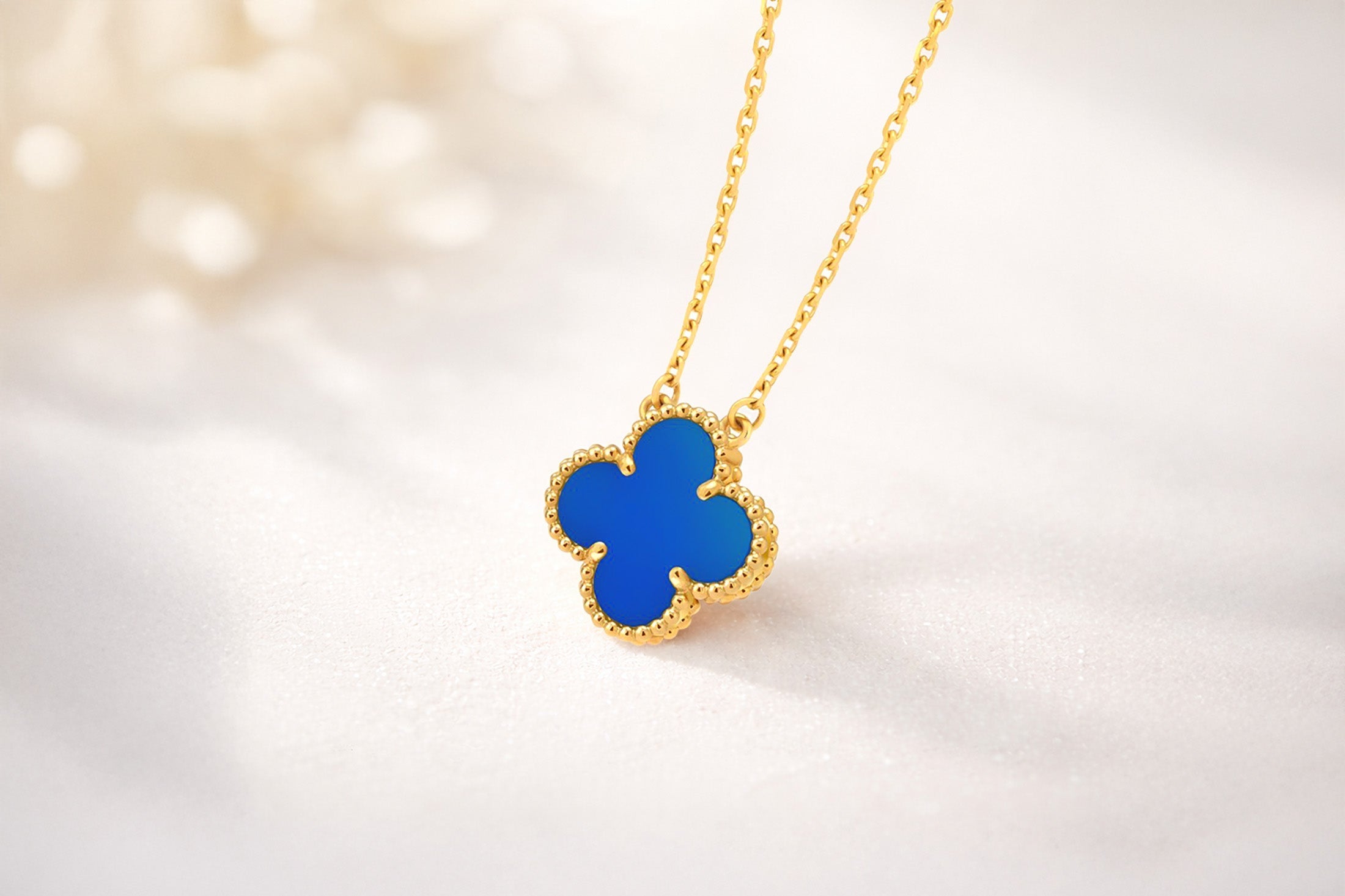
The Alhambra collection stands out for its quatrefoil design, gold bezels circling stone or mother-of-pearl inlays. Those bezels? They're magnets for scratches, especially right where the metal meets the inlay.
If you're looking over an Alhambra necklace or bracelet, zero in on those junction points where metal hugs the stone. Micro-scratches love to collect there and can change the look of the piece way more than marks on plain gold. The beaded gold edges pick up wear patterns, too. Sometimes these look like scratches, but they're really just signs the piece has been worn and loved.
The gold rope chain connecting each motif is another spot to handle with care. Honestly, it's best to support each clover motif separately instead of letting them dangle and bump together. This is especially true for those long, dramatic 20-motif necklaces, they're heavier, and the motifs can knock into each other if you're not careful.
Special Tips for Mother-of-Pearl and Carnelian Pieces
Mother-of-pearl is a bit of a diva, its iridescent surface can get ruined by even gentle pressure. We use soft, indirect light at different angles to spot scratches without actually touching it.
Scratches on mother-of-pearl usually show up as dull, cloudy patches rather than sharp lines. The layered structure scatters light differently when it's disturbed. We like to check these pieces under diffused daylight first, then bring out a magnifying glass with LED lighting to double-check.
Carnelian's a different story. Its translucent nature can make internal flaws look like surface scratches. We hold carnelian up to a backlight to tell the difference. Actual scratches on carnelian usually show up as thin, white lines that don't go deep into the stone.
Assessing Vintage Alhambra and Iconic Styles
Vintage Alhambra pieces from the '70s and '80s use softer gold alloys, so they're more scratch-prone than modern ones. We go slow with these, since their patina and wear add to their charm and value.
With vintage, there's a fine line between a beautiful patina and real damage. Light scratches that give the gold a warm glow? Those often make the piece more authentic. Deep gouges or uneven wear, though, are a different story, those need careful notes.
Some early Alhambra bracelets have thinner bezels than today's versions, so they're more likely to show edge wear that looks like scratching. We check the bezel thickness around each motif to see if what looks like a scratch is really just a quirk from the original manufacturing.
Storage, Handling, and Prevention Tips
Protecting your Van Cleef & Arpels from scratches is all about how you store them, how you wear them, and knowing when to let the pros handle maintenance.
Proper Storage for Preventing New Scratches
Individual pouches or lined compartments are non-negotiable for VCA storage. Each piece needs its own space, no piling them up or letting them rub against other jewellery.
If you've got the original Van Cleef & Arpels boxes or pouches, use them. The suede or velvet lining keeps surfaces safe from micro-scratches. Lost the originals? Soft microfiber pouches are a solid backup.
Storage guidelines:
- Store necklaces flat or hang them to avoid tangling
- Keep bracelets in separate compartments
- Take earrings off their posts before storing
- Separate anything with mother-of-pearl, onyx, or other delicate stones
Hard jewellery boxes with divided, fabric-lined sections work well, too. Even if it seems safe, don't stash multiple Van Cleef pieces together. A little movement can cause surprise scratches.
Handling Daily Wear and Layering Strategies
Take off Van Cleef jewellery before anything messy, lotions, workouts, cooking, cleaning. You'd be surprised how often scratches happen during routine stuff.
If you're layering VCA pieces, think about the materials. Alternate with leather or fabric pieces to avoid gold-on-gold friction. For example, wear an Alhambra bracelet next to a leather one, not another gold bangle.
Put jewellery on last when getting dressed and take it off first at the end of the day. That habit keeps your pieces away from zippers, bag straps, or rough fabrics. Softer stones like malachite, turquoise, or coral need extra care, they scratch much more easily than diamonds or sapphires.
Professional Services for Scratch Repair
Van Cleef & Arpels boutiques offer cleaning and polishing done by people who know these pieces inside out. They use the right methods for each material.
A yearly maintenance check can catch minor scratches before they get worse. The boutique can tell if a mark just needs a polish or if it needs more serious work. Some finishes, like brushed gold, need special restoration that only authorized services can handle.
DIY scratch removal? We really don't advise it. Home polishing can strip coatings, mess up finishes, or even loosen stones. The cost of professional care is way less than the risk of ruining your jewellery.
Frequently Asked Questions
Examining Van Cleef & Arpels for surface damage takes the right tools and a gentle touch. Here are some of the questions we get the most about checking for scratches while keeping your jewellery safe.
What's the safest method to inspect a Van Cleef & Arpels piece for micro scratches without further harm?
Natural daylight is your best friend for a first look. Hold the piece near a window and tilt it around to catch the light, no need to handle it more than necessary.
Wear soft cotton gloves if you need to touch the piece. They keep your skin oils off the metal, so you don't end up with smudges that look like scratches.
Start by just looking. Check from different angles and distances before you get closer.
Can you share tips for magnifying and illuminating scratches on fine jewellery, like on a Van Cleef & Arpels bracelet?
A jeweller's loupe at 10x magnification is perfect for getting a closer look. Go higher and you'll start seeing normal metal textures that aren't really damage.
LED ring lights give you even, cool illumination that shows up surface details without heating things up. Try angling the light at 45 degrees to spot any texture changes.
In our experience, a loupe plus natural daylight gives the truest picture. Artificial light alone can sometimes trick your eye, making scratches look worse, or hiding them entirely.
Are there any go-to gadgets for spotting surface scratches without causing damage, especially on high-end jewellery?
A handheld digital microscope (50x–200x) lets you get a super-close look without touching the piece. They hook up to your phone or computer, so you can save images for later.
Jeweller's loupes are still the classic choice. No batteries, no fuss, and they never let you down.
Soft fibre-optic lighting wands help you shine light into tight spots, like chain links or clasps, without any risk of scratching.
What's the best practice for handling Van Cleef & Arpels jewellery during a scratch assessment?
Always work over something soft, like a jewellery pad or velvet cloth, just in case you drop the piece.
Hold pieces by their sturdiest areas. For necklaces, that's usually the clasp, not the chain. For bracelets, grip near the closure, not the decorative motifs.
Keep handling to a minimum. The less you touch, the fewer chances for accidental dings or micro-scratches.
Could you suggest some non-abrasive cleaners that are safe for use on delicate Van Cleef & Arpels items during scratch evaluations?
A mix of distilled water and a drop of mild, unscented dish soap makes a gentle cleaner. It lifts dirt that could hide real scratches.
Skip anything with ammonia, bleach, or acids, those can react badly with metals or stones in Van Cleef pieces.
We like pre-moistened jewellery wipes made for fine jewellery. They're pH-balanced, clean well, and don't leave residue or cause harm.
What do professionals recommend for documenting scratches on Van Cleef & Arpels pieces? Is there an effective technique?
Try using a macro lens to snap close-up photos, get those details. Take pictures from different angles, and keep your lighting the same each time so you can really see what’s going on.
Some folks just jot down notes in a spreadsheet or a simple doc: where the scratch is, how big or deep, maybe even the date and what kind of lighting you used. It doesn’t have to be fancy.
A lot of jewelers like to sketch out the piece and actually mark the scratches right on the drawing. It’s old-school, but honestly, sometimes it’s just easier to look at a picture with marks than to read a bunch of descriptions.
Love Hermès? See More from Rome Station
Add us to your Preferred Sources on Google to see our newest Hermès guides and insider tips first.