
Common Signs of Fake Van Cleef & Arpels Alhambra Pieces
Check out our Van Cleef & Arpels collection!
Van Cleef & Arpels Alhambra jewelry has charmed collectors since 1968, but its popularity means it's also a favorite for counterfeiters.
The iconic four-leaf clover pops up on necklaces, bracelets, and more, and not every piece with the motif is the real deal. The market's full of fakes, from laughably bad knockoffs to clever replicas that can catch even seasoned buyers off guard.
Authentic Van Cleef & Arpels Alhambra pieces stand out for their use of 18k gold (marked 750 or Au750), top-notch gemstones, sharp craftsmanship, and proper hallmarks. When it comes to spotting fakes, the little things matter a lot.
ounterfeiters usually slip up on the details, think slightly off-round beading or sloppy engraving of serial numbers and trademarks.
Knowing what to check can really save you from regret.
Let's dig into the telltale signs separating real Alhambra jewelry from counterfeits, from metal and gemstone quality to construction quirks and those all-important markings.
Key Takeaways
- Real Alhambra pieces use only 18k gold or platinum, with proper 750 hallmarks and VCA engravings.
- Genuine items feature high-quality gemstones, like D-F color diamonds and mother of pearl from Australia or French Polynesia.
- Authentic Van Cleef jewelry shows flawless craftsmanship, think crisp clover shapes, perfect gold beading, and sturdy construction.
Key Identifiers of Fake Van Cleef & Arpels Alhambra Pieces
Genuine Van Cleef & Arpels pieces carry specific engravings, serial numbers, and brand signatures that fakes rarely get right. The details, like where the hallmark sits or what font they use, make all the difference.
Spotting Engraving and Hallmark Issues
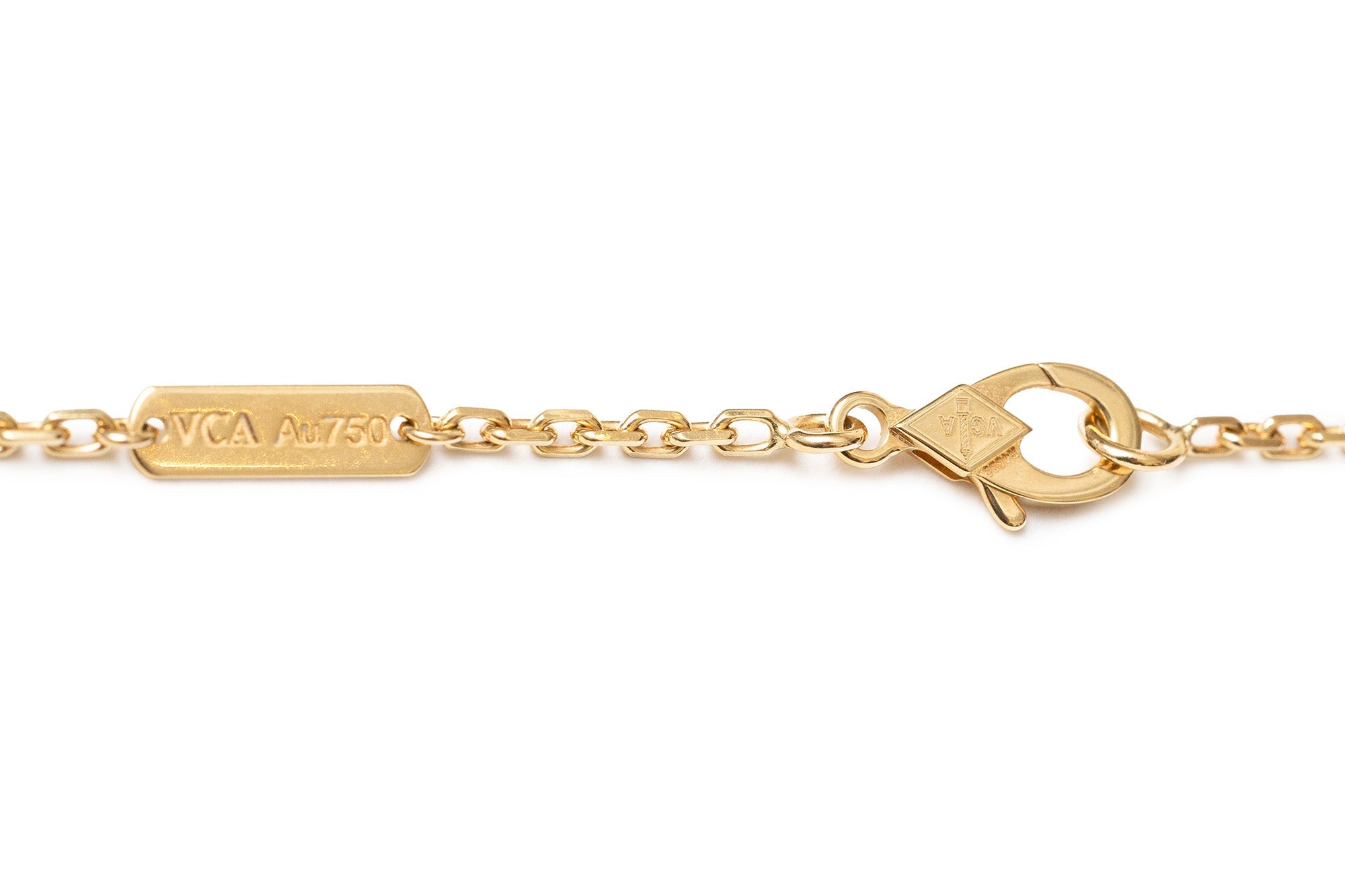
Every authentic Alhambra piece has crisp, precise engravings, showing real attention to detail. The gold purity mark, 750 or Au750, means 18k gold, and that's all VCA uses for Alhambra. These marks should look sharp, evenly spaced, and stamped deep into the metal.
Fakes usually have shallow, uneven, or blurry engravings. Sometimes the numbers look rough or inconsistent, and you might see hallmarks that look scratched in by hand instead of properly stamped.
Hallmark placement changes by piece: necklaces and bracelets have them near the clasp or on the motif closest to it. Earrings show trademarks on the fasteners, and rings have marks on the bottom of the shank.
If the hallmarks look fuzzy or the metal around them is messy, that's a big warning sign.
Serial Numbers and Authenticity Codes
Each authentic Alhambra piece carries a unique serial number, engraved with the same care as the hallmarks. The serial should be easy to read, consistent in depth, and match the quality of the other engravings.
Fakes sometimes skip serial numbers or use random ones that don't fit VCA's system. You might see serials that are too shallow, badly placed, or in the wrong font. The spacing between digits should look clean and professional.
Take a clear photo of the serial number and contact Van Cleef & Arpels directly or stop by a boutique, they can check if it matches their records.
If a seller dodges requests for serial number photos or claims the number "wore off" on a not-so-old piece, that's fishy.
Red Flags in Brand Signature and Logo
You'll see the brand signature as either "Van Cleef & Arpels" or "VCA". Modern pieces usually use "VCA," but older ones might spell out the full name. The letters should look perfect, same spacing, same depth, no weirdness.
Fakes often botch the ampersand or use the wrong letter shapes. Sometimes the font's too thick or too skinny, or they spell the name wrong. Some use a plain script that doesn't match VCA's style at all.
If you zoom in and see fuzzy, incomplete, or hand-engraved letters, it's probably a fake. Real VCA stamps stay sharp even under magnification.
Font, Alignment, and Placement Mistakes
Van Cleef & Arpels keeps their typography consistent, font size, style, and spacing all match across a piece. The engraving lines up straight, and the depth stays the same.
Fakes often have crooked stamps, mixed-up fonts, or weirdly sized letters. Sometimes the VCA stamp is way too big or too small for the piece.
Placement matters, too. Genuine pieces have engravings in just the right spots, while fakes mess this up, like putting a stamp too close to the clasp or in a weird spot on the motif.
Look at the letter spacing. Real pieces keep it even and professional. If the letters are cramped or spread out, that's another red flag.
Material Quality: Metals and Gemstones
Van Cleef & Arpels Alhambra pieces use only 18k gold and platinum, paired with carefully chosen gemstones that meet their strict standards. Counterfeits rarely match these materials, so checking quality is a solid way to spot fakes.
Gold and Precious Metal Verification
VCA sticks to 18k gold for Alhambra, never gold-plated or lower-karat stuff. You'll find rose, white, or yellow gold, and the metal should feel weighty and have a rich, even shine.
Look for the Au750 or 750 mark, which means 18k gold (75 percent pure). Where you'll find this depends on the piece: on the clasp or motif side for necklaces and bracelets, on earring fasteners, or under the ring shank.
The metal should be smooth, with no tool marks, scratches, or uneven polish. Authentic pieces feel hefty; cheap metals just don't have the same weight. If the gold feels too light or you see tarnish or fading, it's probably not the real thing.
Fakes often use lower-grade alloys or gold-plated base metals that wear off, showing another color underneath.
Assessing Gemstone Authenticity
The Alhambra collection uses real gemstones and ornamental stones, all selected for quality. VCA uses diamonds in the D, E, or F color range and clarity from FL (Flawless) to VVS2.
Ornamental stones like onyx, carnelian, malachite, turquoise, and agate are always natural and top quality. Mother of pearl gets special attention, white types come from Australia, grey from French Polynesia.
Real mother of pearl has a natural shimmer, subtle color shifts, and feels cool to the touch. Stones should be set perfectly in the clover, no gaps, glue, or rough edges. Each is hand-set, so the alignment and mounting are spot-on.
Look for consistency in color and pattern across motifs. Natural stones will vary a bit, but the overall look and shine should match.
Common Imitation Stones and Materials
Counterfeiters love to use plastic resin, reconstituted stone, or cheap minerals instead of real gemstones. These fakes lack the depth, natural variation, and shine of genuine stones.
Fake mother of pearl often looks too flat or uniform, misses that iridescent glow, or feels warm and light. Sometimes it looks plasticky or has a weird shine that doesn't shift in the light.
Watch for:
- Painted or dyed materials that wear off or rub color onto your skin
- Glass or acrylic that feels warmer than stone
- Composites with visible seams or bubbles
- Uneven stone thickness from motif to motif
- Too-perfect uniformity, real stones aren't identical
Fake onyx and agate are often just black glass or resin, too shiny, too perfect. Fake turquoise is usually synthetic or packed with resin. Real stones have quirks that fakes can't quite match.
Craftsmanship and Construction Details
Van Cleef & Arpels pieces show off serious engineering and craftsmanship, counterfeiters rarely get close. You can spot the differences in the beading, clasps, and clover shapes, especially in collections like Vintage Alhambra, Magic Alhambra, and Sweet Alhambra.
Beading and Motif Consistency
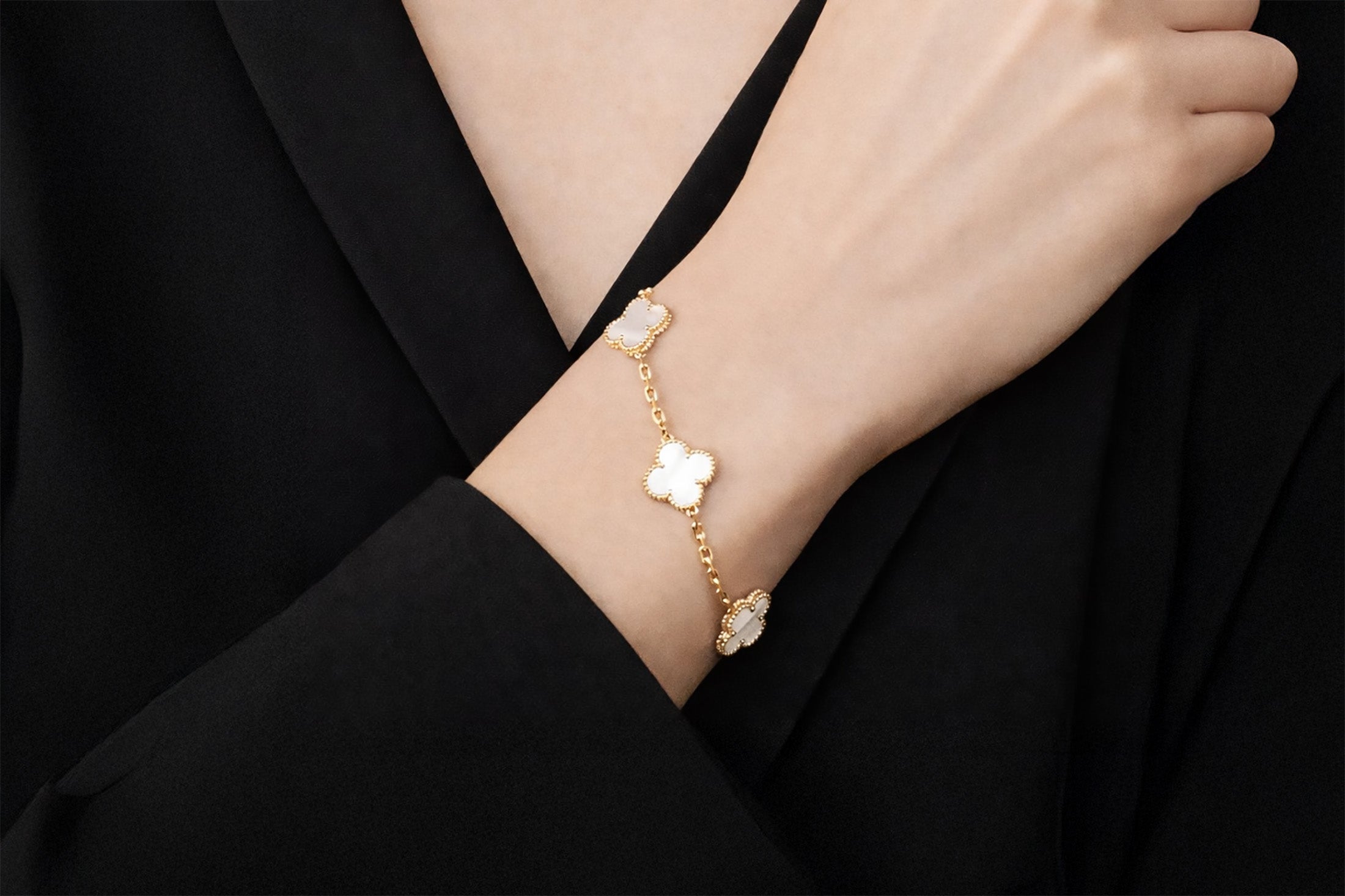
That signature gold beading around each clover takes skill. On real VCA jewelry, the little beads are all the same size, spaced evenly, and attached securely. They catch the light just right, with no gaps or oddballs.
Fakes often have uneven beading, some beads are bigger, some smaller. Sometimes they feel loose or have glue marks. The spacing can be all over the place, making the clover look off.
Genuine pieces keep this perfection along the whole chain, whether it's a single Sweet Alhambra pendant or a long Vintage Alhambra necklace.
Clasp and Chain Precision
VCA uses sturdy lobster clasps that work smoothly and feel solid. The clasp should close firmly, not wobble or feel cheap. Authentic pieces have a little ring where the chain meets the clasp, letting it move naturally.
Chains are well-made. All the links match in size and are perfectly soldered, no seams or rough bits. Fakes often have thinner, lighter chains with uneven links.
Jump rings connecting motifs to chains are seamless on real pieces. Counterfeit bracelets usually have visible gaps or rough rings that can snag on fabric.
Shape and Dimensions of Alhambra Motifs
The Alhambra clover follows strict proportions. Each leaf of the clover is the same size and shape, making for perfect symmetry. Spaces between the lobes are even, and the motif sits flat, no bending or warping.
Sizes are exact: Vintage Alhambra motifs are about 15mm, Magic Alhambra ranges from 16mm up, and Sweet Alhambra is the smallest at around 9mm. Fakes often miss these measurements by a millimeter or two.
The inlay, stone or mother of pearl, should fit snugly in the gold frame, no gaps. Fakes often leave space between the inlay and beading, or the inlay sticks up instead of lying flush.
Packaging, Presentation, and Paperwork
Van Cleef & Arpels puts as much care into packaging as they do into their jewelry. You'll get deep green suede boxes, crisp embossing, and full paperwork, including certificates with matching serials. Counterfeiters can't quite nail the weight, feel, or coordinated look VCA delivers.
Authentic Van Cleef & Arpels Packaging
The signature green suede box is your first real test. Genuine boxes feel heavy and plush, with a deep green color.
The embossed lettering is sharp and deep, not printed or blurry. Run your finger over "Van Cleef & Arpels" and you'll feel the indentation. The hinge opens smoothly, no squeaks, and the lid lines up perfectly.
Inside, the suede lining matches the quality outside. The cushion holds its shape when pressed, not collapsing or feeling flimsy. Fake boxes usually feel lighter, have shiny or rough fabric, and the embossing looks stamped, not recessed.
The outer case fits the inner box perfectly, no gaps or sliding. Many replicas skip this or toss in a cheap, loose-fitting box that just doesn't feel right.
Exam Certificates and Boxes
Every Van Cleef & Arpels haute joaillerie piece comes with documentation that matches the jewelry exactly. The certificate includes a serial number that matches the engraving on your piece, the purchase date, and the boutique location.
The paper stock feels thick and premium, never glossy or flimsy. The typography lines up with the brand's look, with proper spacing and weight. If you're buying pre-owned through reputable sellers, you should still get this original paperwork.
Key elements to check:
- Serial number matches the piece
- Purchase date and boutique location included
- Logo is embossed, not just printed
- Cardstock feels heavy and high-quality
If you see a generic certificate that just says "VCA necklace" with no model details, or one missing a serial number, that's a red flag. Replicas sometimes come with placeholder text or certificates that don't even match the jewelry style.
Documentation and Receipts
Besides the certificate, authentic purchases include a warranty card, care instructions, and usually a branded envelope or folder to keep it all together. The receipt will show the boutique address, a detailed item description, and itemized pricing.
When buying pre-owned, always ask for any original documentation. Legitimate sellers keep these materials because they add value and help verify authenticity. If paperwork is missing, it doesn't automatically mean the jewelry's fake, but you'll want to take extra care authenticating the piece.
The warranty card usually has another serial reference and purchase details. It should feel just as premium as the certificate, same paper, same print quality. Auction houses provide their own authenticity guarantees, but original Van Cleef paperwork is still the gold standard.
Differences Among Alhambra Collections and Variations
Van Cleef & Arpels offers several distinct Alhambra lines, each with specific motif sizes, chain styles, and design approaches. These differences affect both how the pieces look and how fakes try to copy them. Knowing what sets each collection apart helps you spot where counterfeits usually mess up.
Vintage Alhambra vs. Sweet Alhambra
Vintage Alhambra pieces have larger motifs, usually around 15mm in diameter. They're the most recognizable, with heavier chains and bigger clasps to support those bold clovers.
Sweet Alhambra, on the other hand, uses smaller motifs, 10mm or less, for a more delicate, everyday feel. Chains are finer, and the whole piece is lighter. Counterfeiters often mess up the proportions, making Sweet Alhambra with chains that are too thick, or Vintage pieces with motifs that feel flimsy.
The names give you a hint: Vintage Alhambra is all about classic, bold elegance, while Sweet Alhambra is subtle and refined. When you're checking authenticity, make sure the motif size lines up with the chain and clasp style, real pieces always feel balanced.
Magic, Pure, and Lucky Alhambra
Magic Alhambra stands out with transformable designs and multi-sized motifs you can wear in different ways. You'll see big statement clovers paired with smaller accents on the same piece.
Pure Alhambra skips the beaded edge other collections have, going for smooth, minimalist clovers with clean borders. This style leaves no room to hide flaws, so metalwork has to be spot-on. Fakes usually can't match the seamless finish and even thickness of genuine Pure Alhambra.
Lucky Alhambra keeps the beaded edge but focuses on versatility and modern proportions. Each sub-collection has its own vibe: Magic is dramatic and flexible, Pure is minimal, Lucky is a blend of tradition and modern style. Counterfeiters rarely nail these subtle differences.
Stone Combinations and Limited Editions
Van Cleef & Arpels uses specific stones in the Alhambra collection, onyx, carnelian, malachite, mother-of-pearl, turquoise, and agate are always natural and top quality. Each stone is cut to a precise thickness and set with consistent depth.
Limited editions and holiday releases sometimes feature special stone mixes or unique colors not found in the regular lineup. These come with documentation noting their limited status and production details. Fakes often use the wrong stones or cheaper materials like dyed resin or low-quality shell that just don't have the same shine or grain.
The bezel setting around each stone should sit flush, with no gaps or rough edges. Real pieces show uniform stone thickness when viewed from the side. Counterfeits often have stones that are uneven, too thin, too thick, even within the same piece.
Professional Authentication and Marketplaces
Even seasoned collectors sometimes struggle to authenticate Van Cleef & Arpels pieces, especially as fakes get better. Knowing when to get expert help, and understanding the risks of secondhand buys, can save you a lot of trouble.
When to Seek Expert Opinion
It's smart to get a professional authentication if you're buying pre-owned, inheriting a piece, or just feeling unsure. Experts use magnifiers, reference databases, and years of experience to spot details you won't catch in photos.
Authentication usually costs between $25 and $100 for digital checks, while in-person appraisals at boutiques or labs run higher but come with detailed certificates.
Consider expert help if:
- The serial number format looks weird
- Engraving depth seems off
- The seller can't provide more photos or close-ups
Having a certificate from a pro makes a big difference for insurance, estate planning, or future resale.
Risks with Pre-Owned Purchases
The pre-owned Van Cleef & Arpels market has exploded, but not all sellers play by the same rules. Private sellers on eBay or Facebook Marketplace rarely offer authentication, and some fakes come with convincing paperwork and packaging.
Risks include misrepresented condition, swapped parts (real chains with fake motifs), and altered serial numbers. Sometimes sellers don't even realize they're passing along a fake.
Red flags when buying pre-owned:
- Prices way below retail or resale
- Seller won't provide more photos or close-ups
- No mention of serial numbers
- Vague terms like "authentic quality" instead of actual guarantees
Always ask for detailed photos of hallmarks, serials, clasps, and motifs before you buy. Good sellers understand and are happy to provide them.
Notable Secondhand and Consignment Platforms
The RealReal leads the luxury consignment world with in-house authenticators and a solid return policy. They check every Van Cleef piece before listing and give detailed condition reports. Inventory moves fast, and prices reflect the authentication process.
Sotheby's and other auction houses sell authenticated pieces with full provenance, which is great for rare or vintage Alhambra. Their catalogs include expert opinions and condition reports, but auctions can get competitive.
Fashionphile and Rebag focus on authenticated luxury goods and offer return windows. They photograph their pieces extensively and post serial numbers, giving buyers more transparency.
Personally, I trust platforms with full-time authenticators, money-back guarantees, and physical locations where you can inspect items. Boutique consignment shops with gemological credentials are also good alternatives.
Frequently Asked Questions
Authentic Van Cleef & Arpels Alhambra pieces have specific engravings, hallmarks, and craftsmanship that fakes struggle to match. Knowing how the weight feels, how the packaging looks, and where the stamps are placed can help you spot the real thing.
How can you tell if that shimmering Alhambra necklace is the real deal or a superb imposter?
Start with the serial number engraving. On real pieces, the numbers are deeply etched, with consistent depth and crisp edges you can feel with a fingernail.
Fake Alhambra necklaces usually have thin, uneven serial numbers that look more like they've been scratched on than engraved. The characters might even fade in spots where the tool slipped or lost pressure.
Check the chain links, too. Genuine VCA chains have perfectly oval, symmetrical links that hang straight and don't twist. Counterfeit chains feel lighter, the links look irregular, and they make a high-pitched clink instead of the soft, muted sound of real gold.
Check the chain links, too. Genuine VCA chains have perfectly oval, symmetrical links that hang straight and don't twist. Counterfeits feel lighter, the links look irregular, and they make a high-pitched clink instead of the soft, muted sound of real gold.
What subtle details on the VCA Alhambra pieces should you inspect to ensure authenticity?
The motif edges say a lot about craftsmanship. Real Alhambra clovers have smooth, precisely polished edges and petals that catch light evenly.
Fake motifs often look too shiny or uneven in color. Their edges are rounded or dull, and under bright light, they scatter light harshly instead of reflecting it softly.
Check the side engraving on each motif. Genuine pieces have thin, evenly carved inscriptions that feel precise but shallow. Replicas often show swollen letters with weird spacing that feel gritty or raised, almost like acid-etched instead of laser-cut.
Don’t forget the clasp. The VCA and tower icon should be delicate, evenly spaced, and perfectly centered. On fakes, the letters crowd together and the tower turns into a blob.
Are there any tell-tale signs in the hallmark stamps of Van Cleef & Arpels that give away a faux?
The "VCA Au750" hallmark sits on the jump-ring plaque. Genuine pieces have bold, deeply milled letters with tidy corners, look at the "A" crossbar and "7" serif for sharpness.
Counterfeit hallmarks look slim and shallow, often appearing gray in the recess instead of dark. If the hallmark vanishes at certain angles or looks printed rather than cut into the metal, it's probably too shallow to be real.
Can the weight of a Van Cleef & Arpels piece be a dead giveaway when judging its authenticity?
Definitely. Van Cleef & Arpels uses only solid 18k gold or platinum, so their pieces feel hefty and satisfying in your hand.
Fake Alhambra jewelry feels lighter, usually because it’s made from plated brass or hollow metal. If you compare both side by side, the difference is obvious.
Are there specific packaging cues that can help you spot when a VCA Alhambra is masquerading as something it's not?
The real box feels velvety, with deep, even coloring and neatly embossed text that catches light just right. Each letter is spaced perfectly, and the hinge opens smoothly with the lid lining up to the base.
Fake boxes feel lighter, the suede is rougher, and the color can look dull. Their text prints unevenly, with letters too close or too far apart, and the hinge is often stiff or squeaky.
Inside, genuine boxes use soft, dense suede that feels plush. The cushion holds its shape when pressed, not collapsing or feeling flimsy. Fake boxes usually feel lighter, have shiny, cheap fabric that wrinkles at the edges, with logos that look pale, crooked, or off-center.
Is there a 'one-size-fits-all' guide to differentiating between genuine and fake VCA Alhambra jewellery?
Honestly? Not really. Authentication means juggling several details at once, there’s no magic shortcut.
First off, check the serial number’s depth and the quality of the VCA Au750 hallmark. Then, take a close look at the motif edges, the sharpness of the clasp logo, how the chain links are put together, the feel of the clasp it makes when it closes, these all tell a story.
Some fakes might sneak by a single test, but when you look at everything together, the flaws start to show. The way the engravings sit, how the chain links are put together, the feel of the clasp, that little click it makes when it closes, these all tell a story.
Authenticators usually get in there with a loupe and compare every detail to known originals. Once you know what to look for, you’ll start spotting the shortcuts in replicas, and the care that goes into real Van Cleef pieces.
Love Hermès? See More from Rome Station
Add us to your Preferred Sources on Google to see our newest Hermès guides and insider tips first.